 Vietnamnet.vn

 Podcast



On a hill in Krang Go 2 village, Quang Lap commune, Lam Dong province, Ka Don church blends architecture with nature and Chu Ru culture. More than a place of worship, it helps preserve the heritage of the local ethnic community.
Nature provides the decoration
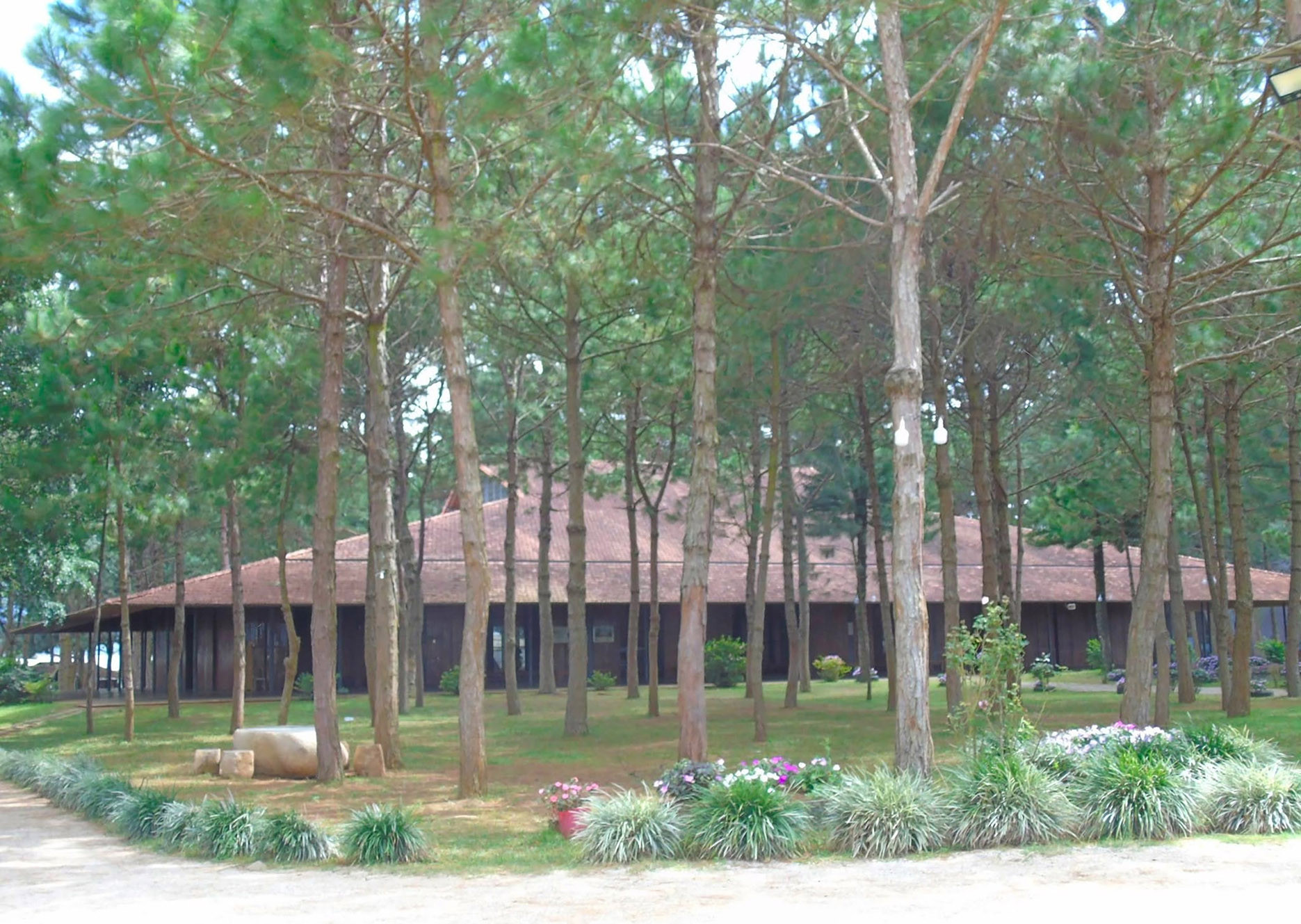
Although a Catholic church, Ka Don has none of the soaring towers, domes or massive columns often associated with Gothic architecture. Instead, it resembles a traditional Chu Ru home, tucked into a pine forest.
The church has no gate or enclosing fence. From outside, visitors see only a low building, its muted brown tiled roof glimpsed through the pines. The floor sits level with the ground, without entrance steps, and the doorways create no sense of separation between the place of worship and the world outside.
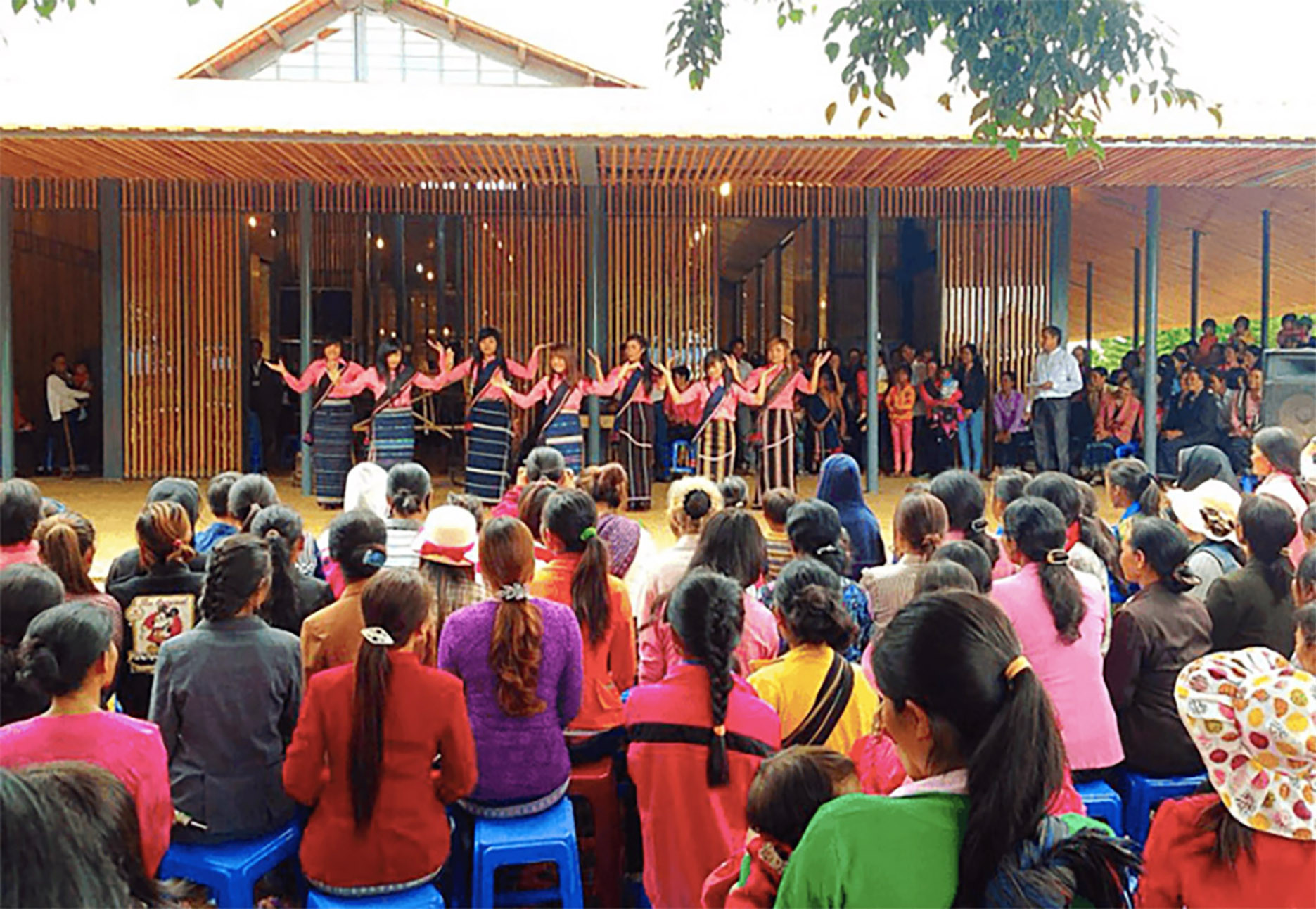
Inside, the space is open and airy, with wooden slats and glass replacing solid walls. When more room is needed, the slatted panels slide along tracks, connecting the veranda and courtyard into one shared space. From the sanctuary, worshippers can see plants, birds and animals, while natural light and breezes flow freely inside.
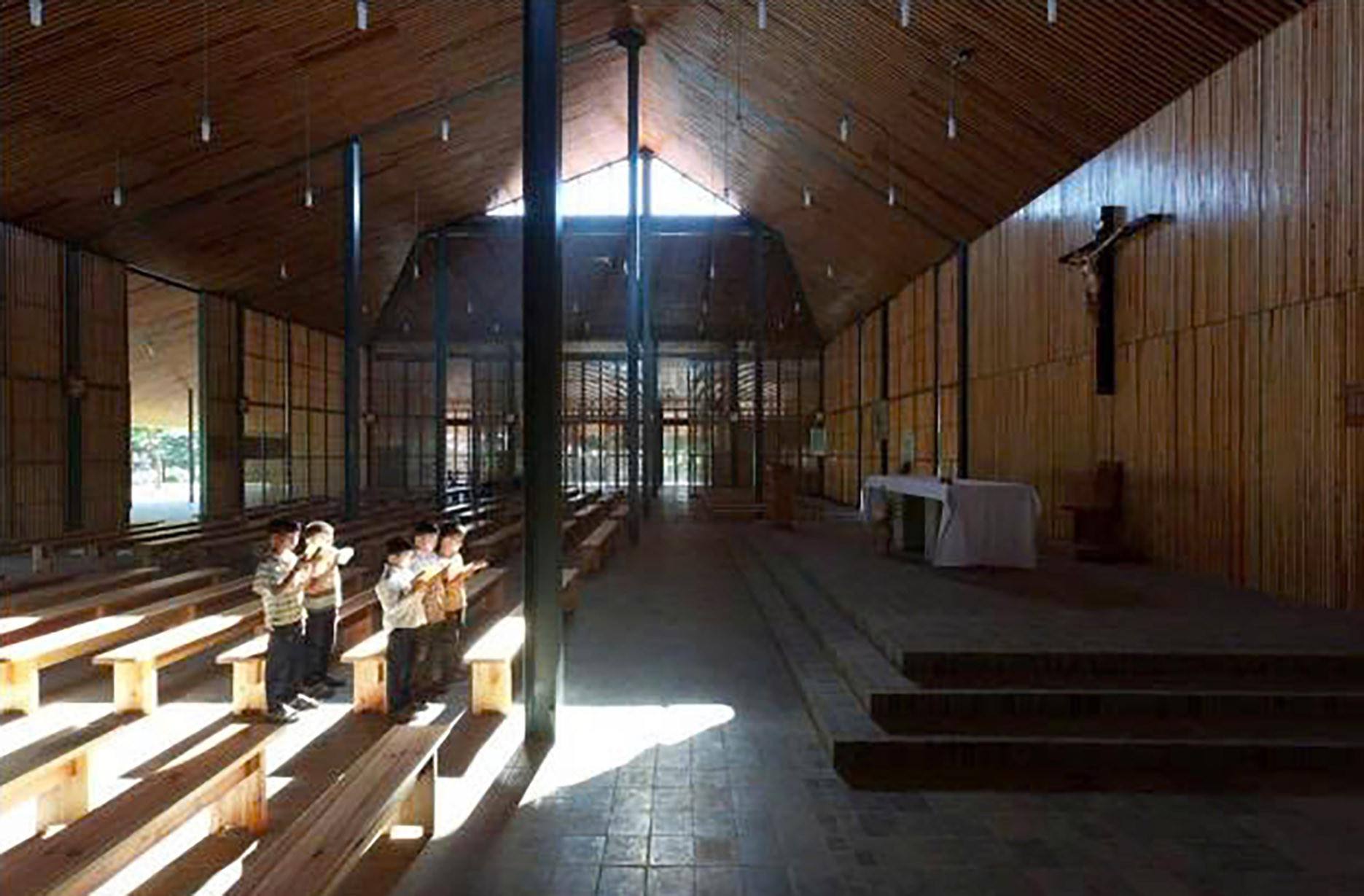
Roof openings admit light from several directions, keeping the sanctuary filled with daylight. Wooden slats extending down from the ceiling add architectural interest while improving ventilation. By day, those inside can gaze at the clouds and sky; by night, moonlight and stars become part of the church’s interior.
There are almost no pictures or floral decorations. The surrounding landscape provides the church’s natural adornment.
Father Giuse Nguyen Duc Ngoc, the parish priest of Ka Don, once said: “The land on which the church stands is already sacred. Nothing more needs to be changed. Nature provides the decoration: the red earth, the mountains, the air, the sunshine and wind, the moonlight… There is only nature and a shared roof.”
Construction began in 2010 and was completed in 2014. From the outset, the parish priest set three requirements for the design: it should be simple, use few colors and respect the natural beauty of the site; it should be modest, low and follow the contours of the hills; and it should be deeply rooted in local culture, recalling the traditional homes of the Chu Ru people.
Using familiar materials - a steel frame, roof tiles, stone flooring, pine wood and glass - the two architects created a building that is simple yet refined, blurring the boundary between indoors and outdoors. The church becomes part of the landscape, bringing modern architecture into harmony with a traditional setting.
The design for Ka Don church received the European Sacred Architecture Award in 2011. After completion, the building won second prize at the sixth International Sacred Architecture Competition in Pavia, Italy, in 2016.
A museum of Chu Ru culture
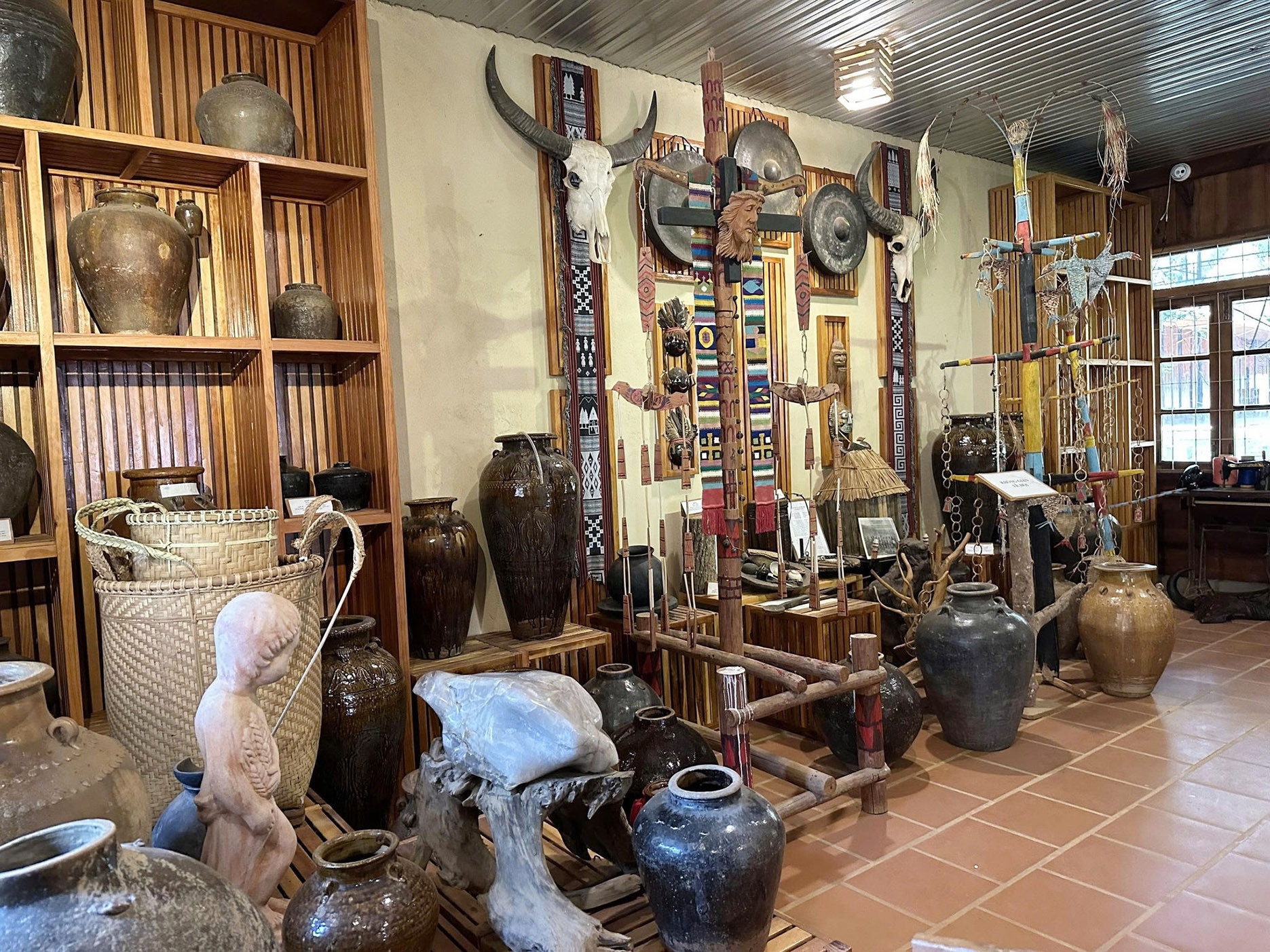
Beyond its religious role, Ka Don church devotes two large rooms to documents, photographs and objects depicting Chu Ru life. Over the years, successive parish priests have collected and preserved artifacts, creating a “miniature museum” of local culture.
The displays include unglazed pottery such as jars, stoves, pots, kettles, cups and bowls; ceremonial objects and instruments, including ritual poles, drums, three-gong sets, gourd wind instruments and stone instruments; and a variety of tools for fishing, irrigation and farming. Inside the sanctuary, a Chu Ru three-gong set occupies a place of honor alongside other musical instruments.
To make its religious teachings more accessible to local people, the church translates daily prayers, catechisms and songs into Chu Ru. Liturgies, prayers and hymns are conducted in the community’s language, helping keep it alive in cultural life.
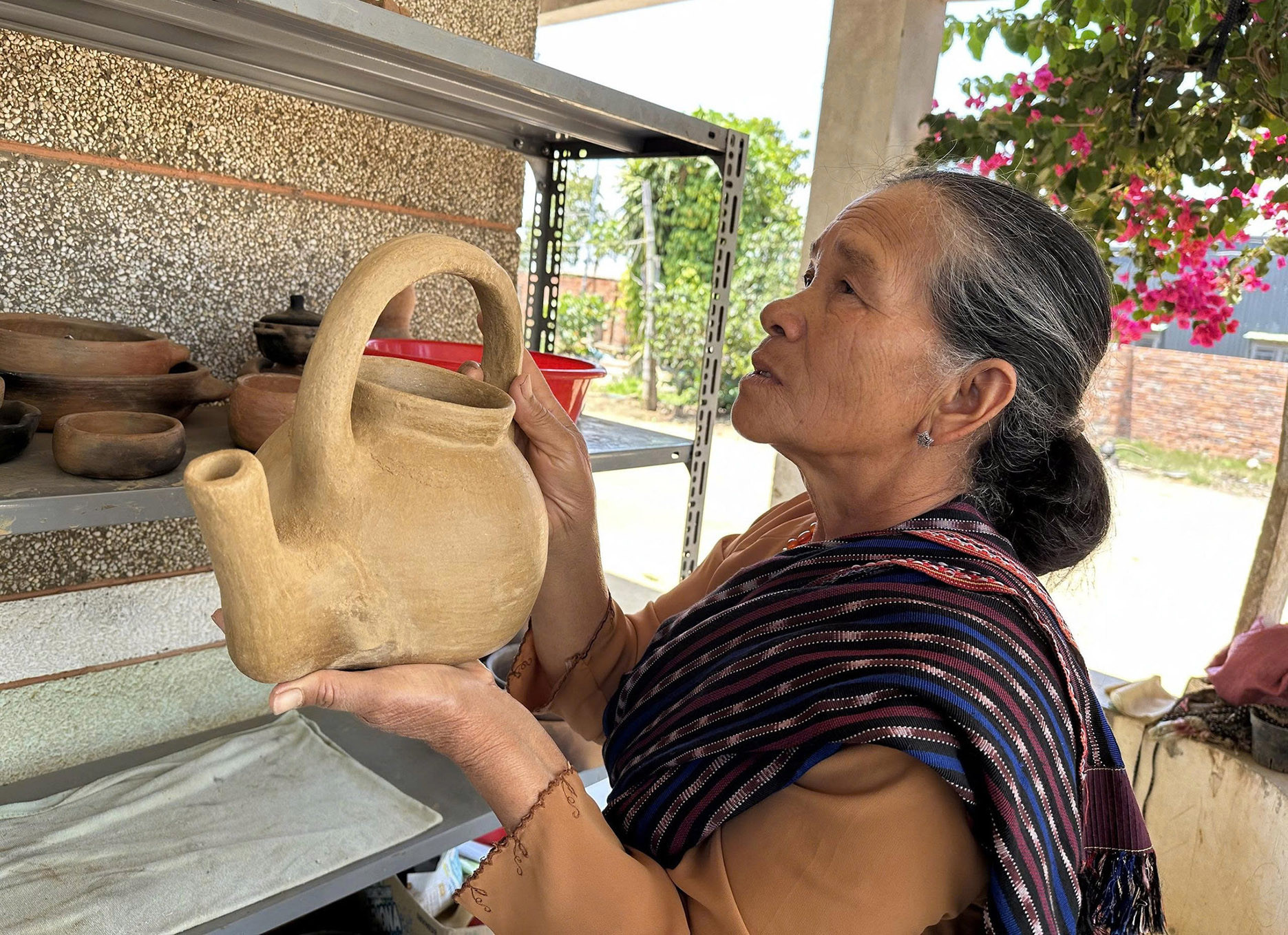
The church also works with residents to preserve traditional crafts, particularly unglazed pottery. Chu Ru pottery once flourished, but gradually declined as a wider range of materials became available on the market. Many kilns fell cold, and potters turned to other occupations.
Father Giuse Nguyen Duc Ngoc encouraged residents to continue the craft, recognizing that pottery provides both a livelihood and a vessel for the community’s cultural heritage. When buyers were hard to find, the church purchased their wares, helping support the potters’ livelihoods.
As tourism has grown, Chu Ru pottery has gradually revived. Although production has yet to return to its former scale, the craft survives and is being passed on to younger generations. It remains a distinctive part of village culture and an attraction for visitors to the area along the Da Nhim River.
At midday, sunlight spreads through the church, and cool breezes rush through gaps in the windows. From the pine benches inside the sanctuary, visitors can watch squirrels dart between branches and hear birds singing in the forest.
Outside in the courtyard, Chu Ru and Kinh parishioners prepare for a community gathering. Some hang lights while others cook, their conversations and laughter mingling with the sounds of nature. At Ka Don, the church seems inseparable from community life, forming part of the cultural world of the Chu Ru people.
Hoang Ngoc Thanh
.svg)
