 Vietnamnet.vn

 Podcast



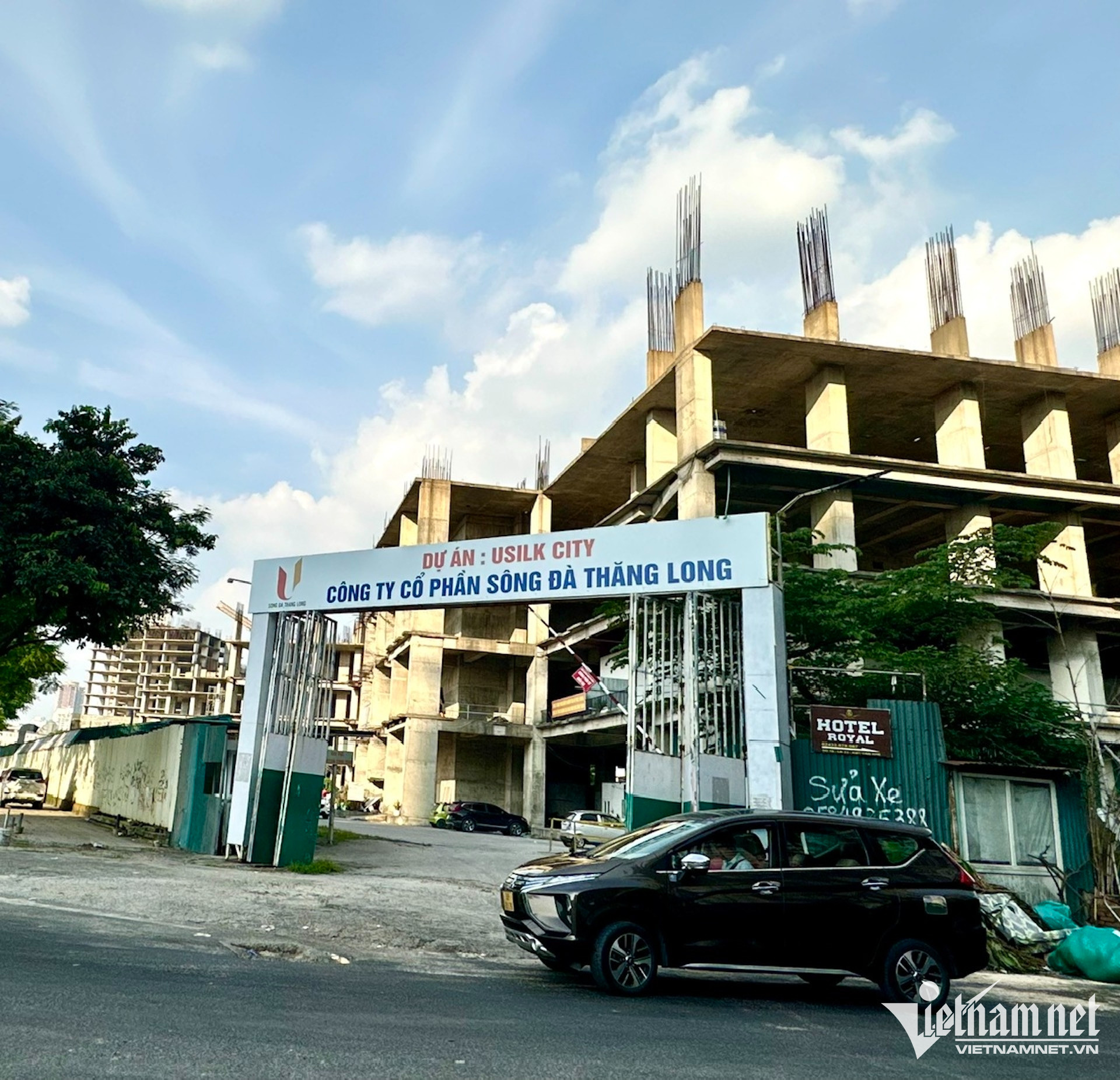
This action follows the Inspectorate’s examination of compliance with legal regulations in land use management, construction planning, and construction licensing in Hanoi. Usilk City was one of 23 projects in the 2011-2022 period that underwent direct inspection.
The Usilk City project is located on To Huu Street (formerly Ha Dong District, Hanoi). It was once introduced as the pride of the capital's residents, consisting of 13 buildings with 25-50 floors, =2,800 high-end apartments and total investment of up to VND10,000 billion.
The project commenced in 2008. According to the original plan, Song Da Thang Long JSC was expected to hand over homes to buyers during the 2012-2013 period.
However, after more than 16 years, only a few buildings have been completed and handed over. Many other buildings remain under construction, with rusted concrete and steel frames abandoned for over a decade.
During implementation, the investor signed numerous transfer contracts, house sales, loan agreements, and bond issuances collecting a total of VND8,456 billion. However, instead of using funds for the project, the enterprise used VND5,302 billion for other projects and purposes.
This led to a capital shortage, slow construction progress, and failure to hand over more than 750 apartments to customers, resulting in lawsuits and causing waste.
The matter must be transferred to investigative authorities for further consideration and handling. On that basis, the Government Inspectorate transferred the dossier related to this project to the Ministry of Public Security for investigation and handling.
Additionally, the Government Inspectorate recommended that the Prime Minister direct the Hanoi People's Committee to review and adjust the land area reserved for the Usilk City project in the detailed planning and land use right certificates issued to the investor to align with land allocation decisions and legal regulations. This includes considering the deduction of certain non-compliant costs amounting to over VND11.5 billion.
Projects assigned without auction/bidding
Through the inspection of 23 urban area and housing projects under the approved inspection plan, the Government Inspectorate also identified limitations, shortcomings, and violations at many projects.
Specifically, nine out of 23 projects had shortcomings and violations regarding construction and land use planning, such as: local adjustments to detailed planning without sufficient basis or conditions; times of investment policy approval when the project was not yet in the housing development plan; issuance of planning permits inconsistent with subdivision planning; approval of master site drawings and architectural plans inconsistent with planning; and determining public floor space without ensuring minimum area; and land allocation for projects inconsistent with planning and land use plans, with adjustments and updates made only afterward.
These involve D25* Cau Giay Tower project; the E2 Chelsea Residences high-rise housing project; the Artemis commercial center, office, and apartment project; the 120 Dai Kim mixed-use project; the Commercial, Office, and High-rise Housing Complex project at No. 1 Giap Nhi Street; the Mixed-use Housing, Commercial, and Office project at No. 83 Hao Nam Street; the Dai Kim New Urban Area project; and the Commercial, Service, Public, High-rise Apartment, Greenery, Parking, and Kindergarten project - Panorama Hanoi.
The Government Inspectorate also pointed out shortcomings and violations in selecting investors for housing projects without bidding at the European Overseas Vietnamese Village project; failing to conduct land-use right auctions at the D25* Cau Giay Tower project, the Ho Guom Plaza commercial, office, and high-end housing center; and making investment policy decisions beyond authority for the Commercial, Office, and High-rise Housing Complex project at No. 1 Giap Nhi.
According to the conclusion, some projects that did not undergo investor bidding or land use right auctions, by the time of inspection, had been completed and put into use. The investors had fulfilled land-related financial obligations to the State, and had transferred houses and land to customers.
Most of these projects, including D25* Cau Giay Tower, Hanoi Radio and Television Station mixed-use building, Ho Guom Plaza, and European Overseas Vietnamese Village, had been implemented before the 2013 Land Law took effect.
Therefore, to ensure the rights of homebuyers, stabilize security and order, and avoid complex or large-scale lawsuits, the Government Inspectorate requested the Hanoi People's Committee to review the projects' legal procedures, ensuring they align with regulations and reality.
Hong Khanh
.svg)
