 Vietnamnet.vn

 Podcast



Amid ongoing global economic volatility, Vietnam is increasingly emerging as a secure destination for international capital. A stable macroeconomic foundation, combined with strong growth potential, is positioning the country’s real estate market as a “safe haven” for billion-dollar investment flows.
Distinct competitive advantages

At a seminar titled “Foreign capital inflows - Opportunities for Vietnam’s real estate,” held on April 6 in Ho Chi Minh City, Troy Griffiths, Deputy Managing Director of Savills Vietnam, emphasized that political stability is the most decisive factor giving Vietnam an edge over regional peers such as Thailand, Indonesia, and Malaysia.
In a world shaped by geopolitical uncertainty, capital tends to gravitate toward markets that can preserve value and minimize risk.
At the same time, governance capacity and legal reforms in Vietnam have continued to improve, enhancing market transparency and aligning more closely with international standards. These developments play a critical role in reducing risks for foreign investors.
Infrastructure investment has also become a powerful catalyst for the market. Expanding expressways, airports, and inter-regional logistics networks - particularly in southern Vietnam - are opening up new development corridors.
“Infrastructure is the key to unlocking real estate potential,” Griffiths noted.
From a macroeconomic perspective, Dr. Dinh The Hien, Director of the Institute of Informatics and Applied Economics Research, said that factors often viewed as limitations - such as incomplete infrastructure or an urbanization process that has yet to peak - are in fact Vietnam’s growth reserves.
GDP is projected to maintain a growth rate of 5-7% from 2026 onward, an attractive level at a time when many major economies are slowing down.
In parallel, Vietnam is shifting from a processing-based economy toward attracting higher-quality foreign direct investment and strengthening domestic supply chains. Major infrastructure projects such as Long Thanh International Airport and the national expressway network are not only boosting economic activity but also directly stimulating the real estate market.
Opportunities favor early movers
According to Ngo Thanh Huan, CEO of FIDT, the global economy is entering an “asynchronous” phase, with the US experiencing strong growth while other regions face challenges. This divergence is prompting capital to be reallocated toward markets that balance safety with profitability.
In that context, Vietnam stands out thanks to its stable internal fundamentals, effective inflation control, and a clear economic restructuring strategy. While there have been periods of capital outflows for portfolio restructuring, the long-term trend remains a return to fundamentally strong markets.
Notably, investment flows are now shifting away from short-term speculation toward more selective, long-term strategies.
Dinh Minh Tuan, Southern Regional Director of Batdongsan.com.vn, observed a clear move away from speculative assets. Searches for land plots have declined sharply, while demand is rising for income-generating properties with clear legal status and strong infrastructure linkages.
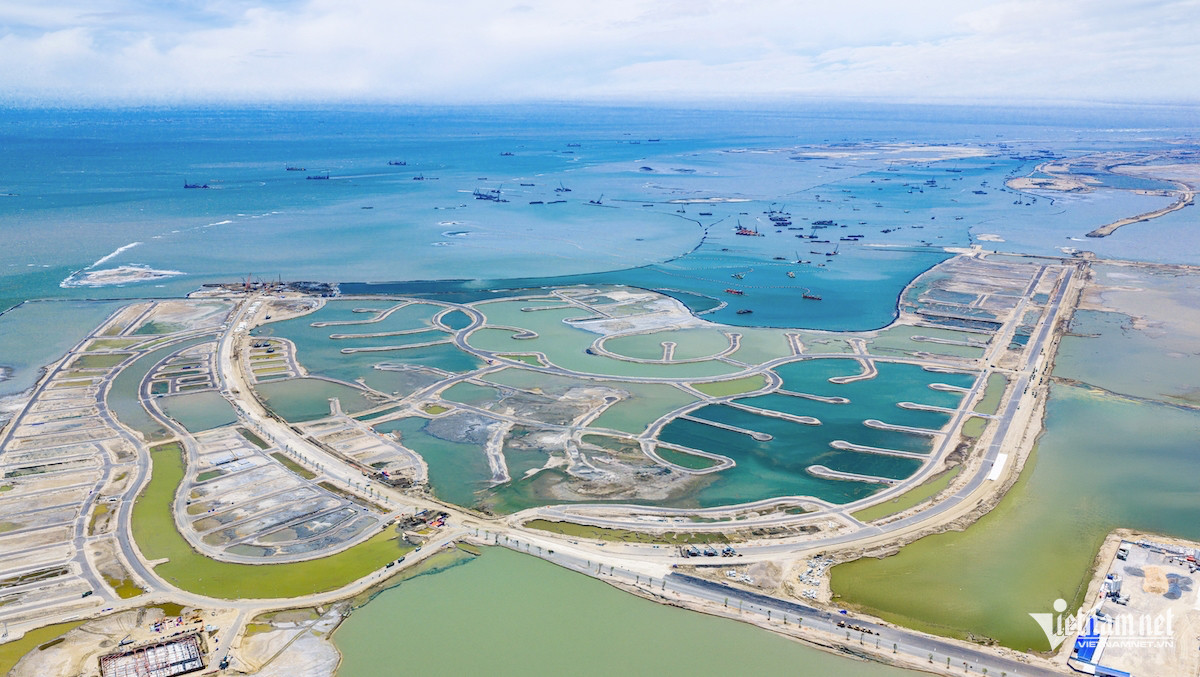
According to Ngo Thanh Huan, international investors are increasingly prioritizing projects that can operate effectively and deliver sustainable value. Well-planned mega-urban developments with integrated amenities and synchronized infrastructure are becoming key investment destinations.
From a market perspective, Do Tri Hieu, representing VinaCapital, highlighted coastal real estate as an emerging high-potential segment. With more than 21 million international visitors in 2025 and significant room for tourism growth, Vietnam has the potential to develop global destinations comparable to models in Dubai or Singapore.
Meanwhile, Stephen Higgins, Head of Capital Markets at Cushman & Wakefield Japan, noted that investment trends are increasingly tied to ESG standards. Projects that meet green and sustainable criteria are expected to gain a competitive advantage in attracting international capital.
This explains why integrated urban developments with low construction density, a focus on livability, and sustainable planning are becoming the new benchmark in the market.
Experts at the seminar agreed that opportunities in the new phase will no longer be evenly distributed but concentrated in areas and projects with genuine value. As international capital accelerates, “pockets of opportunity” are likely to be filled quickly.
For domestic investors, the advantage no longer lies in access to information but in the ability to act early. In a market entering a new growth cycle, those who choose the right segment, location, and timing will hold the upper hand.
Anh Phuong
.svg)
