 Vietnamnet.vn

 Podcast



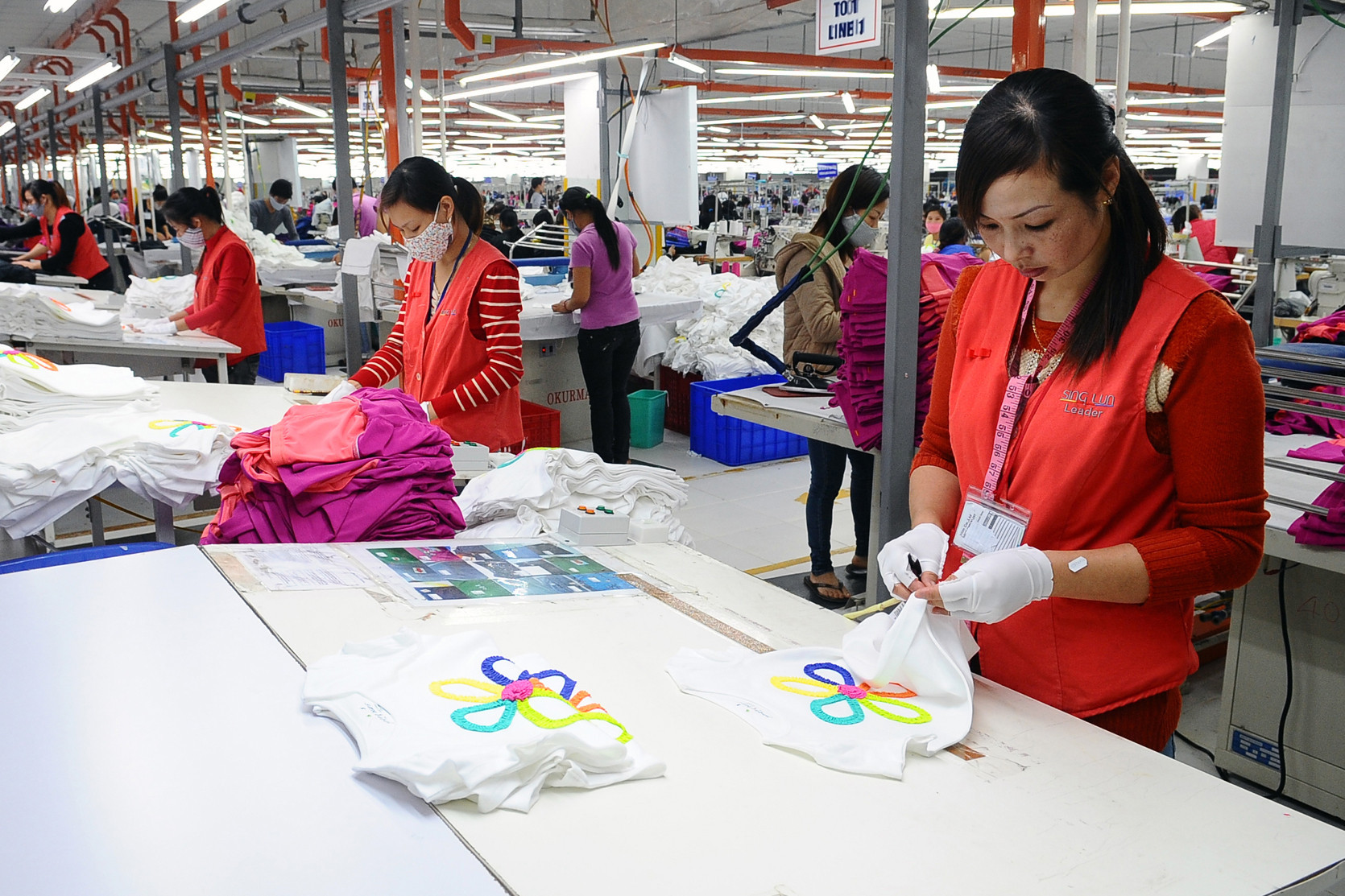
Two major reviews of business conditions in 2016 and 2018 by the Vietnam Chamber of Commerce and Industry (VCCI) yielded positive results. Many unnecessary conditions stipulated in circulars were eliminated, while others were incorporated into decrees.
In June 2016, an intriguing meeting revolved around a central question: should private enterprises be allowed to trade in military gear and equipment, and if so, how should they be managed?
Many voiced concerns over security and social order. However, from an economic standpoint, the world-class capacity of Vietnam’s private garment enterprises was undeniable. Involving them in military gear production would lower costs and increase efficiency.
The ultimate solution was to allow private participation accompanied by strict management of raw material origins and product control, alongside State oversight.
Once the policy was enacted, private firms joined bidding packages for State military gear. Notably, military and police garment enterprises did not face elimination as predicted; instead, they were forced to innovate in technology and management to compete with the private sector.
This is just one of many examples showing how the space for Vietnam's private economy is broadening. From once being prohibited, private enterprises have step-by-step entered fields such as banking, aviation, education, healthcare, notarization, auctions, testing, transport infrastructure, electricity, and soon, the North-South high-speed railway.
The lesson is clear: manage instead of ban; competition instead of privilege.
Subsequently, in 2018, the Ministry of Industry and Trade cut 50 percent of investment and business conditions, and the PM required other ministries to follow suit. Many ambiguous regulations were eliminated, though some conditions later resurfaced.
Currently, significant new movements are emerging as the review process receives direct instruction from the highest levels. With a Working Group led by the Ministry of Justice and strong support from top leadership, those executing the reforms have gained the confidence to propose recommendations that were previously held back during ministry self-reviews.
The most evident sign is the speed of legislative amendment. Law-making is also urgent, with each National Assembly session considering over 30 draft laws and resolutions, a pace that is unprecedented.
The bottlenecks affecting the development of science and technology are being cleared to the maximum extent under the spirit of Resolution 57. Almost all recommendations regarding attracting scientists and tax invoicing related to new technology development and innovation have been approved.
Regarding methodology, the composition of Steering Committee 66 shows a high priority for institutional perfection. The standing agency, the Ministry of Justice, has gathered a highly skilled, reform-minded team to collect feedback from the business community. A ministry leader noted that this is a fresh approach, as previous legal reviews were often conducted internally by state agencies, which rarely produced breakthrough reforms.
Institutional regime for private sector growth
Vietnam is a transition economy, but it has not opted for the mass privatization of State-Owned Enterprises (SOEs). This approach helps Vietnam avoid the "privatization trap," where public privileges are converted into private ones, distorting the market.
Instead, Vietnam allows private enterprises to enter sectors traditionally held by SOEs, placing all in a shared competitive environment. SOEs are not eliminated but are "unbound" to compete more fairly.
While slower, this approach yields more sustainable economic results than the mass privatization models once applied in parts of Eastern Europe. Nevertheless, the process has not always been smooth. There have been cases of private enterprises operating opportunistically, exploiting policy loopholes, or participating in BOT projects that caused social friction.
However, Vietnam's response has not been to shut out the private sector but to perfect the institution. The birth of the PPP Law is a prime example.
New spaces
Discussions on the North-South high-speed railway project signal a major shift in mindset. From a default of public investment, the option of private sector participation has become a serious choice.
With Resolution 68 and the draft documents for the 14th Party Congress, the space for the private economy will continue to expand. Many sectors and projects remain that the private sector can handle, provided the State possesses sufficient management capacity.
Vietnam is entering a new era of development, aiming for high growth based on science, technology, the private economy, and modern institutions, amid a global shift from free trade to protectionism. This requires Vietnam to utilize more industrial policies, and private enterprises must proactively join the State in the policy design process.
Nguyen Minh Duc
.svg)
