 Vietnamnet.vn

 Podcast



Continuing his conversation with VietNamNet, Mr. Vo Hong Phuc looks back on the deadlocks of the old economic model and the decision to launch Doi moi at the Sixth Congress, reflecting on how the system was compelled to change in order to survive and develop.
The imprint of the Sixth Congress
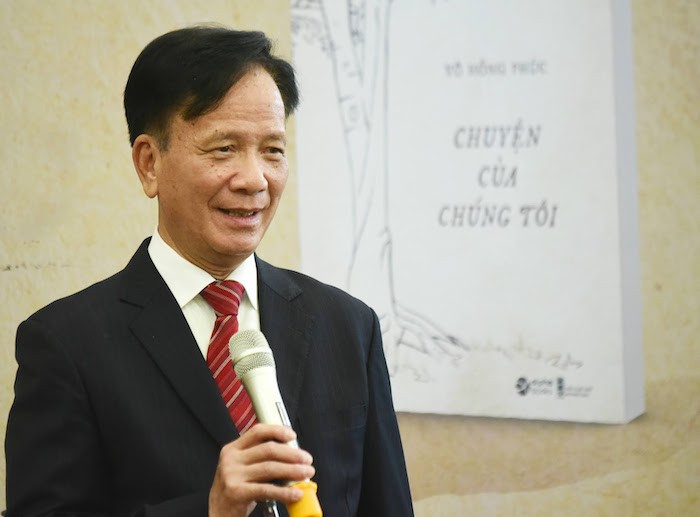
Before Doi moi became an official decision at the Sixth Congress, what “cracks” in the old model - from production realities to the international context - had accumulated to the point that the system had to change?
Vo Hong Phuc: We had already introduced the “contract 10” model in the late 1960s, and by the early 1980s it was expanded, becoming a new approach in agriculture.
At the same time, the Soviet Union - Vietnam’s key supporter - began to encounter difficulties. Early signs of restructuring appeared but proceeded cautiously, without substantive change. When the Soviet Union entered a turbulent reform period, aid and material supplies to Vietnam were no longer as before, pushing the domestic economy into severe strain.
In that context, ministries and sectors - including the Ministry of Investment - began to promote changes from within: expanding secondary and tertiary plans, reforming pricing mechanisms, gradually removing old subsidy elements and granting greater business autonomy to enterprises. These were the first stirrings of reform thinking in economic planning.
Reform, ultimately, is a process of liberating the mind.
It was not until 1986, when the Sixth Congress convened, that Doi moi became an official decision. Notably, during the preparation process, the initial draft documents were still built on old thinking, heavily centered on centralized planning and subsidies.
After Le Duan passed away, Truong Chinh, in his capacity as General Secretary, quickly recognized these shortcomings. After directly studying practical models, especially in agriculture, he directed a comprehensive revision of the draft documents. In a short time, key economic orientations were adjusted.
The Ministry of Planning and Investment, responsible for economic affairs, was directly involved, particularly in shaping orientations for the 1986-1990 period. It was in this context that the slogan “comprehensive renovation of the economy” took shape.
At the Sixth Congress, many opinions sharply criticized the old management approach, identifying it as the cause of the financial-monetary crisis and the price-wage-currency crisis of 1984-1985. The Congress also marked a major leadership transition, with a new collective demonstrating clearer reform thinking. Nguyen Van Linh was elected General Secretary; Do Muoi became Chairman of the Council of Ministers; Vo Van Kiet served as Permanent Deputy Chairman of the Council of Ministers.
As someone who directly witnessed and lived through that period, and with the benefit of later experience, do you see individuals as decisive for Doi moi?
One can clearly see a bottom-up process. When grassroots units became too constrained, they had no choice but to break old bindings, to “break the fence” in order to survive and develop.
In agriculture, there were models from Vinh Phuc and La Nga; in industry and trade, initiatives emerged from Ho Chi Minh City; in food and commerce, one could mention the model of Ba Thi. All showed that from practical realities, reform seeds were sprouting. People realized that without change, the system could no longer function. They proactively experimented with new approaches.
It must be said that those pioneering reformers were fortunate to encounter a generation of leaders highly sensitive to reality. Leaders such as Vo Van Kiet, then Permanent Deputy Chairman of the Council of Ministers, Truong Chinh as General Secretary, and Nguyen Van Linh - who later assumed the top post - were open-minded and receptive to new ideas.
More importantly, they did not merely accept these ideas; they decisively directed revisions in theoretical work, in drafting Congress documents, and in creating conditions for grassroots models to expand nationwide.
What impressed me most was precisely that: reform emerged from below, but was promptly recognized, supported and elevated into a national model.
Yet, as the Sixth Congress documents noted, Vietnam had fallen into internal crisis while facing severe external difficulties.
At that time, domestic resources were nearly exhausted. Under a comprehensive embargo, Vietnam could largely rely only on the socialist bloc. But when that bloc itself encountered difficulties and aid was curtailed, the pressure to change became immense.
When we began economic reform, one of the most powerful and meaningful changes, in my view, was in foreign affairs. Yet in this field, we faced the reality that domestic capacity was insufficient. Experience from many developing countries showed that growth required external resources.
As the socialist bloc’s support shrank, we had to think seriously about attracting foreign investment. Around 1986, we began approaching foreign projects and companies to draw them into Vietnam.
Some Japanese companies entered Vietnam relatively early. A few came under their official names, but most had to establish subsidiaries or use different names to circumvent barriers stemming from the US embargo. Even so, they gradually penetrated the Vietnamese market, initially in trade.
At the same time, they initiated small-scale projects, such as wood processing and food processing in Ho Chi Minh City, or projects in Quang Ninh. Though modest, these early ventures opened a new path: attracting private foreign capital to serve domestic development.
From those initial steps, we gradually formed a clearer awareness of the role of foreign investment, leading to the promulgation of the Law on Foreign Investment in 1987.
So only when Vietnam acknowledged non-state economic sectors during Doi moi could it truly attract foreign investment?
Certainly. Previously, Vietnam adhered to a centrally planned model relying solely on state-owned enterprises. Foreign partners could not see a development path. When Doi moi began in 1986, they finally saw an opportunity to return.
Japanese enterprises were particularly active. Many could not enter officially due to embargo constraints, so they set up subsidiaries or alternative entities to explore the market and study investment prospects.
Some Japanese firms opened representative offices in Hanoi early on. Vietnam also introduced certain incentives, revealing the substantial potential of Japanese enterprises.
The Government therefore approved the establishment of the Vietnam - Japan Economic Cooperation Committee, modeled on earlier bilateral mechanisms with Eastern European countries. Japan set up a corresponding committee, chaired by a leading business figure.
I was a member of that committee and served as Deputy Director General of the Industrial Department, participating in specialized subcommittees. Our task was to work directly with Japanese counterparts, introducing investment and business opportunities in Vietnam. This began in 1986 and continued in subsequent years.
Looking back over 40 years of reform, what is the most important lesson? Is it the willingness to acknowledge mistakes, to recognize diverse ownership and allow different economic sectors to participate?
During Doi moi, we made many correct decisions with long-term significance. However, the implementation path was often slow.
Recognizing various economic sectors and identifying the private sector as a driver of the economy was a prolonged struggle. For a long time, state ownership was always described as dominant, while the private sector was viewed as secondary. Only in recent years has the private sector been officially defined as “one of the most important drivers” of the economy.
Doi moi was directionally correct, but many steps lagged behind practical demands. This is a major lesson for the next phase of reform.
Had we opened more clearly and decisively from the outset, respecting the private sector’s role, outcomes might have differed. Instead, we chose gradualism, and many opportunities were missed.
A typical example was whether Party members could engage in private business. The debate lasted years. Yet in reality, those with education, expertise and managerial capacity - high-quality human resources - were largely Party members. Preventing them from participating in private enterprise effectively excluded a significant portion of capable individuals from economic development.
It was not until the end of the Eighth tenure and the beginning of the Ninth that this began to be accepted. By the start of the Tenth tenure, Party members were officially allowed to engage in private business, and Party organizations were later established within private enterprises.
Many dynamic local leaders strongly supported this shift, voicing clear and forceful opinions at Central Committee meetings.
Doi moi was the right path, but its pace often lagged behind reality. That remains a profound lesson.
The greatest lesson, in my view, is the need to overcome deeply entrenched theoretical barriers.
Old doctrines had shaped generations through education and cadre training, becoming rigid mental frameworks. To truly reform, one must dare to discard dogma detached from reality and use practice as the measure of truth.
Reform, ultimately, is the liberation of thought - daring to overcome the barriers in one’s own mind to build institutions and a development model suited to Vietnam’s realities and global trends.
At the Eleventh Congress, you spoke candidly about production relations, particularly public ownership of the means of production. Why were you so determined to defend change in the draft documents?
The issue stemmed from the 2000 Platform, which defined socialism’s characteristics as closely tied to public ownership of the means of production.
During preparations for the Tenth and Eleventh Congresses, especially within the economic drafting group, we argued strongly that even if the Platform could not be immediately revised, the Congress documents must reflect renewed thinking to lay the groundwork for future amendments.
Thus, the Tenth Congress documents made an important shift. Instead of emphasizing public ownership, they defined production relations as progressive and suitable to the level of productive forces.
This was necessary, as a rigid public ownership model was no longer appropriate. The collapse of Eastern European countries had demonstrated that the old approach was untenable.
In preparing for the Eleventh Congress, debate resurfaced. Our group sought to preserve the spirit of the Tenth Congress, while another group favored reverting to the 2000 formulation. Draft reports became inconsistent.
I believed we could not erase the intellectual achievements of the Tenth Congress merely to return to old interpretations. At a Central Conference, I proposed putting the matter to a vote. I did not win a majority - about 46 percent supported change, 54 percent favored the old approach - so the draft initially retained the 2000 wording.
However, at the Congress itself, many delegates supported maintaining the reform spirit. When given the floor, I outlined four major lessons from the previous term, foremost the need for a correct line, including a clear definition of socialism’s characteristics in production relations consistent with renewed thinking.
The Presidium agreed to a vote. This time, a majority - about 53-54 percent - supported the reform approach. Ultimately, the spirit of the Tenth Congress was preserved in the Eleventh Congress documents.
That, to me, demonstrated the democratic spirit of the Congress. Even with completed drafts, delegates could debate and amend to reach the most appropriate decision.
What might have happened had the Congress retained the original draft? Would foreign investors have lost confidence?
If the original wording had been kept, not only foreign investors but also domestic private investors would have raised serious questions.
Investors need assurance of ownership and investment rights. Ambiguity deters long-term capital. My argument was straightforward: to attract investment, one must first build trust - not only with foreign investors but with domestic private enterprises. Without institutional trust, there can be no investment, and certainly no sustainable development.
At that time, did top leaders harbor ambitions for high growth?
We always had ambitions for high growth, but those ambitions were tempered by reason and feasibility.
Five-year plans typically set targets around 7-8 percent, at most 7.5-8 percent. We never dared to set double-digit growth targets for a prolonged period.
Even in the most buoyant years, such as 1995-1996, peak growth reached about 9.5 percent in individual years. The five-year average was around 7.5 percent. Our approach prioritized stability and sustainability.
In 2008, you disclosed a 53 percent credit growth figure at a National Assembly session, startling the Prime Minister. Why did you feel compelled to reveal that number?
In a rapidly expanding economy transitioning to a socialist-oriented market model, macroeconomic balance becomes critical. Markets may operate freely, but someone must regulate to ensure balanced growth.
During the 2006-2010 period, when the economy was particularly overheated and Vietnam had just joined the WTO, investment - especially in real estate - expanded sharply. After Hanoi’s administrative expansion in 2008, the property wave intensified, driving credit growth to abnormal levels.
Typically, credit growth runs at two to three times GDP growth. At that time, GDP grew about 22-25 percent, yet reported credit growth reached 43 percent. Upon further review with the Ministry of Finance and the State Bank, we found actual credit growth had surged to 53 percent.
This was when inflation spiked dramatically. From that experience, in the 2011 action program, the Ministry of Planning and Investment helped formulate and propose Resolution 11 on macroeconomic stabilization and inflation control.
Resolution 11 placed macroeconomic stability at the center, recognizing it as the prerequisite for returning the economy to a reasonable and sustainable growth trajectory.
Tu Giang - Lan Anh
.svg)
