 Vietnamnet.vn

 Podcast



When happiness is placed at the heart of national goals, every reform is guided by the imperative to protect health, ensure safe living environments, improve public services and guarantee fair access for all citizens.
Bringing happiness to the people is the noble aspiration of every nation. Figures on GDP, growth rates or economic structure ultimately converge on a core question: Are people living in good health, in safety, free to make their own choices, cared for and loved? That is the true meaning of the happiness index, a measure increasingly valued around the world, and Vietnam is no exception to this trend.
A modern measure of social progress

The happiness index is built upon several groups of factors: income per capita, life expectancy, social support, freedom of choice, generosity and volunteerism within society, and perceptions of corruption control.
Among these factors, many are directly linked to healthcare, especially health and life expectancy - two foundational indicators reflecting quality of life. It is no coincidence that Finland, which has led global happiness rankings for many consecutive years, is known for its comprehensive healthcare system, strong preventive care and advanced social welfare policies.
In recent years, Vietnam has paid greater attention to the happiness index as a reflection of development quality. In the draft documents for the 14th National Party Congress, reviewing the 2021-2025 term, it was noted that Vietnam’s happiness ranking rose by 33 places, reaching 46th out of 143 countries.
The former Yen Bai province and the city of Hanoi have boldly incorporated the happiness index into their Party resolutions, treating it as a development goal on par with socio-economic targets. At the National Assembly forum, I also proposed including the happiness index in the documents of the 14th Congress and setting a target to elevate Vietnam’s ranking from 46 into the top 20 within the next five years.
For the first time, the draft documents of the 14th Congress have set a target for the 2026-2030 period: striving to achieve a Human Development Index of approximately 0.78.
A significant turning point
Among all factors contributing to citizens’ happiness, healthcare holds a central place. Over the past five years, the healthcare system from the central to grassroots levels has been gradually strengthened. Hospital networks have been upgraded and expanded; modern medical equipment has been installed across multiple tiers; and doctors and medical staff have received more systematic training.
Another bright spot is the strong policy of opening the door to private healthcare, creating a diversified medical ecosystem that helps ease the burden on public hospitals and improve service quality.
Longstanding bottlenecks in health insurance have been addressed, particularly through the policy allowing patients to access care across designated levels. Participants are now free to choose appropriate healthcare facilities instead of being bound by rigid administrative constraints as before.
A breakthrough initiative is Politburo Resolution 72, which sets the goal of moving toward universal free medical examination and treatment, along with screening for congenital and genetic diseases based on medical indications. If implemented effectively, this would rank among the most progressive health policies for the people.
Restructuring the three tiers of healthcare
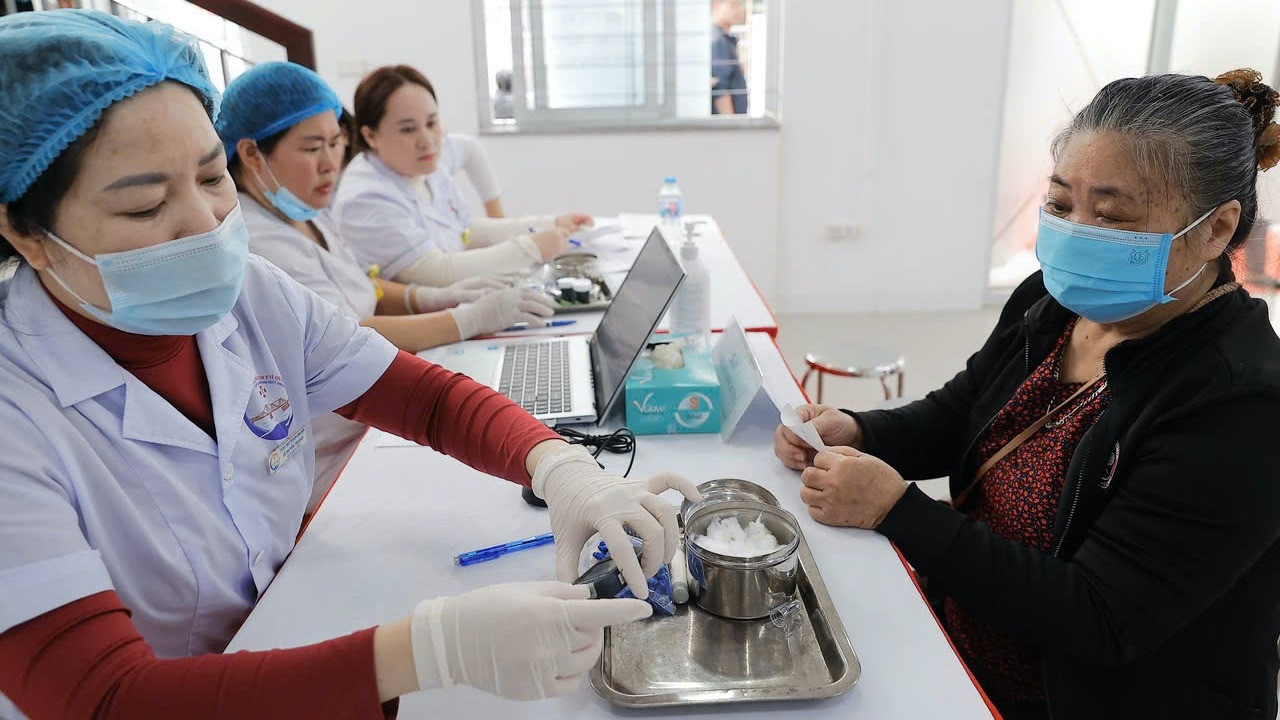
To build a society where citizens’ happiness is the central objective, the healthcare system must be reorganized into three tightly connected and harmonious tiers.
The first tier is grassroots healthcare, primarily preventive care, serving as the initial shield. It must adhere to the principle of being truly close to the people - wherever there are residents, there must be healthcare facilities. When a child develops a fever, a mother should need no more than a 15-minute walk to reach medical assistance. In cases of drowning, electric shock or burns, relatives should be able to access emergency care within the same short span. This is also a global trend aimed at reducing healthcare costs, detecting disease early and improving community health.
The second tier consists of provincial hospitals. These facilities are equipped to receive and treat more complex cases, especially chronic diseases or conditions beyond the full capacity of grassroots centers. Provincial hospitals also implement advanced specialized techniques, from diagnostic imaging and interventional procedures to intensive care and complex treatment protocols requiring multidisciplinary coordination. With stronger professional and technological capacity, they serve as a critical bridge between primary care and central hospitals, sparing patients long-distance travel and reducing financial and time burdens.
The third tier comprises highly specialized medical centers focused on treating severe, rare and emerging diseases, while conducting research of international caliber.
When these three tiers operate smoothly and complement one another, citizens not only receive comprehensive care but also experience a deep sense of security and trust - essential pillars of lasting happiness in a civilized society.
For this system to function effectively, medical training must be prioritized. Medical education cannot rely solely on theory; patients themselves must be the “living textbooks” and the direct teachers of medical students.
Supporting people throughout the life cycle
Resolution 72 and the National Target Program on Health have laid important orientations and foundations for elevating preventive medicine to a new level, both in professional capacity and organizational structure.
In theory and in institutional design, the status of preventive medicine must be more firmly affirmed. This is reflected in the restructuring of the system, the formulation of new regulations and, notably, the National Assembly’s discussion and passage of the Law on Disease Prevention.
This law marks a significant step forward by broadening the scope of prevention. It no longer focuses solely on infectious diseases but also addresses the rapidly rising group of non-communicable diseases such as cancer, diabetes, hypertension, mental health disorders and congenital genetic conditions. This expansion ushers preventive medicine into a more comprehensive, proactive phase, closely aligned with the long-term protection of community health.
Elevating preventive healthcare becomes truly meaningful only when placed within the broader framework of human-centered health and social security policies. In this context, the newly adopted Population Law represents another important milestone. It shifts the mindset from family planning to population and development, expanding care to protect and support people throughout their entire life cycle.
From the prenatal stage to birth, through childhood, adolescence, adulthood and old age, each phase is addressed with consistent and humane policies.
To effectively implement population strategies and strengthen preventive and curative healthcare capacity, a synchronized and sustainable system of solutions is required. A key measure is the development of an integrated national population and health data system, enabling life-long health monitoring, management of non-communicable diseases and more accurate policymaking.
Happiness is not merely a personal emotion. It is the outcome of policies that place people at the center. When happiness becomes the guiding objective, reforms naturally focus on protecting health, ensuring safe living environments, improving public services and guaranteeing equitable access for all. A robust preventive healthcare system, improved quality of medical examination and treatment, and humane policies such as the new Population Law will together lay a solid foundation for a society moving steadily toward enduring happiness.
The newly adopted Population Law marks an important shift from family planning to population and development. It expands the scope of care, aiming to protect and support individuals throughout their life cycle. From the prenatal stage and birth to childhood, adolescence, adulthood and old age, every stage of life is addressed with consistent and humane policies.
Prof. Nguyen Anh Tri (National Assembly deputy)
.svg)
