 Vietnamnet.vn

 Podcast



During the 2021–2025 government term, the cultural sector has emerged as a bright spot for innovative governance and institutional reform, playing a key role in advancing Vietnam’s socio-economic development.
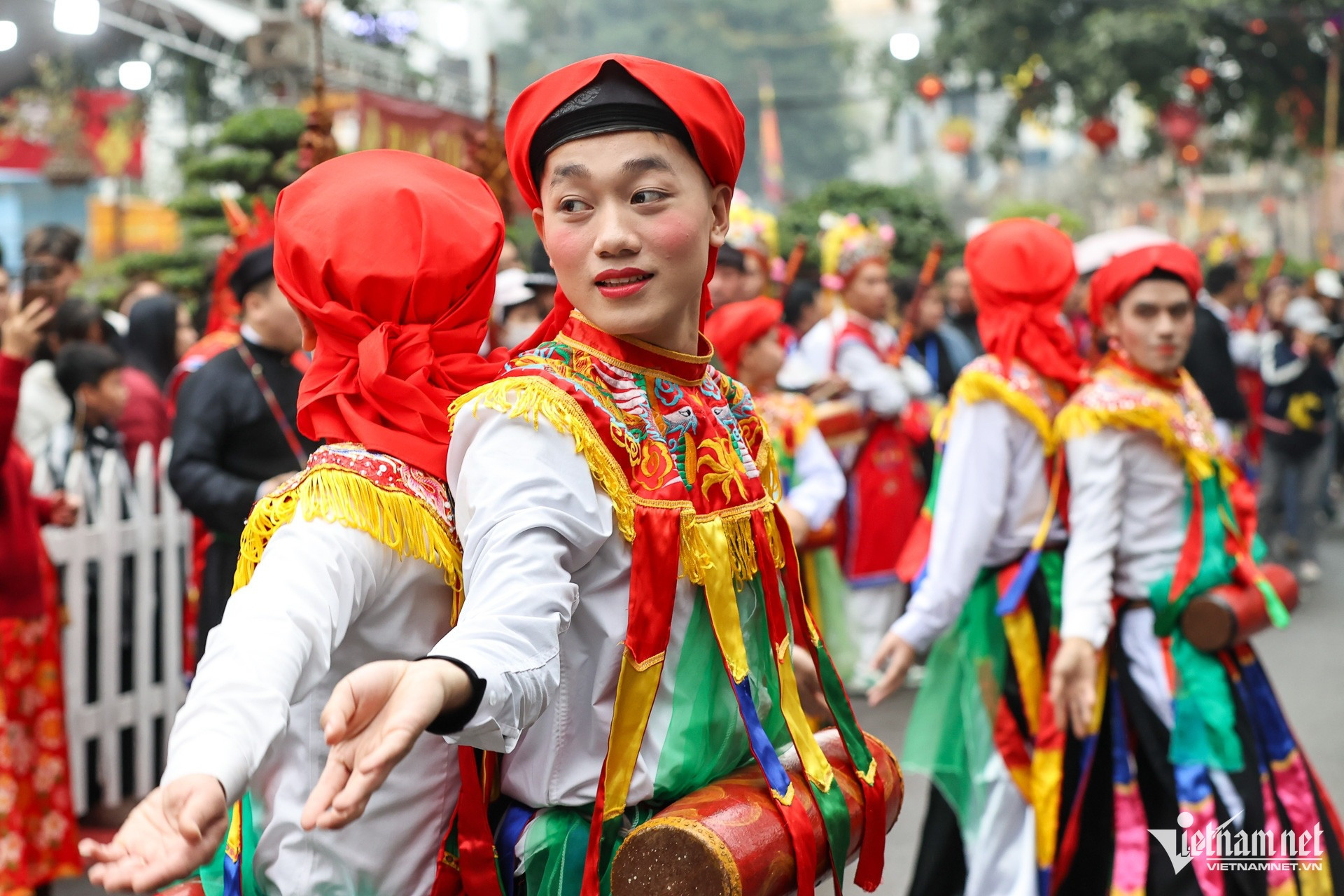
Following the 13th National Party Congress, institutional reform was reaffirmed as a strategic breakthrough, laying the groundwork for rapid and sustainable growth. Aligned with the Party’s directives and state policies, the cultural sector has aggressively pursued legal reforms to remove bottlenecks and mobilize resources for development.
Nguyen Van Hung, Minister of Culture, Sports and Tourism (MCST), said the ministry has operated under a framework of "three commitments, four initiatives, and five effectiveness indicators" to implement the Party’s vision throughout the 2021–2025 term.
A major milestone came during the National Assembly’s eighth session, when lawmakers approved the National Target Program for Cultural Development for 2025–2035. This ambitious framework introduces foundational policies to unlock resources and shape a development landscape for culture, sports, and tourism in the new era.
The cultural sector is now recognized for its management innovation and policy reform, directly contributing to economic and social progress.
A legal overhaul to end bureaucratic deadlocks
Recognizing institutional reform as a critical lever, the MCST has led the drafting and issuance of 146 legal documents, with seven laws enacted during this term. A key highlight is the passage of the 2024 Law on Cultural Heritage, which will replace the 2001 version (amended in 2009) and take effect on July 1, 2025.
This law introduces a bold decentralization framework, granting greater authority to local governments to manage and protect heritage sites - ensuring that communities become true stewards of their own cultural assets.
According to Associate Professor Nguyen Van Huy, Director of the Nguyen Van Huyen Museum, the law represents a game-changing solution for heritage conservation and promotion.
Associate Professor Do Van Tru, President of the Vietnam Cultural Heritage Association, emphasized that the law places full responsibility on provincial People's Committee chairpersons, ending the back-and-forth blame between central and local authorities.
Beyond heritage, institutional reform is also fueling the rise of cultural industries. On November 14, 2025, the Prime Minister signed Decision No. 2486/QD-TTg, approving the Strategy for the Development of Vietnam's Cultural Industries to 2030, with a vision to 2045.
The strategy sets ambitious targets: cultural industries will contribute 9% of GDP, employ 8% of the national workforce, and see digital cultural products account for over 80% of sector output. Export value is expected to grow by 9% annually. Vietnam aims to become a leading cultural and entertainment industry hub in Asia and a globally recognized player.
In line with Resolution No. 162/2024/QH15, which endorsed the National Target Program for Cultural Development 2025–2035, the MCST has issued Decision No. 3399/QD-BVHTTDL to launch Phase I (2025–2030).
This program will operate nationwide and extend to countries with deep cultural ties to Vietnam or large overseas Vietnamese communities.
With nine concrete goals and ten thematic components, the program aims to transform Vietnam’s cultural landscape, reinforce ethical and value systems for individuals and families, and strengthen Vietnamese cultural identity.
It also prioritizes focused investment, effective resource mobilization, and contributions to national economic growth - elevating cultural industries into a central pillar of Vietnam’s economy.
An additional focus is building a professional, high-quality cultural workforce with strong political commitment - ready to meet domestic needs and gradually engage in international markets.
Looking ahead, the sector is preparing a national cultural development resolution. This document is expected to redefine culture as both the spiritual foundation and a driving force for national development.
Digital transformation, national identity, and international integration are projected to be the three strategic pillars in the coming context.
To date, Vietnam’s legal framework for culture, sports, and tourism includes 15 laws, 77 decrees, 41 prime ministerial documents, and 290 circulars and joint circulars - laying a solid foundation for effective governance and a supportive environment for creativity, production, and business.
Alongside new legal drafting, the ministry has maintained a regular and thorough review of legal documents. Over 6,700 texts have been evaluated, with more than 280 laws and regulations either revised, repealed, or newly issued - removing obstacles and enhancing administrative efficiency in line with the Party’s goals for government streamlining.
A springboard for fast and sustainable development
These reforms not only enhance state governance but also provide renewed momentum for cultural advancement. A stronger cultural environment fosters creativity, enriches public engagement, and supports inclusive economic growth.
With key strategies now in motion, institutional reform is expected to be a powerful catalyst for rapid and lasting progress - ensuring that culture fulfills its rightful role as the spiritual bedrock of society and an endogenous driver of national development.
The 2021–2025 term is thus seen as a pivotal period in institutional reform, heritage preservation, and the emergence of cultural industries - firmly positioning culture at the heart of Vietnam’s sustainable development strategy.
Tinh Le
.svg)
