 Vietnamnet.vn

 Podcast



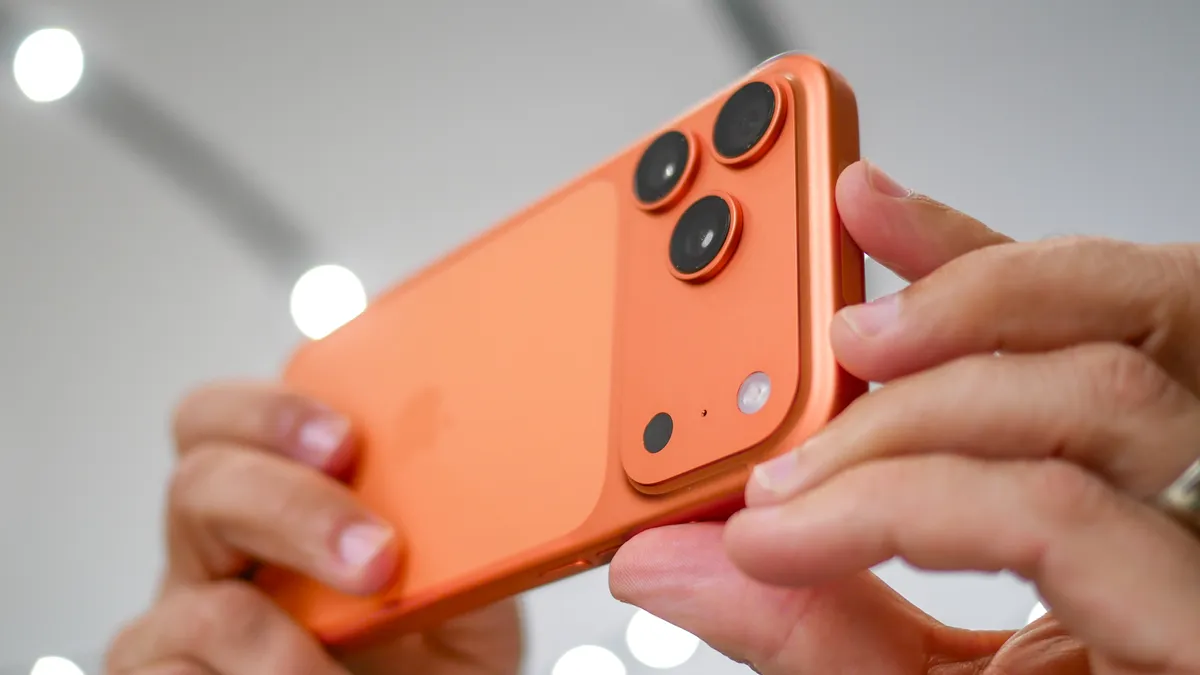
In today’s smartphone landscape, battery technology is creating a clear generational divide. On one side, major players like Apple and Samsung continue to rely on traditional lithium-ion batteries. On the other, Chinese manufacturers such as Oppo and Xiaomi have shifted toward advanced silicon-carbon technology.
This shift is more than theoretical. In practice, silicon-carbon batteries allow new flagship devices to pack around 25-35% more capacity than conventional lithium-ion cells. Even so, Apple and Samsung remain confident in promoting “all-day battery life” during product launches.
To be fair, that claim is not unfounded. Devices like the iPhone 17 Pro Max have previously outperformed many Android flagships, including the Galaxy S26 Ultra, in battery endurance tests.
However, the question remains: does that advantage hold when compared with devices equipped with significantly larger silicon-carbon batteries?
Hardware comparison: a clear edge for the challenger
Before testing real-world performance, the hardware tells part of the story. Apple does not officially disclose battery capacity, but multiple reliable sources suggest the iPhone 17 Pro Max carries a battery of around 4,823mAh (SIM tray version) or 5,088mAh for the eSIM version in the US.
This marks a notable upgrade over its predecessor. Beyond capacity, Apple has also introduced a vapor chamber cooling system for the first time to better manage heat from the A19 Pro chip. The device supports wired fast charging up to 40W.
By contrast, the Oppo Find X9 Ultra stands out with a silicon-carbon battery rated at 7,050mAh - among the largest in the “Ultra” flagship segment. It also supports 100W fast charging, far surpassing its competitor.
The device is further powered by the Snapdragon 8 Elite Gen 5 chip and a 3D Cryo-velocity cooling system, designed to sustain performance over extended use.
On paper, Oppo holds a clear advantage. The question is whether that translates into real-world performance.
Battery test: Oppo pulls further ahead
To find out, both devices were subjected to a continuous YouTube video playback test under identical conditions: 1080p resolution, Wi-Fi connection, 50% brightness, starting from 100% battery over three hours.
After three hours, the iPhone 17 Pro Max dropped to 90% - an impressive result on its own.
However, the Oppo Find X9 Ultra performed even better, retaining 94% battery after the same period.
The gap may appear small at first glance, but consuming just 6% battery over three hours of continuous playback is rare. Extrapolated over a full day, it suggests the Find X9 Ultra could easily handle intensive usage throughout the day.
Charging test: the gap widens further
Battery capacity is only part of the equation. Charging speed is equally critical.
The iPhone 17 Pro Max was tested using Apple’s 40W charger, while the Oppo Find X9 Ultra used 100W SuperVOOC fast charging technology.
Apple claims the device can reach 50% in about 20 minutes. In testing, it reached 35% after 15 minutes and 64% after 30 minutes - a strong result.
Yet again, Oppo came out ahead. The Find X9 Ultra reached 44% after 15 minutes and 74% after 30 minutes, despite charging a significantly larger battery.
This makes the result even more striking, as faster charging combined with higher capacity creates a dual advantage.
Overall, the tests show that Apple has made meaningful improvements in both battery life and charging speed with the iPhone 17 Pro Max. However, competitors from China are moving a step further with silicon-carbon battery technology.
The Oppo Find X9 Ultra not only excels in battery performance but also impresses with its camera and overall design, making it one of the most well-rounded smartphones currently available.
What stands out is that if Apple and Samsung adopt this new battery technology in the near future, the competitive landscape could shift dramatically. For now, however, they remain in a catching-up position compared to what Oppo and other Chinese brands are achieving.
In the race for smartphone battery innovation, the future clearly belongs to silicon-carbon - and Oppo is among those leading the way.
Hai Phong
.svg)
