 Vietnamnet.vn

 Podcast



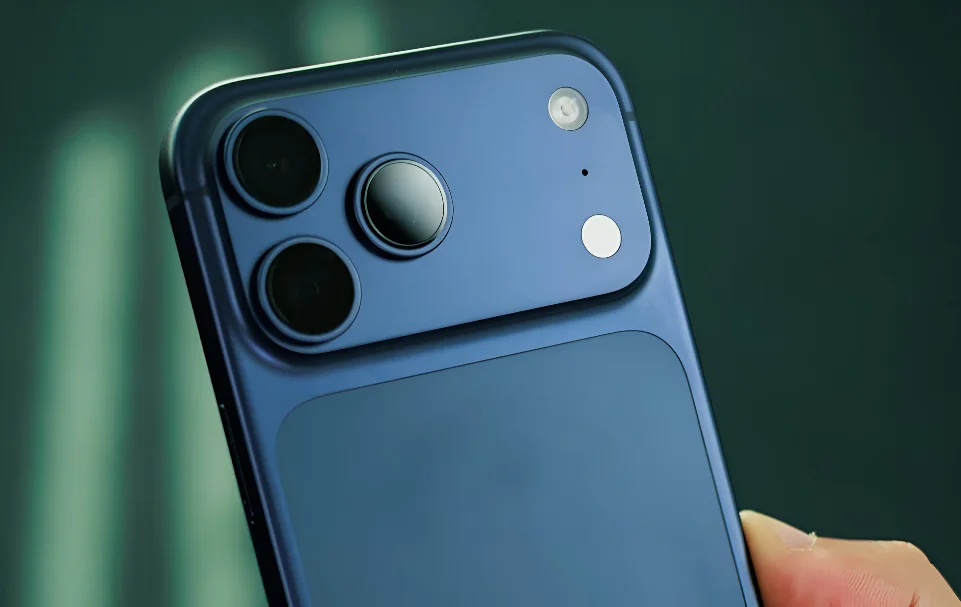
Apple is preparing to turn the iPhone 18 Pro into a true “5G powerhouse”. Tests of its in-house modem show that the company is not only aiming for hardware independence but also targeting a significantly improved connectivity experience.
The story began with the iPhone 16e, where Apple впервые introduced its own mobile modem, known as C1.
This chip marked a strategic move: reducing reliance on Qualcomm, the long-time partner that has supplied most of the connectivity solutions for iPhones.
The financial motivation is clear. Apple no longer wants to pay substantial licensing fees to Qualcomm for modems in its premium devices. But the more important factor lies in long-term vision.
If Apple can perfect its in-house modem the way it did with Apple Silicon, the entire iPhone ecosystem - and other devices - will benefit from improved performance, better power efficiency and deeper integration with software.
So where does Apple’s modem development stand today? Is C1 good enough? And what happens if reports are correct that the iPhone 18 lineup will fully switch to Apple-designed modems?
From C1 experiment to C1X rivaling Qualcomm
The initial C1 modem could not yet match Qualcomm’s solutions. Apple was aware of this, which is why it only deployed the chip in mid-range models - essentially as a real-world testing phase.
Apple then introduced an upgraded version, C1X, featured in the ultra-thin iPhone Air. This marked a significant leap forward.
Within just one generation, Apple improved performance to a level that could directly compete with Qualcomm’s top-tier modem.
In tests, Apple’s new modem performed impressively against the Qualcomm X80 chip used in the iPhone 17 lineup.
Compared to C1, C1X nearly caught up with X80 across key metrics - download speed, signal stability and energy efficiency.
The performance gap has become so small that most users would hardly notice any difference.
More importantly, Apple is not stopping there. Recent reports indicate the company is developing the C2 modem, which is expected to power the iPhone 18 lineup instead of C1X.
Looking at Apple’s transition from Intel chips to the M1 processor in Macs offers a useful comparison. When Apple introduced M1, the MacBook lineup was transformed.
Once criticized as expensive machines with underwhelming performance, MacBooks became powerful devices with impressive battery life.
Apple Silicon not only improved performance but also enabled deep optimization between hardware and software. Subsequent generations of M-series and A-series chips have continued to deliver strong gains, proving Apple’s strength in iterative upgrades.
If this pattern repeats with modems, C2 could bring a similar leap - not just in 5G speed, but also in signal stability, lower latency and better energy efficiency.
iPhone 18 Pro could deliver a major boost
One of the biggest advantages of Apple’s in-house modem is its tight integration with iOS. By controlling the entire stack - from chip to software - Apple can fine-tune power consumption with greater precision.
This may explain why Apple tested C1X on the iPhone Air, a device with a smaller battery that requires maximum optimization.
If C2 continues this progress, the iPhone 18 lineup could strike a balance between 5G speed and battery life that rivals struggle to achieve.
A more efficient modem would also reduce battery drain during 5G usage, a common weakness in many smartphones today.
For Apple, improvements in energy efficiency often translate into a noticeably better user experience.
Under Apple’s new release roadmap, the standard iPhone 18 and next-generation iPhone Air may not launch immediately.
This suggests that the C2 modem will likely debut first on high-end models such as the iPhone 18 Pro, iPhone 18 Pro Max, and potentially even a future foldable iPhone.
If Apple is confident enough to equip its flagship devices with the latest modem, it signals strong trust in the technology. Users can expect better 5G reception, higher speeds and lower power consumption.
From C1 to C1X and soon C2, Apple is moving quickly in the modem race. With its track record in hardware-software optimization and the success of Apple Silicon, the iPhone 18 Pro is likely to deliver a superior 5G experience.
For those who care about network speed, signal stability and battery life on 5G, waiting for the iPhone 18 Pro and iPhone 18 Pro Max could well be worth it.
Hai Phong
.svg)
