 Vietnamnet.vn

 Podcast


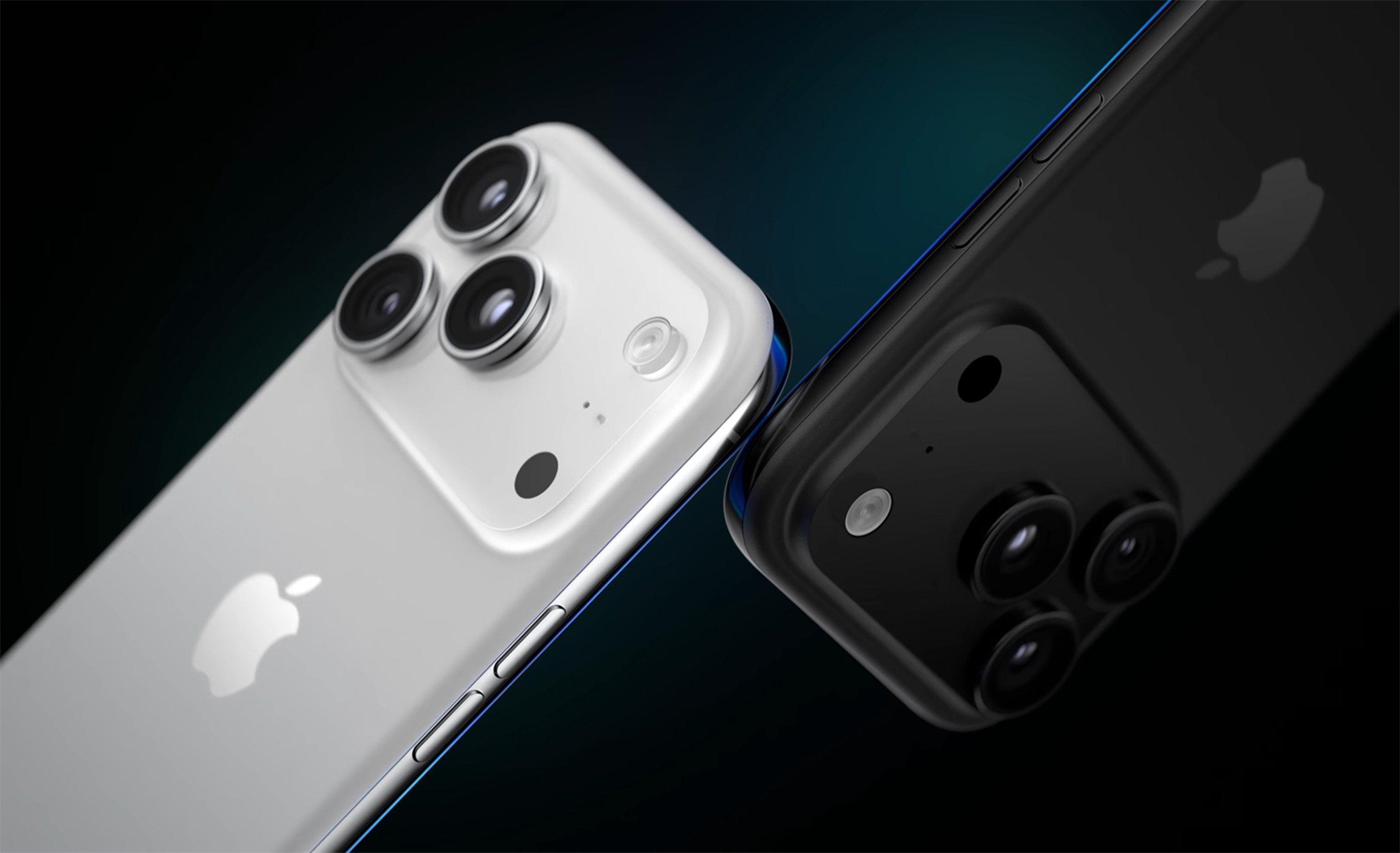
Rather than competing to increase megapixel counts, Apple is reportedly focusing on a triple-layer stacked image sensor, a 17nm logic circuit and LOFIC technology to extend dynamic range on the iPhone 20 Pro Max.
These upgrades could improve processing speeds, photography in challenging lighting conditions and overall image quality.
Apple has yet to announce the iPhone 20 Pro Max or confirm any changes to its camera system. However, supply chain leaks are offering glimpses into the company's potential development strategy.
According to prominent leaker Ice Universe on Chinese social media platform Weibo, the 20th-anniversary iPhone could feature a main camera sensor with a logic layer manufactured using a 17nm process.
The information builds on earlier reports about triple-layer stacked image sensors and LOFIC technology, suggesting Apple may be pursuing more fundamental improvements at the semiconductor level.
17nm process: Faster processing and lower power consumption
The most notable aspect of the latest iPhone 20 Pro Max camera leak is not its resolution but the 17nm manufacturing process reportedly used for the image sensor's logic layer.
This component is responsible for reading pixel data, transmitting signals and supporting the processing of captured information.
Moving to a smaller manufacturing process for the logic layer could improve circuit efficiency and accelerate image data transmission without increasing the physical size of the sensor's light-sensitive area.
In practice, this upgrade could deliver three significant benefits.
The first is reduced power consumption. More efficient logic circuits could lower energy requirements during continuous photography, burst shooting and extended video recording.
The second is faster pixel readout. Higher data transmission speeds could reduce rolling shutter distortion, which commonly occurs when photographing fast-moving subjects.
Faster readout could also support multi-frame image processing, helping produce higher-quality photographs.
Finally, the new manufacturing process could improve thermal management. More energy-efficient processing circuits could generate less heat, particularly during demanding photography and video recording tasks.
However, adopting a 17nm process does not necessarily mean larger pixels or greater light-gathering capabilities.
Its primary advantage lies in accelerating data processing, allowing Apple's image signal processor and computational photography algorithms to operate more efficiently.
Triple-layer stacked sensor and LOFIC technology
Alongside the 17nm process, another significant rumored camera upgrade for the iPhone 20 Pro Max is a triple-layer stacked image sensor.
Unlike conventional two-layer stacked sensors, a triple-layer architecture separates light capture, signal processing, and data storage or control functions into distinct layers.
This arrangement could reduce electrical interference between components while increasing data transmission bandwidth.
If successfully implemented, the technology could allow the sensor to process larger volumes of image data in less time, laying the foundation for more advanced photography features.
Another technology reportedly included in Apple's 2027 camera development roadmap is LOFIC (Lateral Overflow Integration Capacitor).
The technology uses integrated capacitors to increase the charge storage capacity of individual pixels, improving image capture in environments with high lighting contrast.
With LOFIC, the sensor could preserve more detail in both bright highlights and dark shadows within a single frame.
This would be particularly useful for backlit photography, landscapes with brightly illuminated skies and scenes featuring substantial differences between light and shadow.
Combining a triple-layer stacked sensor, LOFIC technology and a 17nm logic circuit within a single camera system could deliver significant improvements in high dynamic range (HDR) imaging and processing speeds.
However, no reports have confirmed that all three technologies will be integrated into the same sensor module.
Variable aperture could enhance hardware-level light control
Another potential upgrade for future iPhone Pro models is the combination of high-speed image sensors and mechanically adjustable apertures.
Apple introduced mechanical variable aperture technology on the iPhone 18 Pro Max. Further development of this technology in subsequent generations, including the iPhone 20 Pro Max, could provide more flexible light control across different shooting conditions.
When photographing outdoors under intense sunlight, narrowing the aperture could help prevent overexposure while maintaining appropriate shutter speeds for more natural-looking images.
Conversely, in low-light environments or indoor settings, a wider aperture combined with low-noise sensor readout could preserve more shadow detail and reduce motion blur.
Hardware-level aperture adjustment could also provide more natural control over depth of field, benefiting both still photography and extended video recording.
Hai Phong

