 Vietnamnet.vn

 Podcast



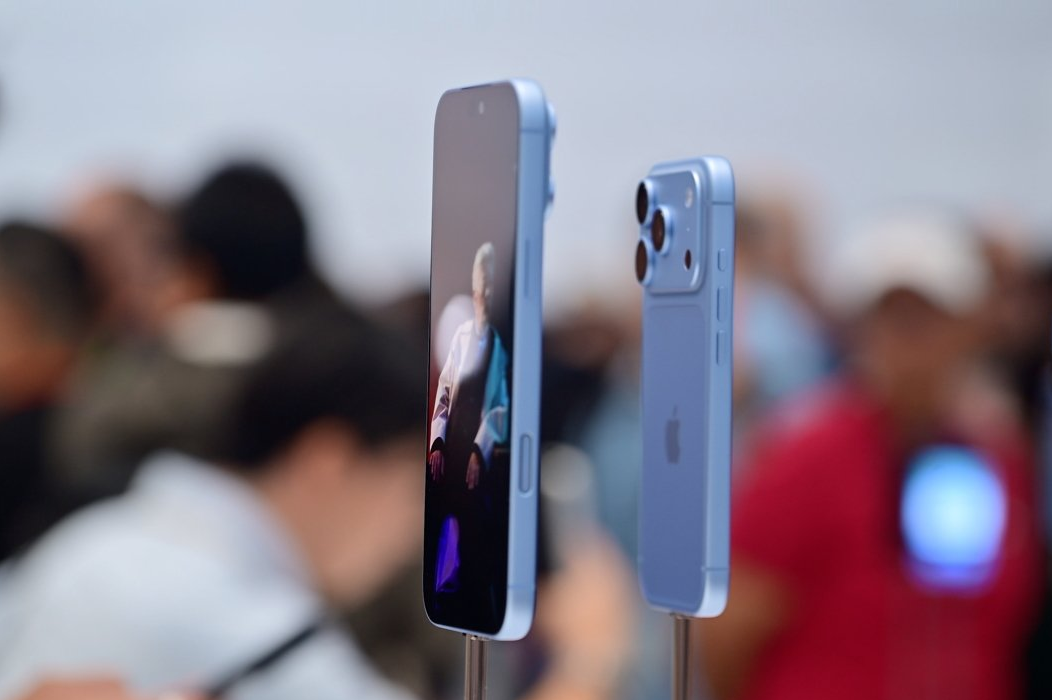
Is there something wrong with the iPhone 18 Pro Max? Judging purely by its specifications, the answer is almost certainly no.
Apple has repeatedly highlighted the strengths of its latest Pro-generation iPhones, from longer battery life and improved thermal management to a brighter, more energy-efficient and advanced display.
Most notable is the A20 Pro chip, manufactured on a 2nm process. It represents one of the biggest technological upgrades in the new iPhone generation, potentially delivering significant gains in both performance and energy efficiency.
Prices have risen, too, although Apple is hardly alone. Samsung and Google have also added $100 to the prices of some of their 2026 flagship models, including the Galaxy S26 and Pixel 11.
Yet early demand for the iPhone 18 Pro and iPhone 18 Pro Max appears to be significantly weaker than for the previous generation of Pro models.
Global inflation, higher living costs and pressure from housing and fuel expenses are undoubtedly factors, but they may not tell the whole story.
This time, Apple’s own product strategy may also be working against its flagship.
iPhone Duo takes away the Pro Max’s exclusivity
The first reason is the iPhone Duo, Apple’s first foldable iPhone.
It was arguably the product that drew the most attention at Apple’s Sept. 9 event. The company entered the foldable smartphone market roughly seven years after the earliest competitors, but that has done little to diminish interest in the device.
Instead, the novelty of the iPhone Duo may be giving even loyal Apple fans reason to reconsider their next purchase.
If an Apple customer wants a new iPhone in 2026, why necessarily choose an iPhone 18 Pro Max with a relatively familiar design and user experience when, for the first time, there is an entirely new foldable iPhone?
That is the challenge.
Beyond its technological differences, the iPhone Duo offers something harder to quantify: novelty and status.
Consumers who spend heavily on technology do not always buy a device because they genuinely need additional performance. Sometimes they simply want something that feels newest, most distinctive and most interesting.
The iPhone Duo fits that desire.
There is, of course, a very practical obstacle: most customers cannot afford to buy both.
The iPhone Duo starts at around $2,000, while the iPhone 18 Pro Max begins at $1,300. Buying both would mean spending roughly $3,300.
At that price, even some of Apple’s most enthusiastic fans may think twice before adding an iPhone 18 Pro Max to their shopping cart.
Delayed standard iPhone 18 gives buyers another reason to wait
The second reason stems from Apple’s decision to delay the standard iPhone 18.
Traditionally, consumers shopping for a new iPhone have had several new models to choose from at roughly the same time. With the standard iPhone 18 absent from the initial launch, however, this year’s upgrade decision has become more complicated.
For anyone considering an iPhone 18 Pro or iPhone 18 Pro Max, an obvious question arises: what happens when the cheaper iPhone 18 arrives?
The standard model does not need every feature found on the Pro versions.
If Apple gives the iPhone 18 enough of the features consumers actually care about, the practical gap between the two models could narrow considerably.
Some customers may then conclude that spending $1,300 or more on the iPhone 18 Pro Max is unnecessary.
In other words, by delaying the standard iPhone 18, Apple may inadvertently encourage some customers to wait rather than buy the Pro Max immediately.
The 2027 iPhone 20 looms over this year’s flagship
The third reason could be even more significant: the iPhone 20 is expected in 2027.
This will not be just another year on the iPhone calendar. The year 2027 marks two decades since the original iPhone was introduced, transforming the mobile phone industry.
Apple certainly understands the significance of that anniversary. It is therefore difficult to imagine the company treating the iPhone 20 as merely another annual update.
Nobody outside Apple knows exactly what the company is preparing. Rumors have already raised the possibility of a substantial redesign, although consumers should be cautious about setting expectations too high for a device that has yet to be unveiled.
Even so, anticipation surrounding the iPhone 20 alone creates a difficult proposition for the iPhone 18 Pro Max.
For someone who already owns a relatively recent iPhone, why spend $1,300 this year when they could keep their existing device for another year and see what Apple delivers for the iPhone’s 20th anniversary?
If the iPhone 20 turns out to be a major leap forward, those who waited may be glad they did.
If it proves less revolutionary than expected, the iPhone 18 Pro Max will likely be available at a more accessible price by then anyway.
That creates a difficult psychological hurdle for a premium smartphone arriving just one year before a major anniversary.
It is too early to call the iPhone 18 Pro Max a failure
None of this means the iPhone 18 Pro Max is destined to fail.
Lower initial preorder figures do not necessarily translate into weak sales across the product’s entire lifecycle. Once the launch excitement fades, demand for the iPhone 18 Pro Max could improve substantially.
Apple’s most premium conventional iPhone could still prove to be a late bloomer, particularly if consumers come to value its chip, battery life, display and thermal improvements after spending more time with the device.
For now, however, Apple faces an unusual paradox: it has inadvertently given its own customers several compelling reasons not to rush out and buy its latest flagship iPhone.
Hai Phong
.svg)
