 Vietnamnet.vn

 Podcast



A new report confirms what many users have long suspected: iPhones consistently outperform their Android counterparts in long-term value retention. Five years after launch, Apple devices continue to command impressive resale prices-sometimes double or triple those of similar Android models.
For many buyers-especially those shopping for children or seeking reliable devices for basic use-the ability to resell a phone later at a fair price has become a key consideration. While cutting-edge specs aren’t always necessary, ongoing security updates and good resale value can turn a five-year-old phone into a surprisingly valuable asset.
In fact, devices released between 2020 and 2021 are still selling at unexpected prices, with some iPhone models holding on to more than a quarter of their original value.
That means many households could be sitting on a few hundred dollars tucked away in drawers, simply by holding onto an old but functional phone.
Apple dominates long-term resale rankings
A five-to-six-year depreciation study published by MakeUseOf shows Apple leading by a wide margin. On average, iPhones lose around 70% of their value over five years. That may sound steep-until you compare it to Samsung and other Android brands, which typically lose more than 80%.
The iPhone 12 Pro Max is a standout. Launched in 2020, it still fetches around USD 275 on the resale market-roughly 25% of its launch price. That figure is significantly higher than similarly aged Samsung or Google phones.
While the Google Pixel 5 retains a similar percentage (around 25%), this is largely because its original retail price was lower. In terms of performance, ecosystem integration, and software support, the iPhone 12 Pro Max clearly outshines it, making it the smarter long-term buy.
2021 lineup continues the trend
Apple’s dominance in value retention continued into the next generation. The iPhone 13 Pro Max, released in 2021, still holds about 32% of its original value five years later-more than any other phone in the comparison group.
In contrast, Samsung’s Galaxy S21 and S21 Ultra have both lost over 80% of their initial value, creating a steep drop-off for owners hoping to resell.
According to MakeUseOf, a major reason for this disparity is the broader distribution and shorter software support cycles of many Android phones. Until recently, Android manufacturers typically offered fewer years of software updates, which led to faster obsolescence.
Longevity is Apple’s secret weapon
Take software support, for example: the iPhone 12 will continue receiving updates until at least 2027-seven years after launch. Samsung’s Galaxy S20, by contrast, only received three Android version upgrades and five years of security patches, which ended in 2025.
Even though Samsung and Google have both pledged to offer seven years of support for newer flagship models, Apple still holds the edge in long-term trust and resale confidence.
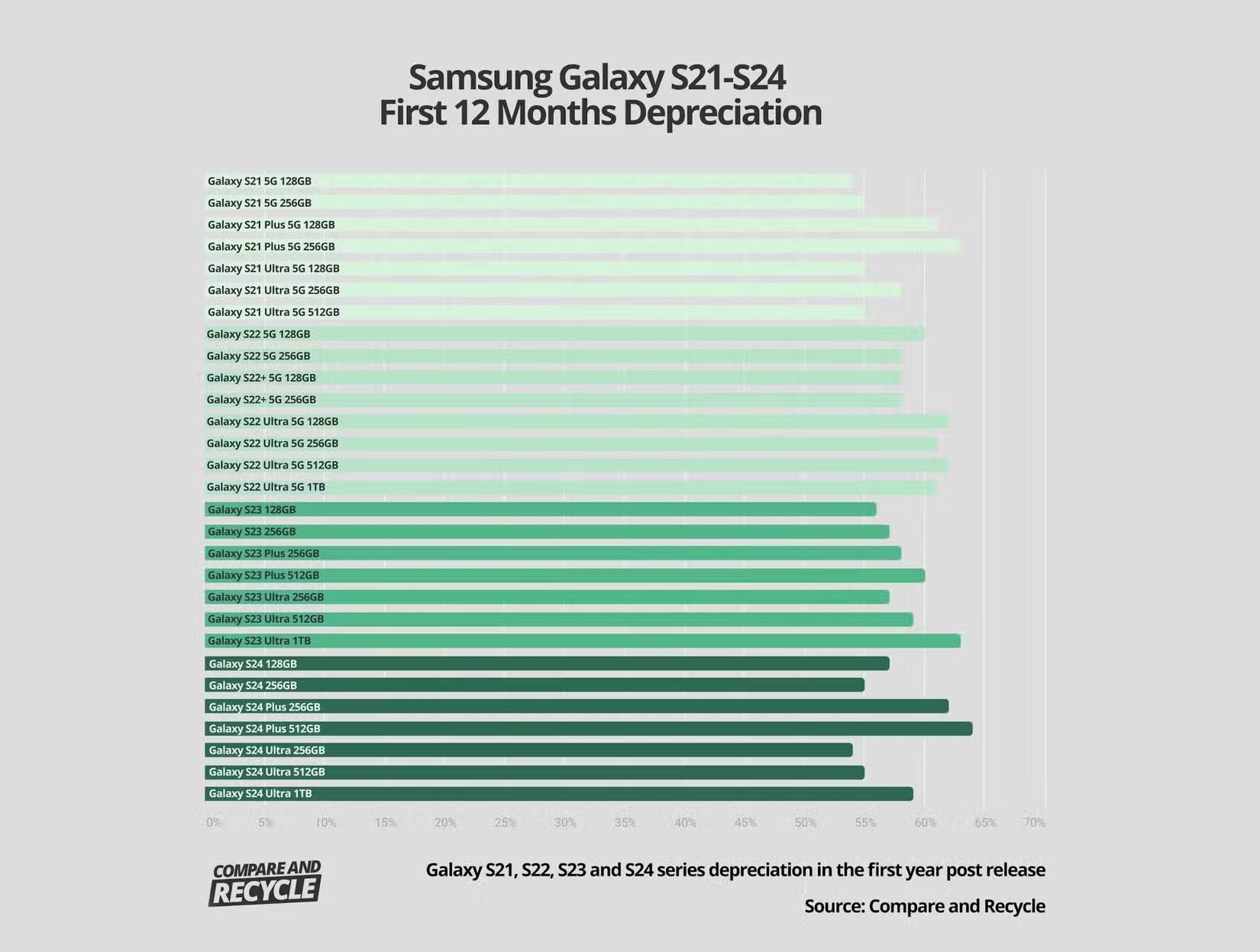
Data from Compare & Recycle shows modest improvements in Samsung’s recent depreciation rates. The Galaxy S22 lost 60% of its value in the first year, followed by 59% for the S23 and 58% for the S24. Still, these numbers are significantly higher than Apple’s.
In the end, if your goal is to buy a smartphone that will hold its value, stay updated, and be easier to resell down the line, the iPhone remains the most financially sound choice.
Du Lam
.svg)
