 Vietnamnet.vn

 Podcast



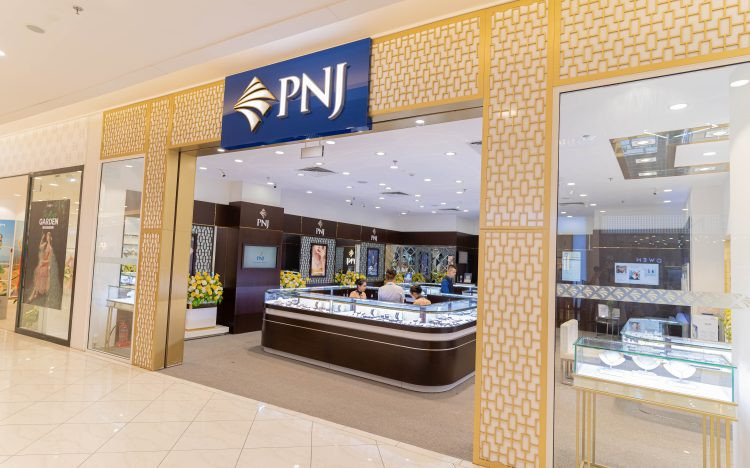
PNJ plans 550 million-share offering as stock continues to tumble
Phu Nhuan Jewelry JSC (PNJ), chaired by Cao Thi Ngoc Dung, has released additional documents for an extraordinary general meeting of shareholders scheduled for Oct. 21.
Most notably, the company is seeking approval for a private placement of up to 550 million common shares to professional securities investors.
The shares would be subject to a transfer restriction of at least one year.
The proposed offering price would be no lower than the average closing price of PNJ shares over the 30 trading sessions preceding the board’s approval of the issuance price, and no lower than the company’s book value per share.
At the end of June 2026, PNJ’s book value stood at around VND27,200 per share.
PNJ plans to allocate 60% of the proceeds to business activities related to adjustments to its exchange and repurchase policies for previously sold products.
Another 20% would be used for working capital and other financial needs, while the remaining 20% could be used to repay short-term debt.
The scale of the proposed offering is striking.
The 550 million new shares would exceed PNJ’s approximately 511.7 million shares currently outstanding. If the entire placement goes ahead, the number of new shares would be equivalent to more than 107% of the existing total.
The capital-raising proposal comes as PNJ pursues a series of restructuring measures.
The company plans to raise up to VND8 trillion through various channels to bolster its financial resources.
PNJ is also asking shareholders to approve cutting its 2026 cash dividend from 20% to zero and reducing the 2025 dividend from 20% to 10%. It plans to close 25-30 stores while opening around 10 new locations.
The company has also revised its product repurchase and exchange policy.
From Sept. 30, customers selling back certain gold products will receive full payment after two days, while payment for diamonds, diamond jewelry, colored gemstones, pearls and loose diamonds can still take up to 120 days.
The changes come as PNJ faces liquidity pressure.
The company previously said it spent trillions of dong buying back gold and diamonds from customers in the first weeks of July alone.
On the Ho Chi Minh Stock Exchange, PNJ shares hit their daily downside limit for three consecutive sessions through Sept. 30, following declines in the previous four sessions.
The stock fell from VND36,900 on Sept. 21 to VND26,600 on Sept. 30.
Compared with around VND83,000 in early March, PNJ has lost nearly 68% of its market value per share, wiping about VND30 trillion off the company’s market capitalization.
On Sept. 30 alone, sell orders for more than 26 million PNJ shares remained unmatched at the floor price.
550 million new PNJ shares: Where will the money come from?
What makes PNJ’s capital-raising plan particularly significant is its sheer size.
At the company’s book value of VND27,200 per share, an offering of 550 million shares would be worth nearly VND15 trillion.
That is even larger than PNJ’s current market capitalization of around VND13.6 trillion.
If all the new shares are issued, they would account for approximately 51.8% of PNJ’s total post-offering shares, potentially bringing a substantial change in its ownership structure.
The dilution for existing shareholders could be significant if they do not participate proportionately in the new capital.
Meanwhile, the family of PNJ Chairwoman Cao Thi Ngoc Dung has also been reducing its stake.
Dung’s two daughters sold a combined 25 million shares in September.
According to disclosed figures, Dung, her family members and related parties still hold around 58.16 million shares, equivalent to approximately 11.36% of the company, excluding the 9 million shares Cao Ngoc Duy has registered to sell in October.
If the group retains all 58.16 million shares and PNJ issues the full 550 million new shares, its stake would fall from around 11.36% to roughly 5.5%.
The proportion would decline further if the additional registered share sale is completed.
A successful placement could therefore significantly reshape the balance of ownership at PNJ.
One major question remains unanswered: who will buy the shares?
Capital is no longer cheap.
By late September, a number of banks had raised 12-month deposit rates to as high as 9-10% a year.
Vietnam’s stock market is also facing heavy selling pressure across multiple sectors, while PNJ itself has lost nearly 68% of its value since early March.
Investors considering putting as much as VND15 trillion into PNJ would therefore be taking on not only dilution and broader market risks, but also betting on the company’s ability to recover from its current crisis of confidence and liquidity.
Institutional investors, long-term investment funds, strategic investors or other organizations with substantial financial capacity could potentially participate.
However, neither the identities of the investors nor the final offering price will be known until the search, negotiation and allocation process is completed.
PNJ still has assets that could appeal to long-term investors.
It owns a strong jewelry brand, operates a network of more than 430 stores and has large-scale jewelry manufacturing capabilities.
In 2025, PNJ generated nearly VND35 trillion in revenue and VND2.829 trillion in net profit. Jewelry accounted for around 80% of total revenue.
An analysis by Rong Viet Securities (VDSC) estimated PNJ’s share of Vietnam’s jewelry retail market at around 22% in 2025, underscoring its significant brand and distribution advantages.
Vietnam’s jewelry market also retains long-term growth potential, with its size estimated at around $2 billion in 2026 and gold accounting for a large proportion.
However, surging gold prices could weigh on jewelry demand, while the recent diamond incident has made rebuilding consumer confidence a major challenge for the business.
PNJ’s proposed 550 million-share placement is therefore about more than raising fresh capital. It is also a test of whether the company can restore liquidity and rebuild confidence.
A fully subscribed offering could provide PNJ with substantial resources for its restructuring, but it could also dramatically reshape the company’s ownership.
The question now is: who is prepared to make that bet?
Manh Ha
.svg)
