 Vietnamnet.vn

 Podcast



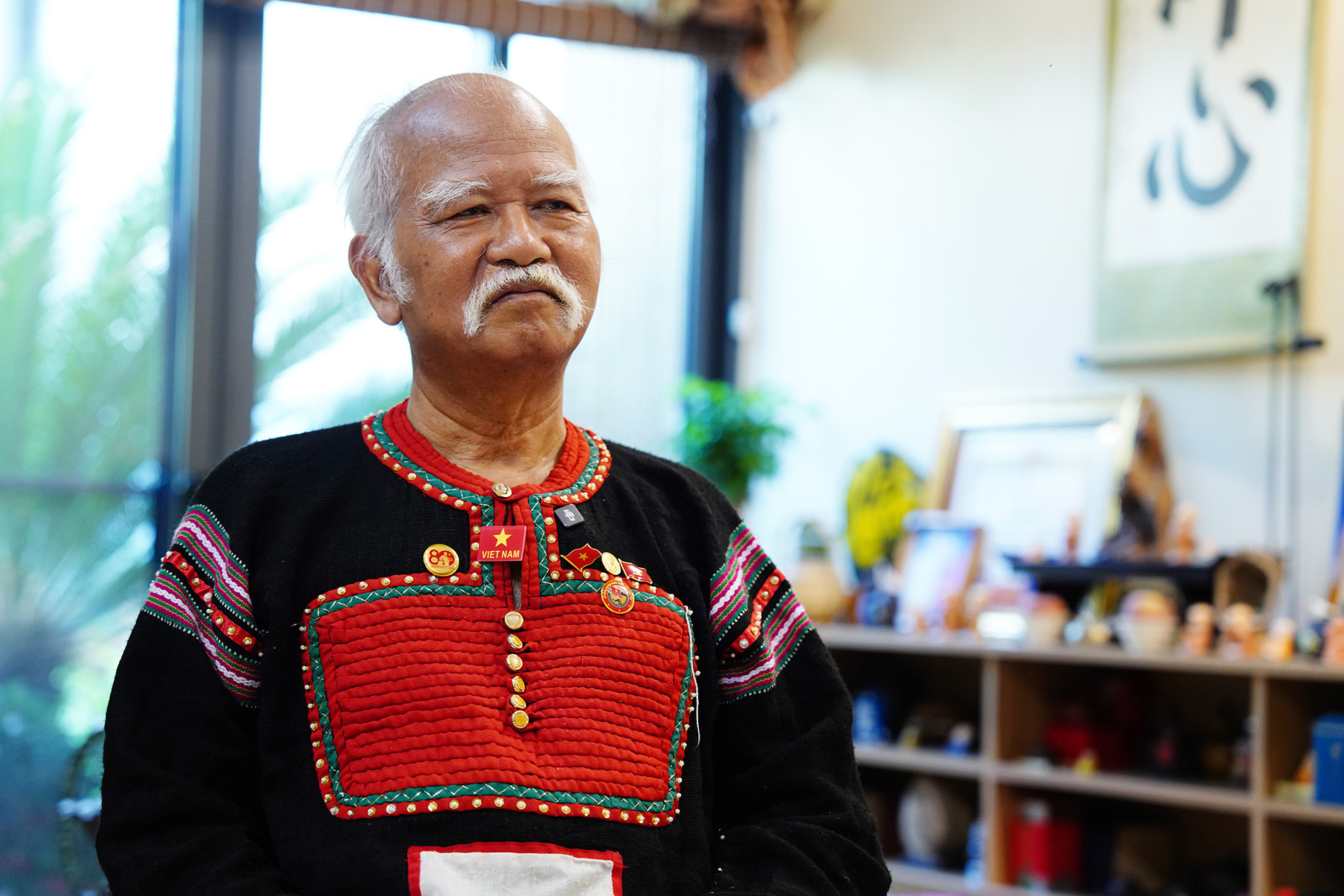
Roads had not yet reached the villages, homes had no electricity, clean water was unavailable, schools were sparse, and healthcare stations were almost nonexistent.
From that starting point, his life is a long journey: from the villages to the nation, and then from the nation back to the villages through policy, parliamentary speeches and countless field trips.
Ksor Phuoc was born and raised in the Central Highlands, the great forests that endowed him with resilience, straightforwardness, and endurance; it was also the villages that nurtured within him a profound love for his compatriots.
In Ksor Phuoc, people witnessed a distinctive type of official. He did not merely read reports. He traveled to the exact locations to see with his own eyes and hear with his own ears. He once visited very small ethnic minority regions, remote villages that required scaling high mountains to access, and places where only a handful of scattered roofs dotted a single hillside.
He said: “If you work in ethnic affairs but do not visit the grassroots, you cannot understand the people."
That is why one sentence has guided him throughout his career in ethnic affairs: “People working in ethnic affairs must look directly at the truth and speak the truth.”
The truth in ethnic minority regions was not always easy to hear. It could mean poverty, disease, drug addiction, consanguineous marriage, superstition, lack of production land, shortages of clean water and weak grassroots officials. But if people avoided the truth, policies would never reach the places that needed them most.
He once recalled visiting a mountainous area in northern Vietnam where local officials said nearly every household had someone addicted to drugs. In some regions, ethnic communities lived too scattered, with just a few households on each mountain, making schools, healthcare, electricity, water and transportation extremely difficult challenges.
Some outdated customs and practices were not merely cultural issues but obstacles to the development of entire communities.
What made him respected was that, as Minister and Chair of the Committee for Ethnic Minority Affairs and later Chair of the National Assembly’s Ethnic Council, he never viewed ethnic minorities with pity. He looked at them with compassion and respect.
He understood that the State must provide support, and policies must come with budgets, but people could not remain passive beneficiaries. They had to become the driving force of change themselves. That is why he placed particular emphasis on the phrase “internal strength.” He said policies supporting ethnic minorities must aim to “promote internal strength so they can progress alongside the rest of the country.”
This idea became the core of how he viewed ethnic affairs: helping people not so they would depend on support, but so they could stand up through their own strength. That same philosophy followed him into parliament.
Officials should listen to the people, not lecture them
For those who followed parliamentary sessions, Ksor Phuoc was known as a straightforward and responsible delegate who dared to say what needed to be said. That came from a principle he considered fundamental for any National Assembly delegate: “Love the country and love the people.”
He once said: “Laws can be amended, the Constitution can be adjusted, but love for the country and the people cannot be changed.”
He advised officials visiting local communities: “You must take notes, observe and listen to the people instead of lecturing them.”
He believed that if officials approach people with an attitude of giving orders or handouts, the people would distance themselves. But if they come with a willingness to listen, the people would open their hearts.
In Ksor Phuoc, there was both the decisiveness of a soldier and the gentleness and depth of a village elder. He could speak bluntly at major conferences and once even declared that if what he reported was untrue, his superiors could dismiss him.
When discussing ethnic affairs, he always viewed them through the broader perspective of national unity. To him, ethnicity was not merely the story of Vietnam’s 53 ethnic minority groups. It was the story of all 54 ethnic groups together building one Vietnamese nation united in cultural diversity.
He emphasized equality, solidarity, mutual respect and mutual support. In particular, he often mentioned the word “sincerity” in Ho Chi Minh’s thinking on ethnic policy. Sincerity means acting sincerely; showing genuine respect; practicing real equality; staying close to the people and truly helping them.
Thai An
.svg)
