 Vietnamnet.vn

 Podcast



Nearly 100 doctors and medical staff stayed up through the night, preparing a complex operation to transfer life-saving organs from a brain-dead patient to six critically ill individuals. But at the final hour, everything collapsed in silence - because of one unexpected voice.
At 6 a.m., the operating room at E Hospital in Hanoi was meant to witness something sacred: the extraction of a heart, liver, lungs, and kidneys from a man declared brain-dead, each destined to save a life. But instead of the green light, a sudden objection stopped it all.
A sleepless night of hope
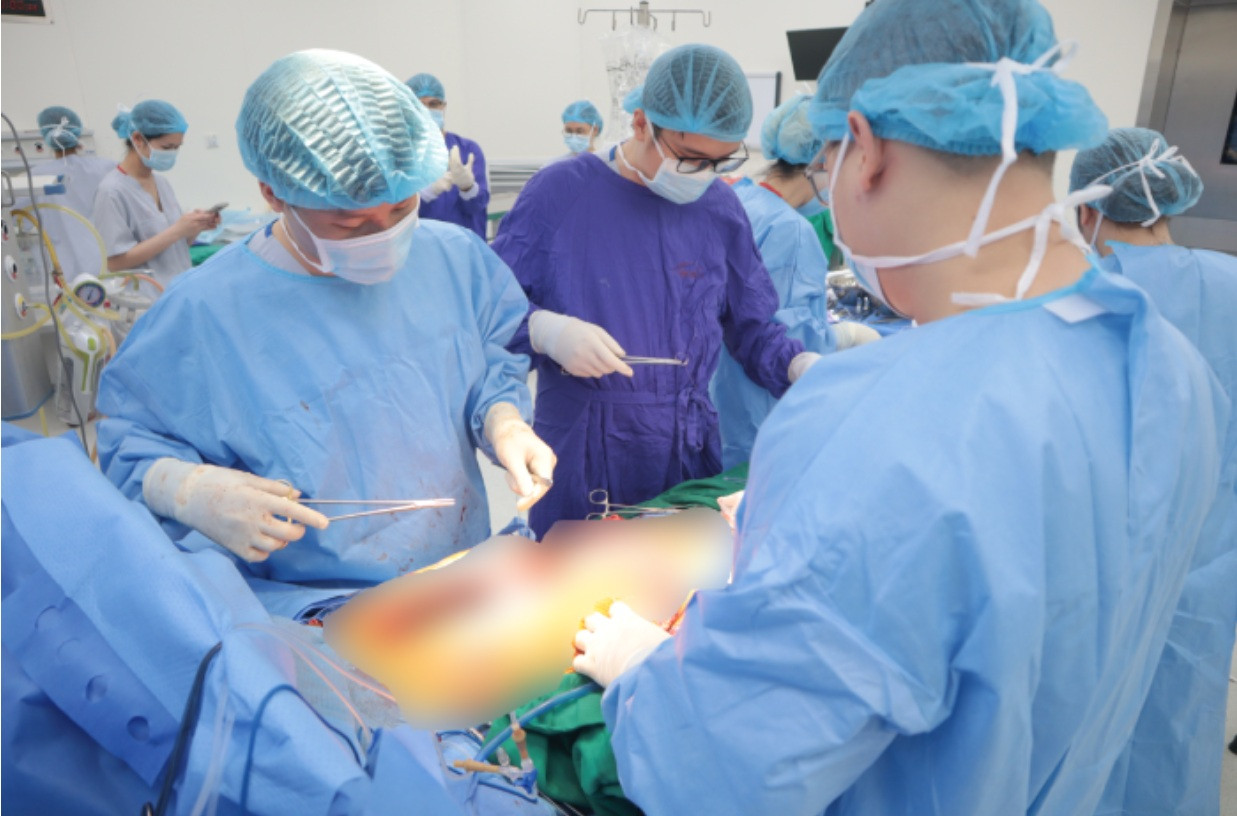
Dr. Mai Van Luc from the Department of Urology and Andrology at E Hospital recalled the case. A middle-aged male patient had been admitted following a severe traffic accident. A “red alert” emergency was triggered, and doctors gave their all - but the traumatic brain injury was beyond recovery. After three evaluations, the man was officially declared brain-dead.
At that point, the hospital’s social workers faced their most difficult task: convincing the family to donate his organs. After deep and emotional conversations about the meaning of organ donation, his parents and wife agreed - despite being consumed by grief. They chose to let their loved one’s heart continue beating in someone else, and his eyes keep seeing the world.
Immediately, the National Coordination Center for Human Organ Transplantation mobilized nearly 100 doctors, surgeons, and specialists from across Vietnam. Coordination meetings ran through the night.
At one end, a patient with end-stage heart failure, reliant on ECMO, waited for a heart to live. At others, two patients with liver failure, two with kidney failure, and one needing a lung transplant clung to hope.
As the hours passed, everything was readied: donor–recipient matching, compatibility tests, medications, legal documentation, and personnel. The plan was in place. All that was left was for the operating room lights to switch on at 6 a.m. - and for lives to be reborn.
A single objection that changed everything
But then, at “the 89th minute,” something unimaginable occurred.
A man claiming to be a relative arrived at the hospital. Without warning, he declared, “Our family does not agree to organ donation. Absolutely not.”
He reportedly questioned the hospital’s motives, accusing staff of pushing for organ donation out of personal gain - though with no evidence.
That single sentence struck like lightning on a clear day. Everything stopped. The surgical teams stood still. Their plans, their effort, their hopes - gone in an instant.
“This groundless suspicion shattered the sleepless efforts of hundreds of medical staff,” said Dr. Luc. “It severed the thread of life for six patients who were just one step from being saved.”
Not long after, the patient on ECMO passed away, unable to hold out for another chance. The other patients waiting for kidney, liver, or lung transplants were left in uncertainty, unsure if they would get another shot at survival.
Dr. Luc reflected on his own decision over a decade ago: he and his classmates had signed up to donate organs should anything happen to them. He told his mother and wife, “If something bad happens to me, please donate my organs. Don’t hesitate.”
He believes that though the body returns to dust, its parts can become miracles for others.
A deeply rooted belief - and a modern medical truth
The idea that “the body must remain whole after death” still lingers in many people’s minds. But in modern medicine, organ donation is not a loss - it’s the most humane form of life extension.
According to the National Coordination Center for Human Organ Transplantation, Vietnam currently has 147,531 people registered for post-mortem organ donation. There are 4,323 people waiting for transplants, but only 225 actual brain-dead donors so far.
In 2024, registrations tripled compared to previous years. The number of brain-dead donors increased by 173% over 2023. Yet cases like this show that public understanding remains fragile.
Under Vietnam’s 2006 Law on Donation, Removal, and Transplantation of Human Tissues and Organs, any adult with full civil capacity can register their intention to donate organs after death. Those approved receive an official donor card from the national coordination center.
Organs can be legally retrieved in two cases:
· If the deceased held a valid donor card and had been declared brain-dead by legal and medical standards.
· If no card exists, the family (parents, spouse, guardian, or adult children) must provide written consent.
Related cases
Young man donates organs, saves five lives: A 32-year-old from Long Hai, Ho Chi Minh City, was declared brain-dead after a traffic accident. His family agreed to donate his organs, which saved five people.
Scam alert: Fake hospital staff ask for payment to issue donor cards: On August 1, Cho Ray Hospital in Ho Chi Minh City warned about individuals posing as staff and asking for fees to process organ donor cards.
Seven major surgeries and the South’s first lung transplant in three sleepless days: From November 7–9, a team of doctors in southern Vietnam performed two rounds of transplants, including the first-ever lung transplant in the region.
Phuong Thuy
.svg)
