 Vietnamnet.vn

 Podcast



Tran Nghi
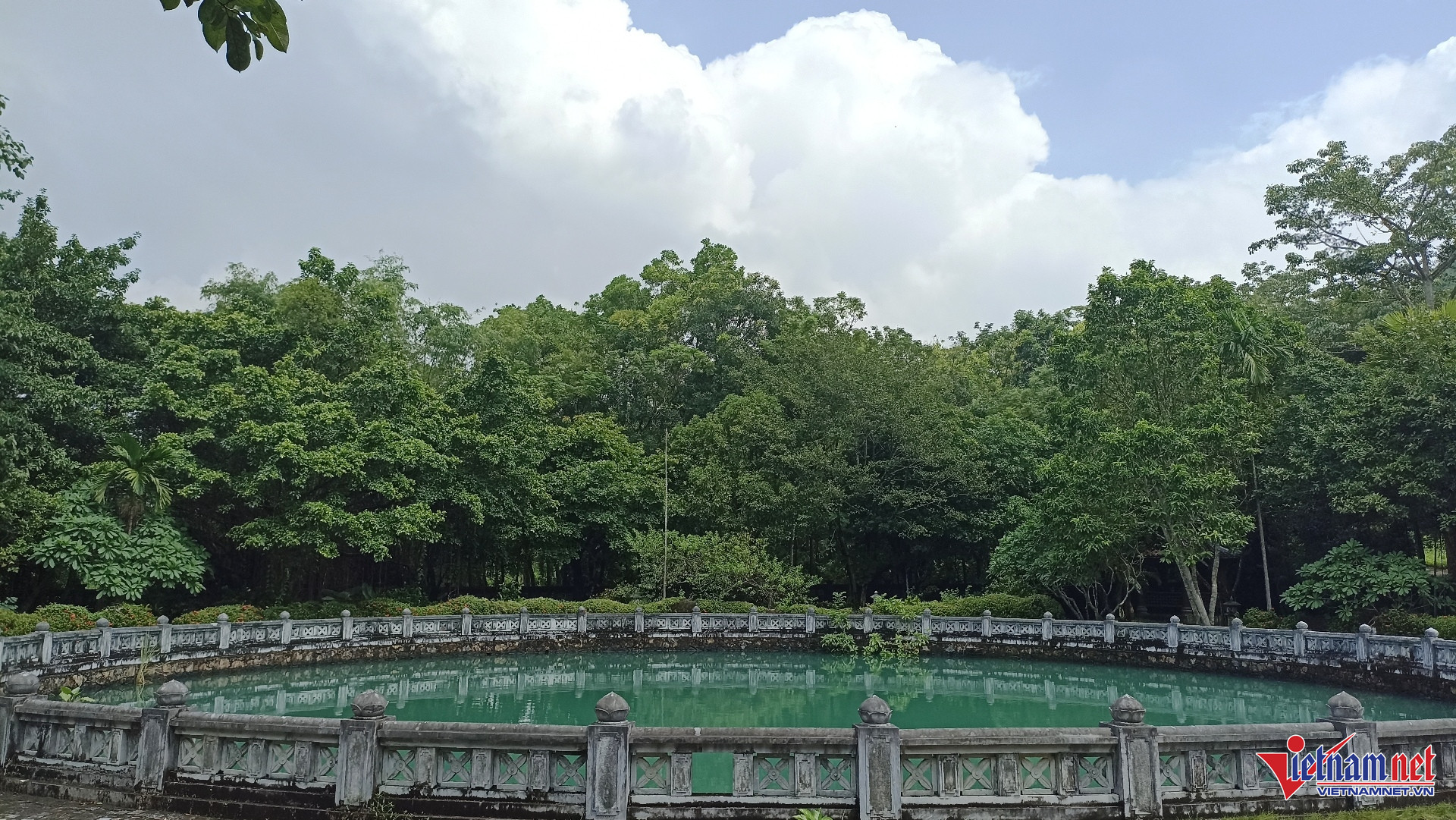
Ngoc Well, nestled at the base of Dinh Mountain within the Bai Dinh Pagoda complex in Ninh Binh, is steeped in legend and revered as Vietnam’s largest spiritual well. Locals believe its water never dries up - even in drought - earning it mythical names such as “dragon’s eye” and “sacred well.”
The circular well, 30 meters in diameter and 10 meters deep, is encircled by stone from Dinh Mountain. Its jade-green waters shimmer like a crescent moon and are regarded as a source of spiritual blessing.
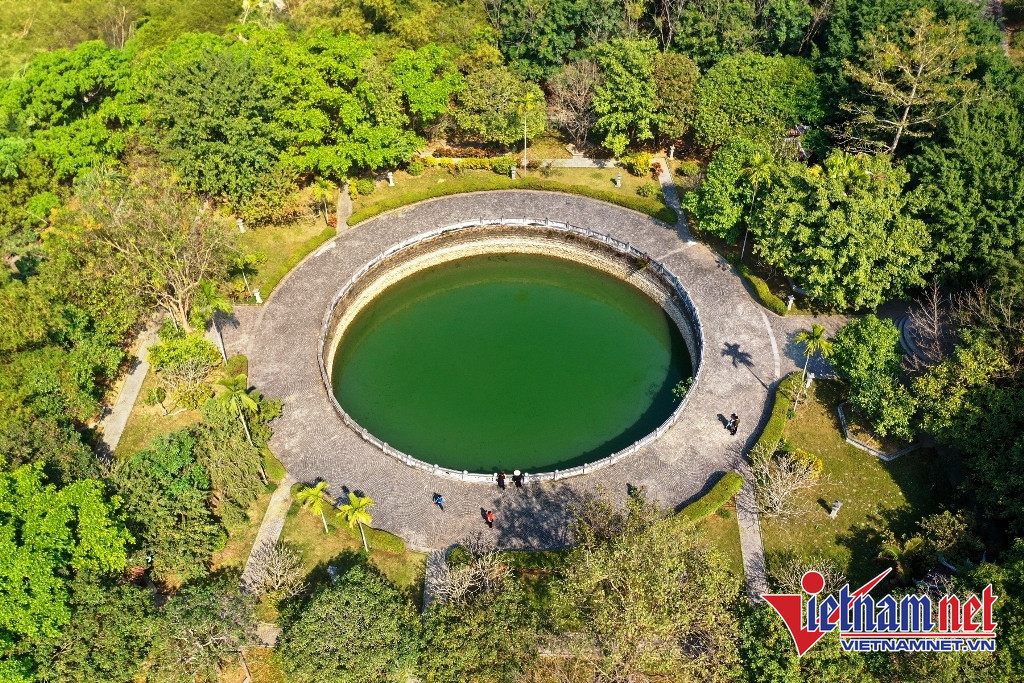
According to legend, nearly a thousand years ago, Zen master Nguyen Minh Khong drew water from this well to boil medicinal herbs used to heal Emperor Ly Than Tong and locals in the surrounding area.
A representative from Bai Dinh Pagoda explained that the well taps into an underground spring known among locals as “lo lung,” meaning “stone hollow.” In ancient times, the national monk is believed to have dug the well while meditating on the mountain, using its water for both rituals and healing.
The well was expanded to its current form in 2007 as part of the pagoda’s larger restoration project.
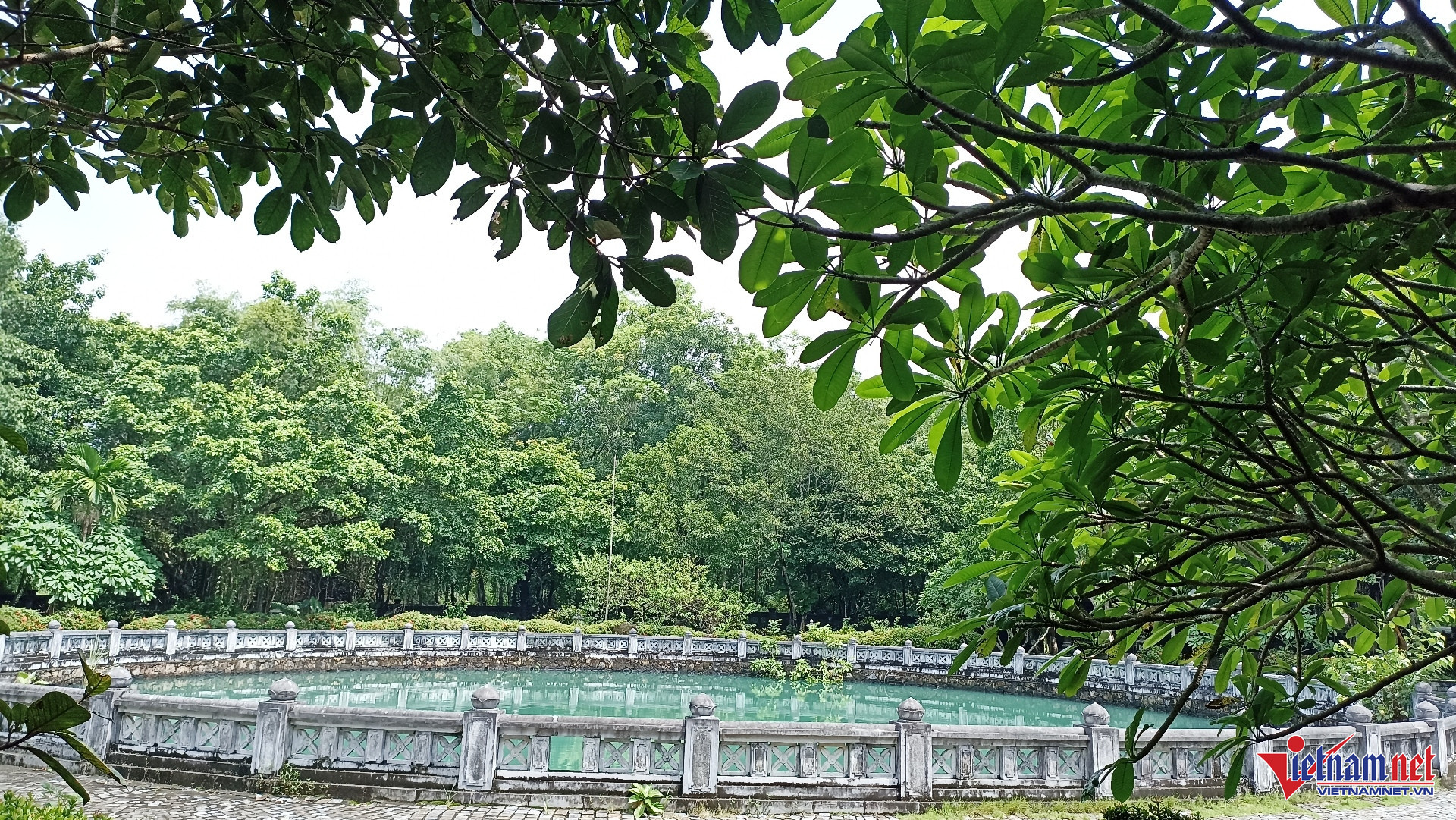
Beyond its utility, Ngoc Well is surrounded by rich symbolism. Its circular shape represents heaven, while the square perimeter of roughly 6,000 square meters - featuring four octagonal pavilions at each corner - represents earth. The design reflects the harmony of heaven and earth in Vietnamese spiritual thought.
Locals often refer to the well as the “open-air dragon’s eye.” According to village elders, this site - paired with a hidden “dragon eye” pond in a mountaintop cave - forms a rare dual spiritual energy system, unique to Bai Dinh. Together, the two are said to create a “dragon’s gaze,” one eye visible at the mountain’s base, the other concealed at its summit.
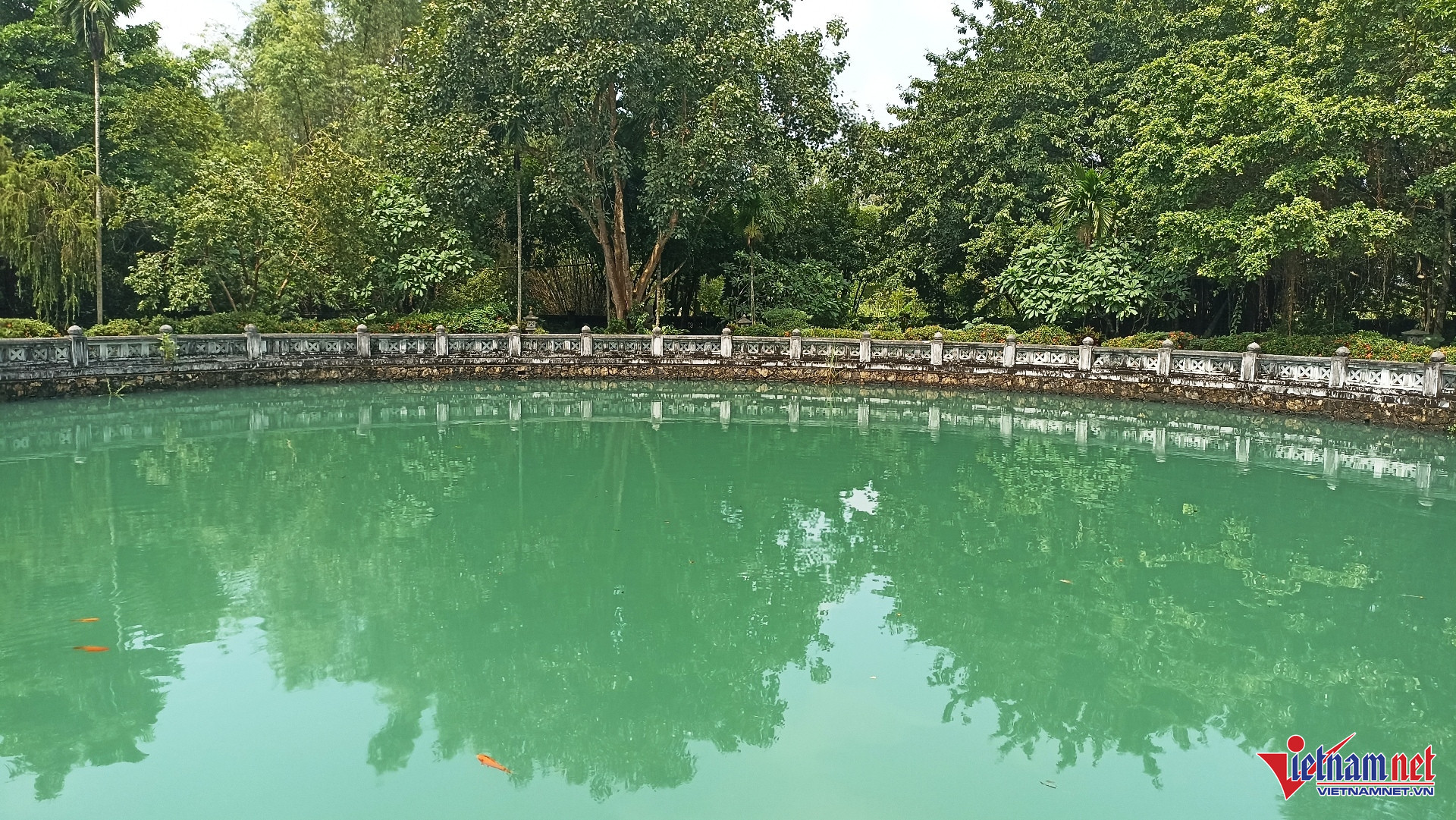
Water from the well is believed to originate from an underground stream flowing down from “Thung Thuoc” - an ancient herbal garden once used by the monk. Locals have even demonstrated that objects released from the cave above reappear in the well below, proving the natural underground connection.
Historian Truong Dinh Tuong, president of the Ninh Binh Historical Science Association, said the name “Ngoc Well” likely comes from the shimmering lights that reflect off the water during storms, appearing as multicolored gemstones under the night sky.
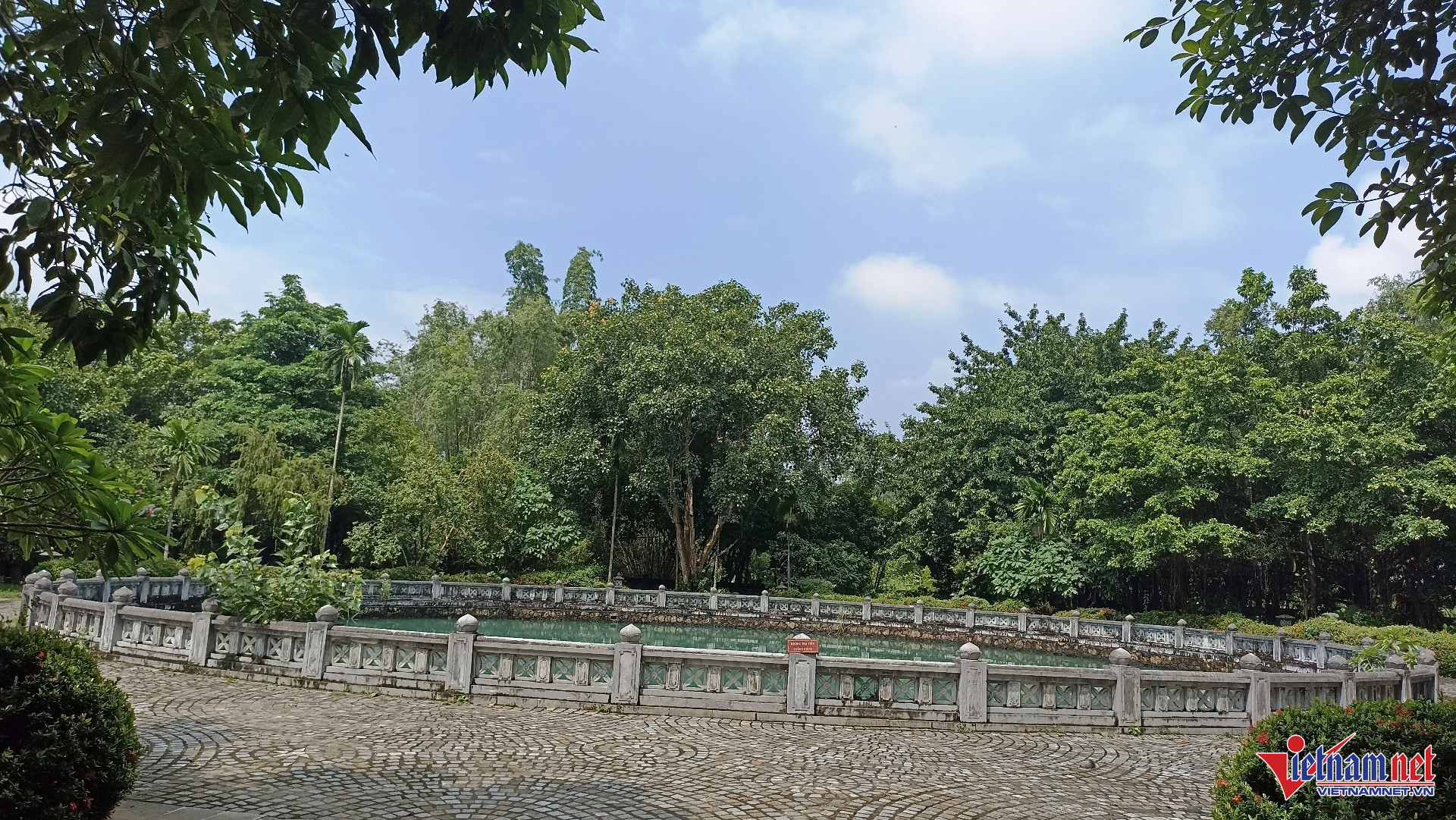
In 2007, the Vietnam Book of Records officially recognized Bai Dinh as the site of the country’s largest well. Since then, Ngoc Well has become a major spiritual destination, particularly during the Bai Dinh Pagoda Spring Festival.
Each lunar new year, thousands of pilgrims flock to the site to pray and collect its waters, believing that carrying home a bottle of Ngoc Well water brings blessings of peace and prosperity.
.svg)
