 Vietnamnet.vn

 Podcast



In Dak Ko Dem village, Dak Ui commune, Quang Ngai Province, these days bring a vivid sight: lush coffee gardens stretching across the hills and the resonant sound of gongs calling Spring home. It is here that the Xo Dang people feel most clearly the warmth of prosperity and their aspiration to rise.
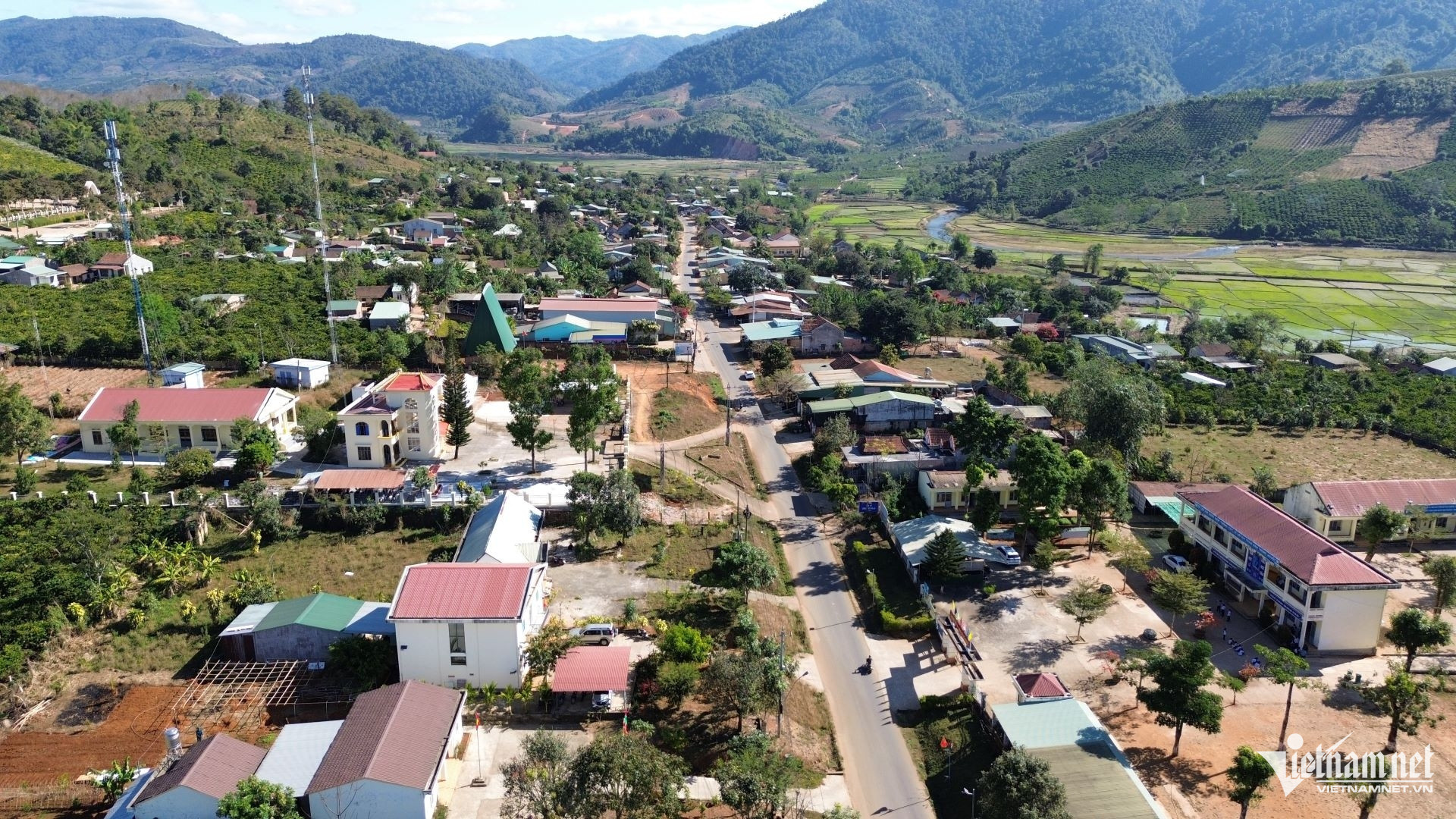
Dak Ko Dem village dons a new look of comfort and abundance. Photo: Ngoc Chi
Prosperity taking root
Dak Ko Dem has 218 households, nearly 100 percent belonging to the Xo Dang ethnic group, To Dra branch. Once a poor village, it now wears a new coat of comfort and sufficiency.
Y Hue, Party Cell Secretary of Dak Ko Dem village, Dak Ui commune, shared that the most significant change has been a shift in production mindset. Residents have moved from growing cassava and traditional rice varieties to cultivating industrial crops and applying scientific and technical advances. Today, every household owns coffee or rubber plantations, with many continuing to expand their scale.
Thanks to the attention of the Party and State through infrastructure investment and support for seedlings, combined with the determination of the Xo Dang To Dra people, Dak Ko Dem has developed nearly 130 hectares of coffee, more than 6 hectares of rubber, 6 hectares of fruit trees and over 30 hectares of wet rice. With stable agricultural prices, families now earn hundreds of millions of VND each year.
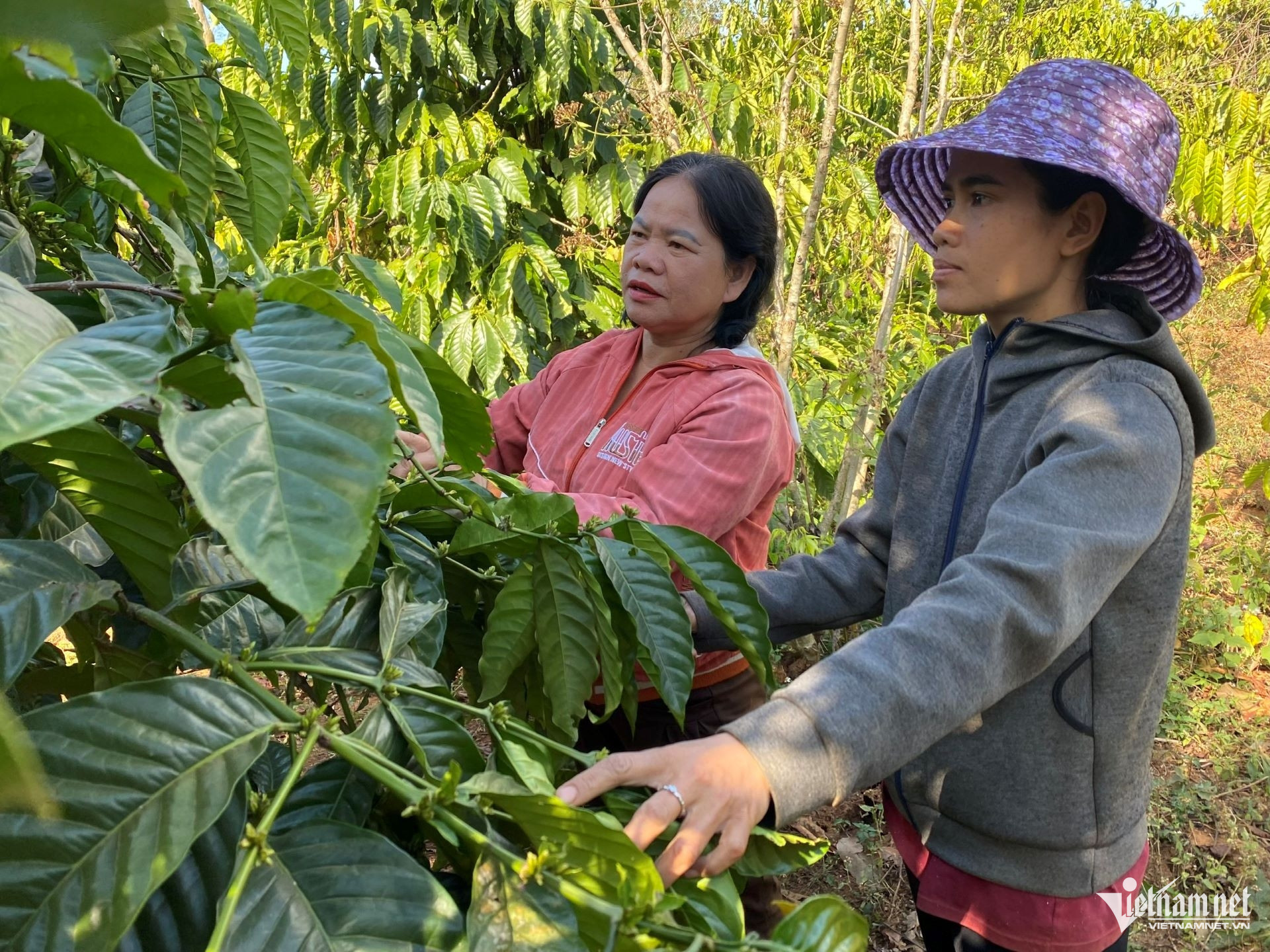
Coffee cultivation has brought a stable life to the Xo Dang To Dra community in Dak Ko Dem. Photo: Ngoc Chi
Y Hang, a villager, said her family cultivates one hectare of coffee. After expenses, they earn more than VND300 million per year (US$12,000), enough to build a spacious house. They are now investing in an additional two hectares, hoping for even better income in the future.
Temporary shelters have been replaced by solid brick houses equipped with modern amenities. Children attend school regularly. Average per capita income exceeds VND50 million per year (US$2,000), and the village no longer has poor households.
Raising the neu tree to welcome Spring
Dak Ko Dem stands as a testament to the solidarity and determination of the Xo Dang To Dra people. Economic growth goes hand in hand with the preservation of traditional cultural values. In the coming time, the commune will continue guiding residents to apply scientific techniques to coffee cultivation, improving productivity and income so that they not only escape poverty but also move toward prosperity.
As living standards improve, traditional values are cherished even more. These days, the tall neu tree rising in the yard of the communal house is not only a sign that Tet has arrived, but also a sacred thread connecting the Xo Dang people with the spiritual world.
Village elder A Boi explained that erecting the neu tree is an important communal task. Young men venture into the forest to select a straight bamboo about 20 meters high as the main pole. The trunk is decorated in two primary colors, black and white. Black comes from kitchen ash or soot, while white is made from finely shaved young bamboo fibers wrapped skillfully around the pole. Fresh forest leaves crown the top, and four smaller bamboo poles are symmetrically arranged and carefully adorned around the base.
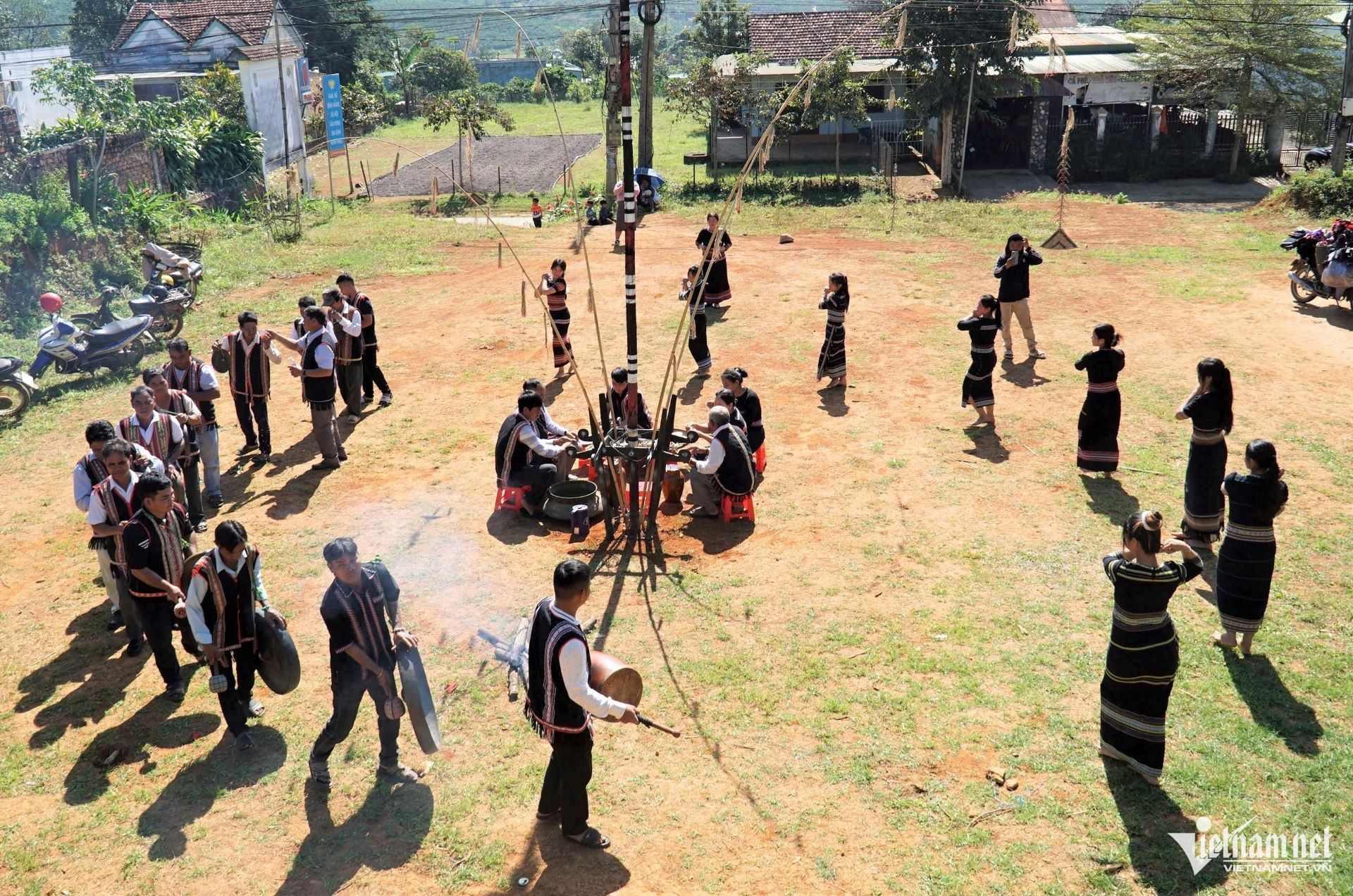
The sound of gongs echoes through the communal yard, filling Dak Ko Dem with vibrant Spring energy. Photo: Ngoc Chi
On Tet day, offerings such as bamboo-tube rice, grilled meat and jar wine are placed beneath the neu tree to present to the deities. The tree is not merely decorative. It signals to ancestors that Spring has returned and expresses hopes for favorable weather, bountiful harvests and good health.
A Wui, another villager, said the image of the neu tree welcoming Spring is a cultural symbol and a source of pride. The ritual helps younger generations understand their origins and appreciate ancestral values. It is living proof of the enduring vitality of Central Highlands culture, where people live harmoniously with nature and always look toward what is good.
The echo of gongs across the communal yard, the rhythmic xoang dances of young men and women, create an atmosphere brimming with life. Each family prepares jar wine and traditional dishes such as bamboo-tube rice, sticky rice, wild fern, thick soup and cassava leaves, forming a feast rich with the flavors of the mountains and forests.
Ngoc Chi
.svg)
