 Vietnamnet.vn

 Podcast



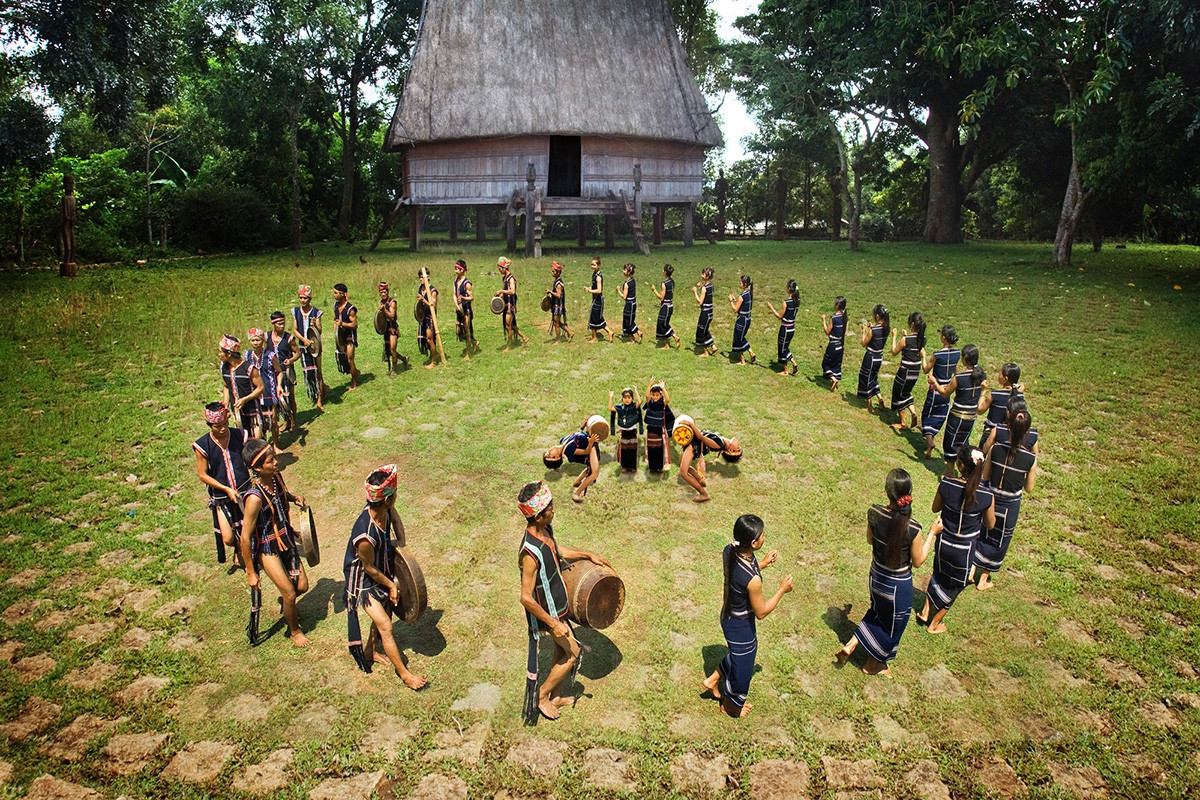
The resolutions are not confined to meeting halls, but are implemented through preservation and promotion activities such as events, festivals, cultural exchanges, and cultural preservation models linked to community-based tourism development.
When UNESCO recognized the Central Highlands gong cultural space as a representative intangible cultural heritage of humanity, that pride also came with a reminder of responsibility to preserve and pass it on.
From this awareness, the Dak Lak People’s Council has issued many thematic resolutions, treating culture as a foundation for development and as a “lifeline” to unlock policies, budgets, and community initiatives.
According to the Dak Lak Department of Culture, Sports, and Tourism, by 2024, the province had 481 cultural and artistic teams and groups operating in villages and hamlets.
By 2025, the locality had established an additional 70 cultural clubs with clear regulations and action plans, step-by-step bringing resolutions deeply into practical life. Thanks to this, culture is not just present in halls or on paper, but has become the "breath" of every village, heard in the sounds of gongs and folk songs.
What is heartening is that this spirit is not only spreading in community spaces but is also being carried forward by the Central Highlands youth. They do not just preserve culture during festivals but also know how to bring the stories of their villages into digital space.
The "Buon vui lam" (Happy Village) group, led by Dang Lam Y Binh in the former Lak district, is a vivid testament. With love for his village, he and his group of Ede, Mnong, Tay, and Nung ethnic friends joined hands to turn technology into a tool for cultural promotion.
“Culture is not something grand. It is the way of life, the stories of families and clans - simple things. I just hope that when people watch our programs, they will laugh, feel proud, and understand that: Our culture belongs to us, and we must be the ones to keep it,” Y Binh said.
While Y Binh chooses laughter, Ly Mai Ly Nie Kdam in Buon Ma Thuot chooses to tell cultural stories through experiential tourism. Her homestay is nestled in the middle of wet rice fields; each season is a different painting: from the vibrant green of young seedlings to the golden hue of the harvest.
She tells the story of the wet rice and upland rice civilizations of the Central Highlands people, past and present, through posts and images on social media, evoking pride and attracting tourists. She also coordinates with the Dak Lak Ethnic Dance and Music Troupe to open classes teaching folk dance and musical instruments to youth, and each class is a "seed" of the resolution planted for the future.
With the same spirit, Y Xim Ndu, a Mnong man born in 1992 in Lak, gave up a stable job as a civil servant to open an eco-trekking tour to Cu Yang Lak mountain in his hometown.
On the forest trails, he organizes tours to plant trees, search for medicinal herbs, and listen to artisans playing the flute by the waterfall. He also implements the "Seed Bomb" program so that every forest trip is a journey of sowing green seeds and connecting humans with nature.
Y Xim's project won second prize in the provincial Startup Competition in 2022, but the greatest value is how he turned resolutions on cultural preservation and environmental protection into sustainable livelihoods. Local people gain more jobs: guiding, cooking, and caring for young trees, working together to protect both the forest and their culture.
Recently, the reality TV show "Gia dinh Haha" (Haha Family) was filmed in Y Xim's village, creating a strong impact with over 3 million views on national television (VTV). The sound of gongs, the laughter, and the rustic stories of the villagers proved that a resolution only truly "lives" when it is tied to livelihoods and local pride.
Clearly, from meeting halls to villages, from documents to actions, the resolutions of the Dak Lak Provincial People's Council have been "translated" into many languages: social media videos, community tourism tours, and classes for teaching gongs and traditional instruments. People no longer view cultural preservation as "the state's business" but as an essential part of life.
Xuan Hoa
.svg)
