 Vietnamnet.vn

 Podcast



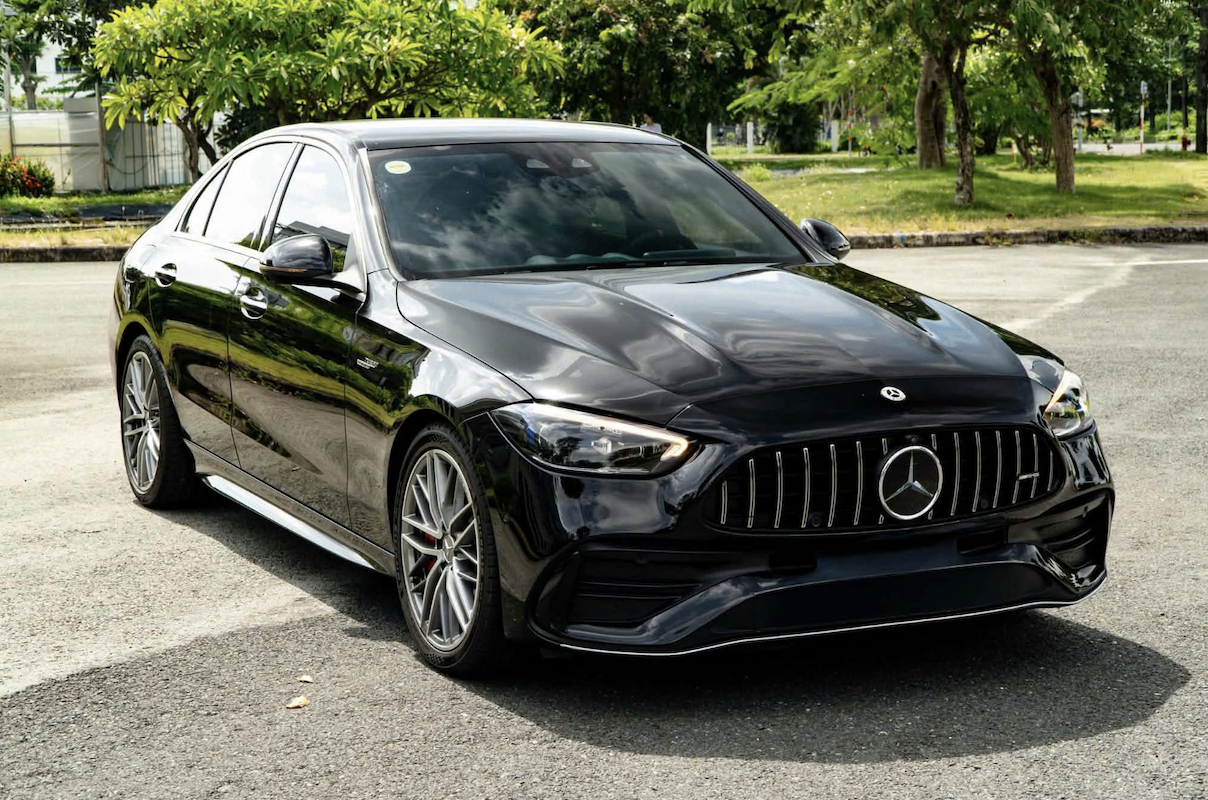
Vietnam’s pre-owned automobile market is undergoing a difficult phase, with the luxury segment under pressure as new car prices are adjusted downward.
Numerous luxury models, despite being only a few years old or driven just a few thousand kilometers, have been discounted by dealers by hundreds of millions to a billion VND, yet buyers remain scarce.
This situation spans multiple brands and extends beyond older vehicle generations. Models produced between 2021 and 2023, and even 2025 releases driven just over 3,000 km, are undergoing steep price reductions to attract customers.
Nearly-new luxury cars see price cuts
Among the models being offered with significant discounts is a 2021 Toyota Land Cruiser LC300 imported from the Middle East. A luxury showroom in Cau Giay, Hanoi, originally purchased the vehicle for VND5.3 billion, but is now offering it for just over VND4 billion, representing a price cut of roughly VND1 billion.
Land Cruiser is a Japanese SUV highly favored by business owners and affluent buyers in Vietnam. For official distribution products, listed prices currently start at VND4.58 billion for gasoline variants and VND4.71 billion for hybrid models.
Another SUV listed significantly below cost is a 2020 Mercedes-AMG G63. Featuring a black exterior and red interior, the vehicle has the ODO of roughly 40,000 km and is described in original, prime condition. Initially bought by the dealer for around VND7 billion, it is now listed at VND6.2 billion.
The Mercedes-AMG G63 sparked a craze in Vietnam in 2020-2021, when it was repeatedly chosen by celebrities, businesspeople and other well-known figures. At the time, the price of a new G63 ranged from about VND11 billion to VND13 billion.
A 2018 Range Rover Vogue, with a black exterior and brown interior, is also among the vehicles facing steep price cuts. The vehicle was previously acquired for more than VND4 billion and is now being offered for more than VND3 billion.
Another case is a special-edition 2021 Lexus RX350 F Sport. A used luxury car dealer in HCMC acquired the vehicle in June 2026, when it was offered for VND3.399 billion. Its asking price has now fallen to VND2.999 billion, but the vehicle still has not found a buyer.
Similarly, a 2023 Mercedes-AMG C43 has also seen a significant price reduction. According to the dealer, the model could still be sold for more than VND1.9 billion around March 2026. It is now being offered for just over VND1.7 billion.
Luxury car demand falls
A representative of a dealership specializing in lightly used luxury cars in Ha Dong, Hanoi, said market demand is extremely weak. Price cuts are occurring across the market, but even after accepting losses, many vehicles remain unsold.
The owner of a well-known luxury car showroom in Cau Giay, Hanoi, said the market as extremely difficult. Many vehicles are being sold at losses of up to VND1 billion but still cannot find buyers.
“All the cars have been discounted and we are taking losses on all of them, but we still can't sell them. If things continue like this, the market will become paralyzed. We don't dare to bring in more cars because every vehicle is losing money like this. We've never seen the car market like this before,” the showroom representative said.
He said luxury cars are being affected by the rapid decline in prices of new vehicles. When new-car prices are adjusted downward, used cars are also forced to become cheaper to maintain a reasonable price gap with new vehicles.
Le Nguyen Tuan, admin of a well-known Vietnamese group for lightly used luxury cars, commented that the used luxury car market has suffered a severe downturn, partly due to the volume of new cars remaining in manufacturers' inventories.
Some new vehicles manufactured in previous years with older VINs are being heavily discounted by manufacturers to clear inventory. For example, the 2025-VIN Mercedes-Benz GLC300 is being discounted by about VND600 million. When new-car prices fall sharply, used-car prices are immediately affected.
Demand, rather than just supply, is also a major issue. Tuan said that as consumers become more cautious about spending, cars, which are non-essential consumer assets, may be among the items owners consider selling when they face financial difficulties. He estimates that current demand is only about 10 percent of what it was previously.
Y Nhuy
.svg)
