 Vietnamnet.vn

 Podcast



The very material that once built the delta is now depleting, triggering rampant erosion, loss of land, property, and livelihoods.
The urgent need for long-term strategic solutions to ensure sustainable development in the region has never been clearer.
From cause to consequence
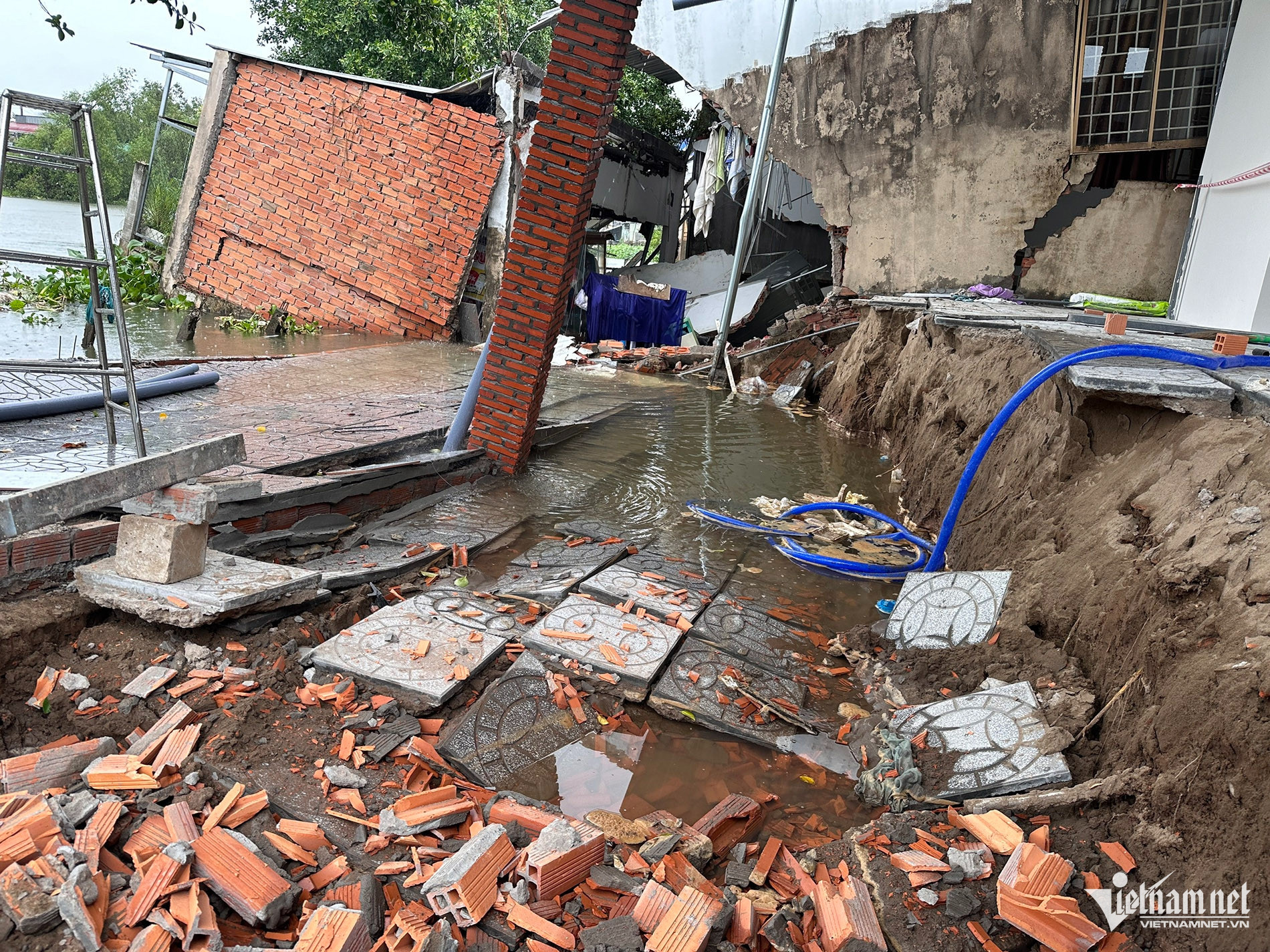
Erosion along rivers in the Mekong Delta has intensified recently. To develop effective solutions, we must first understand the delta’s origins and characteristics.
Historically, the Mekong River brought around 160 million tons of fine sediment annually, not including the estimated 30 million tons of sand and gravel transported along the riverbed.
During flood seasons, heavy currents transported sand and gravel downstream, moving them only during about three months of the year.
It could take several decades for this sediment to reach the delta from the upper Mekong due to the slow pace of transport.
Depending on seasonal rainfall, sediment supply varies. Floodwaters not only nourish farmlands but also carry silt and sand to estuaries, where they settle and are later redistributed by ocean currents along the coast, building up the Ca Mau Peninsula.
This natural redistribution leaves sandy coastlines from Tien Giang to Soc Trang, while muddy coastlines stretch from Bac Lieu to Ca Mau.
Roughly 100 million tons of sediment are pushed out to sea annually, expanding the delta by an average of 16 meters toward the East Sea and 26 meters toward Ca Mau each year.
The murky coastal waters act as a “shield,” absorbing wave energy and protecting the delta. Waves from the open sea lose height and energy when passing through these turbid waters, further reduced by mangrove forests, historically forming a robust defense line.
The erosion mechanism
The primary driver of widespread riverbank and coastal erosion is the lack of sediment and sand. Without these materials, the delta cannot maintain its structure.
On the coast, erosion occurs in areas lacking sand or mud. Along rivers, as riverbeds deepen due to sediment loss, the banks become unstable and prone to collapse.
This erosion is systemic across the delta and not isolated to areas with sand mining. It is more severe upstream, where sandy soil is more loosely bound. Riverbank erosion often occurs at bends or narrow passages where water flow intensifies.
A shrinking sand supply
According to ecologist Nguyen Huu Thien, sand shortages for infrastructure development are slowing growth in the Mekong Delta. The depletion results from two factors: upstream dams blocking sediment and extensive sand mining throughout the river, including in the delta.
The Mekong functions like a “conveyor belt” delivering sediment to the delta. But hydropower dams along the river capture most of this sediment.
According to a 2020 report by the Mekong River Commission, annual fine sediment load has dropped to 49 million tons. If all planned dams are completed, 96% of fine sediment and nearly all sand will be trapped.
In the delta, sand mining far outpaces natural sediment flow. Between 2018 and 2020, 17.77 million tons of sand were extracted annually, while only 6.18 million tons naturally reached the region. This deficit is worsening erosion across the Mekong Delta.
The case for relocation
Frequent and widespread erosion now threatens tens of thousands of households living along rivers and canals.
The traditional “riverbank living” lifestyle makes relocation difficult. Local authorities also face land and budget shortages for resettlement projects.
According to Dr. Duong Van Ni from Can Tho University, even small canal banks are no longer safe. The interconnected river system means that when main channels lose sediment, smaller tributaries are “mined” to compensate, leading to unexpected erosion even in seemingly stable areas.
Relocation is difficult due to cultural ties to river-based living. As one elderly resident from Vinh Long province noted, she prefers repairing her cracked home rather than leaving it. However, officials acknowledge they lack resettlement land and resources to relocate entire affected communities.
Dr. Duong Van Ni calls for a large-scale resettlement plan to move residents from erosion-prone areas. He estimates it could take over a decade to relocate the most urgent cases and significantly longer to cover all at-risk populations.
A challenge for infrastructure projects
Major infrastructure developments like the Chau Doc - Can Tho - Soc Trang expressway, a 188.2 km route with an investment of $1.76 billion, are being delayed due to sand shortages for roadbed fill. Only 5.6 million cubic meters of sand are currently available, far short of the 36 million cubic meters required.
This shortage has driven sand prices up threefold, severely impacting construction timelines. Despite high public expectations, experts warn that unless materials and procedures are adapted, projects may face long delays like past expressways.
Facing the sea
Over the past decade, Cà Mau province has lost over 5,200 hectares of coastal land and forest due to wave erosion, equivalent to the size of a large commune. Officials admit they are often reactive rather than proactive in addressing the damage due to limited funding.
Cà Mau is experimenting with public-private partnerships to build seawalls, exchanging inland development rights for coastal protection investment. The pilot project in Khai Long has shown promise and may be expanded.
A shift to elevated expressways
To reduce dependence on sand, experts propose building elevated expressways (viaducts), which would also help prevent flooding and environmental disruption. Authorities are exploring the use of sea sand, but environmental concerns remain.
Elevated roads may cost more initially, but their long-term benefits include better durability, less maintenance, and minimal impact on water flow and local ecosystems. Similar models have proven effective in South Korea and China.
Changing construction practices
Nguyen Huu Thien advocates for major changes in urban planning and construction practices. He suggests minimizing concrete use, employing lighter materials, and implementing “cut-and-fill” designs that balance excavation and infill without extensive sand use.
Instead of large-scale landfills, cities should integrate canals, ponds, and green spaces, which would enhance aesthetics, drainage, and local climate. For roads, reviving traditional methods of parallel canal construction could save sand and promote ecological harmony.
Above all, the delta must adapt with resilience-focused planning. Timely monitoring of riverbed changes, early warnings for residents, and reducing reliance on sand-based infrastructure are critical steps for long-term survival.
Nhan Dan
.svg)
