 Vietnamnet.vn

 Podcast



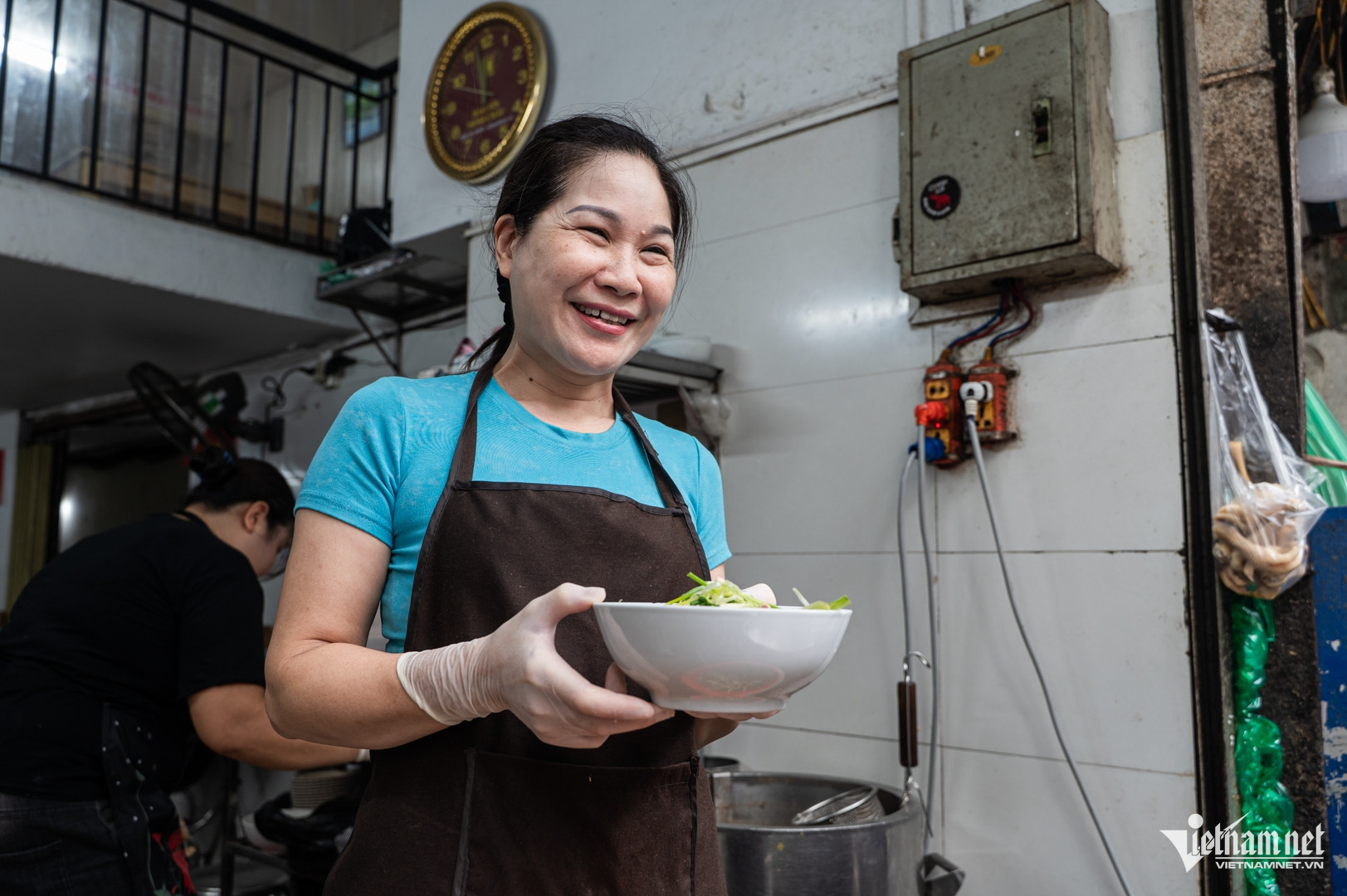
Ha said the shop opened in 2008 on the Hang Hom sidewalk, serving diners only in the evening from 6pm to 11pm. Later, when sidewalk business rules tightened, Ha rented the current space, about 40 sqm. The shop now serves from 6am to midnight, but is busiest from 11:30am to 1pm and 6:30pm to 8pm.
At lunchtime, customers arrive in waves and fill all the tables. At the counter right at the door, Ha and two staff quickly debone chicken, blanch noodles, and make each steaming bowl of pho or mixed noodle to order. Two other staff handle serving and cleaning.
Ha said she taught herself the chicken pho recipe, then asked neighbors in the Old Quarter for feedback to adjust it gradually.
"Fortunately having a knack for selling, just a few years after opening, my shop started getting packed. Initially, I only sold traditional chicken pho because it was cramped on the sidewalk, lacking enough space to make other dishes. Arriving customers sometimes had to carry their own bowls and sit on plastic stools," she recalled.
Later, to give diners more diverse choices, she added mixed chicken pho/noodles/instant noodles, chicken sticky rice, cabbage chicken salad (nom ga bap cai), and chopped chicken platters to the menu.
Ha estimates that every day, the shop consumes about 30 chickens, mostly sourced from Thanh Ba (Phu Tho) or Son Tay (Hanoi), weighing about 4.5 kg per bird.
"We are an eatery in the casual segment, so this type of chicken is the most suitable regarding quality and cost. The chickens are from large farms, featuring chewy, sweet meat and crispy yellow skin. I do not select capons because those have large bones and tough meat. Hens will yield a lot of meat, being softer and sweeter," Ha said.
The broth is simmered from pork bones for 8 to 10 hours, then chicken bones for another 2 to 5 hours, along with chicken boiling water, roasted ginger, and roasted shallots. "The broth must simmer on low heat, and we skim the foam to keep it clear. A lot of bones give natural sweetness, not additives," Ha said.
The owner added that chicken is deboned and sold as needed to keep the meat juicy, not dry. However, with this method, customers may have to wait longer during peak hours.
Besides traditional chicken pho, the shop’s mixed chicken pho and chicken sticky rice also sell very well. The noodles are blanched soft, topped with sliced chicken, then drizzled with sauce and sprinkled with roasted peanuts and fried shallots. The sauce is made from soy sauce, sugar, fish sauce, vinegar, plus chicken fat for richness that coats the noodles.
For sticky rice, the shop uses high-quality yellow flower glutinous rice. "We only soak the rice for about 2 hours and steam it quickly for 10 to 15 minutes. The grains are glossy and round, not mushy or sticky. This dish sells especially well in winter, mainly at dinner and late night," said Them, the staff representative.
A pho shop that pleases customers: 'sells at any price'
Just arrived in Hanoi, Yalinie from Sri Lanka and two friends Mel and Bridget from Australia joined a "street food tour." Their Vietnamese guide took them to Pho Ga Ha. It was the first time the three female tourists heard of "mixed chicken pho," so they were eager to try.
Guided by the tour leader, they added a bit of garlic vinegar and chili sauce.
"The flavor here is completely different from several places I’ve tried in Melbourne. I can taste soft noodles coated in sauce, chicken, fragrant herbs, spicy chili, and other crunchy ingredients," they shared.
Peter Bryan, a US tourist, is a pho fan. He has eaten both beef and chicken pho in the US, especially while living in California where there is a large Vietnamese community. "The flavor at this shop is balanced, appealing, and very worth trying," he shared.
According to Peter’s guide, Pho Ha is loved by tourists because the owner is open, cheerful, and accommodating. International guests often visit 4 to 6 different places in a day to enjoy Hanoi cuisine, so they don’t want too much of each dish.
"At the shop, tourists can order a bowl for VND25,000 to 30,000, or any price, and the owner is willing to serve. The bowl is smaller than a regular serving but has all the ingredients," the guide said.
Linh Trang
.svg)
