On September 2, millions of Vietnamese voices joined in unison to sing the national anthem, creating an unforgettable moment of unity and pride.
The moment when millions of people across Vietnam raised their voices in unison to sing the national anthem became an emotionally charged highlight, delivering a powerful message of unity: no matter where they are, the people of Vietnam share one heartbeat and one voice.
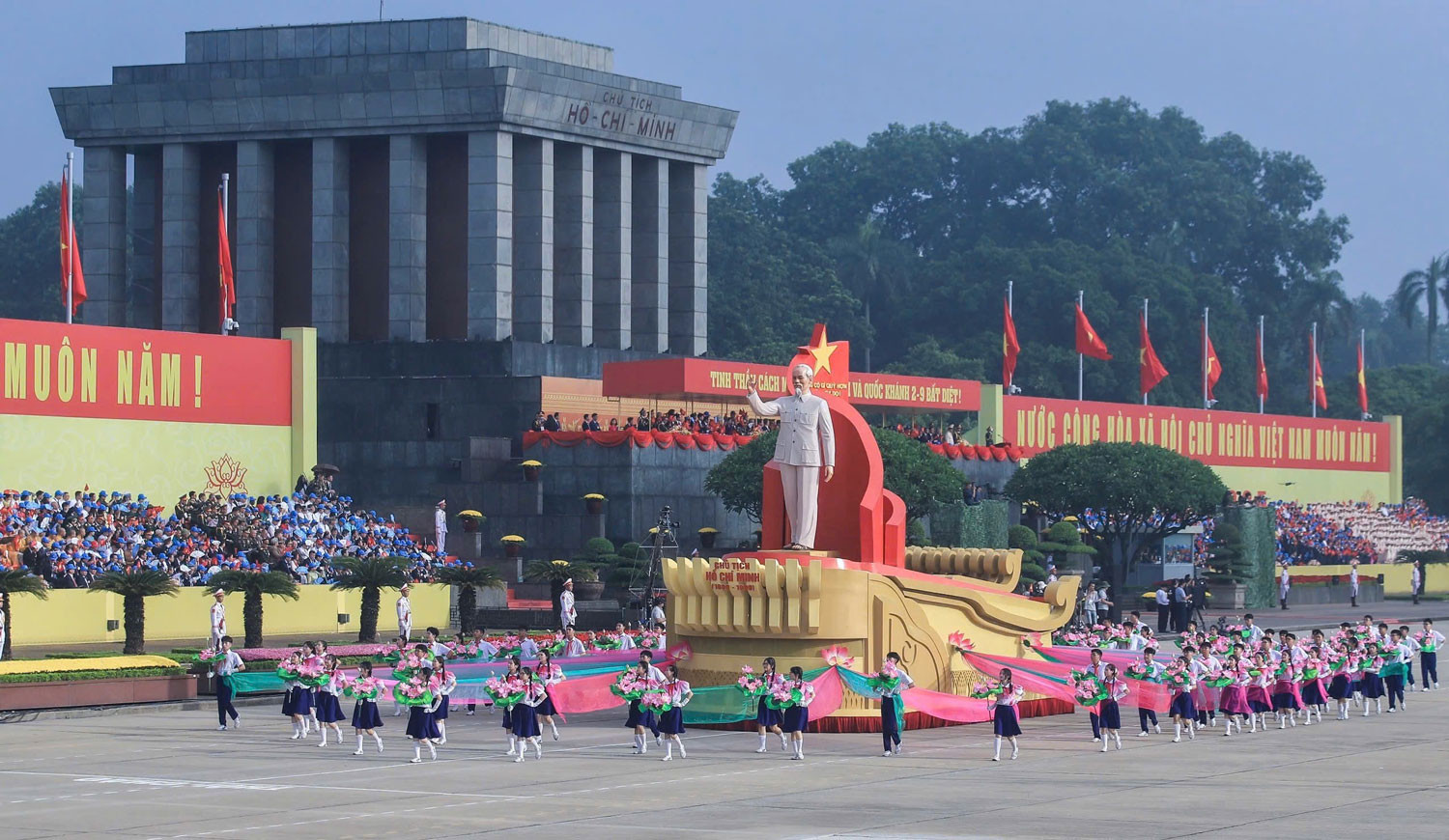
On the morning of September 2, at the historic Ba Dinh Square, as the red flag with a yellow star was hoisted to the stirring notes of “Tien Quan Ca,” millions of hearts beat as one and voices rang out together. This sacred moment was not confined to the heart of the capital but spread across the country through television broadcasts, 21 outdoor LED screens in Hanoi, and millions of connected devices, forming an unprecedented national chorus.
In an atmosphere both solemn and uplifting, the parade commemorating the 80th anniversary of national independence was grandly held. For days leading up to the event, millions of citizens flocked to city streets in anticipation. One of the most touching moments was when the national anthem simultaneously rang out from dozens of locations. These emotionally rich scenes were captured in full by Hanoi Radio and Television.
At the same time, Hanoi Radio and Television aired a special program titled 80 Years of National Independence - 80 Years of the Capital Under the Golden Star, broadcast live from 4:30 a.m. The show guided viewers through key locations across the city, reliving the memories of Hanoi on that historic day. It featured moving documentaries such as Hanoians Celebrate Independence Day and Walking Amidst a Sea of Flags in the Autumn of Freedom. For many, National Day is not just a major holiday but has become deeply ingrained in cultural life as an “Independence Tet” - a day of reunion and celebration.
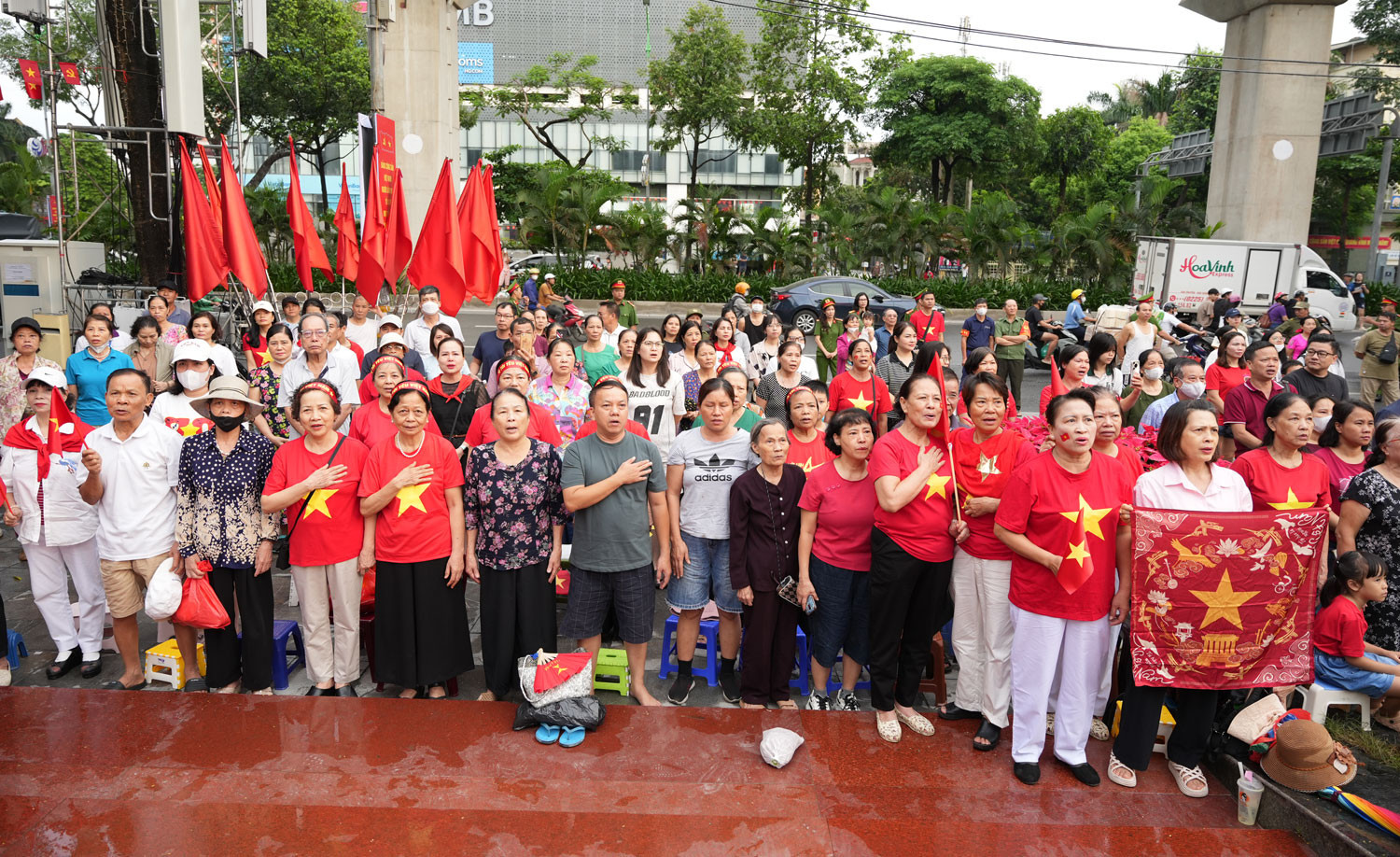
Millions of hearts beat as one and voices rang out together in the national anthem.
The program also reconstructed many precious historical fragments: the story of the photographer at the 1945 podium, the whirlwind four days spent building that podium, and the memories of a 100-year-old police officer who once guarded the square. These were interwoven with footage of Vietnam’s first military parade in 1955, reminding the nation of its long path of growth and resilience.
To deliver visually stunning footage, Hanoi Radio and Television used VR 360 technology, panoramic flycam shots of Ba Dinh Square, and creative aerial camera angles. For the first time, National Day was broadcast in ultra-high-definition 4K (UHD), allowing every detail to appear crisp and vibrant. This milestone demonstrated how Vietnamese television has pioneered the use of top-tier technology in covering national events.
Beyond the TV screen, Hanoi Radio and Television, in collaboration with city authorities, set up 21 LED screens at 18 public locations - from squares and parks to residential neighborhoods - so everyone could participate in the national celebration. The sight of elderly citizens and children standing before the screens, singing the anthem together, became a powerful testament to the event’s impact.
Few know the tremendous effort behind these seamless broadcasts. The production team spent months scouting locations, rehearsing drone flights, testing lighting, and building transmission lines. These behind-the-scenes efforts were instrumental in the stunning success of a nationwide-scale program.
For nearly five hours - from the first live broadcast at 4:30 a.m. through to the national ceremony, the parade, and the post-event commentary - the audience was immersed in a deeply historic atmosphere.
The moment when millions joined in singing the national anthem became a moving symbol of national solidarity. It sent a resounding message: no matter the distance, the people of Vietnam share the same rhythm, the same voice.
 Vietnamnet.vn

 Podcast



.svg)
