 Vietnamnet.vn

 Podcast



This was the most significant and official event in a series of activities commemorating the 80th anniversary of the August Revolution and National Day.
Attending the ceremony were current and former leaders of the Party, State, National Assembly, Vietnam Fatherland Front, ministries, departments, local authorities, along with leaders from other countries, political parties, and international guests.
In the days leading up to the event, rehearsals and full-dress rehearsals attracted thousands of onlookers, yet public interest in the official ceremony remained strong.
The ceremony featured a torch relay, flag-raising ritual, speeches by Party and State leaders, a military parade, a public procession, and large-scale artistic performances.
Around 40,000 participants were present. The parade included 87 formations: 4 ceremonial blocks, 13 public blocks, 22 military blocks, 3 militia and guerrilla units, 17 police blocks, 14 military vehicles and artillery units, 9 specialized police vehicle units, and a block carrying red flags.
The Vietnam People's Air Force performed an aerial salute with 30 aircraft, including Mi helicopters, Su-30MK2 fighters, Yak-130 multirole fighter jets, L-29NG training aircraft, and Casa transport planes.
This year's parade showcased the full might of Vietnam’s armed forces with formations on land, sea, air, and mechanized units. For the first time, a naval parade was held in Khanh Hoa province with the participation of the Navy, Coast Guard, Border Guard, and Military Zone 5.
It was also the first time since 1985 that a large-scale formation of armored vehicles, weapons, and military hardware paraded at Ba Dinh Square.
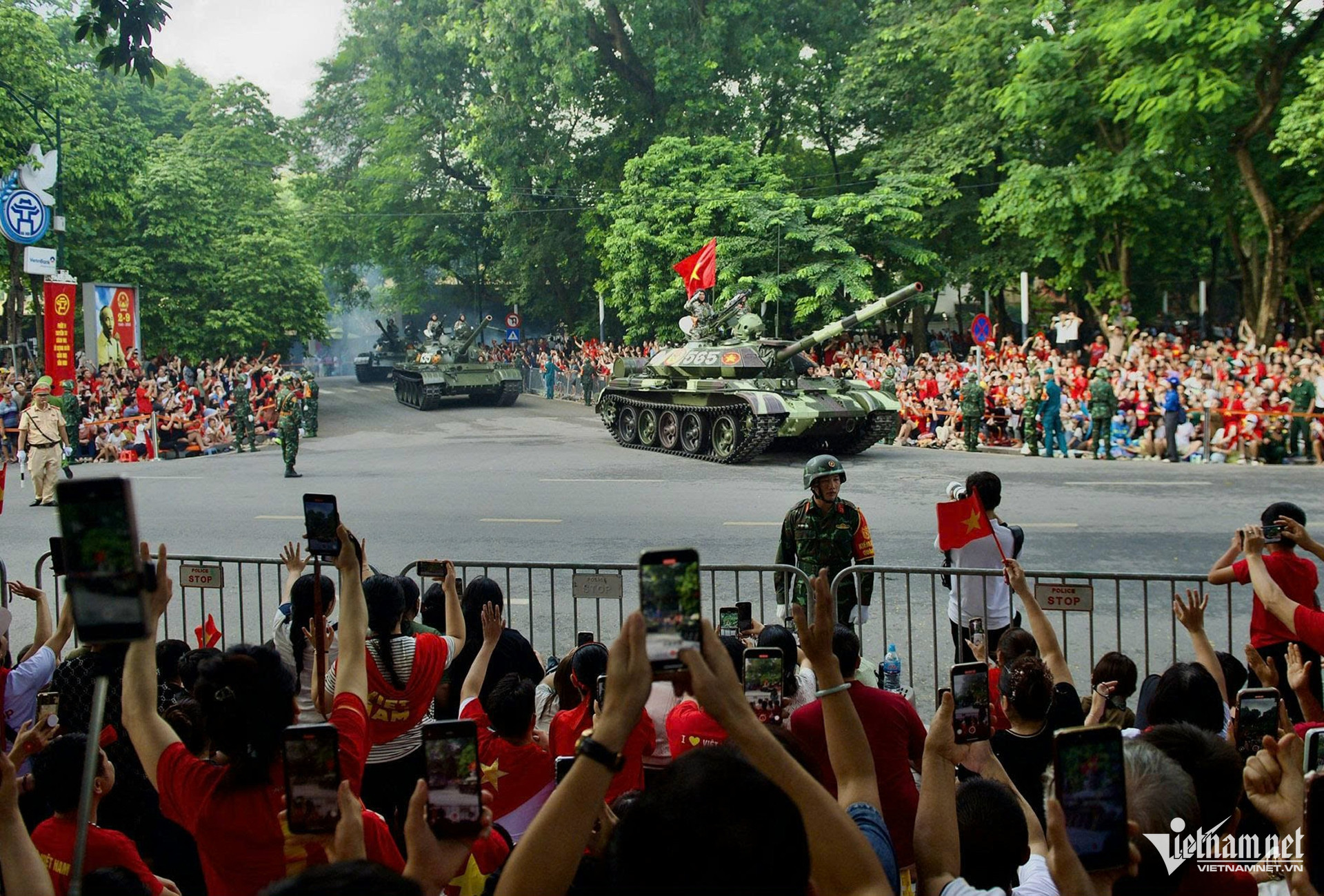
Military vehicles roll through city streets to the cheers of the people
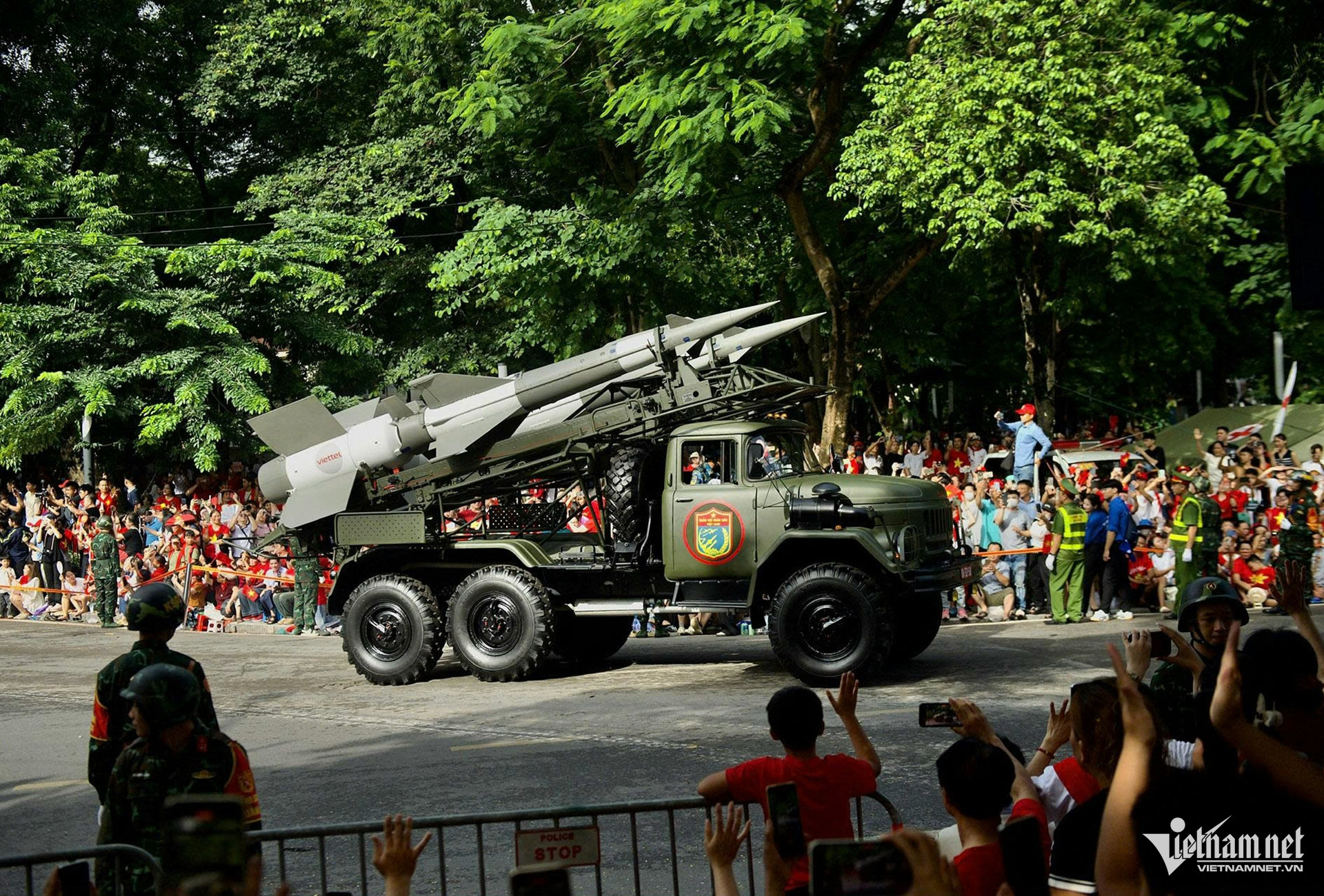
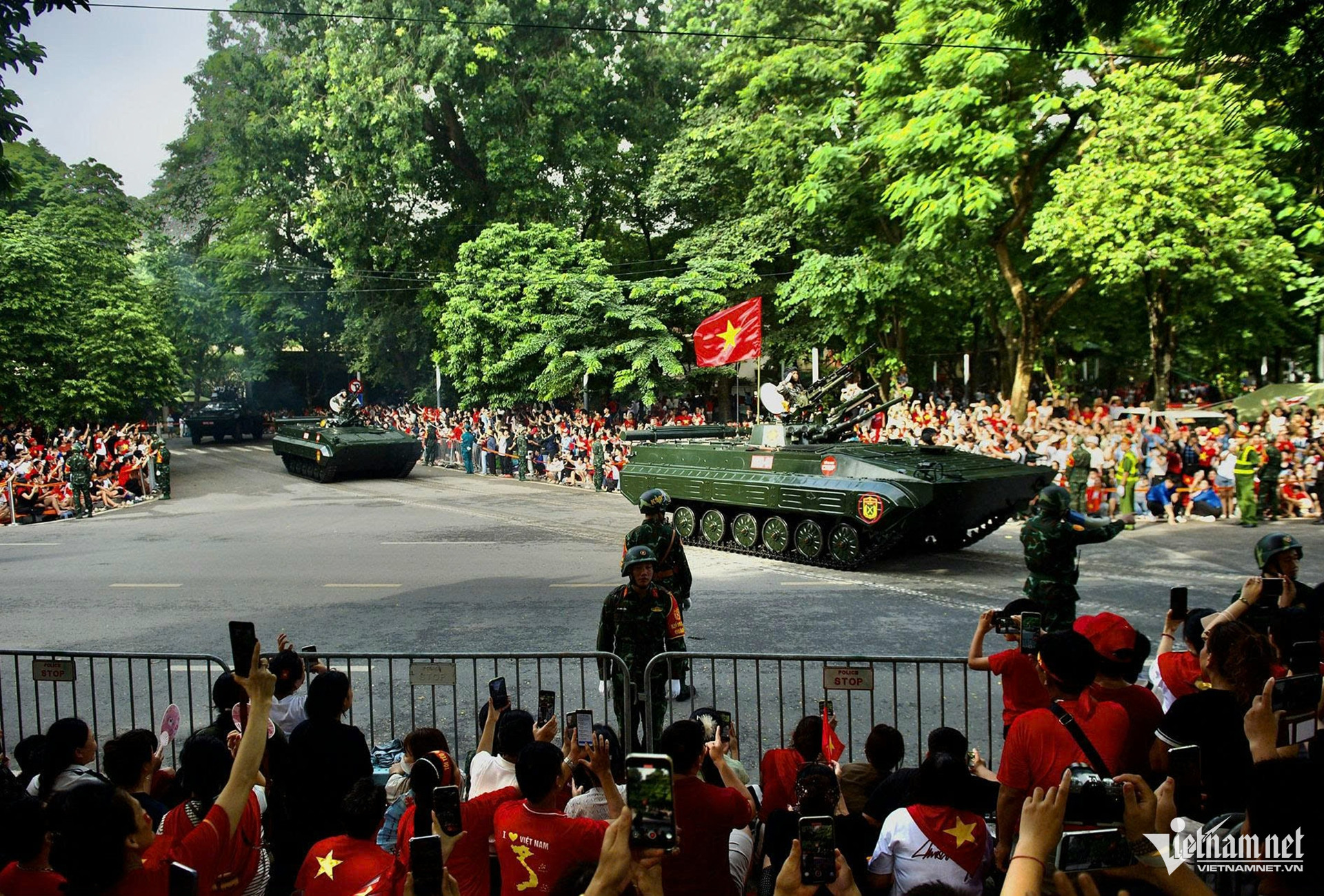
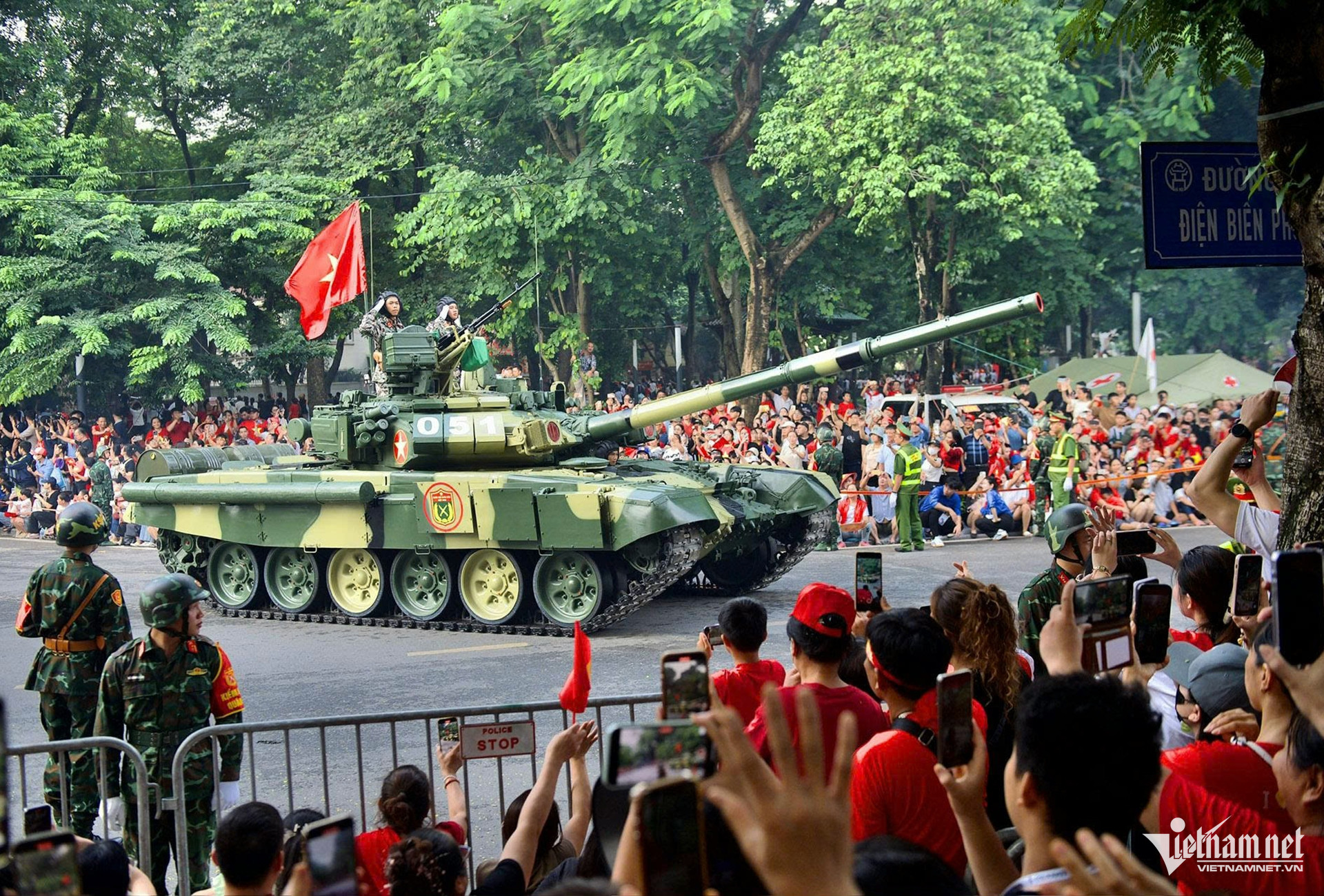

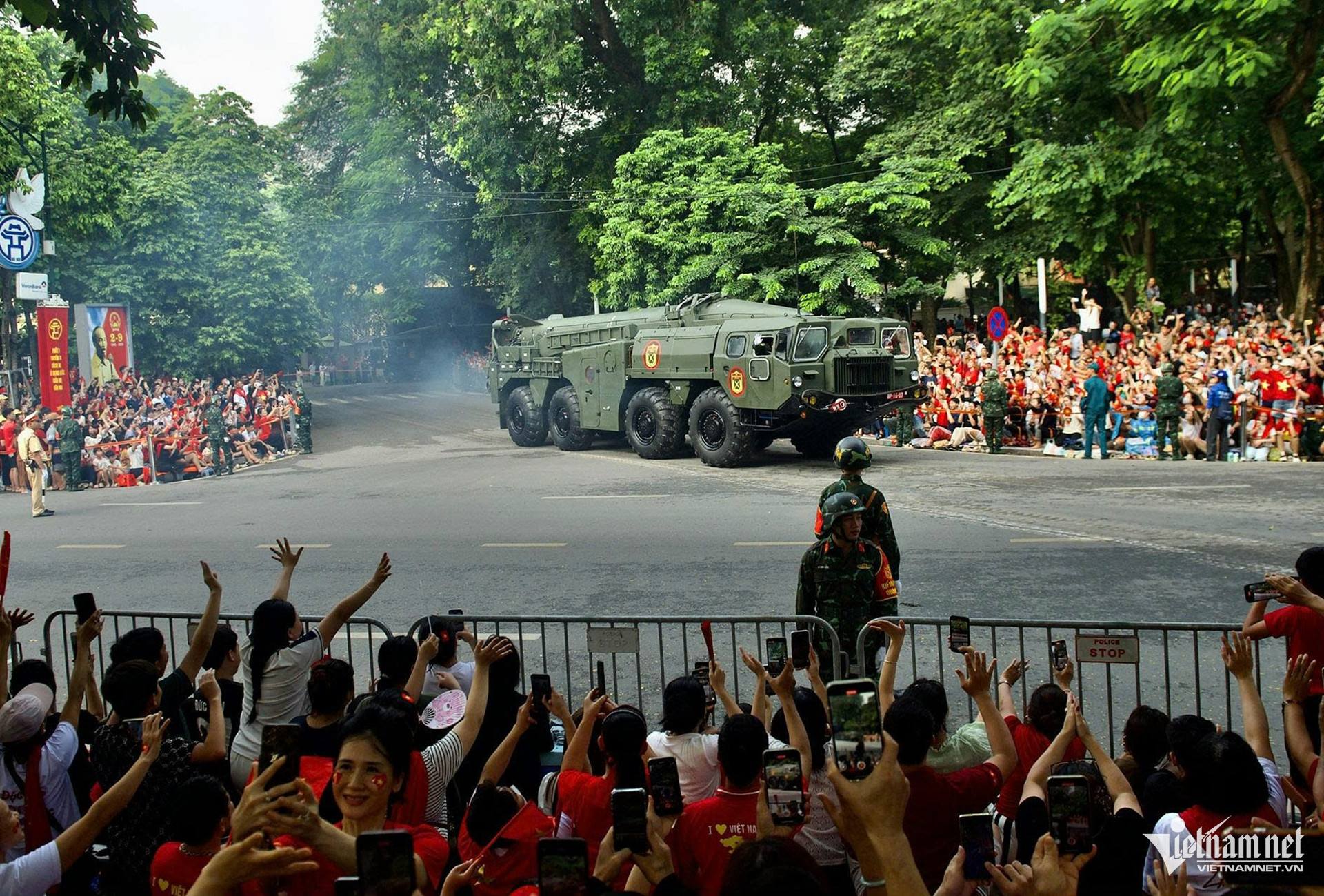
Thirteen civilian blocs pass the grandstand
Thirteen civilian blocs participated in the parade and march, including: the Vietnam Fatherland Front bloc; the bloc representing Vietnam’s 54 ethnic groups; the Vietnam War Veterans bloc; the bloc of former People’s Public Security officers; the bloc of Vietnamese workers; the bloc of Vietnamese farmers; the bloc of Vietnamese intellectuals; the bloc of revolutionary Vietnamese journalists; the bloc of Vietnamese entrepreneurs; the bloc of Vietnamese women; the bloc of overseas Vietnamese; the bloc of Vietnamese youth; and the bloc of culture and sports.
These civilian blocs impressed spectators with their distinct attire, each representing a different demographic, profession, or field. In particular, the culture and sports bloc drew enthusiastic applause from young people for its inclusion of many well-known artists, performers, and athletes.
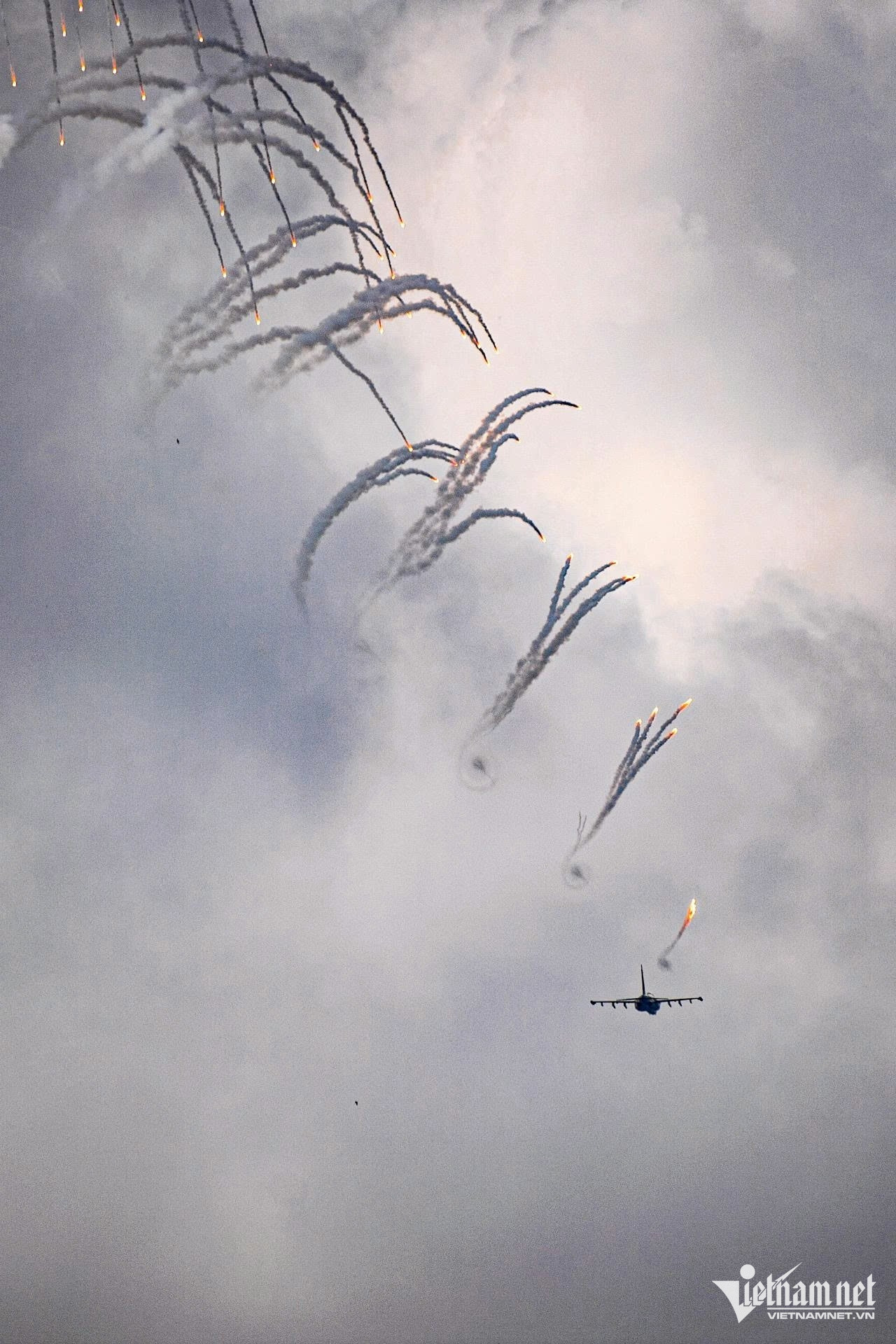
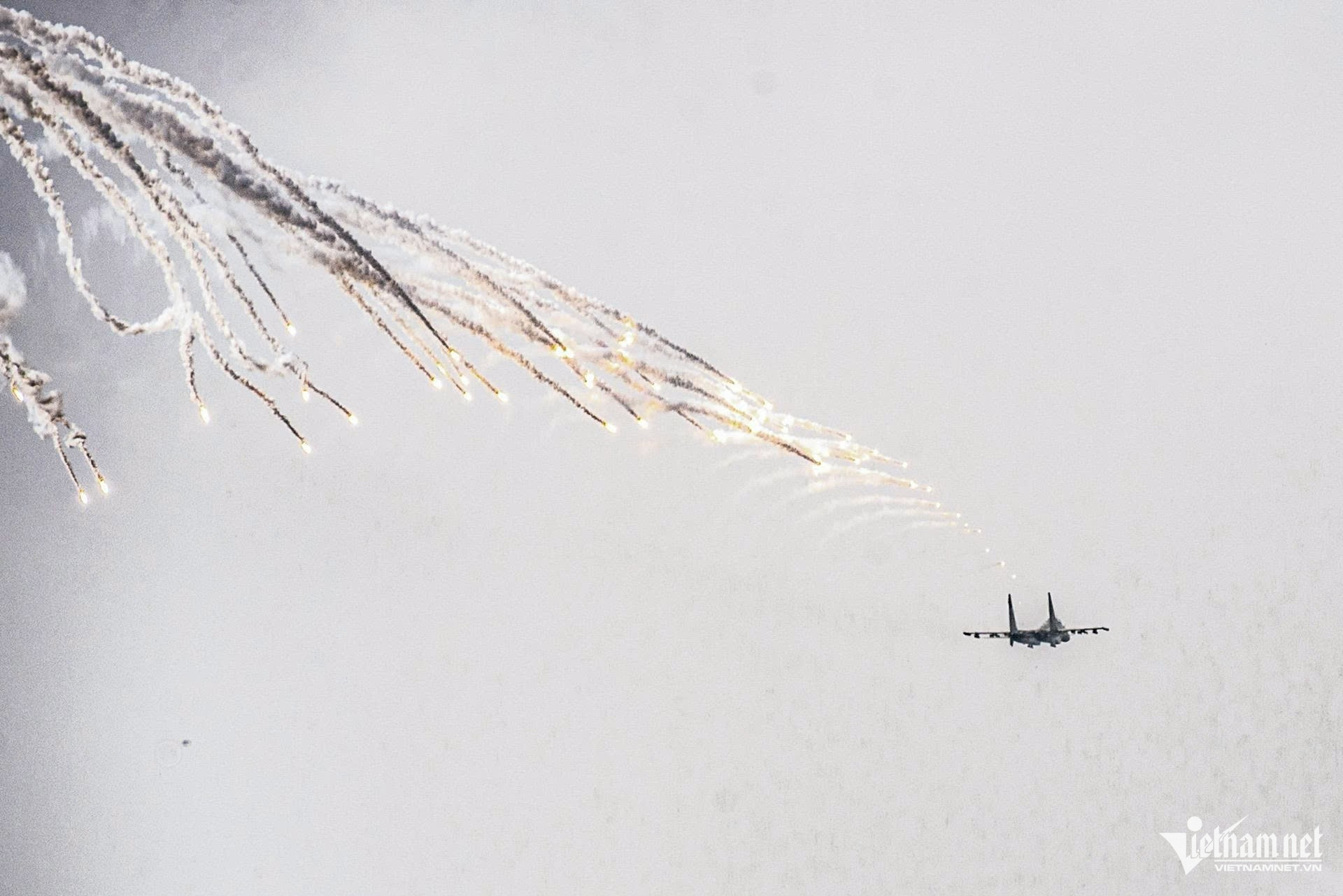
Su-30MK2 fighter jets release infrared flares
Five Su-30MK2 fighter jets flew over Ba Dinh Square, tilting their wings in salute to the people of the nation and releasing infrared decoy flares.
The decision to deploy the flares at this location was carefully calculated by the Air and Air Defense Force.
These infrared flares are part of an active defense system designed to protect aircraft against infrared-guided surface-to-air missiles. The system is mounted at the rear of the Su-30MK2 fighter jets.

Military vehicles and special-purpose equipment move into the square
After nearly 40 minutes of parade formations passing the grandstand, 14 blocks of military vehicles and specialized police equipment gradually moved into the review route in front of the Ho Chi Minh Mausoleum.
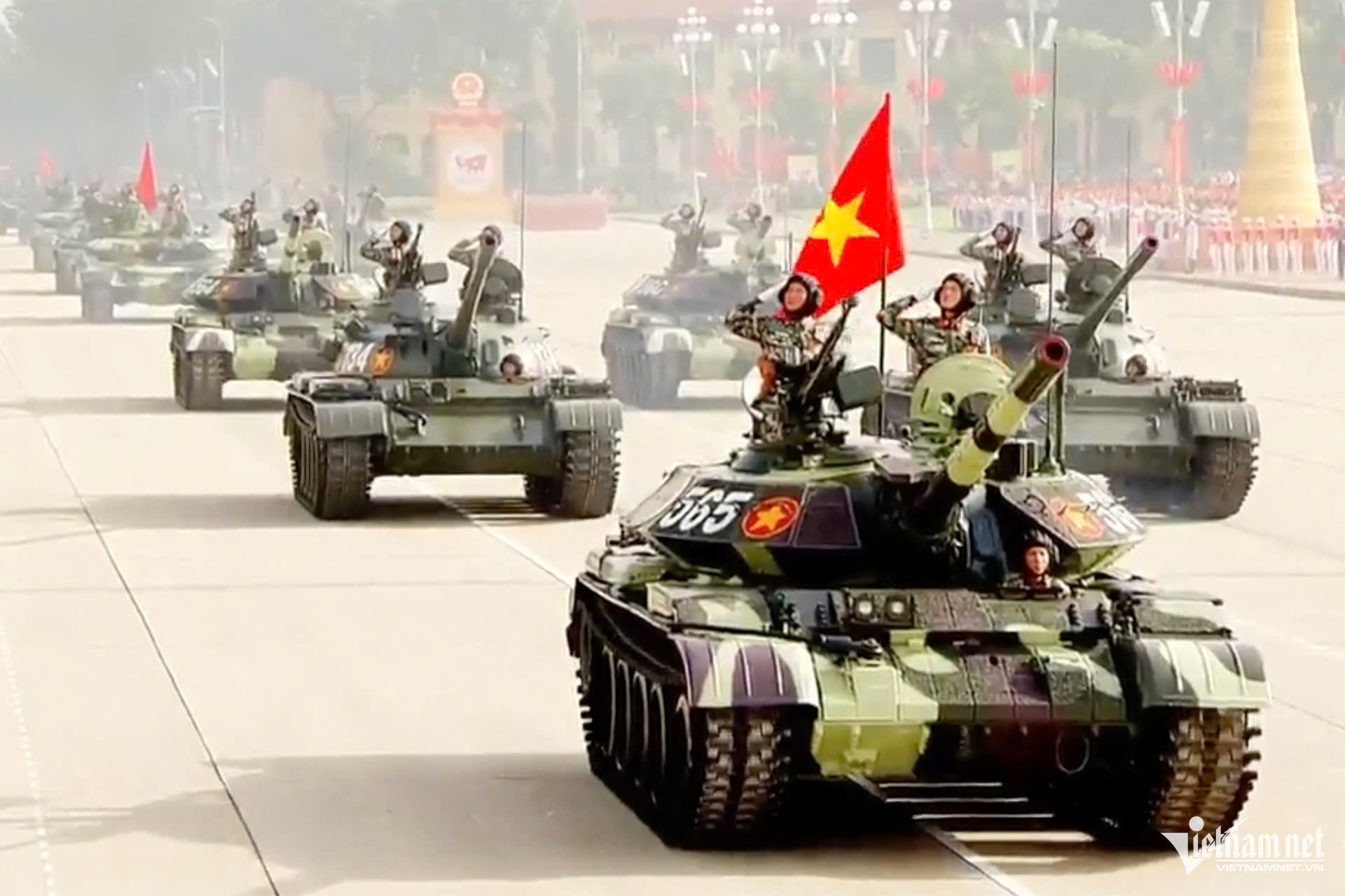
Leading the formation is the block of T-54B and T-55 tanks – true steel fortresses armed with 100mm cannons and machine gun systems. These tanks boast powerful firepower and high mobility. Notably, the T-54B version has been upgraded and modernized to meet the demands of contemporary combat operations.
Following them is the block of T-90S and T-62 tanks, led by the command tank T-90SK. These weapons feature superior smart firepower, excellent mobility, and rapid, precise fire-control systems. They have achieved numerous accomplishments in training and combat readiness, affirming the valor and strength of Vietnam’s heroic armored forces.
Next is the block of amphibious armored vehicles. Leading the group is the BRDM-2 reconnaissance vehicle, followed by the BMP-1 and BMP-2 infantry fighting vehicles. Of special note is the BTR-60PU command and communication vehicle, a Vietnamese-upgraded mobile communication hub ensuring seamless command under any circumstances. It has delivered outstanding results in training and exercises across mechanized infantry and armored units nationwide.
Following that is the block of armored vehicles produced by the General Department of National Defense Industry entering the grandstand. Leading the group is the XCB-01 infantry fighting vehicle, followed by the XTC-02 armored personnel carrier. These modern combat vehicles will contribute significantly to enhancing the combat strength of the military.
Next is the block of military vehicles and artillery from the Artillery - Missile Command. Leading the formation are artillery towing trucks assembled domestically by the General Department of Logistics and Technology under the Ministry of National Defense, branded with the Vietnam People’s Army emblem, pulling 130mm M46 long-barrel guns and 152mm D20 howitzers.
With long-range, powerful firepower, and high combat efficiency, these artillery pieces have once rained down firestorms on invading forces and earned distinguished battlefield achievements.
Continuing the formation is the block of self-propelled artillery systems Su-122 and Su-152. These modern tactical and operational artillery pieces feature high mobility, formidable firepower, rapid fire rates, and high accuracy, perfectly aligned with modern combat requirements.
Closing the formation is the block of BM-21 multiple rocket launchers – a self-propelled system with remarkable flexibility, enhanced firepower, and superior long-range capabilities.
Public security forces parade into the square
Leading the formation is the command vehicle driven by Major General Le Van Sao, Deputy Commander of the Mobile Police under the Ministry of Public Security, representing the heroic People's Public Security forces as they march toward the ceremonial platform. Following closely is the Public Security Honor Guard, bearing the flag of glory for national security, adorned with prestigious decorations awarded by the Party and the State.
Formed during the fervor of the August Revolution in 1945, founded, educated, and trained by the Party and President Ho Chi Minh, and supported wholeheartedly by the people, the People's Public Security forces have shown courage and ingenuity in foiling plots and activities by hostile forces, reactionaries, and various criminals, thereby contributing to the strong defense and construction of the Socialist Republic of Vietnam.
The block of male officers from the People's Security forces proceeds toward the ceremonial platform. With 80 years of development, struggle, and growth, the People's Security forces have thwarted numerous espionage and counter-revolutionary plots, earning exceptional achievements and receiving many prestigious honors from the Party and the State.
Every officer and soldier in the People's Security forces is a silent hero, always dedicated and ready to sacrifice to protect the Party, the State, and the socialist regime.
The block of male officers from the People's Police force follows - a force directly engaged in fighting crime and ensuring public order and safety. The People's Police uphold the tradition of being “intelligent and courageous Vietnamese police, selfless for the nation, devoted to the people,” achieving outstanding accomplishments recognized and highly valued by the Party, the State, and the people. Today, the People's Police are being developed into a professional, elite, and modern force, ready to fulfill their mission in the nation’s era of growth.
Next is the block of male officers from the Guard Command. With more than 70 years of development and service, the People's Public Security Guard force has achieved numerous feats in ensuring absolute safety for President Ho Chi Minh, Party and State leaders, international delegations, and key national events and locations.
With unwavering determination and absolute loyalty, each officer and soldier of the Guard force is a true “steel shield” defending the Party and the nation’s leadership.
The block of male combat reserve Mobile Police follows. This newly established force is tasked with training, rapid deployment, and handling complex security and public order situations, protecting major events and conducting rescue missions.
These officers continuously enhance their tactical skills and knowledge, staying proactive in addressing challenges and maintaining public safety and peace for the people.
Marching next is the block of male cadets from Public Security academies and schools, representing over 50,000 cadets nationwide. Trained in a disciplined environment, they embody youth, capability, and intellect - always ready to take on and excel in any task. They are the next generation, a valuable addition to the cadre of personnel, contributing to the development of a revolutionary, professional, elite, and modern People's Public Security force.
Following them is the block of male grassroots-level public security personnel - formed by reorganizing local civil defense, semi-professional commune police, neighborhood patrols, and exemplary citizens.
After more than a year in operation, this force has increasingly affirmed its role as a vital support to the People's Public Security in ensuring local security and order. It validates the Party's policy of building and promoting the "people’s security posture" in safeguarding national stability, while maintaining deep bonds with the community.
The parade concludes with the cavalry unit of the Mobile Police – a specialized armed force under the Mobile Police Command, established in 2020.
With responsibilities including training and deploying service horses, the Cavalry Mobile Police have successfully participated in criminal prevention, patrols, security assurance, parades in cities and tourist areas, and both national and international events.
Military parade columns begin dispersing through Hanoi streets
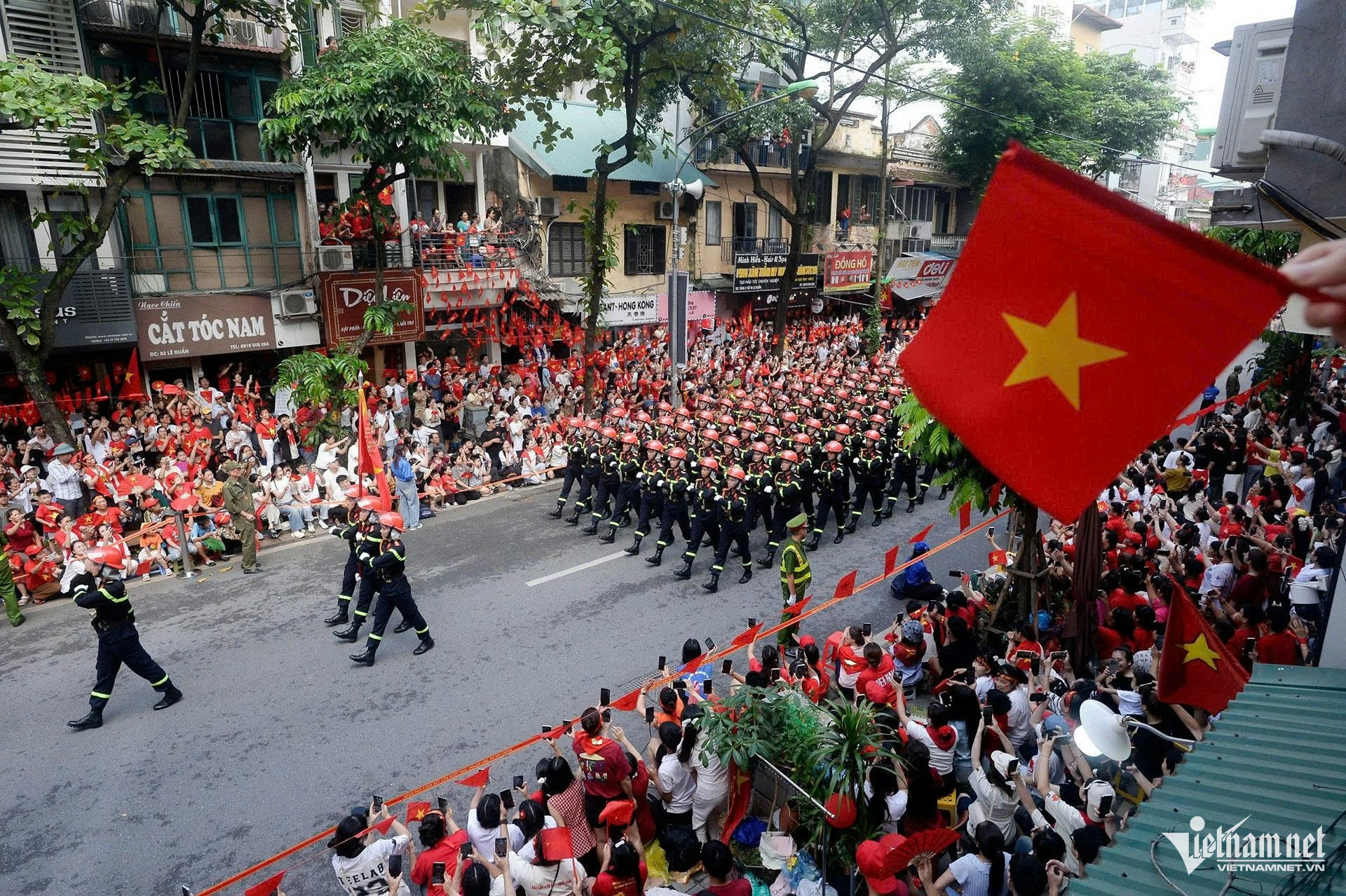
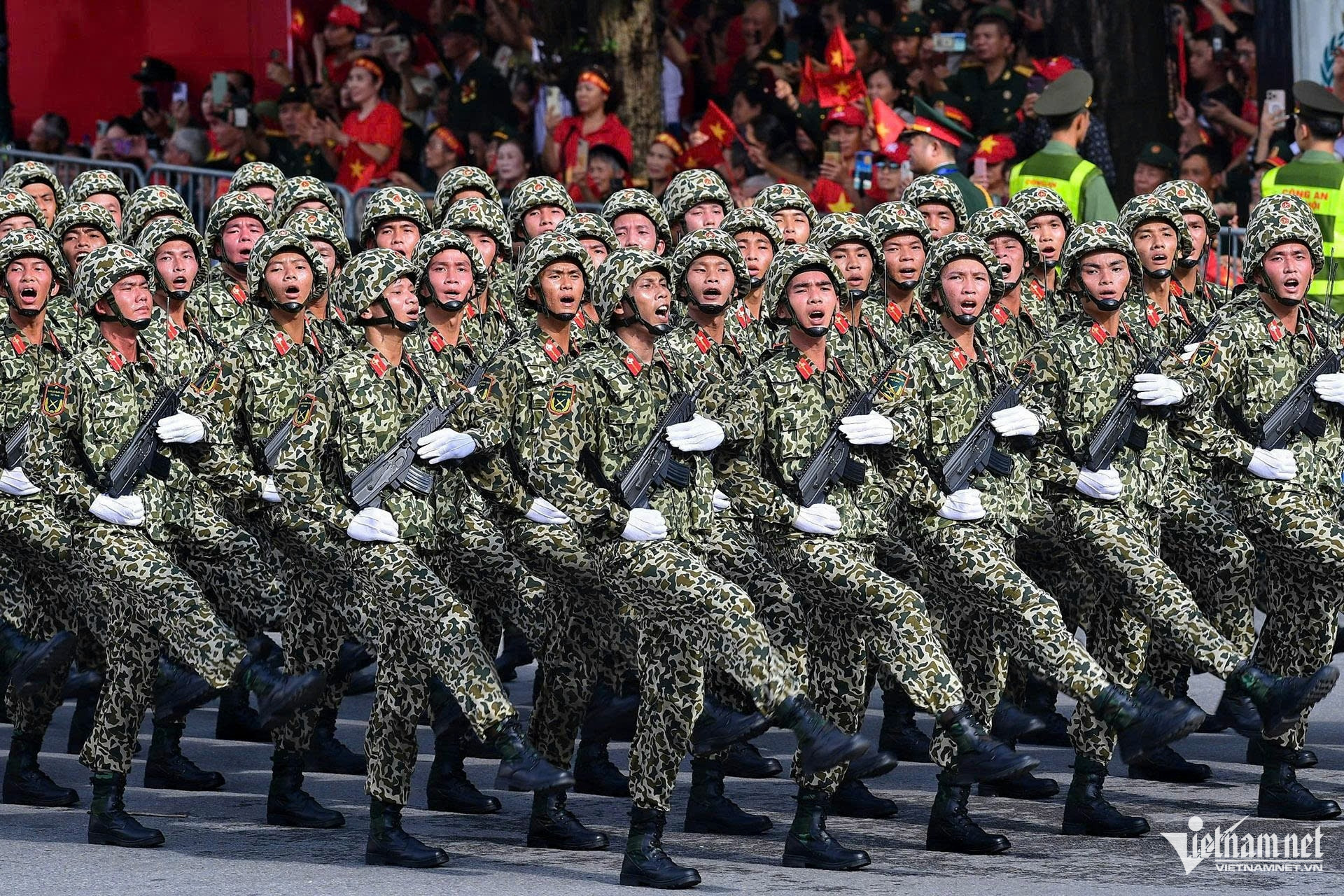
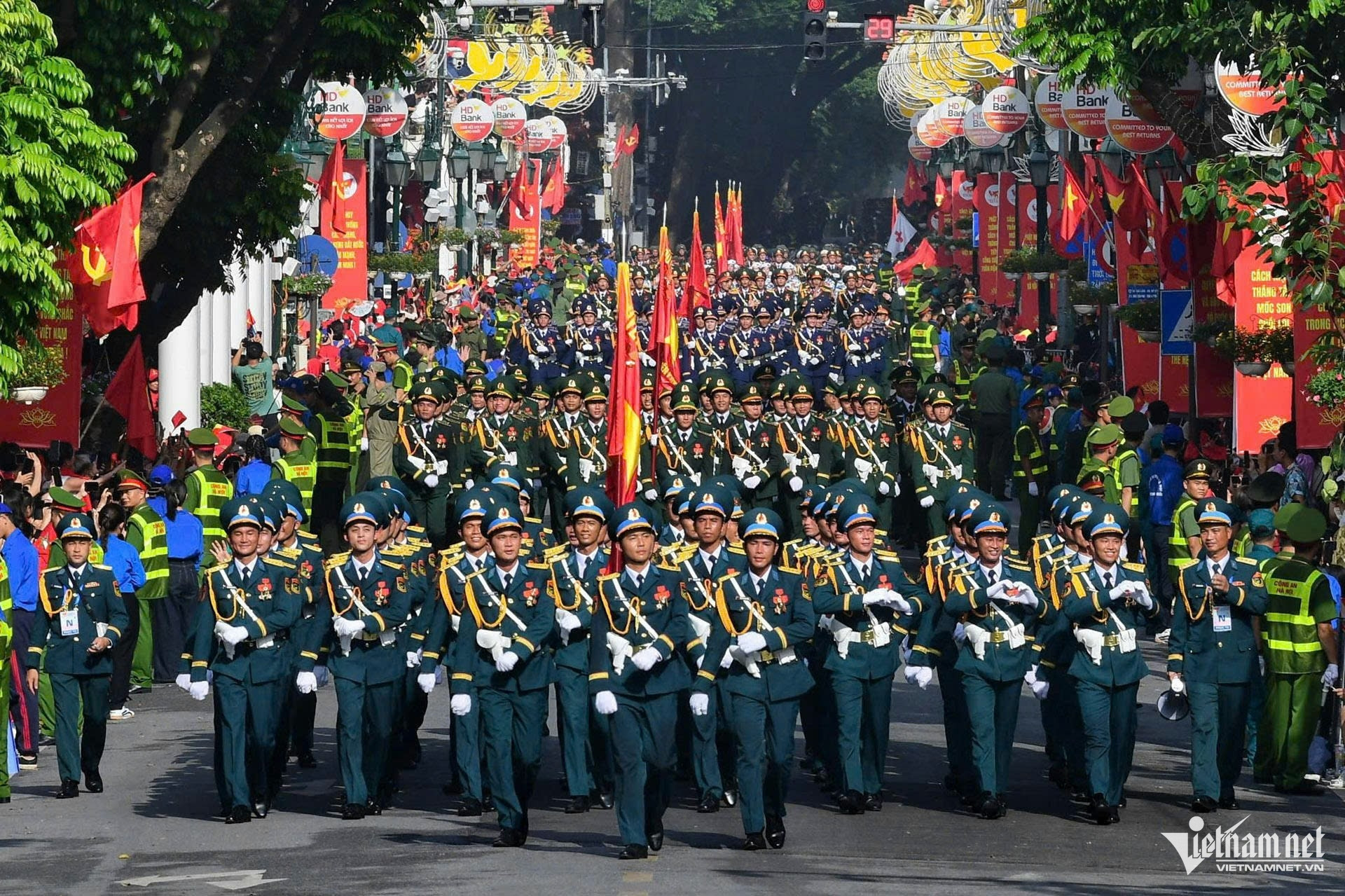
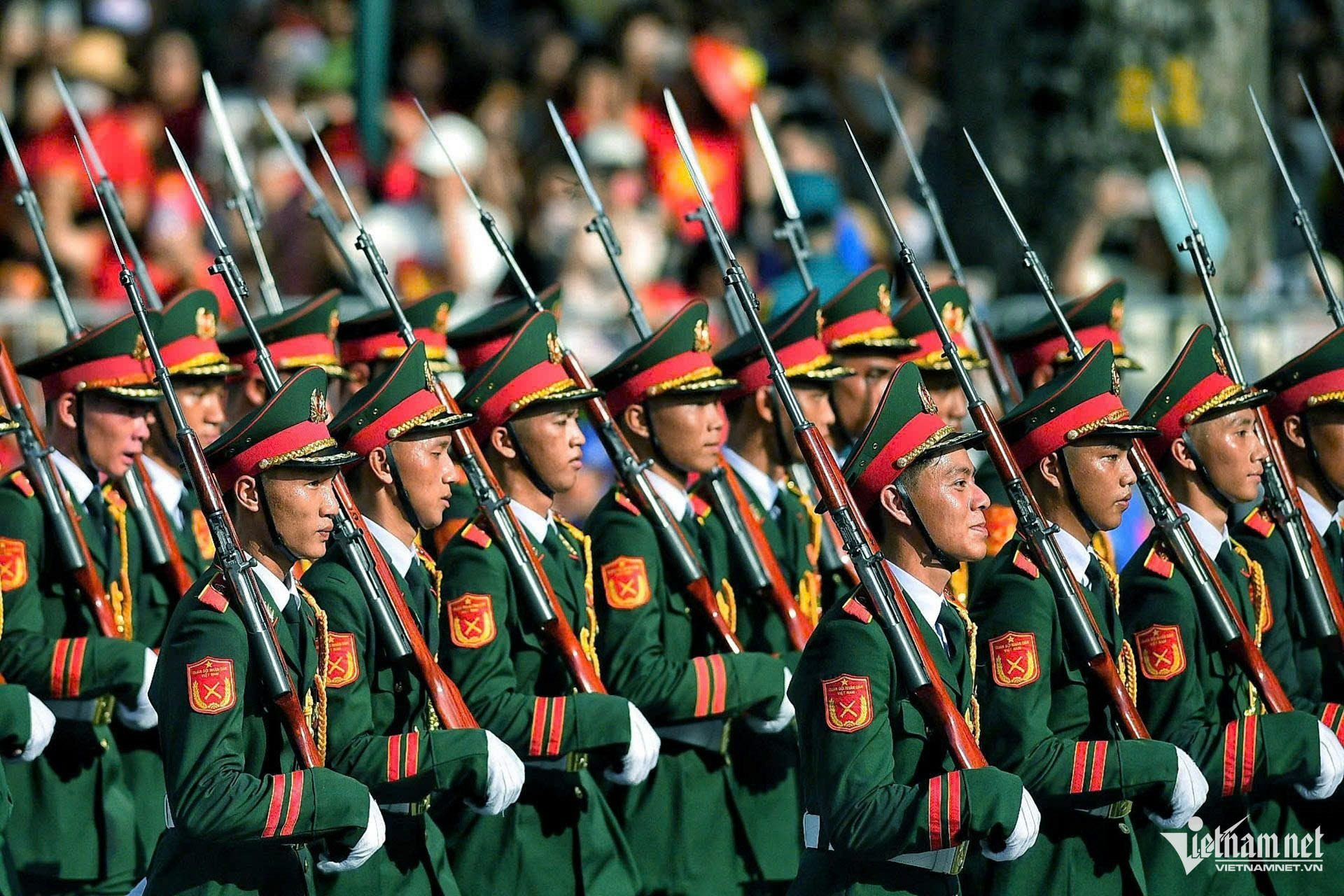
After marching past the grandstand in front of President Ho Chi Minh’s Mausoleum, the parade formations proceeded straight onto Hung Vuong Street to break into separate groups. They then split into seven different directions, marching through major streets such as Nguyen Thai Hoc, Tran Phu, Kim Ma, Cua Nam, Le Duan, Trang Thi, Trang Tien, and in front of the Hanoi Opera House.
Lining both sides of the streets, crowds of people cheered and applauded enthusiastically as each formation passed by.
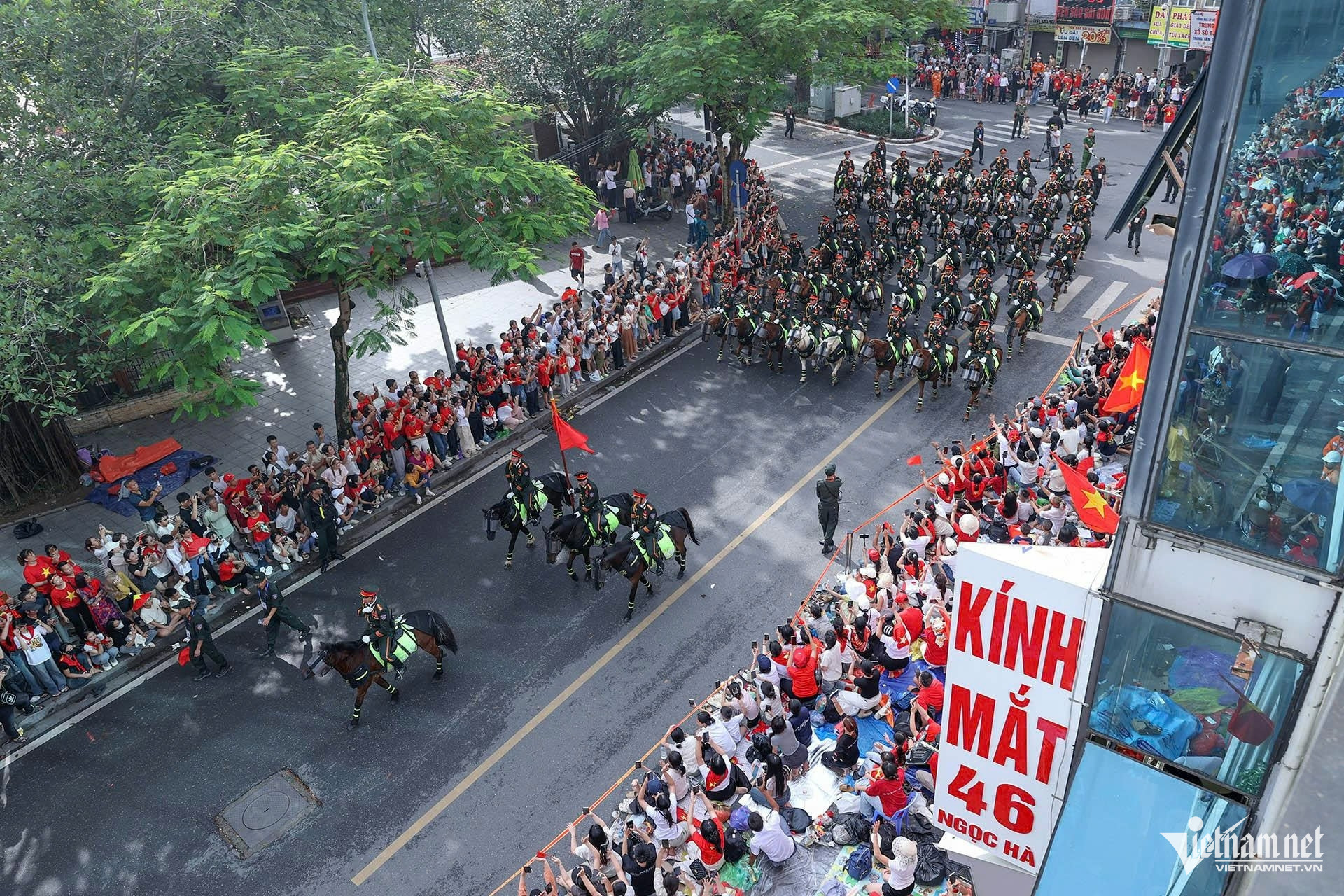
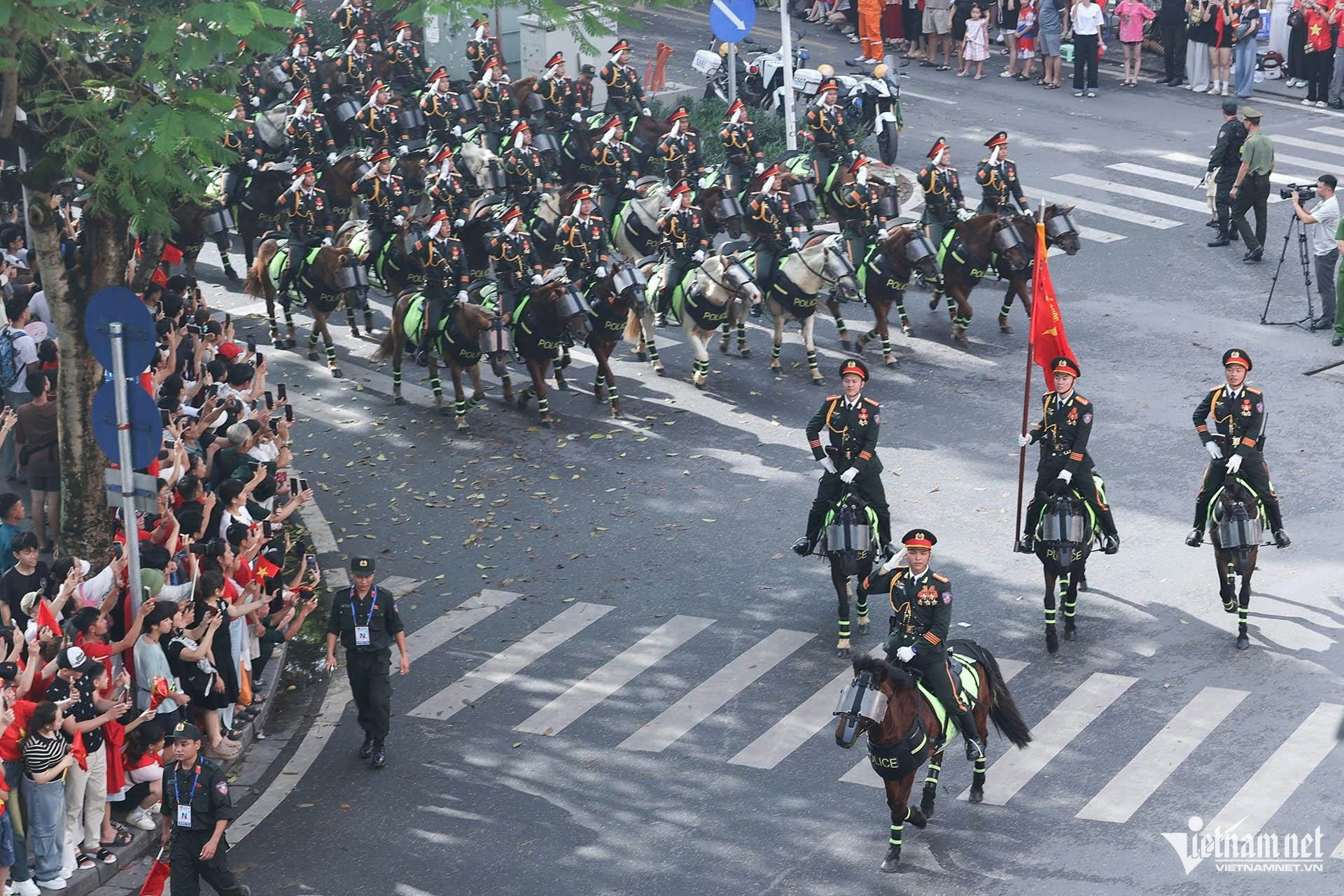
Photo: Le Anh Dung


Foreign military formations enter Ba Dinh Square
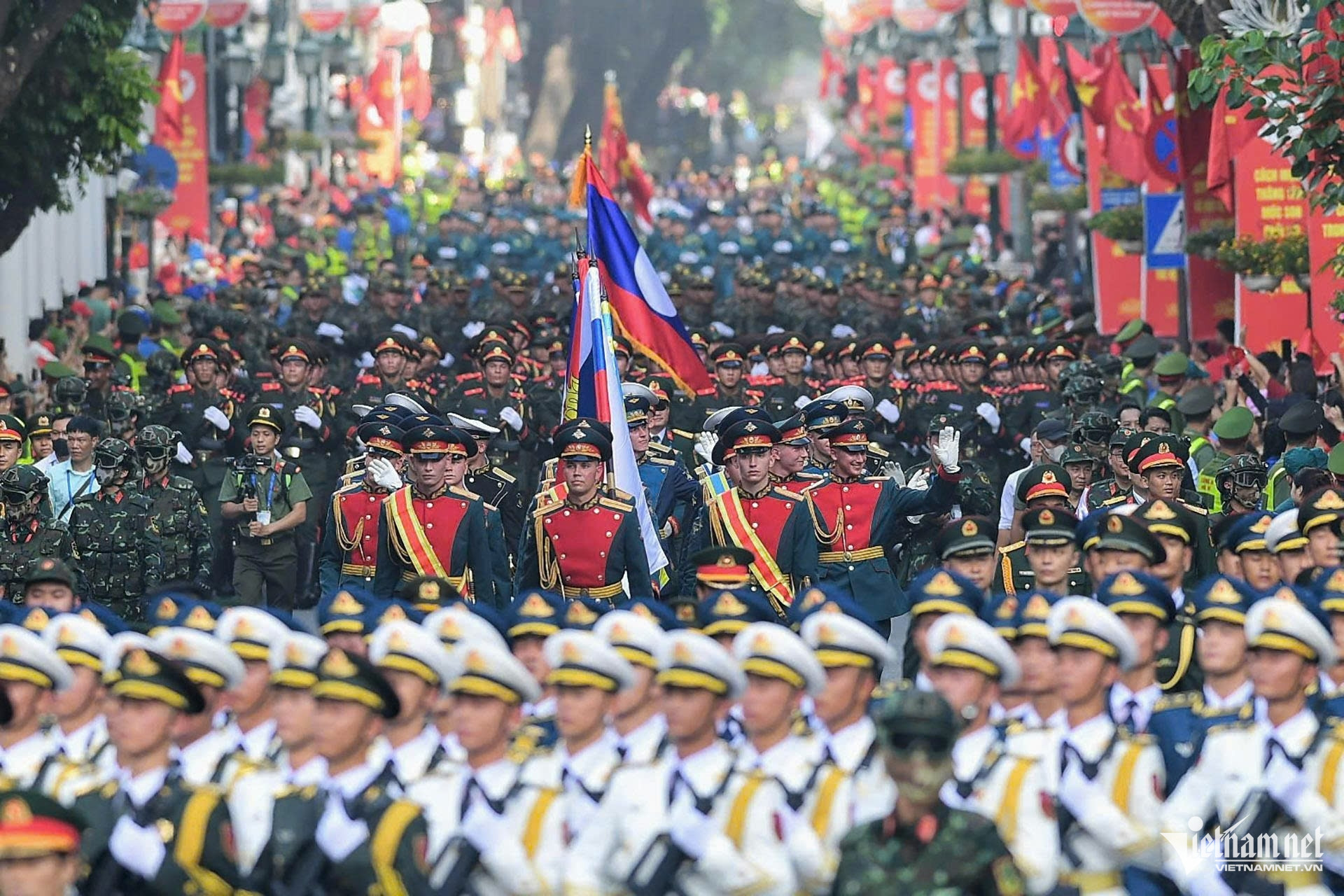
Leading the formation is the ceremonial honor guard of the People's Liberation Army of China, consisting of 120 soldiers. Established in 1952, this is the only unit designated to perform official ceremonies for the Communist Party of China, the Chinese state, and the Chinese military. Over the past 70 years, the unit has successfully completed more than 13,000 ceremonial missions.
The People's Liberation Army of China and the Vietnam People's Army have written glorious pages of history together, united in the fight against invaders, strengthening the relationship of being “both comrades and brothers.”
Following is the Russian Federation National Flag Formation, accompanied by an honor guard representing the three branches of the Russian Armed Forces: the Ground Forces, the Aerospace Forces, and the Navy. The formation is led by Lieutenant Anton Mikhailov.
During the Great Patriotic War, the Soviet Red Army played a decisive role in defeating fascism. Today, Russia’s armed forces continue to be a pillar of global peacekeeping and defense cooperation, further strengthening the traditional friendship and comprehensive strategic partnership between Vietnam and Russia to new heights.
The Lao People's Army formation enters the square - this is the main armed force of the Lao national revolution. Throughout the struggle for national liberation, the armies of Vietnam and Laos stood shoulder to shoulder in battle and triumphed over invading forces.
Today, the Lao People’s Army has been comprehensively developed. The Vietnam–Laos relationship is continuously enhanced, nurturing the great friendship, special solidarity, and comprehensive cooperation between the two nations.
The Royal Cambodian Armed Forces formation enters the square. Historically, the Cambodian and Vietnamese armies have fought side by side for national independence and freedom.
Today, the two militaries continue to strengthen their friendship, solidarity, and comprehensive cooperation, contributing to regional peace and stability.
Military formations continue their march into Ba Dinh Square
The electronic warfare unit was among the next to enter the square. Born and battle-hardened through many resistance wars, the electronic warfare force has played a pivotal role in the nation’s greatest victories.
In the new era, this elite, compact, and modernized force stands ready to protect critical assets of the Party, State, and Army - earning its place as a silent guardian of peace and stability, creating a secure environment for national development.
Following was the airborne special operations unit. This elite force of the heroic Vietnam People’s Army has earned numerous outstanding achievements in national defense and construction. Continuing the proud legacy of military intelligence, today's airborne special operations soldiers undergo rigorous training and remain combat-ready, fulfilling all tasks with excellence. They are a trusted, core force, absolutely loyal to the Party, State, and People.
Then came the cyber operations force - a modern, elite unit built to defend the nation’s digital sovereignty. This force plays a vital role in the military’s overall strategy, continuously growing in strength and effectively carrying out its missions in cyberspace.
In response to new strategic requirements, the cyber operations force has become a pioneer in scientific and technological development, innovation, and digital transformation - contributing to Vietnam’s entry into a new era of development.
Next was the formation of female Vietnamese peacekeepers. Over more than a decade of growth, over 1,000 “blue beret” peacekeepers have been deployed on sacred missions entrusted by the Party, State, Army, and the people. These women embody independence, responsibility, and cooperation, showcasing Vietnam as a reliable partner and responsible member of the international community. They represent the noble qualities of “Uncle Ho’s soldiers” and promote the image of the Vietnamese people and nation to the world.
The armored forces then entered the square. As one of the Army’s key offensive forces, the Armored Corps has, over 66 years of service, built a proud tradition: “Once deployed, victory is assured.” Through generations of dedication, they have recorded historic triumphs.
In the new era, the Armored Corps continues training with modern weapons, maintaining high mobility and combat readiness to decisively defend the Fatherland in all situations.
The artillery and missile forces followed. As the Army’s primary ground firepower, they trace their roots to the earliest days of national resistance - barefoot, with no more than will and courage. Artillery troops fired the first shots of the national uprising and delivered the final blow against the enemy command on April 30, 1975. They built a proud legacy of “Iron shoulders, bronze backs, accurate fire, and decisive victory.” Today’s artillery and missile forces are determined to carry out every mission with excellence.
Then came the commando unit, representing the motto: “Exceptionally elite, heroically brave, strategically bold, striking hard and winning big.” Known for their stealth, surprise attacks, and fearlessness, these commandos have haunted the enemy on every battlefield, contributing greatly to national victories.
With extraordinary courage and unshakable spirit, the Commando Force remains a source of pride for the heroic Vietnam People’s Army.
Following them were the female special operations agents - courageous daughters of Vietnam, often operating deep within enemy lines. These “steel roses” sacrificed their youth to quietly organize, develop, and grow resistance cells in the heart of enemy-controlled areas.
With creativity, courage, and surprise attacks on enemy strongholds, they struck fear into the hearts of their foes.
The engineering corps then advanced. In wartime, combat engineers carved paths through mountains, built bridges, and laid pontoons under constant threat, earning Uncle Ho’s banner: “Paving the way to victory” - a tradition nearly 80 years strong.
Today, the Engineering Corps is advancing toward modernization, excelling in training and combat readiness, building national defense infrastructure, supporting disaster response, rescue and recovery, and demining operations. Their participation in UN peacekeeping missions has earned them the admiration of the Vietnamese people and international friends alike.
Next marched the female signal corps - Vietnam's resilient “steel flowers” - each carrying signal transmission equipment on their backs. For 80 years, these women have overcome adversity with unity, wisdom, and bravery to keep communications flowing.
Now a prioritized modern force, the Signal Corps is committed to ensuring communication is “timely, accurate, secure, and safe” in any situation.
Then came the chemical defense formation. These silent warriors are always prepared to face invisible dangers.
For 67 years, the Chemical Corps has led the effort to defend against weapons of mass destruction, toxic chemicals, biological threats, radiation, and nuclear risks. They have actively mitigated war-related environmental damage and protected public health.
With the motto “Proactive – Timely – Safe – Effective” and a proud tradition of “Excellent defense, skilled combat,” chemical soldiers continue their quiet yet vital service, safeguarding peace for the homeland.
Military formations march past the ceremonial platform


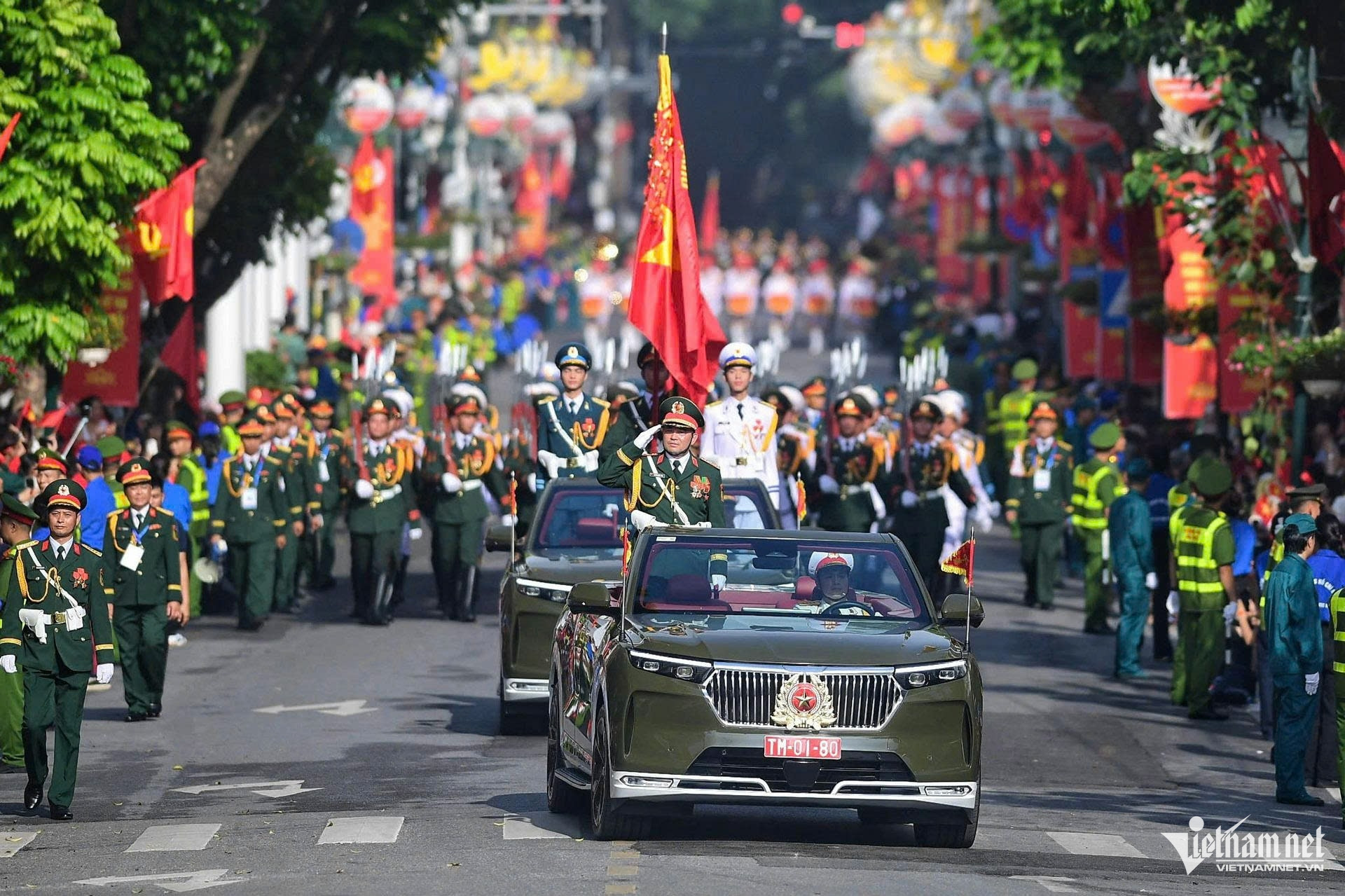
Leading the procession was the command vehicle and the revered Military Flag escort. The command vehicle carried Colonel General Nguyen Hong Thai, Deputy Minister of National Defense, who led the formations representing the heroic Vietnam People’s Army and the militia and self-defense forces as they entered the ceremonial platform.
The “Determined to Fight, Determined to Win” Military Flag fluttered proudly, adorned with prestigious medals symbolizing the bloodshed, sacrifice, and heroic victories that have shaped the proud tradition of the army. As President Ho Chi Minh once praised: “Our army is loyal to the Party, devoted to the people, ready to fight and sacrifice for the independence and freedom of the Fatherland, for socialism; any mission can be completed, any difficulty can be overcome, any enemy can be defeated.” Worthy of the title “Heroic Army of a Heroic Nation.”
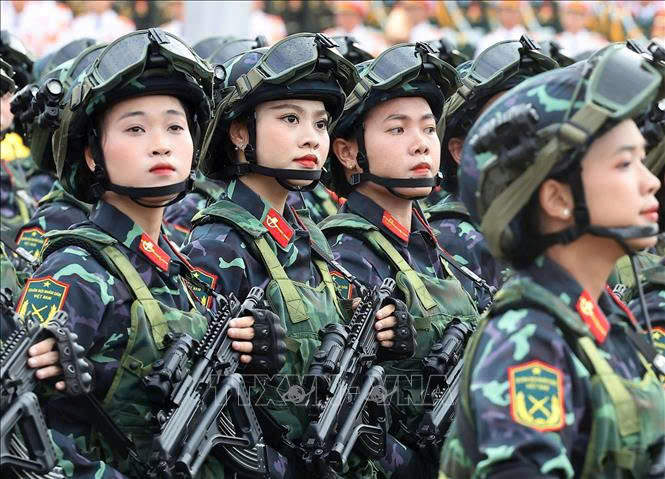
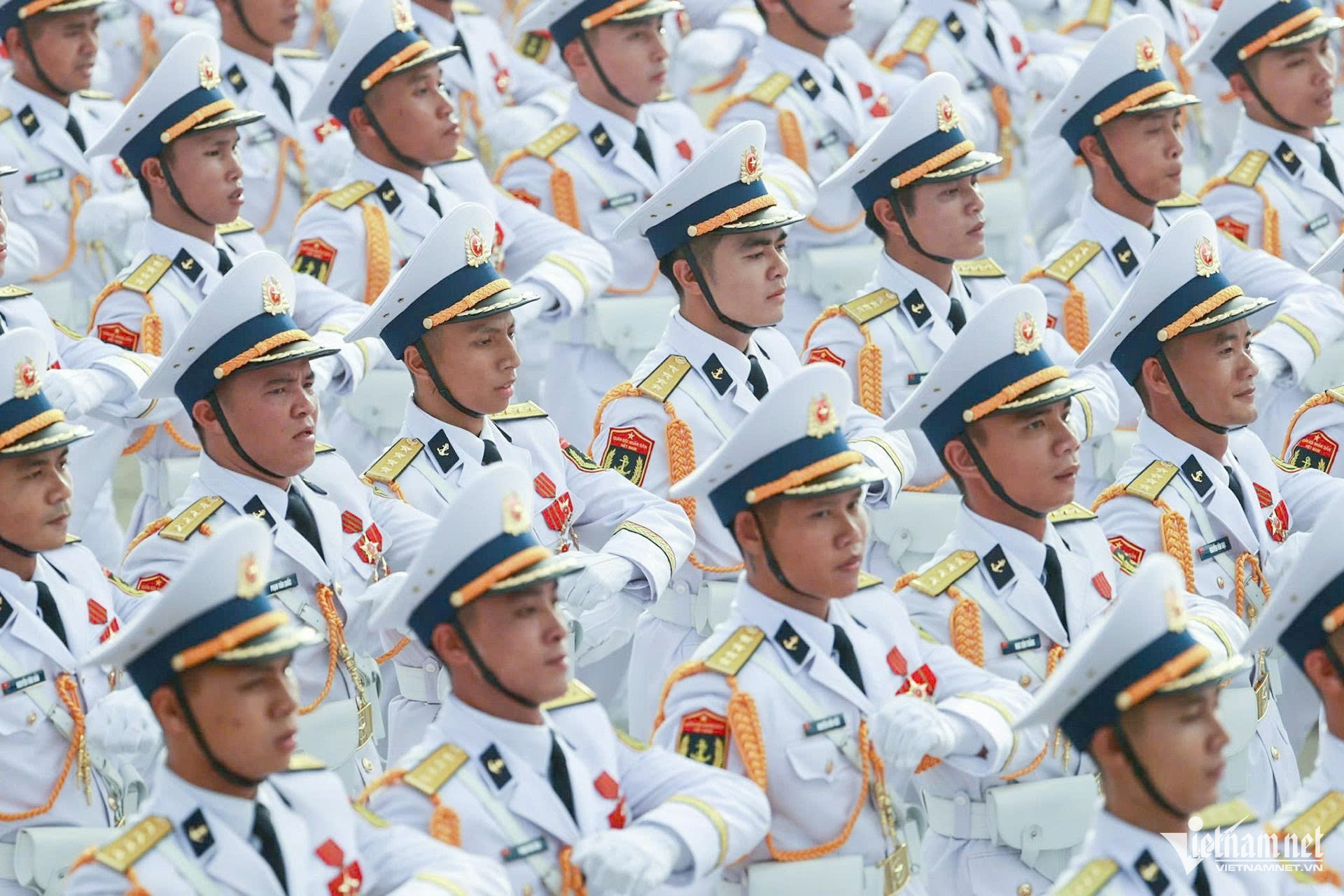
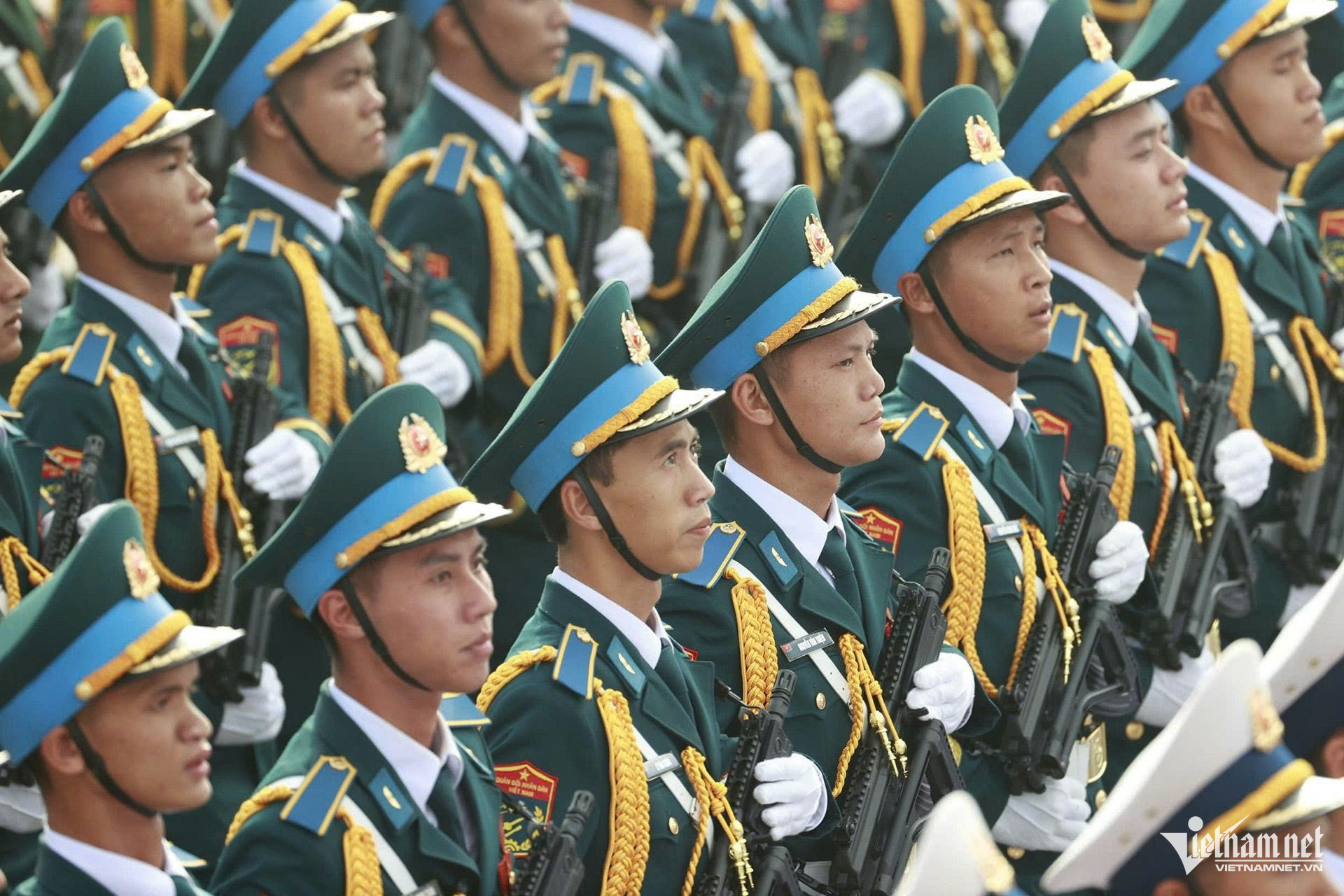
Next came the honor formations of the three main service branches: Ground Forces, Navy, and Air Defense - Air Force. These are the core forces of the Vietnam People’s Army that, together with the people, achieved legendary victories from the globally renowned Dien Bien Phu Campaign to the historic Ho Chi Minh Campaign, playing a central role in national construction and defense.
Today, these forces have been built into revolutionary, regular, elite, and modern armies - always ready to defend the independence and sovereignty of the homeland.
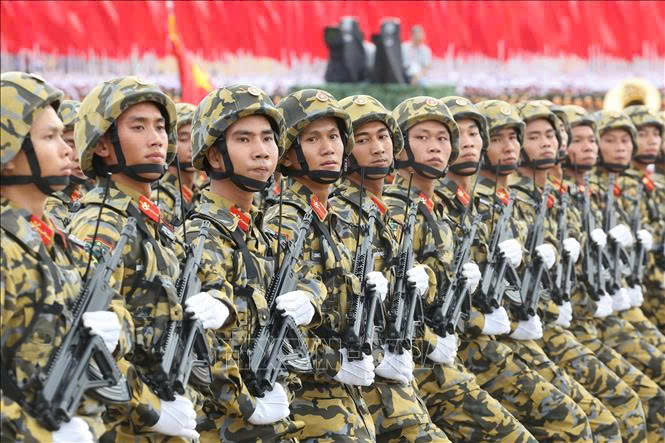
Following them was the powerful sound of the female military band formation. During the fight for national liberation and unification, the battle horns of military musicians bolstered the courage and fighting spirit of the army and the people, helping lead them to victory against all invaders.
Today, those heroic and proud melodies continue to echo during the nation's most important events, inspiring the entire Party, people, and military to unite in building a prosperous and happy Vietnam.
Next was the Ground Forces officer formation. As the core in command, strategy, and direct combat, generations of Ground Forces officers have stood firm on all battlefields, demonstrating unwavering bravery and strategic acumen, earning countless victories.
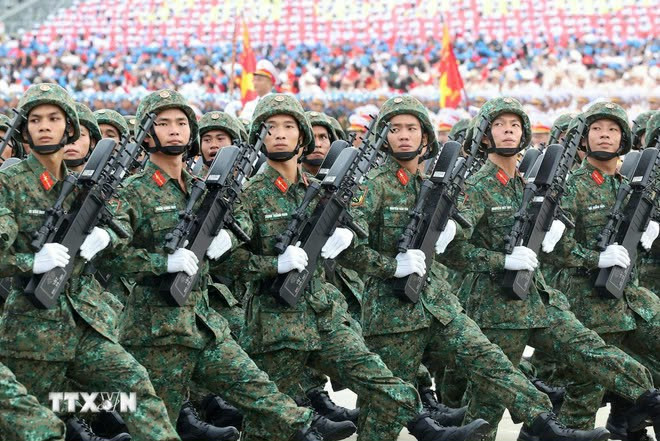
Today, the Ground Forces officer corps continues to be rigorously trained and comprehensively developed, always ready to fight and sacrifice to defend the Socialist Republic of Vietnam and the well-being of its people.
Marching in next was the Naval officer formation. With over 70 years of development, the Vietnam People’s Navy has achieved numerous brilliant feats and contributed significantly to the nation's victories. It has forged the proud tradition of “courageous combat, creative strategy, mastery of the seas, determined to win.”
Today, the Navy continues to be developed into a revolutionary, regular, elite, and modern force, playing a core role in defending the nation's sacred maritime sovereignty.
Following was the Air Defense - Air Force officer formation. In the resistance wars, with the spirit of “daring to fight, knowing how to fight, determined to win,” this force shot down thousands of enemy aircraft and made history with the legendary victory of “Hanoi - Dien Bien Phu in the air,” showcasing Vietnam’s heroic spirit and intellectual might.
Today, the Air Defense - Air Force continues to grow stronger, mastering science and technology, modern weaponry, and advanced combat tactics to firmly defend the country in all circumstances.
Next came the Border Guard officer formation. Guided by the motto “The post is home, the border is homeland” and “Ethnic people are our own flesh and blood,” these elite guardians of the sacred borderlands remain loyal to the Party and devoted to the people. They firmly defend national sovereignty and border security, advise on political foundation-building, support local socioeconomic development, and excel in military diplomacy and people-to-people relations - shining as exemplary “Uncle Ho’s soldiers” in the hearts of the people.
Following them was the Vietnam Coast Guard officer formation - a specialized and core force in law enforcement and national maritime security. With the tradition of “Resolute and courageous, overcoming difficulties, united in coordination, upholding the law,” the Vietnam Coast Guard has achieved many exceptional accomplishments, continuously affirming the resilience and intellect of steadfast sea soldiers who safeguard the sacred maritime territories day and night.
Next marched the officer formations of Logistics, Engineering, and the Defense Industry. Throughout 80 years of the revolutionary journey, these forces have overcome immense hardships, taking initiative in research, production, and timely supply of logistics and technical equipment for combat and victory. Today, these sectors are continuously innovating, applying science and technology, digital transformation, and improving quality to fulfill their missions with excellence.
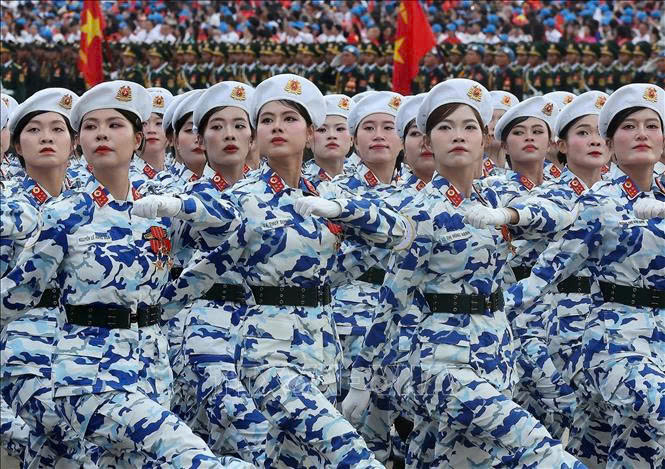
Following them was the female military medical officer formation, clad in their newly designed uniforms with the medical emblem. Inspired by President Ho Chi Minh’s teaching: “A good doctor must also be a kind mother,” these female officers have selflessly served on the front lines - through rain, bombs, and bullets - caring for soldiers and civilians, responding to natural disasters and pandemics, and achieving outstanding results. With a spirit of dedication, they continue to pursue excellence in knowledge, skill, and service, devoting themselves fully to the Fatherland and the people.
Then came the formation of cadets from military academies and schools. These cadets are being trained to become elite commanding officers - the backbone of future military development. Guided by the principles “Study goes hand in hand with practice” and “Training must be close to real combat,” they strive to meet the demands of building a revolutionary, regular, elite, and modern military.
Overhead, a formation of Yak-130 and L-39NG aircraft flew across Ba Dinh Square. These are modern, multi-role training aircraft capable of operating in all weather conditions, day and night. They conduct training, reconnaissance, and precision strike missions on aerial, land, and maritime targets. Their presence affirmed the Vietnam People's Air Force’s combat readiness and national defense capabilities.
Ceremonial vehicle formations enter Ba Dinh Square
In the jubilant atmosphere of Independence Day, the entire nation gathered here to commemorate a glorious golden chapter in the history of Vietnam.
Today’s parade formations recreate and reaffirm the monumental scale and profound significance of the August Revolution, which gave birth to the Democratic Republic of Vietnam - the first people's democratic state in Southeast Asia. It shattered the oppressive rule of colonialism and fascism, abolished feudalism, and marked a historic turning point, transforming Vietnam from a colonized territory into a sovereign, independent nation. The Vietnamese people rose from the status of subjugated subjects to become masters of their own land, ushering in a new era - one of national independence and socialism.
The resounding triumph of the August Revolution and the founding of the Socialist Republic of Vietnam stands as an immortal epic and a brilliant symbol of passionate patriotism. It embodies the strength of great national unity and the fervent aspiration for independence and freedom by a resilient and indomitable people under the leadership of the Communist Party and President Ho Chi Minh. It is a victory of justice, social progress, human dignity, and conscience - an enduring source of inspiration and powerful momentum for national liberation movements worldwide.
Leading the procession was the national emblem of the Socialist Republic of Vietnam. The vehicle’s body was inspired by the “rowing a boat” motif found on ancient Dong Son drums, symbolizing the great national solidarity of the Vietnamese people and their unwavering commitment to the socialist path chosen by the Party, President Ho Chi Minh, and the people. The “Vietnamese Revolutionary Boat” sails proudly toward the shores of glory and happiness.
Marching behind was a formation of 54 outstanding young men and women representing Vietnam’s 54 ethnic groups - united in strength and spirit, contributing to the victories of the vibrant Ho Chi Minh era.
Next came the formation carrying the Party flag and the national flag. The image of the flag waving above historic Ba Dinh Square stands as the soul of the nation - sacred, inviolable, and symbolic of the ideals, belief, resolve, intelligence, courage, and united power of the Vietnamese people.
This is the very source of strength that enables the Party, the people, and the armed forces to succeed in the renewal process and to firmly build and defend the Socialist Republic of Vietnam, advancing the nation toward wealth, prosperity, and lasting happiness.
A vehicle carrying the portrait of President Ho Chi Minh entered the ceremonial platform. President Ho Chi Minh - a visionary leader, founder, and tireless mentor of the Communist Party, a national liberation hero, and the beloved Father of the People's Armed Forces - led the Vietnamese revolution from one victory to another. Though he has passed, his life, career, ideology, morality, and style continue to illuminate the path forward for the Vietnamese people in a new era.

A model vehicle bearing the symbol of the 80th anniversary of the August Revolution and National Day followed. This emblem, rich in meaning, revisits a shining historic milestone for the entire nation, representing the collective yearning for “independence, freedom, and happiness” and the unwavering determination to lead the country toward a brighter future. The formation carrying the national flag was artistically shaped to express strength and momentum, capturing the spirit of “rising and taking flight.”
As the ceremonial vehicles entered the square, overhead, the formation of Casa C-295 and C212i transport aircraft flew in. Known as the “silent warriors,” these aircraft perform critical missions such as joint combat coordination, reconnaissance, transportation, and search and rescue operations.


Parade and procession begin
The most anticipated moment of the celebration: the grand parade and procession.
The highlight of the celebration was the highly anticipated military parade and public procession, featuring a total of 43 marching formations - 26 military units and 17 police units. Also participating were military contingents from China, Russia, Laos, and Cambodia; formations of military vehicles and artillery; specialized police vehicles; naval forces; and 13 civilian parade blocks.
Colonel General Nguyen Van Nghia, Deputy Chief of the General Staff of the Vietnam People’s Army, commanded the parade and procession.
The event began with the aerial formation of the heroic Vietnam People's Air Force soaring through the national skies.
Leading the formation were Mi-171, Mi-17, and Mi-8 helicopters, proudly carrying the Party flag and the national flag fluttering over the historic Ba Dinh Square.
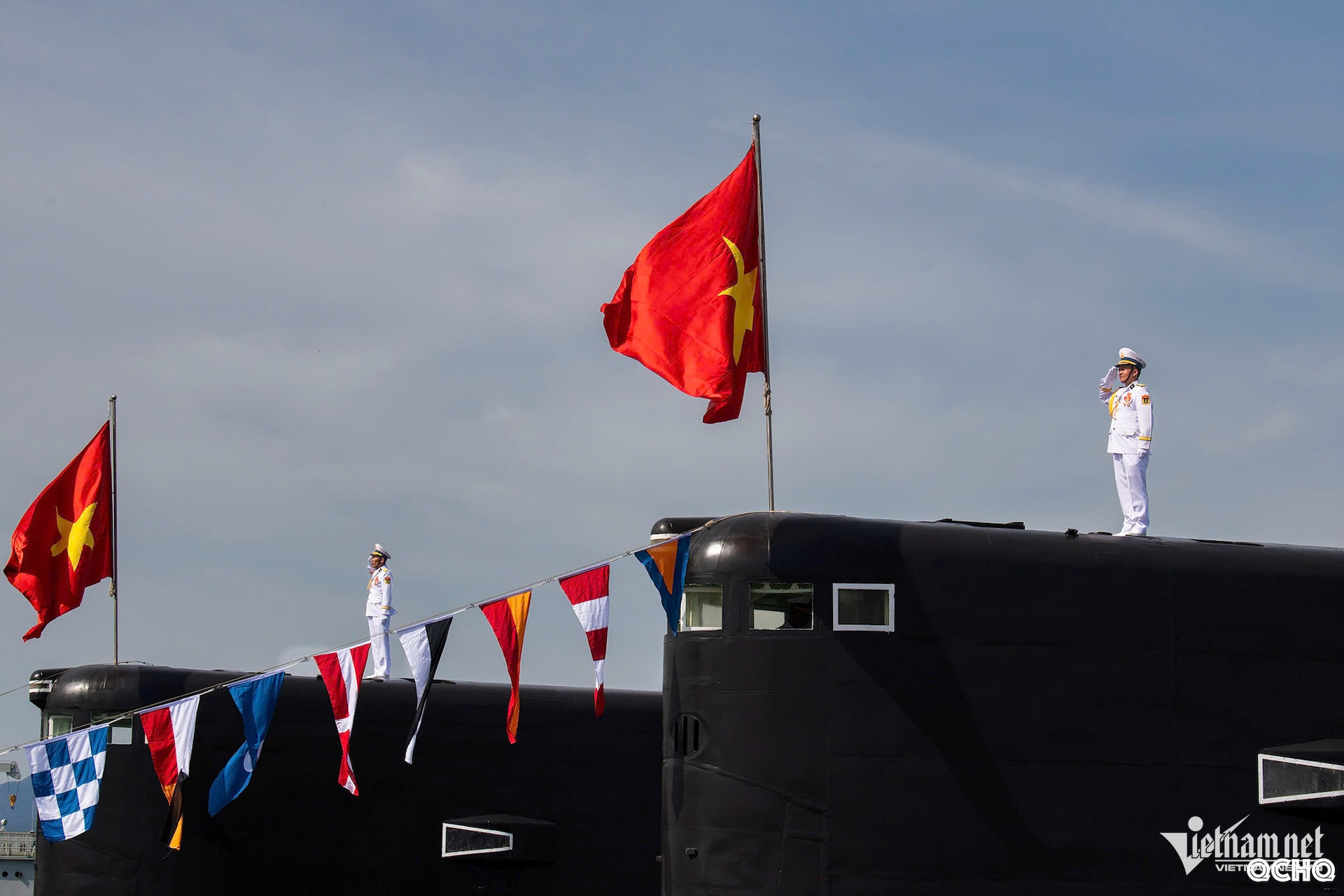
Following the aerial display were the naval parade forces at the Cam Ranh Military Base in Khanh Hoa province.
The maritime units affirmed Vietnam’s strength in asserting control over its seas and skies. From humble beginnings with simple wooden boats, the nation’s naval forces have grown into a modernized and powerful fleet. Today, advanced warships and submarines - equipped with modern combat capabilities to operate in all weather conditions - feature missile systems, torpedoes, and high-tech weaponry with tremendous destructive power, long range, multi-target engagement, and effective strike capabilities against land, air, sea, and underwater targets.
These forces form the core of Vietnam’s maritime defense, serving as a steadfast steel shield on the front lines, safeguarding the nation's sacred maritime sovereignty and continental shelf.


General Secretary To Lam: No obstacle, no reason can stop us from reaching peace and prosperity
Permanent Deputy Prime Minister Nguyen Hoa Binh invited General Secretary To Lam to deliver the keynote address commemorating the 80th anniversary of the August Revolution and National Day.
General Secretary To Lam began by recalling that 80 years ago, at the historic Ba Dinh Square, beloved President Ho Chi Minh solemnly read the Declaration of Independence, proclaiming the birth of the Democratic Republic of Vietnam - now the Socialist Republic of Vietnam - the first people's democratic state in Southeast Asia, ushering in a new era of independence and freedom for the nation.
From that historic moment, the Vietnamese people embarked on a new journey: building a people's government, defending the Fatherland, and advancing firmly along the socialist path toward the goals of “a wealthy people, a strong nation, democracy, justice, and civilization.”

“In this sacred moment, we pay our deepest respects to our ancestors and express boundless gratitude to our great President Ho Chi Minh; we honor the revolutionary forebears and the millions of compatriots and soldiers who sacrificed and dedicated themselves for the independence, freedom, and unification of the nation and the happiness of the people.
We shall forever remember the contributions of Heroic Vietnamese Mothers, war veterans, wounded and sick soldiers, the families of martyrs, and those who rendered great service to the revolution. We also recognize the immense contributions of workers, farmers, entrepreneurs, intellectuals, artists, the elderly, youth, women, children, religious communities, ethnic groups, overseas Vietnamese, and progressive friends around the world who have stood side by side with us and supported the just revolutionary cause of the Vietnamese people over the past 80 years,” he shared.
He emphasized that the Vietnamese homeland is the crystallization of a thousand-year legacy of building and defending the nation - embodying resilience, wisdom, compassion, and a relentless spirit to rise. That spirit forged the mighty force of the August Revolution, the prolonged resistance wars against colonialists and imperialists, the peaceful process of building and protecting the nation, and the path of renovation, international integration, and national development.
According to General Secretary To Lam, that strength originates from the people, belongs to the people, and serves the people. It is the power of the great national unity bloc under the glorious flag of the Communist Party of Vietnam, founded, led, and trained by President Ho Chi Minh.
“We are proud to affirm that every victory in Vietnam's revolutionary journey is tied to the correct and wise leadership of the Party and the ideology, morality, and style of Ho Chi Minh.”
He reaffirmed that the Party, the vanguard of the working class and also the vanguard of the working people and the Vietnamese nation, remains steadfast in the goal of national independence closely linked to socialism. The Party has creatively applied and developed Marxism-Leninism and Ho Chi Minh Thought in accordance with the country's reality at every stage, always placing the interests of the Fatherland and the people above all else.
Thanks to this, our nation has overcome countless difficulties and challenges; our country, once a colony, has become an independent, unified nation steadily advancing toward modernization and deep international integration, with growing international stature and prestige.
General Secretary To Lam stated that safeguarding national independence, sovereignty, and territorial integrity; ensuring national security, social order, and safety to support rapid and sustainable development; and continuously improving the well-being and happiness of the people are the calls to action for today.
Achieving these three goals would fulfill President Ho Chi Minh’s final wish: “My ultimate desire is that our entire Party and people unite to build a peaceful, unified, independent, democratic, and strong Vietnam, contributing worthily to the world revolutionary cause.”
Through 80 years of hardship and heroism, we have affirmed a profound truth: under the glorious banner of the Party, guided by the light of Ho Chi Minh’s legacy, and empowered by the people and the great national unity bloc, there is no difficulty or challenge we cannot overcome; there is no noble goal we cannot achieve.
“Therefore, no obstacle, no reason can stop us from reaching peace and prosperity. Our nation shall endure and flourish,” he declared.
Looking to the future, the Party has set the goal that by 2045, on the 100th anniversary of the nation's founding, Vietnam will become a powerful, prosperous, and happy country. This is the aspiration of the entire people and a solemn pledge to history and to the people.
The General Secretary called on the entire Party, the people, the armed forces, and Vietnamese both at home and abroad to unite through practical and concrete actions - standing shoulder to shoulder to turn aspirations into reality. He urged for greater efforts, stronger determination, and the fullest mobilization of intellect, creativity, and the indomitable Vietnamese spirit to successfully achieve the goals and tasks set by the Party and expected by the people.
“We are steadfast and persistent in protecting our independence, freedom, sovereignty, and territorial integrity - every sacred inch of our land - with the combined strength of the entire nation: political, economic, cultural, scientific, technological, military, diplomatic, and most importantly, the will of the people.
We seek to be a friend and reliable partner to all countries. We uphold international law and the UN Charter, resolving disputes and differences through peaceful means. At the same time, we absolutely will not compromise in the face of any schemes or actions that infringe on our independence, sovereignty, unity, and territorial integrity. We resolutely protect our national and ethnic interests.”
In this solemn moment, it is as though we can still hear the echo of President Ho Chi Minh’s 1945 Declaration of Independence and feel the synchronized heartbeat of millions of Vietnamese with pride, resounding with the vow: “We are determined to die for the Fatherland to live.”
We now more deeply understand the value of Independence, Freedom, and Happiness. We cherish and commit to fostering peace, and we are ever more moved by the sacred meanings of “My people” and “My homeland.”
Once again, we solemnly bow in reverence to the spirit of the great President Ho Chi Minh and the heroic martyrs - those who have become one with the soul of the nation.
The General Secretary extended his warmest greetings to all compatriots, comrades, soldiers across the country, Vietnamese abroad, and international friends on the occasion of the 80th National Day of the Socialist Republic of Vietnam.
Introducing delegates attending the National Day celebration
Following the flag-raising ceremony and opening remarks, Permanent Deputy Prime Minister Nguyen Hoa Binh stated: “Today, at historic Ba Dinh Square—where exactly 80 autumns ago, the great President Ho Chi Minh read the Declaration of Independence, founding the Democratic Republic of Vietnam—the Central Committee of the Communist Party of Vietnam, the National Assembly, the President, the Government, the Central Committee of the Vietnam Fatherland Front, and the city of Hanoi solemnly organize the celebration of the 80th anniversary of the August Revolution and National Day.”
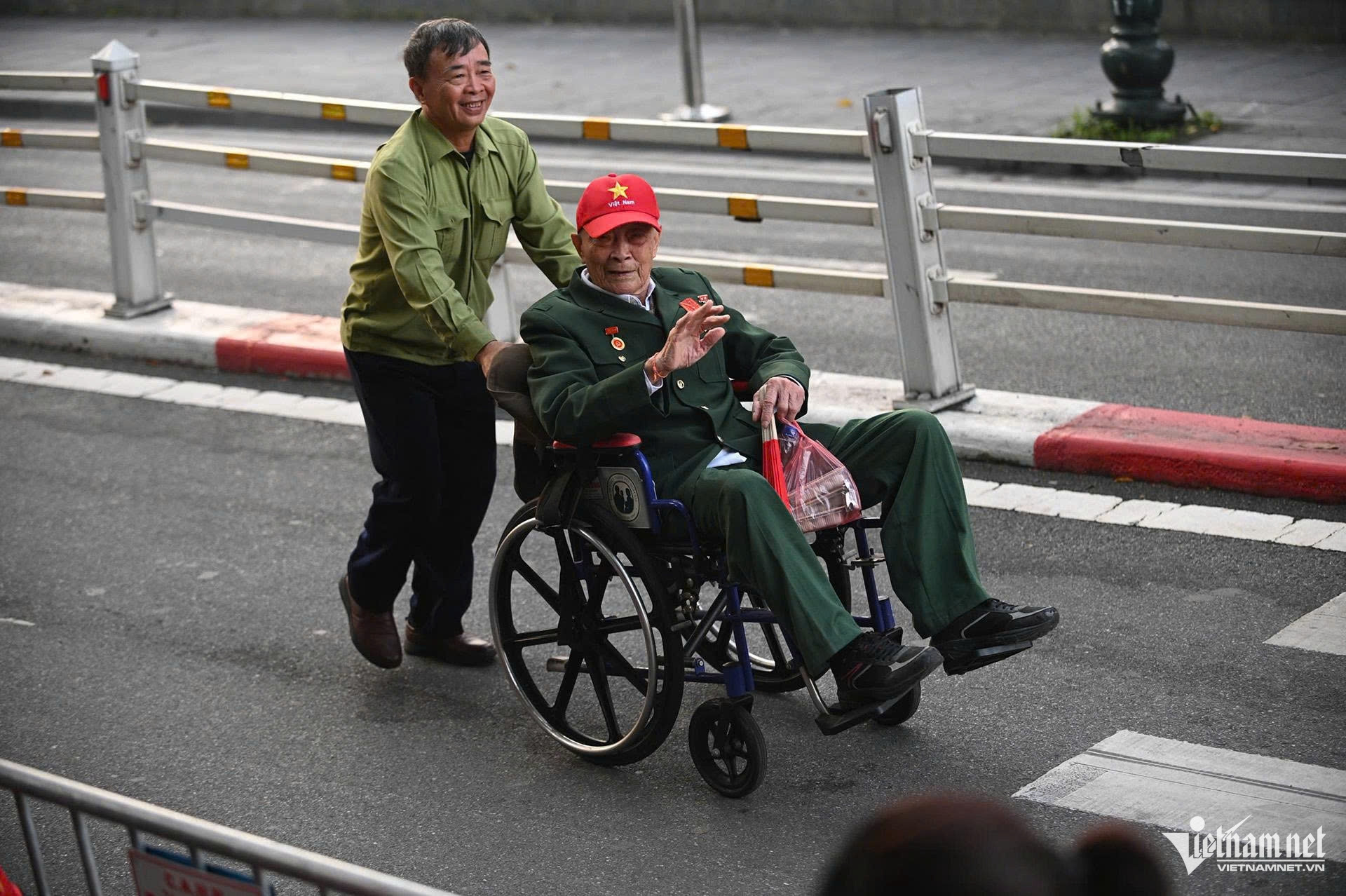
The ceremony was attended by General Secretary To Lam, President Luong Cuong, Prime Minister Pham Minh Chinh, National Assembly Chairman Tran Thanh Man, and other current and former leaders of the Party, State, National Assembly, ministries, departments, and local authorities. Also present were Heroic Vietnamese Mothers, Heroes of the People's Armed Forces, Labor Heroes, senior officers from the armed forces, representatives of war veterans, former police officers, former youth volunteers and logistical personnel, participants in the resistance wars, and families of wounded soldiers, martyrs, and those who rendered outstanding service to the country.
Deputy Prime Minister Nguyen Hoa Binh emphasized that throughout the 80-year journey of securing independence, defending the homeland, and developing the nation, Vietnam has always received valuable support and assistance from international friends and peace-loving people around the world. In this solemn atmosphere, the celebration also welcomed international delegations and representatives of the Vietnamese diaspora.
The international guests included a high-level delegation from the Lao Party and State led by General Secretary and President of Laos Thongloun Sisoulith; a high-level delegation from Cambodia led by Samdech Hun Sen, President of the Cambodian People's Party and Chairman of the Senate; a delegation from Cuba led by Miguel Díaz-Canel, First Secretary of the Communist Party and President of Cuba; a delegation from China led by Zhao Leji, Chairman of the Standing Committee of the National People's Congress; a delegation from Belarus led by Igor Sergeyenko, Speaker of the House of Representatives; and a delegation from the Russian Federation led by Vladimir Yakushev, Secretary General of the United Russia Party’s Political Council and First Deputy Chairman of the Federation Council of the Federal Assembly.
Flag-raising ceremony
Permanent Deputy Prime Minister Nguyen Hoa Binh respectfully invited current and former leaders of the Party and State, the Central Committee of the Vietnam Fatherland Front, all delegates, honored guests, and fellow citizens and comrades to stand for the flag-raising ceremony.
As the national anthem echoed through the square, images of military personnel and civilians saluting the flag from across the country were broadcast on a large LED screen.
At the same moment, at My Dinh National Stadium, the ceremonial artillery unit fired a 21-gun salute in unison to the sound of the anthem. The cannon salute was broadcast live to Ba Dinh Square.
Torch relay marks the beginning of National Day celebration
Permanent Deputy Prime Minister Nguyen Hoa Binh officially announced the commencement of the military parade and procession commemorating the 80th anniversary of the August Revolution (August 19, 1945 - August 19, 2025) and National Day (September 2, 1945 - September 2, 2025).
He invited leaders, delegates, and fellow citizens nationwide to witness the traditional torch relay.
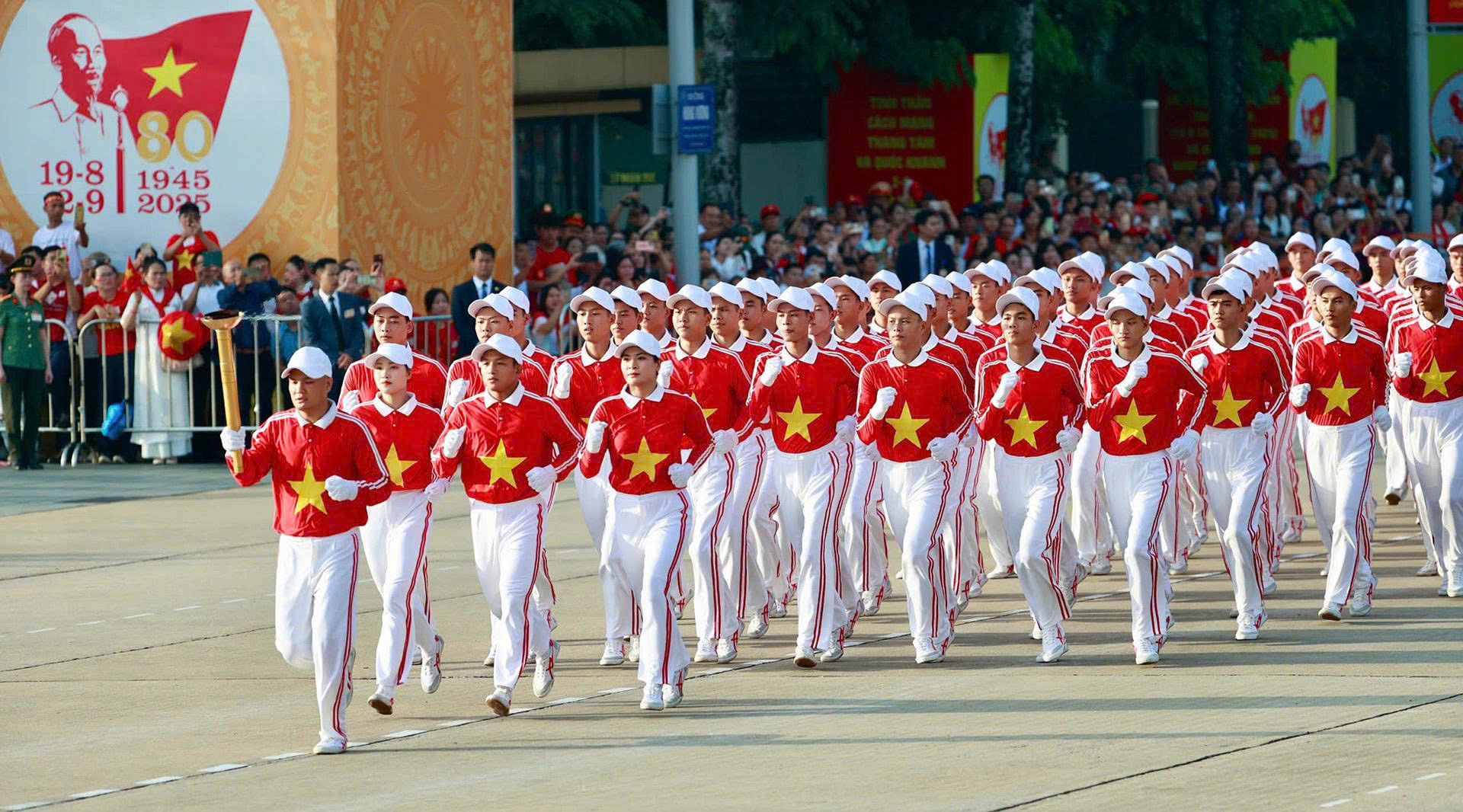
The ceremony began with the torch relay conducted by a ceremonial team carrying the flame from the Ho Chi Minh Museum to Ba Dinh Square. In 1995, the sacred flame was brought from Pac Bo (Cao Bang) - the birthplace of the revolution - to Hanoi and solemnly offered to President Ho Chi Minh at Ba Dinh Square. It was in Pac Bo in 1942 that Nguyen Ai Quoc (President Ho Chi Minh) wrote the prophetic lines:
"The revolutionary fire lights up the land - Illuminates the flag of independence and freedom!"
The flame he ignited then became the spark of national liberation, lighting the path to the success of the August Revolution.
The traditional flame symbolizes the enduring will, eternal strength, and everlasting aspiration of the Vietnamese people. Forged from thousands of years of nation-building and defense, it was carried from the Ho Chi Minh Museum into Ba Dinh Square.
The torch relay team comprised 80 athletes, symbolizing 80 years of independence, led by Captain Bui Quoc Tung (a boxing athlete). Escorting the sacred flame were First Lieutenant Tran Huu Nguyen (a swimmer), along with track-and-field athletes Captain Nguyen Linh Na and First Lieutenant Bui Thi Nguyen. They represented the vibrant youth and strength of the new generation of Vietnamese.
The flame was lit atop the ceremonial cauldron, calling upon the entire Party, people, and army to unite as one, uphold the patriotic tradition, foster national solidarity, and resolutely build and protect the Socialist Republic of Vietnam.
The torch was handed to Lieutenant General Nguyen Duc Soat, People's Armed Forces Hero and former Deputy Chief of the General Staff of the Vietnam People's Army. Known for his extraordinary achievements, including shooting down six enemy aircraft, he is one of the heroic fighter pilots of the Vietnamese military. He lit the ceremonial cauldron with the sacred flame.
The flame blazed brightly, honoring the 80th anniversary of the success of the August Revolution and the National Day of the Socialist Republic of Vietnam.

Honor guard takes position
Colonel General Nguyen Van Nghia, Deputy Chief of the General Staff of the Vietnam People’s Army, commanded the honor guard to take their positions on the field at Ba Dinh Square.
Twenty soldiers from the Command of the Ho Chi Minh Mausoleum solemnly marched to their designated spots, tasked with guarding and securing the ceremonial platform.
Opening ceremony of the 80th National Day celebration
The celebration began with a grand drum performance titled “Drums of the Homeland,” featuring 2,000 performers from the National Festival Drum Art Troupe. The performance symbolized Vietnam’s rich cultural identity and the nation’s enduring aspiration for peace.

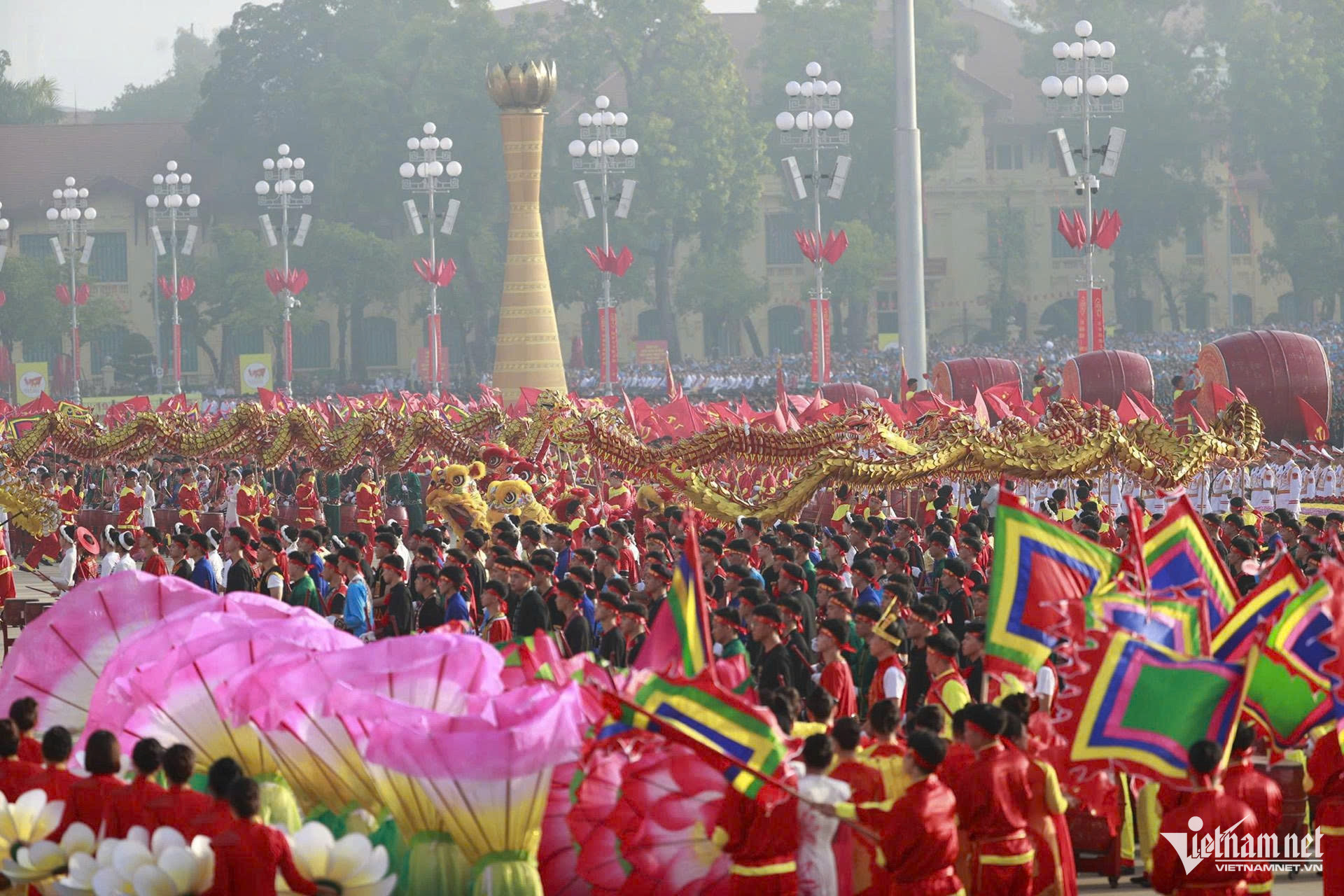

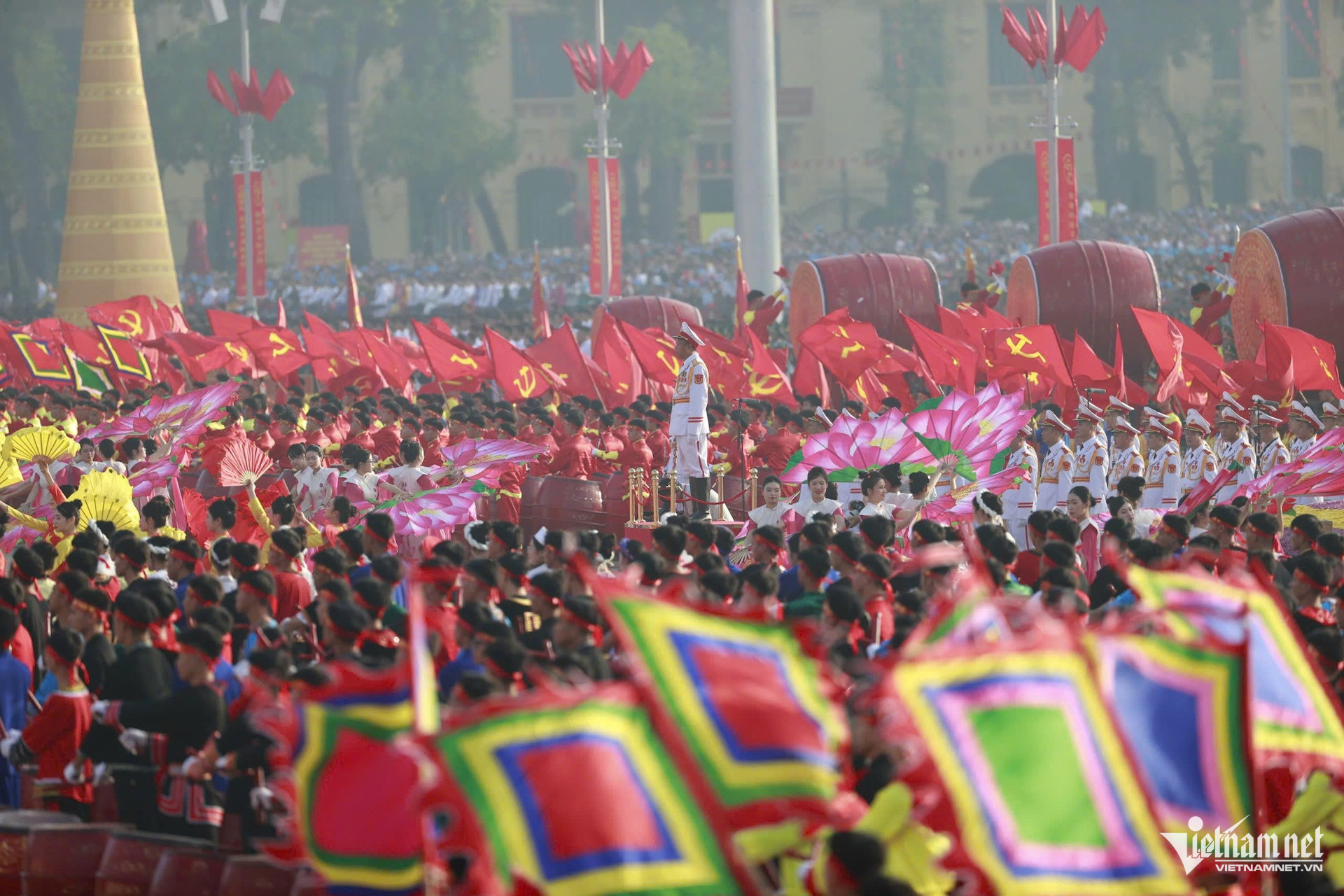
Hanoi awash in red flags and national pride
The vibrant atmosphere of the 80th anniversary celebrations swept across Hanoi, with Party and national flags fluttering throughout the city. Skyscrapers, government buildings, and offices were adorned with massive posters themed around independence, freedom, happiness, and national development. Outdoor LED screens displayed images of President Ho Chi Minh, the 80th-anniversary emblem, and scenes of progress in Hanoi and Vietnam.
Familiar streets turned red with patriotic color, as people donned shirts with red flags and yellow stars, celebrating the country’s Independence Day right on the streets.
Thousands line up early to witness the historic parade
Hanoi had experienced evening showers in recent days, yet the rain conveniently ceased just before rehearsals. Last night was no exception - by midnight, the skies had cleared, offering a cool and pleasant climate, making outdoor preparations easier for the forces and more comfortable for those waiting to watch the event.
According to the National Center for Hydro-Meteorological Forecasting, Hanoi was expected to have light, intermittent rain on September 2, clearing up with mild sunshine between 6 and 8 a.m.
At the area near My Dinh Stadium, crowds gathered early to witness the ceremonial fireworks rehearsal. Many arrived in advance to secure ideal viewing spots. Meanwhile, the 30,000-seat grandstand at Ba Dinh Square was fully occupied. Thousands stood in designated blocks below, with large screens behind them broadcasting the naval parade and scenes from Ba Dinh Square.
Parade formations arrive and rehearse before showtime
As the clock approached the official start, parade formations continued practicing at Ba Dinh Square. The chants of “forward march” rang out as military music played from speakers, accompanied by drums and commanding voices, creating a solemn atmosphere.
The square was decked out with flowers and flags. LED screens prominently displayed the message: “Parade celebrating the 80th anniversary of the August Revolution and National Day of the Socialist Republic of Vietnam.”
One by one, parade units moved into formation as citizens welcomed them with cheers. Soldiers, resplendent in uniforms and medals, marched in disciplined precision. Each unit bore distinct features based on military branches, equipment, and gear.
Route map for the marching units
After passing the ceremonial platform, the parade units followed seven different routes.
The ceremonial group turned onto Nguyen Thai Hoc - Trang Thi - Trang Tien, ending at August Revolution Square.
The marching groups (military, police, militia, and foreign delegations) followed three main routes: Nguyen Thai Hoc - Kim Ma - Lieu Giai - Van Cao - Quan Ngua Stadium; Nguyen Thai Hoc - Trang Thi - Trang Tien - August Revolution Square; Nguyen Thai Hoc - Le Duan - Thong Nhat Park.
The mobile police and cavalry units turned onto Le Hong Phong - Ngoc Ha, ending at Bach Thao Park.
The red flag block turned onto Le Hong Phong - Doi Can - Giang Van Minh - Kim Ma - Lieu Giai, ending at Quan Ngua Sports Center.
The mass organizations marched straight through the platform and ended at Hang Day Stadium (model vehicles turned onto Nguyen Thai Hoc - Trinh Hoai Duc).
The tank and tracked vehicle formations turned onto Le Hong Phong toward the Ministry of National Defense Command Center.
Mechanized vehicles followed two main routes: Cua Bac - Nghi Tam - Au Co - Vo Chi Cong - Lang Street - Tran Duy Hung - Thang Long Avenue - Le Quang Dao - F1 Racetrack; and Nguyen Thai Hoc - Giang Vo - Lang Street - Tran Duy Hung - Thang Long Avenue - Le Quang Dao - F1 Racetrack.
At Quan Ngua Cultural Palace and August Revolution Square, art exchange activities took place to foster connections between the armed forces and the public.
Dawn preparations ignite patriotic spirit
From early morning, more than 16,300 troops, military vehicles, specialized police vehicles, and mass participants positioned themselves along key streets, ready to move into Ba Dinh Square.
On routes such as Kim Ma, Lieu Giai, Nguyen Thai Hoc, Nguyen Tri Phuong, Le Quang Dao, Trang Tien, Tran Phu, and Hung Vuong, the sidewalks were packed with citizens eager to catch a glimpse of the marching formations.
Hanoi police had set up cordons to clearly designate public viewing areas. Despite hours of waiting, the crowd’s excitement and patriotic enthusiasm never waned. They sang and encouraged one another through the night until the historic morning dawned.




.svg)
