 Vietnamnet.vn

 Podcast



On the afternoon of April 22 in Hanoi, the Party Committee of the Ministry of Ethnic and Religious Affairs held a conference to review first-quarter performance and outline tasks for the second quarter of 2026. Member of the Party Central Committee, Party Secretary and Minister of Ethnic and Religious Affairs Nguyen Dinh Khang chaired the meeting.
Attendees included members of the Party Standing Committee, the Executive Committee of the Ministry’s Party organization, heads of departments and affiliated units, as well as representatives from the Government Party Committee, the Central Organization Commission, the Central Internal Affairs Commission, the Central Inspection Commission, and the Party Central Office.
Notable achievements in the first quarter of 2026
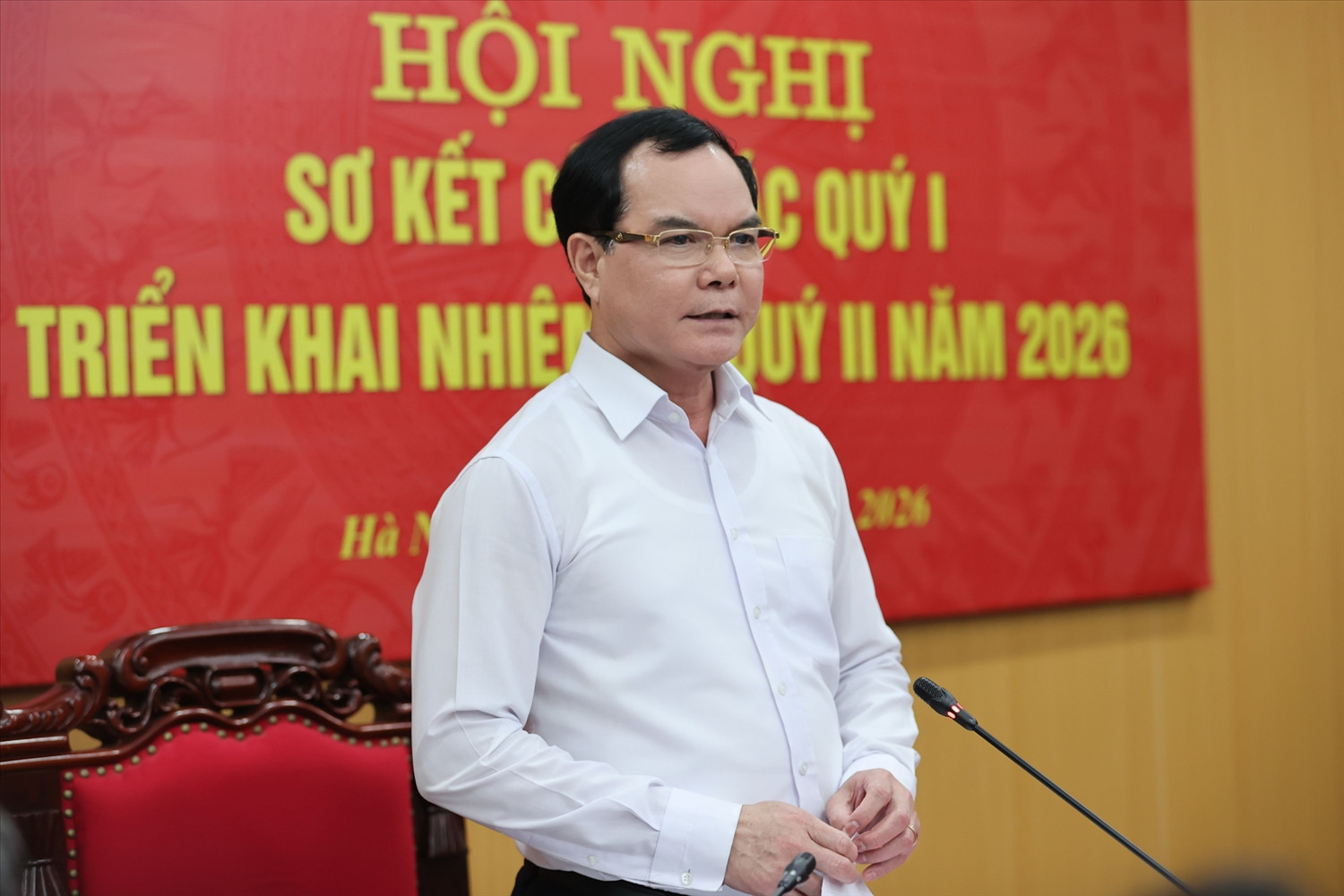
Member of the Party Central Committee, Party Secretary and Minister of Ethnic and Religious Affairs Nguyen Dinh Khang speaks at the conference. Photo: Le Anh Dung
A report presented at the conference showed that in the first quarter of 2026, the Party Committee of the Ministry of Ethnic and Religious Affairs provided comprehensive leadership and direction across all areas, achieving a number of important results.
Party building efforts continued to receive strong attention, particularly in studying and implementing resolutions and directives from the Central Committee in alignment with the sector’s political tasks. Ideological work among officials, Party members, civil servants, and employees was carried out effectively, especially during the process of streamlining organizational structures within departments and affiliated units.
Subordinate Party organizations promptly disseminated and implemented Party directives and resolutions to all members. Party committees at various levels closely coordinated with the leadership of departments and units in directing and managing professional tasks in accordance with their assigned functions and responsibilities.
In terms of professional work, the ministry actively advised the Government and the Prime Minister on key policies related to ethnic and religious affairs, while focusing on removing obstacles and promoting socio-economic development in ethnic minority and mountainous areas.
Alongside these achievements, the conference also candidly acknowledged several limitations. The implementation of some tasks remained slow, coordination among units was not always synchronized, and the grasp of grassroots developments was at times not timely.
Some delegates noted that in the current context, ethnic and religious affairs demand increasingly high standards, requiring renewed leadership approaches and improved advisory quality.
Creating clear changes in leadership and direction
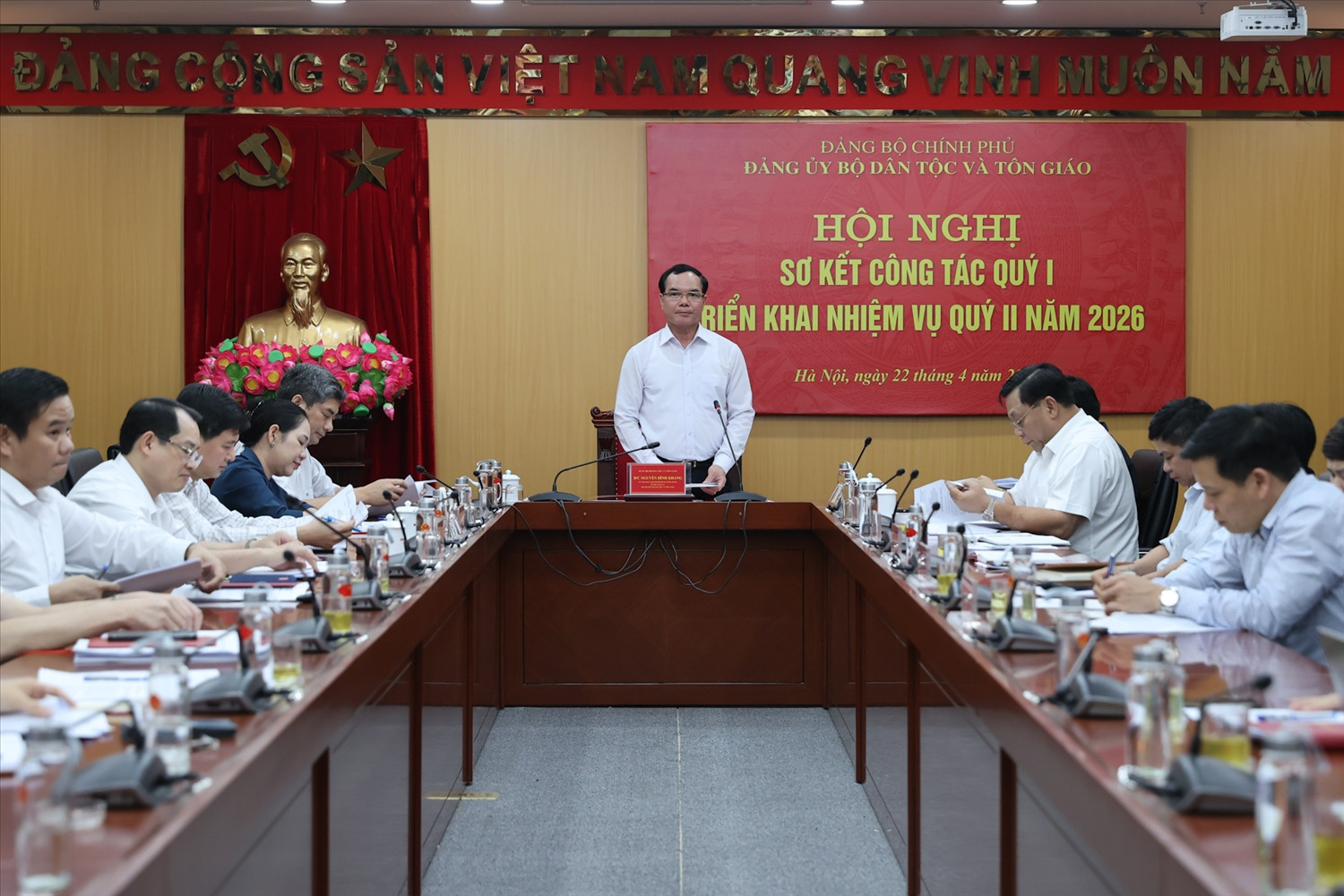
In his concluding remarks, Party Secretary and Minister Nguyen Dinh Khang emphasized that the conference had largely reached consensus on the draft report for the first quarter of 2026. He noted that delegates’ discussions were carefully prepared, offering in-depth, practical, and concrete contributions that would serve as an important basis for finalizing the report and implementing tasks in the coming period.
He described the feedback as valuable and reflective of a strong sense of responsibility, and requested that the entire Party organization seriously absorb these inputs and translate them into the second-quarter work program.
Highlighting key priorities ahead, Nguyen Dinh Khang stressed the need for a genuine shift in thinking, with Party committees enhancing their comprehensive leadership role and avoiding a narrow focus on professional tasks alone. He underscored that professional duties must be carried out within the framework of Party leadership, ensuring adherence to principles and proper functions.
At the same time, task implementation must deeply reflect the guiding ideology of General Secretary and State President To Lam, as well as the direction of the Politburo, translating them into clearly defined responsibilities and actionable tasks.
The Party Committee Office was assigned to strengthen oversight and review of reports from subordinate committees and units, ensuring compliance with working regulations and guidelines. Reports must clearly reflect the leadership role of Party committees and avoid overlap with professional functions. Units were also instructed to urgently review central documents and promptly develop implementation plans for any content not yet executed.
Regarding Party building, Nguyen Dinh Khang called for continued innovation and heightened awareness, especially among Party secretaries, committee members, and heads of units, with the goal of building a clean, strong, and comprehensive Party organization.
He stressed that Party organizations must focus on strengthening internal unity, fostering openness and dialogue, and building consensus in both awareness and action.
Khang further directed departments and units to intensify leadership and ensure decisive implementation of assigned tasks, while reviewing and completing any outstanding work from 2025 and the first quarter within the second quarter of 2026. At the same time, they must closely monitor grassroots developments and promptly advise the Party, the National Assembly, and the Government on effectively addressing issues related to ethnic minorities and religious affairs in line with policies and real-world conditions.
He also instructed Party bodies to swiftly develop second-quarter work programs aligned with discussions at the conference, while supplementing and refining tasks based on delegates’ feedback.
Hoang Quy
.svg)
