 Vietnamnet.vn

 Podcast



The Standing Committee of the National Assembly convened on Tuesday morning to review explanations, revisions and refinements to the draft Law on Belief and Religion (amended), as lawmakers move to ensure the legislation is ready for adoption on schedule.
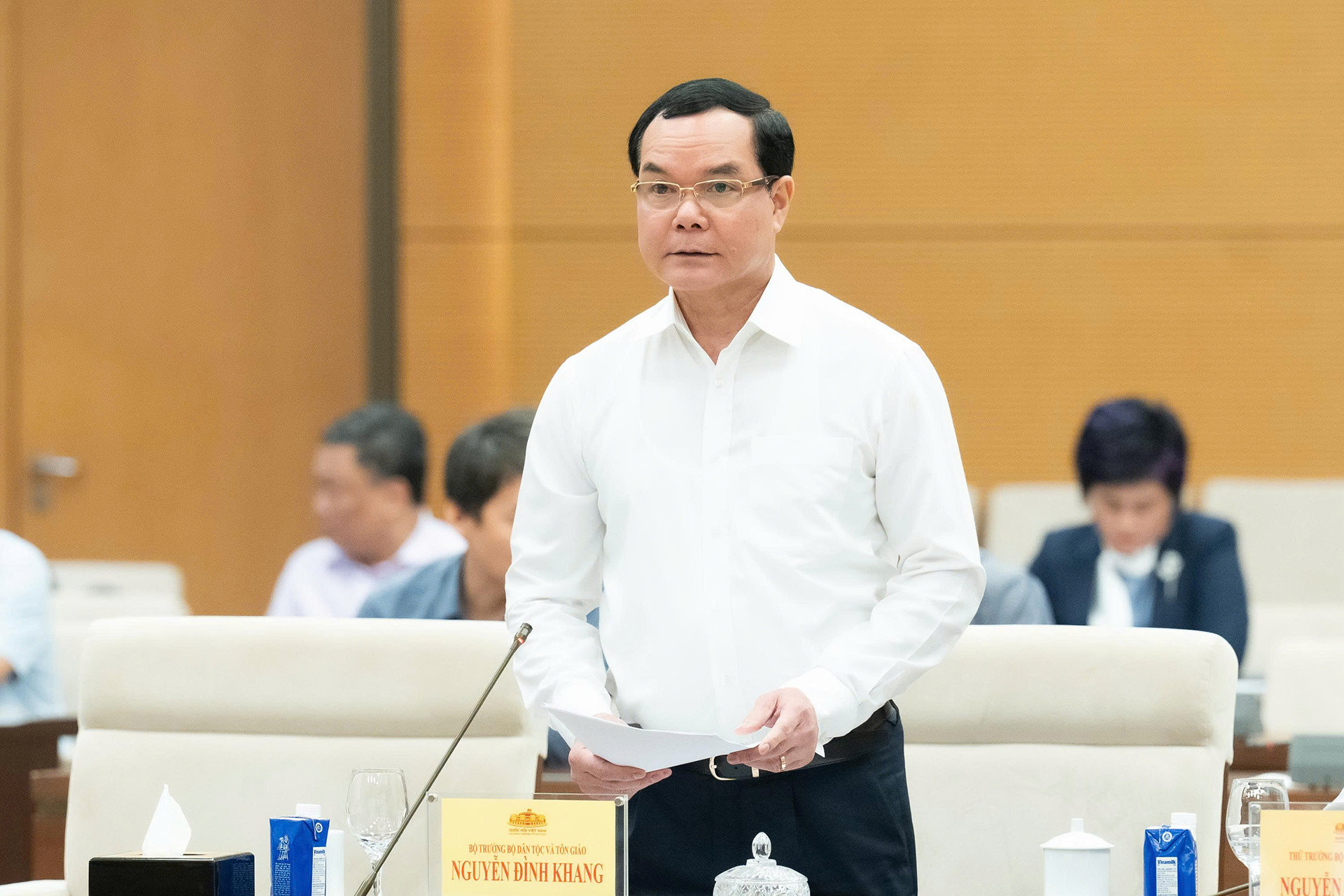
Presenting a summary report, Minister of Ethnic and Religious Affairs Nguyen Dinh Khang said that while the number of provisions remains unchanged from the previous draft, several important contents have been revised to ensure constitutionality, consistency within the legal system and alignment with current religious and belief practices.
The Government has also clarified conditions to ensure resources for implementation, along with mechanisms for decentralization and delegation of authority to local governments, particularly at the commune level.
Delivering the verification report, Trieu The Hung, Vice Chairman of the National Assembly’s Committee for Culture and Social Affairs, said the reviewing body largely agrees with the Government’s revisions and considers the draft significantly improved. However, he noted that several issues require further study and should be specified more clearly in the law rather than left to subordinate regulations.
In her concluding remarks, Vice Chairwoman of the National Assembly Nguyen Thi Thanh commended the drafting and reviewing agencies for their urgent and serious work, helping ensure the revised law can be submitted for approval at the first session of the 16th National Assembly.
She noted that the draft has achieved broad consensus, with three major issues still under consideration: completing the mechanism for decentralization among different levels of government; clearly defining criteria and scope for regulating religious and belief activities in cyberspace; and reviewing the timeline for the law’s entry into force to better meet practical demands.
These are considered key factors to ensure the law’s feasibility and its role in safeguarding citizens’ rights to freedom of belief and religion in a changing context.
The Standing Committee agreed with provisions promoting decentralization and delegation of authority while strengthening state management responsibility, in line with the two-tier local government model and ensuring greater proactiveness and accountability in implementation.
Regarding religious activities in cyberspace, there was general support for adding provisions to clearly identify responsible entities. Lawmakers also called for further coordination among drafting and reviewing bodies to develop principled regulations on limiting rights in cases where spatial or jurisdictional boundaries cannot be clearly determined.
The revised law is expected to provide a more coherent legal framework, reinforcing both the protection of religious freedom and the effectiveness of state management in an increasingly complex social and digital environment.
Tran Thuong
.svg)
