 Vietnamnet.vn

 Podcast



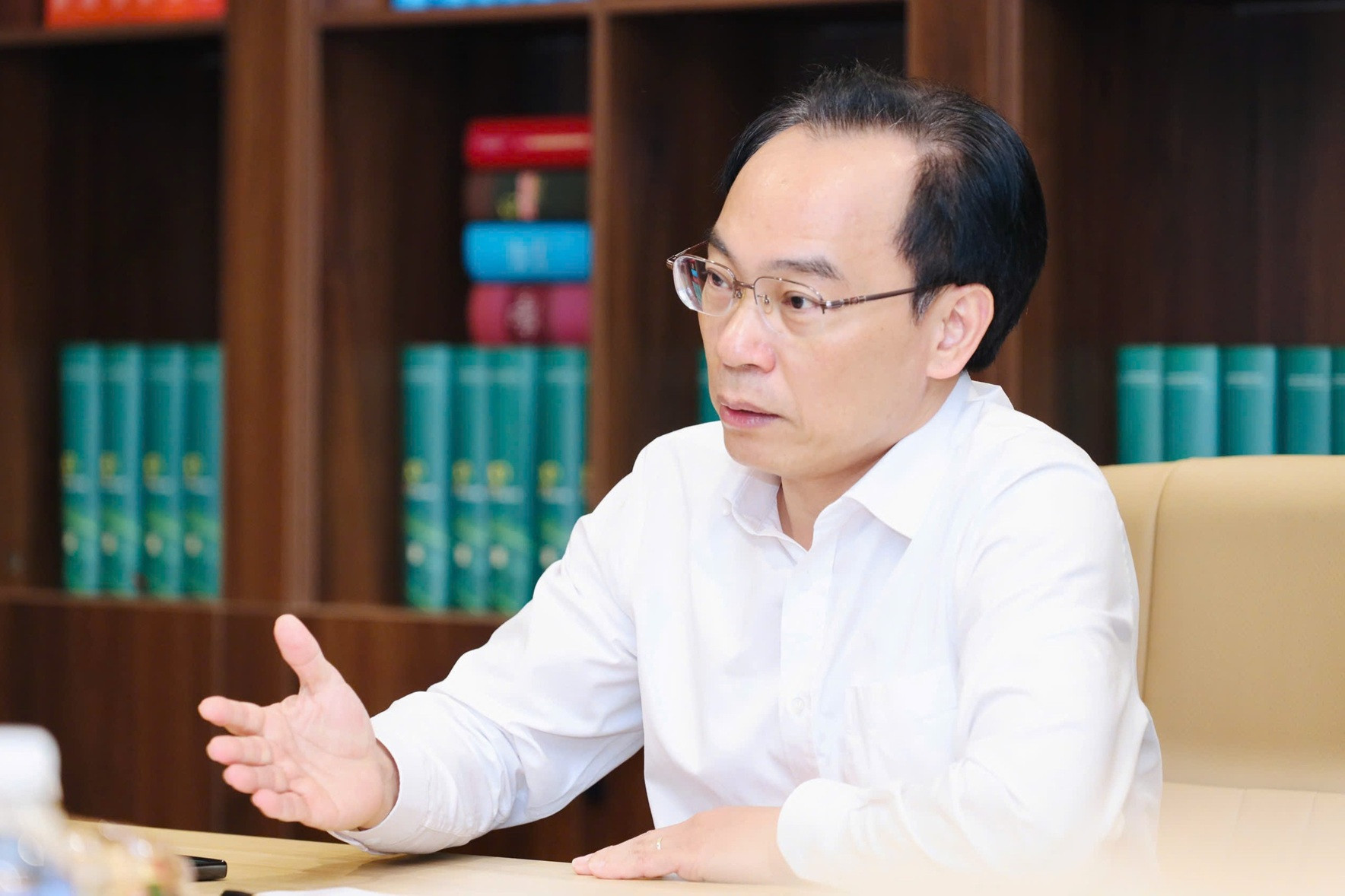
From the 2026–2027 academic year, general education schools nationwide will begin operating under a new model following restructuring and mergers. What instructions will the Ministry of Education and Training (MOET) issue to help schools maximize their strengths and reduce post-merger difficulties?
Restructuring schools will optimize the teaching staff; administrators can be considered for a shift back to direct teaching. These are educators with high professional competence and experience who, upon taking charge of classrooms directly, will enhance teaching quality while mitigating the current teacher shortage.
An excellent teacher who previously taught at only one school can now teach across multiple campus branches. Students will learn from top teachers in each subject. Before mergers, one school might lack teachers in a specific subject while another lacked teachers in a different one; with a larger school scale, the teaching staff will clearly be utilized more effectively.
Importantly, mergers do not affect students' access to education. Students continue learning where they are, and under even more favorable conditions.
The challenge posed by restructuring is that school and class sizes will grow larger while the number of administrators, principals, and vice principals will decrease. Therefore, a new governance model or innovative school management approach is required; administrative management can no longer be conducted in a purely traditional manner.
MOET has issued guiding documents serving as a governance framework for large-scale general education schools, covering objectives, teacher deployment coordination, decentralization, delegation of responsibility among principals and vice principals, to the management of facilities, professional affairs, and finances.
In the near future, the ministry will deploy a national educational governance digital platform to support schools, with all operating on a single shared digital platform. Combining guidance on delegation of power and responsibility in school operations with digital platform tools, I believe governance capacity will be enhanced, thereby raising the efficiency and operational quality of educational institutions after the restructuring.
During the initial stage of the mergers, some school managers will have to move from positions as principals or vice principals to teaching roles, while schools will simultaneously have to take on many new educational responsibilities. How do you view these difficulties? What should be done to ensure that larger schools can maintain education quality after the mergers?
There will inevitably be some disruption during the initial stage of the reorganization. MOET, together with the Ministry of Home Affairs (MHA), advised the Government to issue a decree on policies aimed at providing the best possible arrangements for teachers under the circumstances.
During the reorganization process, local authorities are also responsible for adjusting and arranging the teaching workforce. In some cases, teachers may be assigned to schools closer to home, making it more convenient for them to teach. Localities also have their own policies to encourage and support teachers. This is particularly important because education quality ultimately depends on the teaching workforce.
Going forward, MOET will continue to advise the Government on policies for teachers in accordance with the Law on Teachers. These policies will not be limited to remuneration, including the requirement under the Law on Teachers that teachers' salaries be "ranked highest in the administrative and public service salary system," but will also include greater social recognition and appreciation for teachers.
Only when these policies are implemented effectively and the role of teachers is given due importance can teachers feel secure in their work and remain committed to contributing to the education sector.
The reorganization of schools is taking place not only at the general education level but also in higher education. Could you outline the specific plan and roadmap for implementation?
The Politburo has issued its conclusions, and the Government has adopted an action program assigning MOET to take the lead, in coordination with ministries, sectors and local authorities, in reorganizing higher education and vocational education institutions.
Vocational education institutions will be streamlined, with at least 30 percent of their administrative units eliminated, while their management will be transferred to local authorities.
MOET has worked with ministries and sectors and prepared a consolidated report and proposed an implementation plan for September 2026, completing it one month ahead of the deadline set in the Politburo's conclusions.
For higher education institutions, there may be difficulties in the short term, but in the long run, the organizational restructuring is intended to make individual institutions and the higher education system as a whole stronger, while eliminating institutions that provide poor-quality education or operate inefficiently.
Thanh Hung
.svg)
