Nha Trang is now home to a primary “mega-school” with more than 10,500 students after a sweeping consolidation aimed at streamlining management and sharing resources.
Following a major restructuring of educational institutions, 13 primary schools in Nha Trang Ward, Khanh Hoa Province, have been merged into a single school with 287 classes and more than 10,500 students.
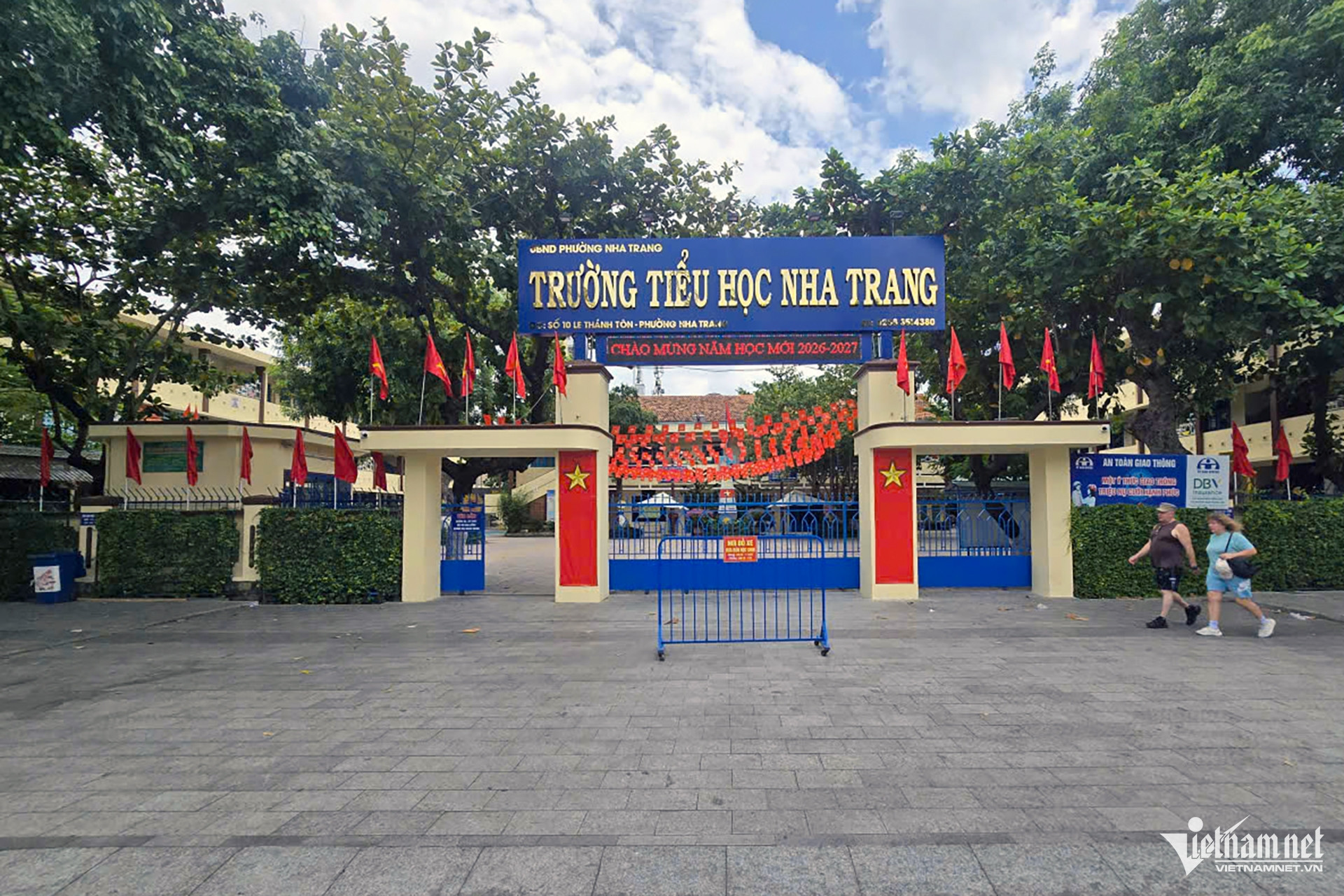
Nha Trang Primary School on Le Thanh Ton Street in Nha Trang Ward at noon on Sept. 8. Photo: Xuan Ngoc
The Nha Trang Ward People’s Committee has completed the restructuring of educational institutions at different levels in preparation for the 2026-2027 academic year.
As part of the consolidation, 13 preschools, primary schools and lower secondary schools have been merged into larger institutions, forming Nha Trang Preschool, Nha Trang Primary School and Nha Trang Lower Secondary School.
Nha Trang Preschool now comprises one main campus, 11 branches and 14 school sites, serving nearly 2,800 children with 371 administrators, teachers and staff.
Nha Trang Primary School has 287 classes, more than 10,500 students and 524 administrators and teachers.
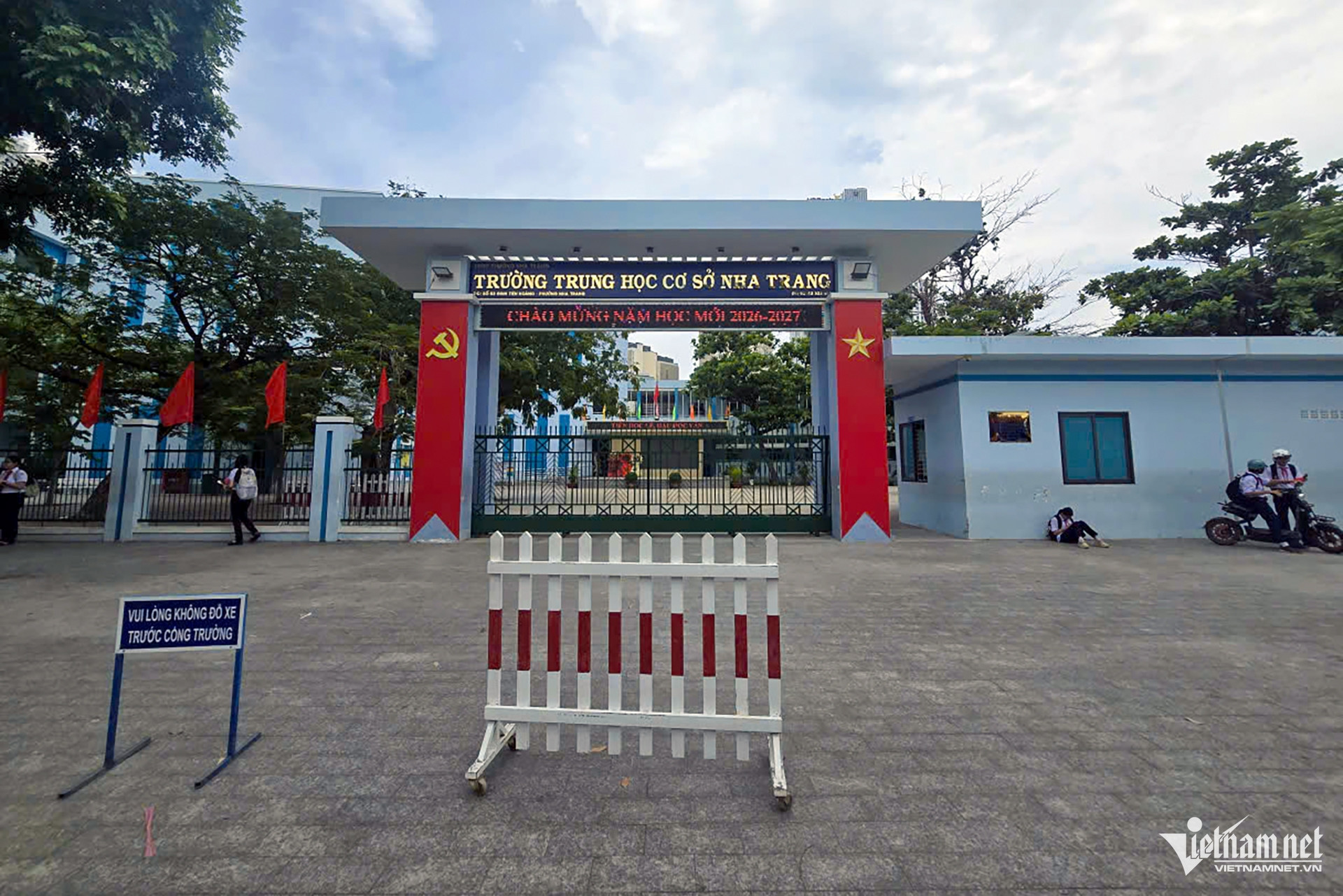
Nha Trang Lower Secondary School has 205 classes, nearly 8,800 students and 379 administrators, teachers and staff.
How Nha Trang manages a primary ‘mega-school’
Speaking to VietNamNet on Sept. 8, Huynh Quang Tu, vice chairman of the Nha Trang Ward People’s Committee, said management and staffing had remained stable following the mergers, with the new organizational structure designed to preserve continuity.
According to Tu, each of the 12 branches has a vice principal in charge. All previously served as principals of local schools and are familiar with their teaching staff and the strengths of their respective institutions.
The arrangement is intended to minimize disruption, preserve close working relationships and operational stability, while avoiding excessive transfers of administrators and teachers between campuses.
For full-day schooling services, all branches follow the same meal standards, with no distinction between the main campus and its branches, ensuring consistency and improving service quality.
A lower secondary school in Nha Trang Ward. Photo: Xuan Ngoc
For schools with large numbers of classes and students, teaching staff will be organized in accordance with Ministry of Education and Training guidelines.
Each main school has a principal and vice principals, while each branch is assigned a vice principal. Individual school sites do not have their own vice principals.
The restructuring is intended to help balance staffing levels, reduce localized teacher shortages or surpluses and improve teaching effectiveness.
Facilities and equipment at school sites that previously belonged to separate institutions will now be managed collectively as part of one larger school, allowing resources to be shared and used more efficiently while helping improve teaching and learning quality.
“Ward leaders will regularly monitor operations and maintain dialogue to improve management and administration, ensuring that these institutions operate increasingly effectively,” Tu said.
Earlier, at an August press briefing organized by the Khanh Hoa Provincial Party Committee’s Commission for Information, Education and Mass Mobilization, Nguyen Duc Son, deputy director of the provincial Department of Education and Training, provided details on the education sector’s restructuring.
According to Son, the consolidation reduced the total number of schools across Khanh Hoa Province from 728 to 246, a decline of 66.2%, or 482 administrative units.
The biggest impact of the restructuring has been on school administrators and staff.
Across the province, more than 640 principal and vice principal positions were eliminated. Of those affected, 468 people were reassigned to other positions, including teaching or other suitable roles, while 173 applied for retirement and received benefits in accordance with regulations.
Among school staff, the restructuring is expected to reduce the workforce by 1,244 positions.
More than 550 of those employees could be transferred to other jobs, while over 690 are expected to leave their positions and receive benefits and other support in accordance with regulations.
 Vietnamnet.vn

 Podcast



.svg)
