 Vietnamnet.vn

 Podcast



Moc Chau (Son La province) does not boast record-breaking altitudes. This highland doesn’t need jagged peaks or fierce frontiers to leave an impression. It doesn't rely on grand language.
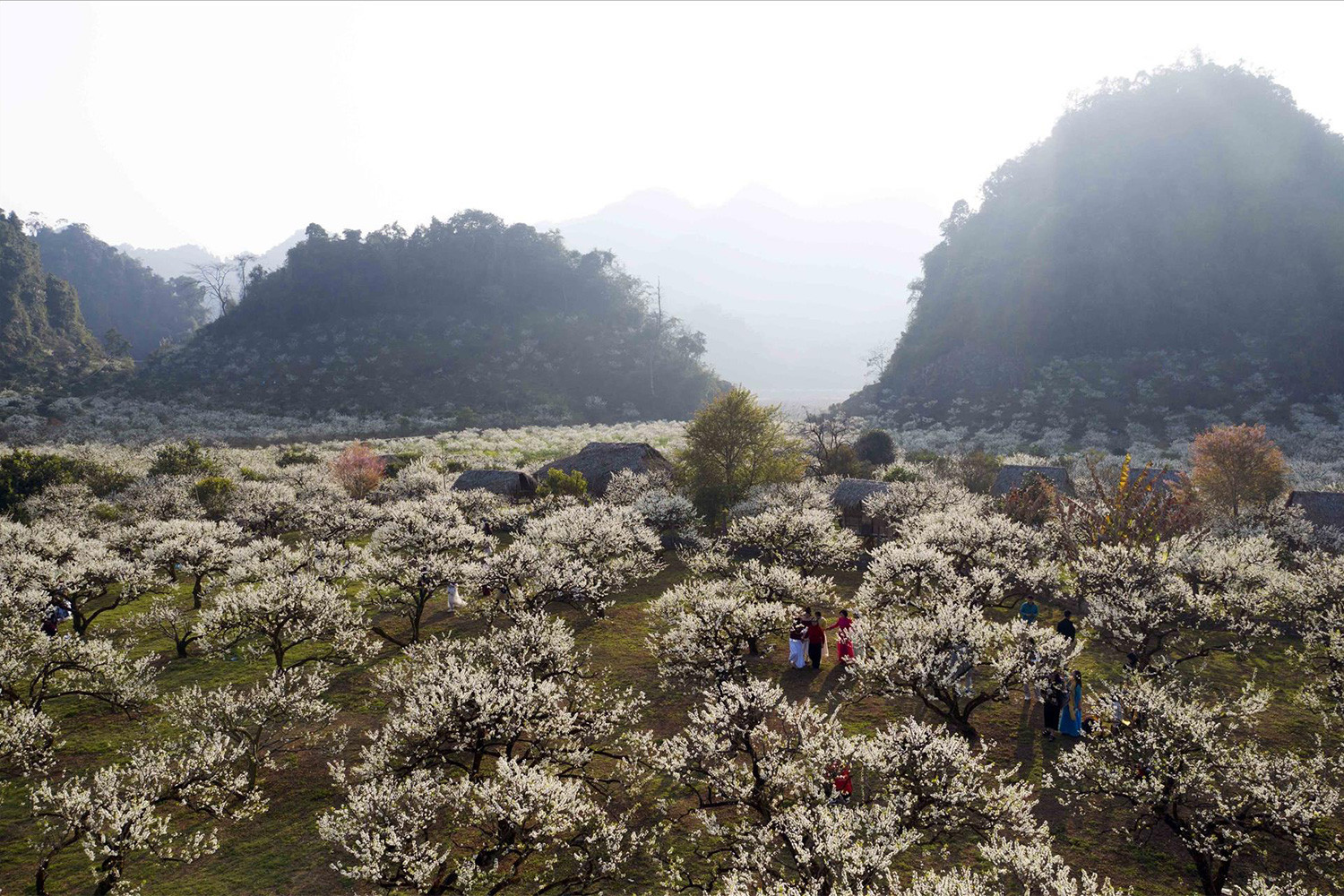
Here, the quiet white of plum blossoms arrives subtly - toward the end of winter, as spring breathes in. Mist still clings to the slopes, the cold not yet lifted. The flowers bloom without fanfare, without warning. But once they’ve blanketed the hills and villages, time seems to slow. The air softens. And something in you wants to stay.
Plum trees here don’t stand alone for admiration. Their blossoms stretch across hillsides, slip between fields, press against wooden roofs, blending into the rhythms of life. Their white isn’t showy. It doesn't seek attention. But it’s unforgettable. A beauty that needs no introduction - just the right season, the right soil, and the right hearts.
Moc Chau sits at just the right height to be cold, to welcome morning fog, and to invite humans to stay and work the land. Within this “just enough,” the plum blossom becomes a familiar signal of the plateau: a seasonal cue, a whisper of memory, a reason to stay.
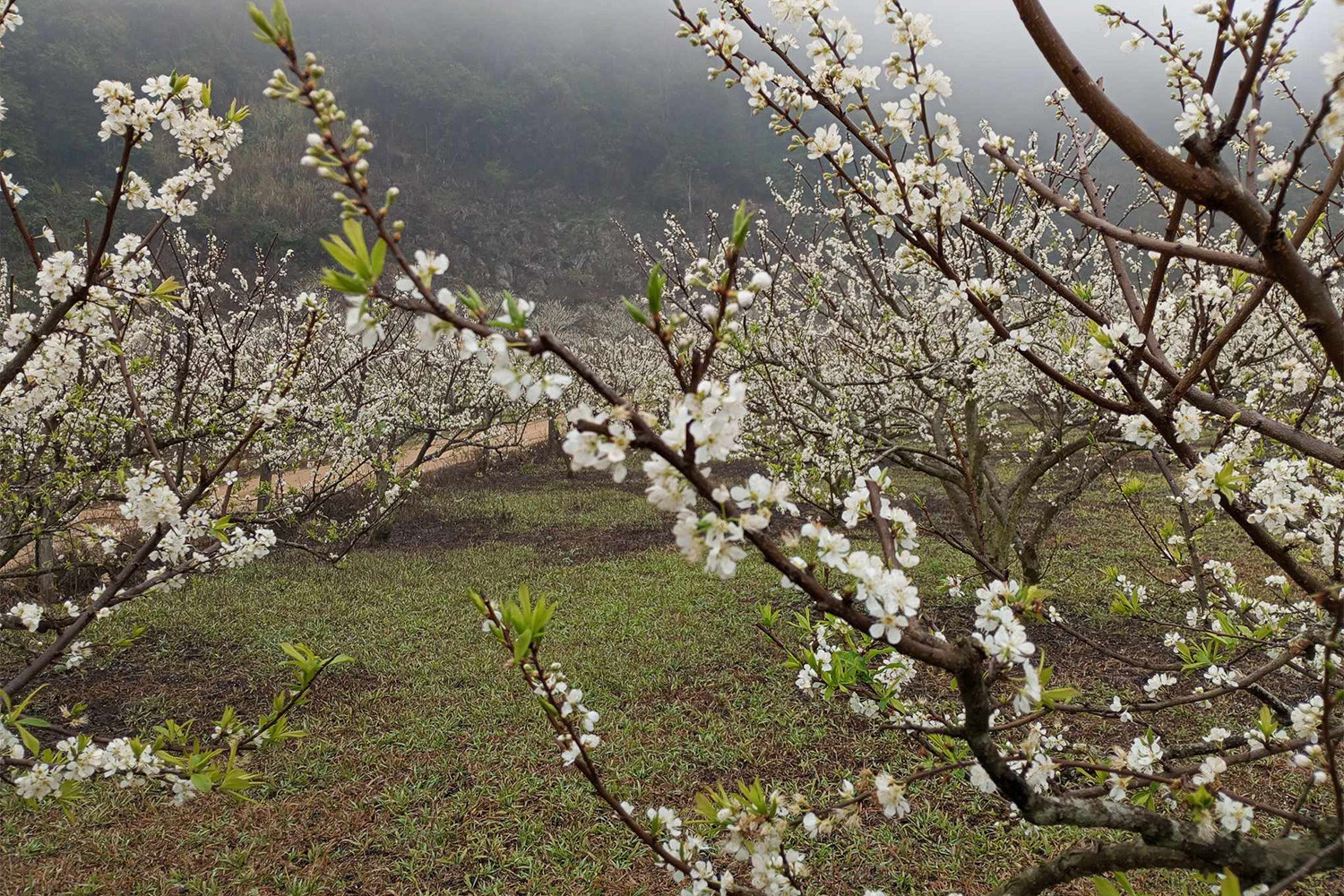
For the Mong people, who have long lived among these orchards, plum blossoms need no poetic name. They arrive as seasons do. When they bloom, it marks the beginning of a new cycle, a sign for spring festivals and the cheerful noise of market days.
The white of the blossoms stands out against the intricate indigo, blue, and red embroidery of Mong women’s traditional dresses. Together, they form a painting of unplanned harmony.
Moc Chau is also home to the Thai ethnic group, who’ve built their lives along streams and terraced rice fields. Their stilt houses sway with gentle music and the grace of traditional dances. In this space, the plum blossoms don’t overshadow - they don’t fade either. They exist as part of the landscape, like the trees near the house, like the stream that passes the village.
Then there are the Dao people, another community of the plateau. With their forest wisdom and life-rituals, they’ve found their own way to live with the land. In spring, they add another quiet layer of culture to the white season.
“A path to return for those who leave”
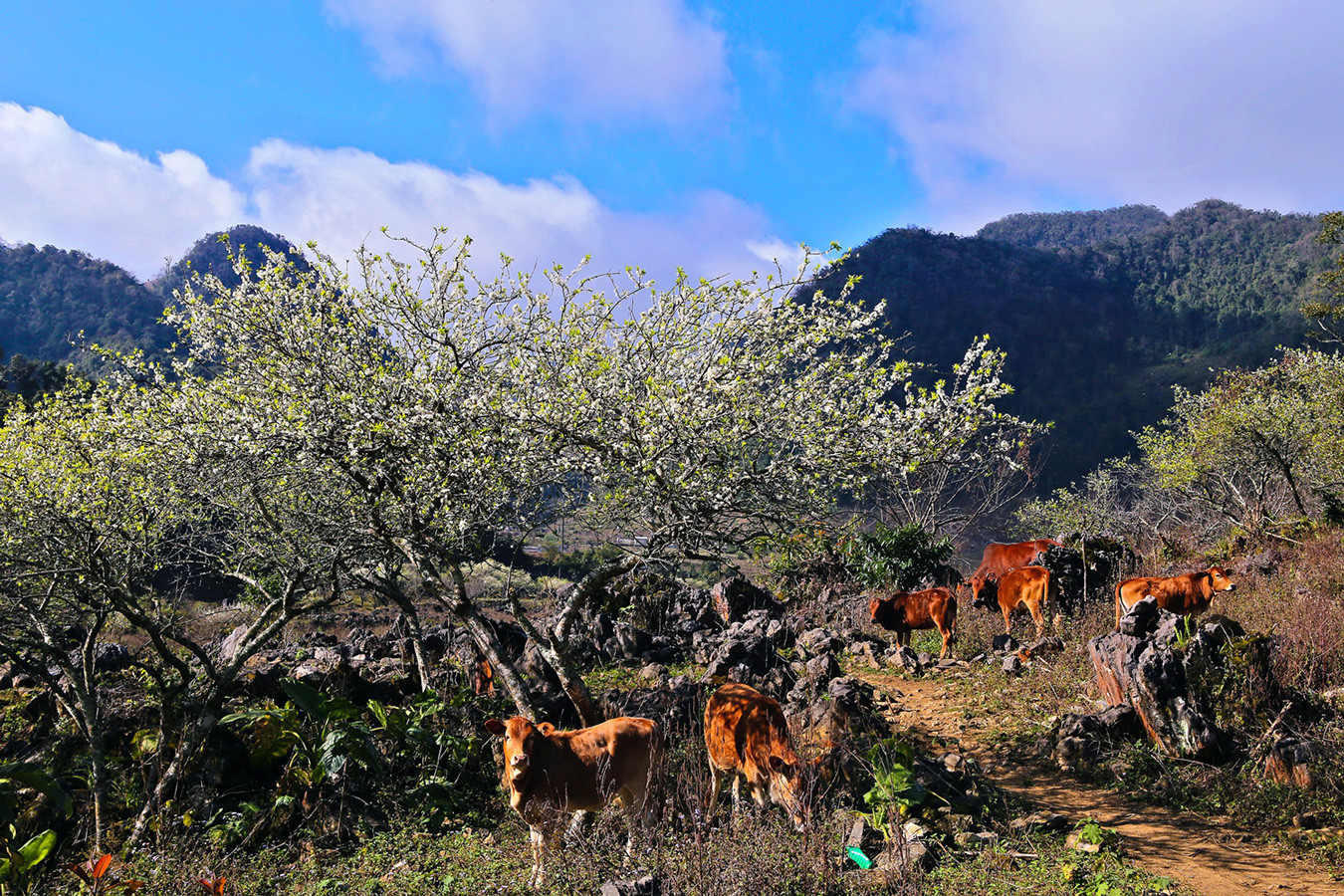
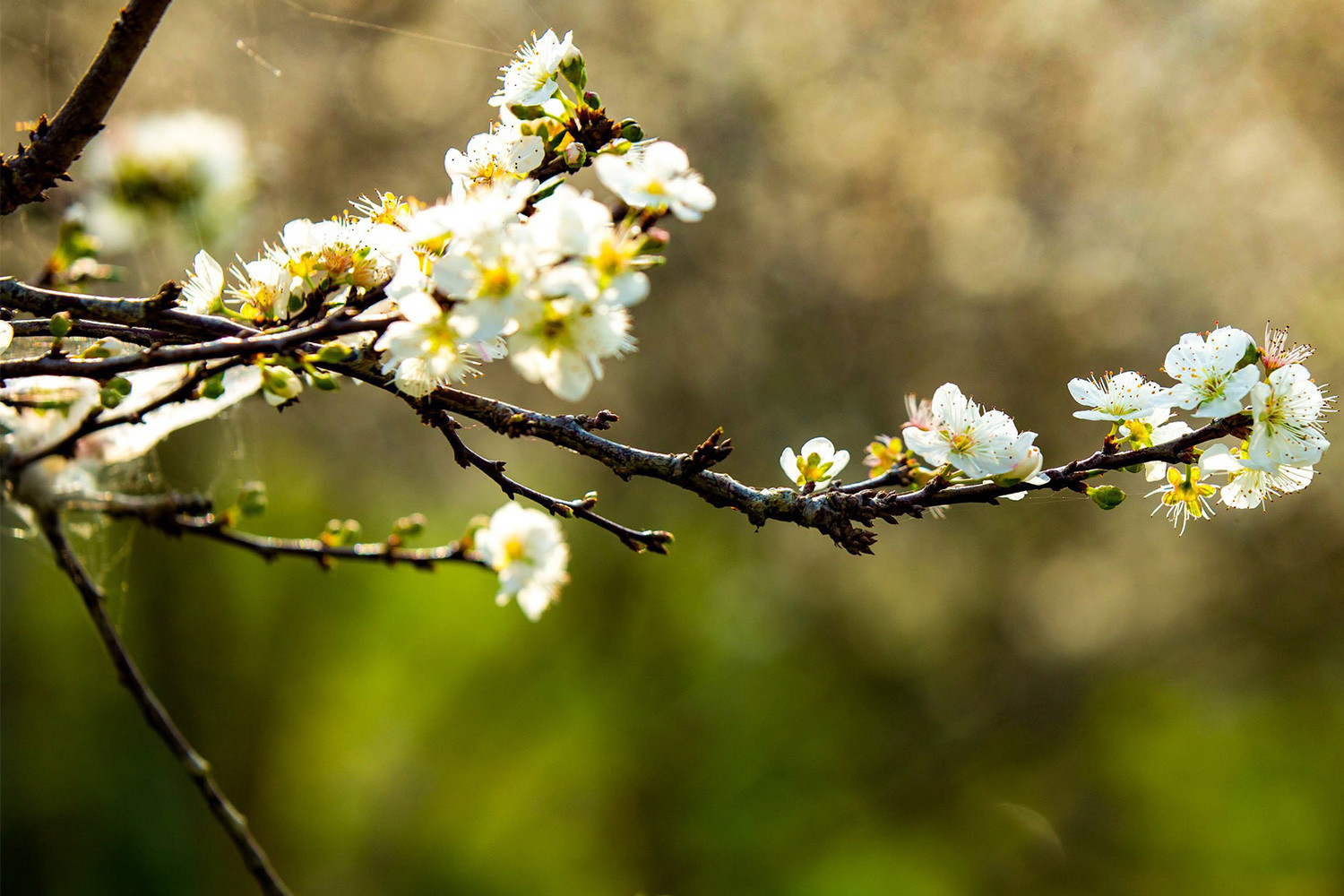
The beauty of Moc Chau’s plum blossoms doesn’t lie in how many there are or how far they reach. It lies in how deeply they live within daily life. These flowers don’t separate people from nature, nor do they turn nature into a backdrop. People live among the blossoms, work among them, walk through them like through any other familiar stretch of the year.
When a breeze brushes through the orchards, the petals fall quietly to the ground - not hurried, not loud. They return to the earth, making way for the buds that will bear fruit in the spring sun. This cycle repeats, like the highland’s breath. A reminder that beauty doesn’t need to last - it only needs to arrive at the right moment to touch the heart.
Moc Chau doesn’t tell a story of grandeur. It tells a story of staying. Staying with the cold, with the mist, with flower seasons that don’t need praise.
In this story, the plum blossom is not a symbol. It’s a sign - a quiet marker of a land that knows how to hold its own rhythm. And like poet Chu Thuy Lien once wrote, the snow-white plum blossoms help “those who leave remember the path home.”
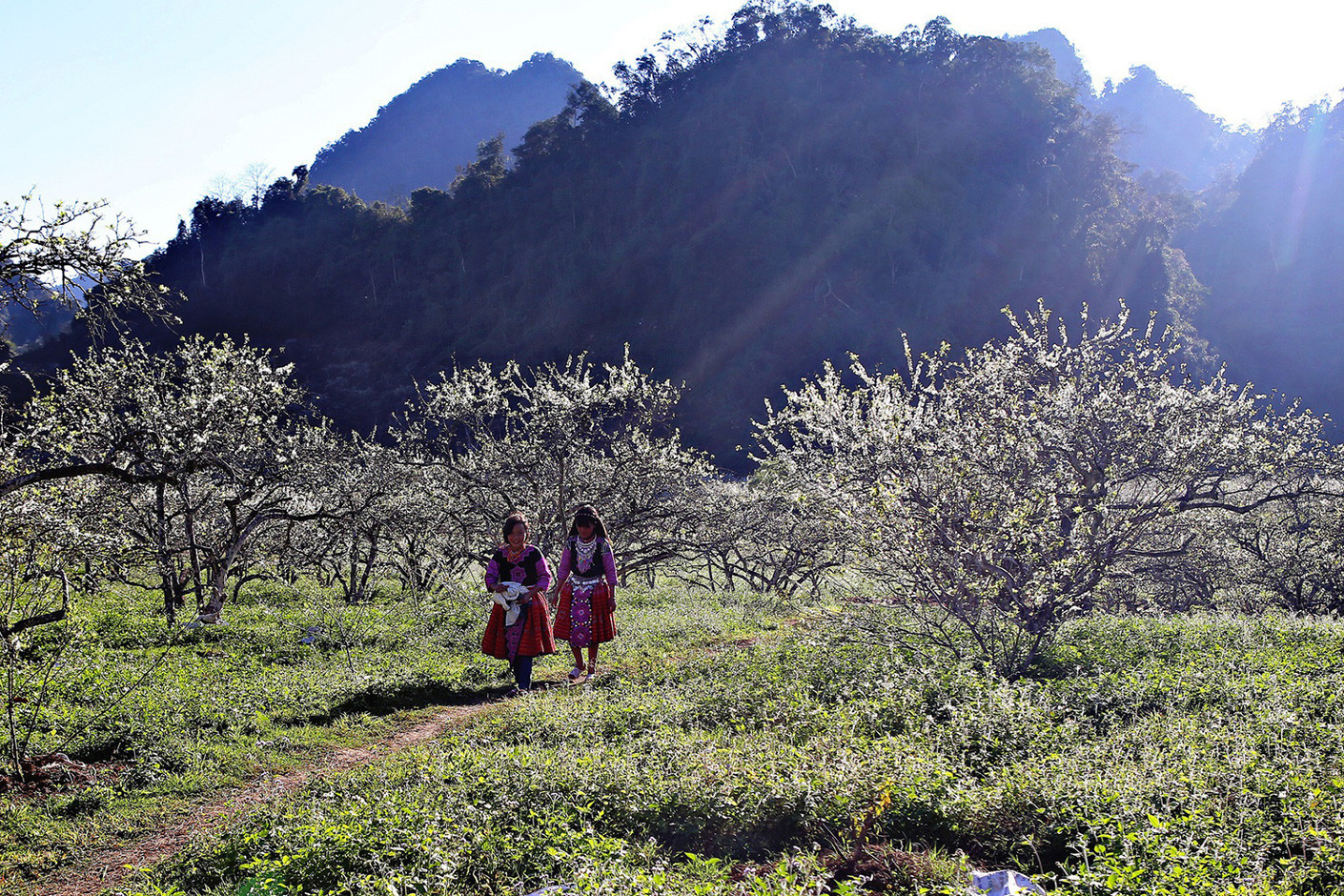
To the locals, plum blossoms are part of collective memory. They belong to childhood, to dusty paths, to the sound of the flute calling a lover, to colorful spring markets.
For those who see Moc Chau for the first time, the soft white opens up a new vision of Vietnam - not just its blue coasts or fertile plains, but also gentle highlands, where people and nature live in quiet respect for one another.
In a world full of motion, the plum blossoms of Moc Chau still bloom their own way. No need to explain. No need to be placed at the center. That quiet white simply says: Here is a different Vietnam - quiet, deeply human. And perhaps, it is that quiet which stays with us the longest.
Ngoc Huy
.svg)
