 Vietnamnet.vn

 Podcast



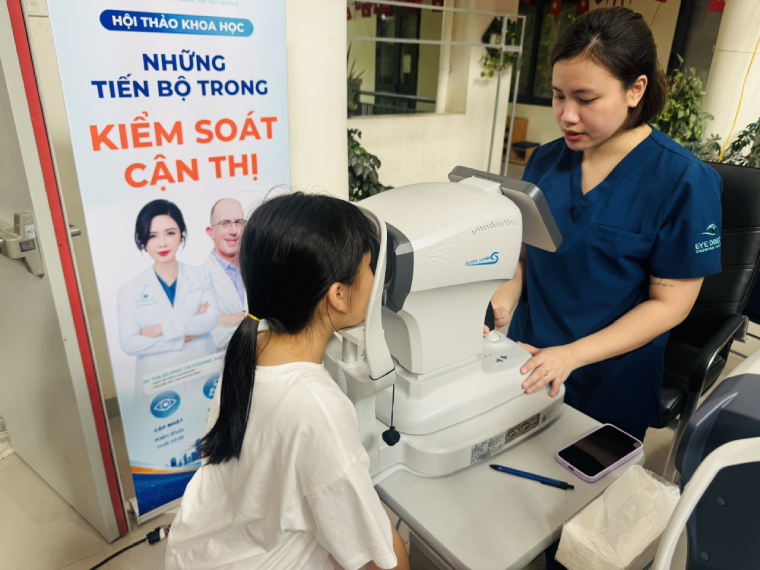
The increasing prevalence of myopia among children is not primarily caused by studying under poor lighting conditions. Instead, specialists say it is largely driven by reduced outdoor activity, excessive screen exposure and prolonged close-up visual tasks.
In support of the Month of Action for Children, ophthalmologists from the Million Bright Eyes Foundation, together with healthcare partners, organized the seminar “Advances in Myopia Control” and the community outreach program “Happy Eye Check-up Day” on June 7. The event aimed to raise awareness among parents about protecting children’s vision.
According to data from the Vietnam Ophthalmological Society, approximately five million children nationwide are currently affected by refractive errors, including myopia, hyperopia and astigmatism. These conditions impact between 30% and 40% of school-aged children.
Multiple surveys suggest the problem is growing rapidly and is increasingly being described as a public health epidemic. In Hanoi, some classrooms report that around 51% of students have refractive errors, with myopia accounting for 37.5%. In Ho Chi Minh City, the prevalence is even higher, reaching 75.6%, including 52.7% with myopia.
Experts warn that if left undetected and untreated, refractive errors can affect academic performance, daily activities and increase the risk of amblyopia, commonly known as lazy eye.
Lifestyle changes behind the surge
Speaking at the event, Dr. Dinh Thi Phuong Thuy, Director of Dong Do Hospital, said many people still believe myopia is mainly caused by reading in dim light. However, current research points to significant lifestyle changes among modern children as the primary factor.
According to Dr. Thuy, the most important protective factor against myopia is time spent outdoors. Previous generations of children regularly played outside and were exposed to natural sunlight, which has a much higher intensity than indoor lighting.
Sunlight stimulates the retina to release dopamine, a neurotransmitter that helps prevent excessive elongation of the eyeball - one of the key mechanisms behind the development of myopia.
Today, however, children spend most of their time studying and entertaining themselves indoors. Although modern lighting systems have improved significantly, artificial light remains far less intense than natural sunlight and cannot fully replicate its protective effect on eye health.
At the same time, prolonged near-focus activities such as reading, studying or using smartphones and tablets require continuous eye accommodation. Over time, this can lead to eye strain, temporary or pseudo-myopia, and eventually progress to permanent myopia.
Excessive screen exposure is also associated with increased rates of dry eye syndrome, digital eye strain and other vision-related health issues.
Prevention starts with daily habits
To reduce the risk of refractive errors, specialists recommend that children spend at least two hours outdoors each day while limiting the amount of time spent using electronic devices.
Parents are also encouraged to provide a balanced diet rich in nutrients that support eye health, including vitamins A, C and E, omega-3 fatty acids and lutein. These nutrients can be found in foods such as fish, eggs, dark leafy greens, carrots and fruits.
In addition, children should undergo comprehensive eye examinations every six months to help detect abnormalities early and ensure timely intervention when necessary.
Phuong Thuy
.svg)
