 Vietnamnet.vn

 Podcast


Driven by pride in her Muong heritage, 35-year-old illustrator Bui Xuan Quynh has embarked on an ambitious artistic project to reinterpret De dat de nuoc (The Birth of Land and Water), one of the most important epics in the Muong community's cultural tradition.
Through a collection of colourful illustrations inspired by traditional motifs, costumes and folklore, Quynh hopes to introduce the ancient narrative to modern audiences while preserving its cultural identity.
Her project reflects a broader aspiration to bridge traditional heritage and contemporary visual storytelling, allowing younger generations to explore the history, beliefs and worldview of their ancestors.
Rediscovering cultural roots through art
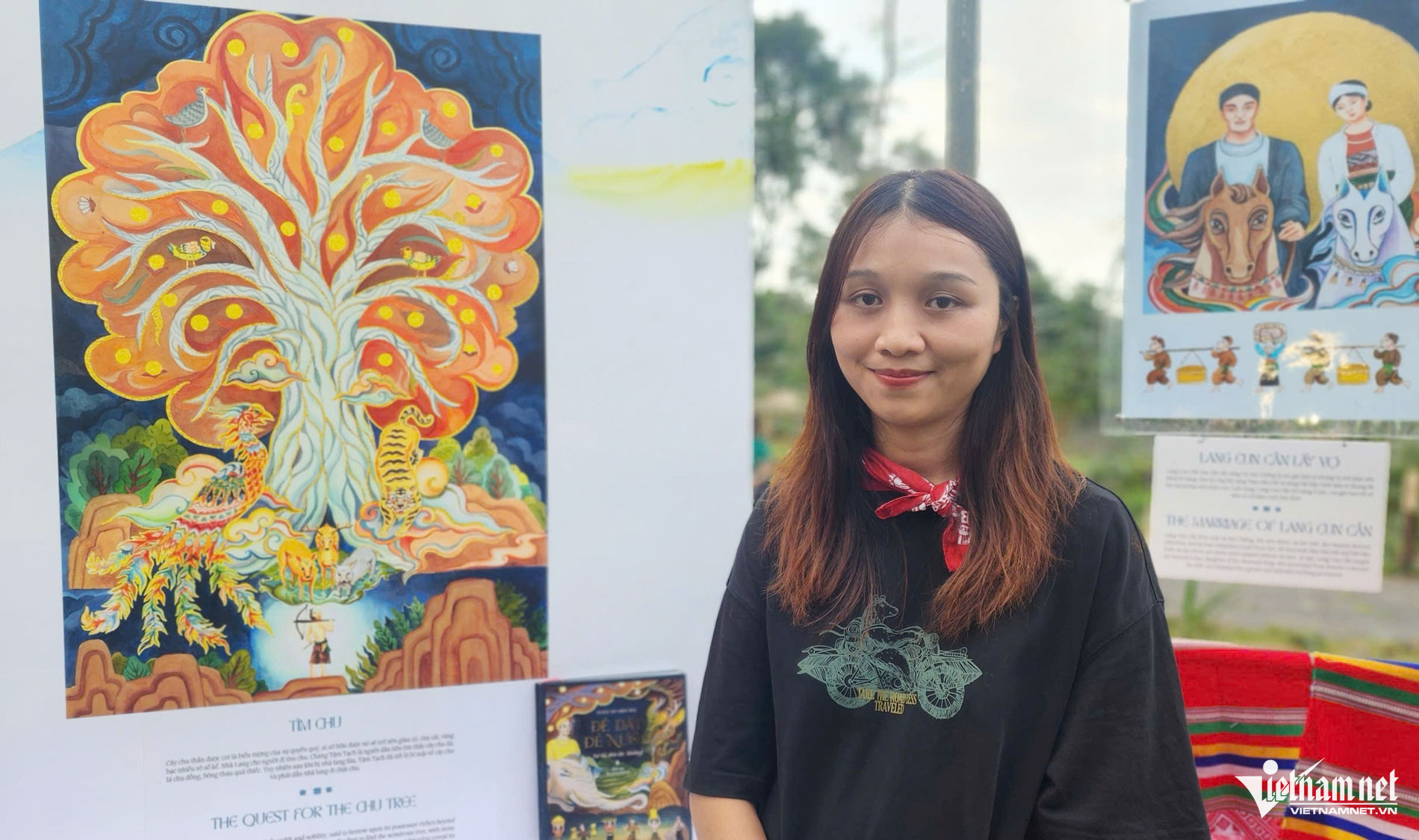
Born and raised in the Muong cultural environment of Cam Thuy District in Thanh Hoa Province, Quynh developed a deep appreciation for traditional cultural values from an early age.
A graduate of Monster Lab Academy, she has long been interested in finding ways to connect popular art with ethnic identity.
Her passion for preserving Muong culture eventually inspired her to create an illustrated adaptation of De dat de nuoc.
The project also offered an opportunity to revisit the community's traditional heritage through a more creative and contemporary visual language.
The epic is among the most extensive collections of folklore and traditional knowledge belonging to the Muong people.
Comprising thousands of verses traditionally recited by mo ritual specialists, it recounts the origins of the natural world and human society while reflecting the Muong people's understanding of life, nature and the universe.
For generations, De dat de nuoc has served as a source of cultural identity, helping Muong communities connect with their origins and appreciate their historical traditions.
However, traditional performances of Mo Muong are closely associated with funeral rituals, limiting the epic's exposure to wider audiences, particularly younger people.
"Mo Muong contains thousands of verses. Young people today are eager to learn about their culture, but it can be difficult to understand through oral storytelling alone," Quynh said. "I want to use visual language to communicate these stories, making them easier for people to access and imagine."
Transforming oral traditions into contemporary illustrations
Creating a complete illustrated collection based on De dat de nuoc presented significant challenges.
Because Mo Muong has primarily been transmitted orally across generations, much of the visual reference material associated with its stories has been lost.
To ensure cultural accuracy and preserve the spirit of the epic, Quynh devoted considerable time to research.
She sought knowledge from traditional artisans and mo ritual specialists while carefully studying the patterns, clothing and everyday objects associated with Muong communities.
Her illustrations portray the mystical world of Mo Muong not as something distant or intimidating, but as a vibrant and approachable universe filled with life and colour.
Traditional decorative patterns and brocade-inspired colours are combined with contemporary artistic techniques, allowing viewers to imagine the mythical creation of the natural world and the emergence of Muong society.
The illustrated collection is Quynh's first major artistic project.
It comprises 18 completed illustrations, with 12 representative works selected for exhibitions at various venues.
To convey the epic's mythological atmosphere, she adopted a stylised decorative approach that combines expressive lines with bold areas of colour.
Her colour palette and patterns draw inspiration from traditional Muong clothing, temples, bronze drums and household objects used by the Muong and ancient Vietnamese communities.
Character designs are influenced by early 20th-century Muong quan lang, or traditional local leaders, as well as female figures depicted in Vietnamese folk paintings.
The result is a visual world that retains distinctive cultural references while encouraging contemporary audiences to engage their imaginations.
Illustrating the origins of humanity and Muong society
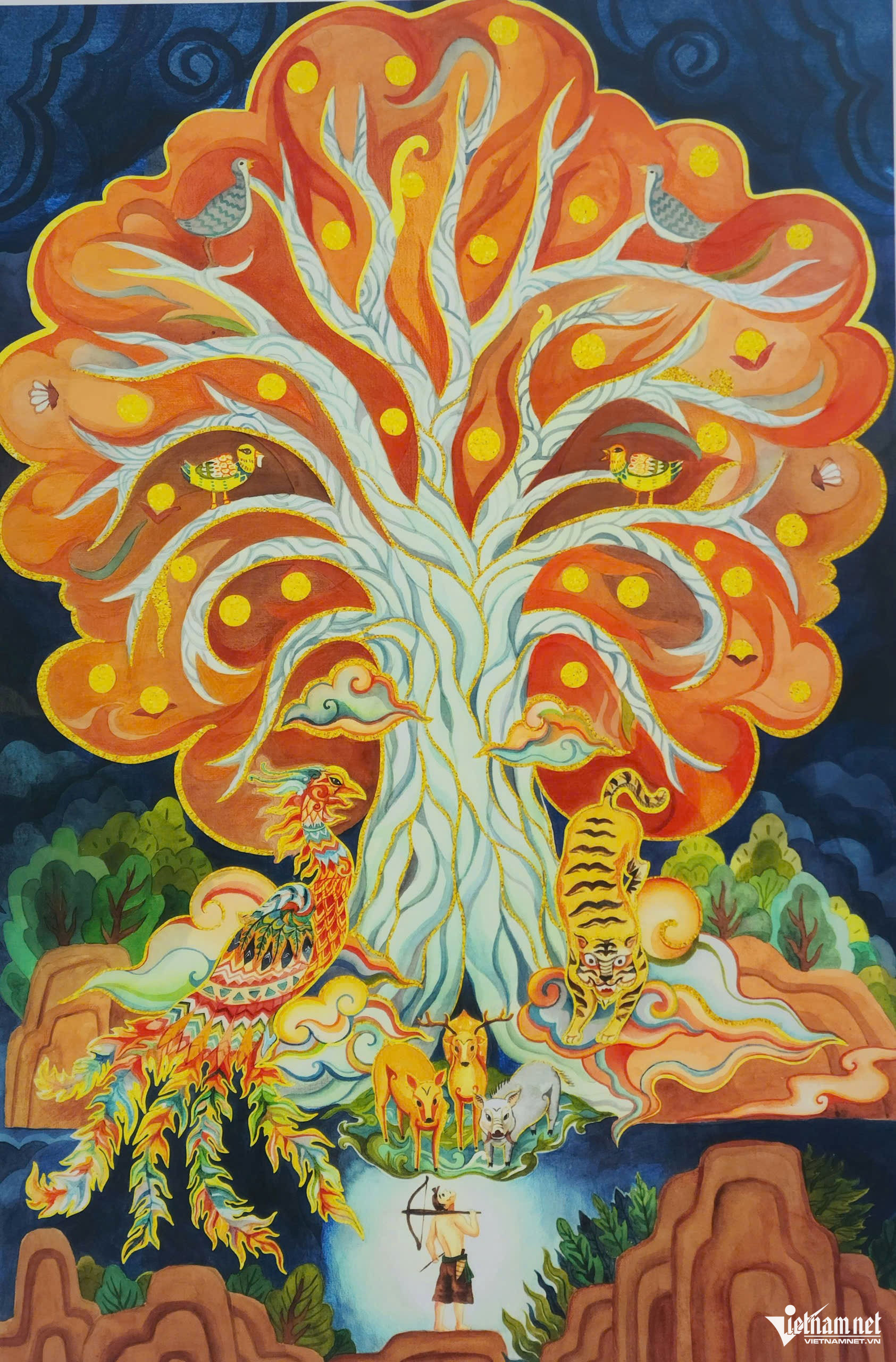
Among the works in the collection is an illustration of the sacred chu tree, regarded in Muong mythology as a symbol of nobility and prosperity.
According to the epic, those who possess the mythical tree are believed to gain immense wealth, including abundant gold, silver and other treasures.
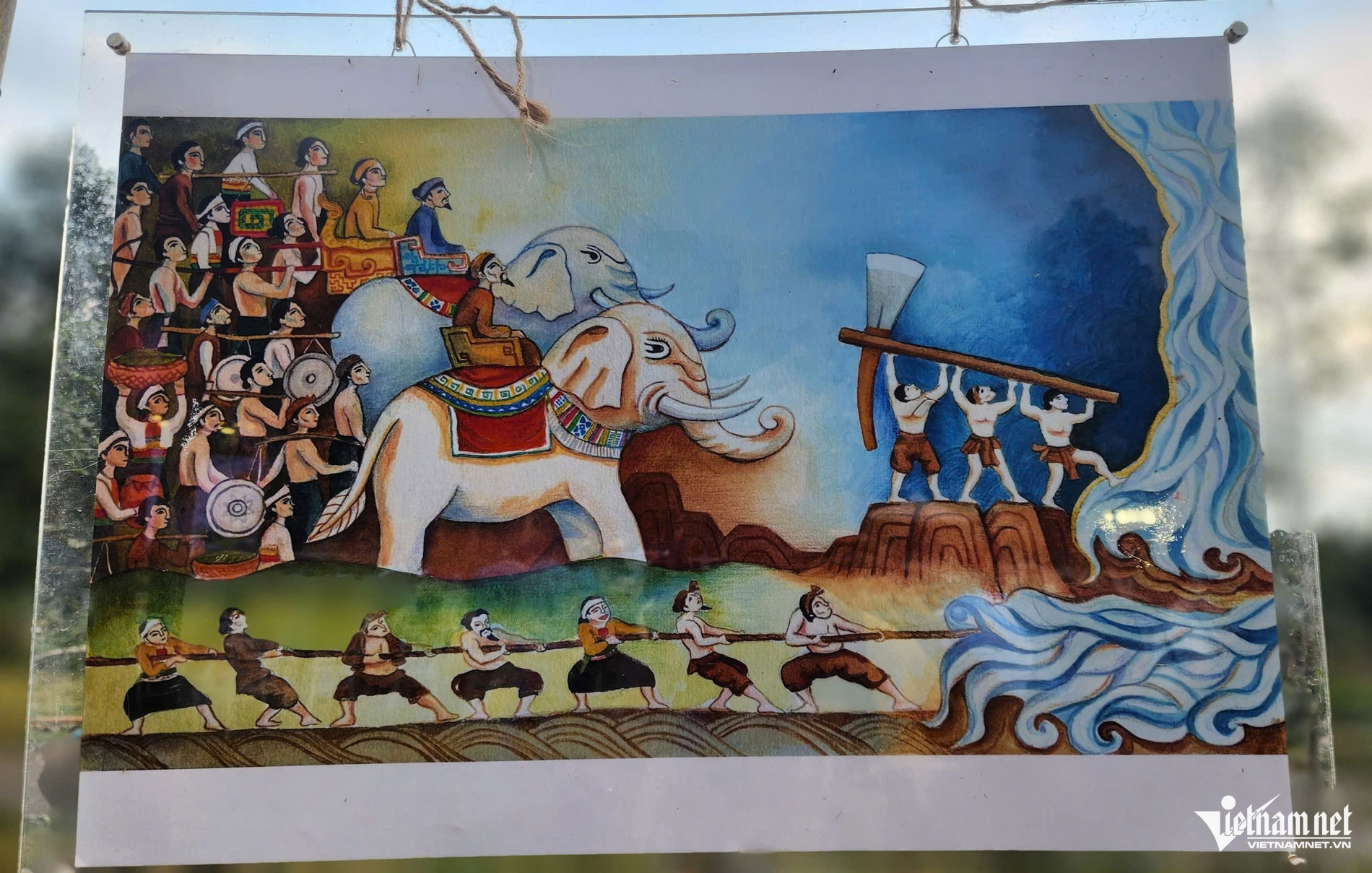
Another illustration depicts the cutting down of the sacred bronze chu tree.
In the narrative, ancient Muong leaders and heroes must overcome the supernatural tree to obtain materials for building settlements, constructing houses and creating tools for human life.
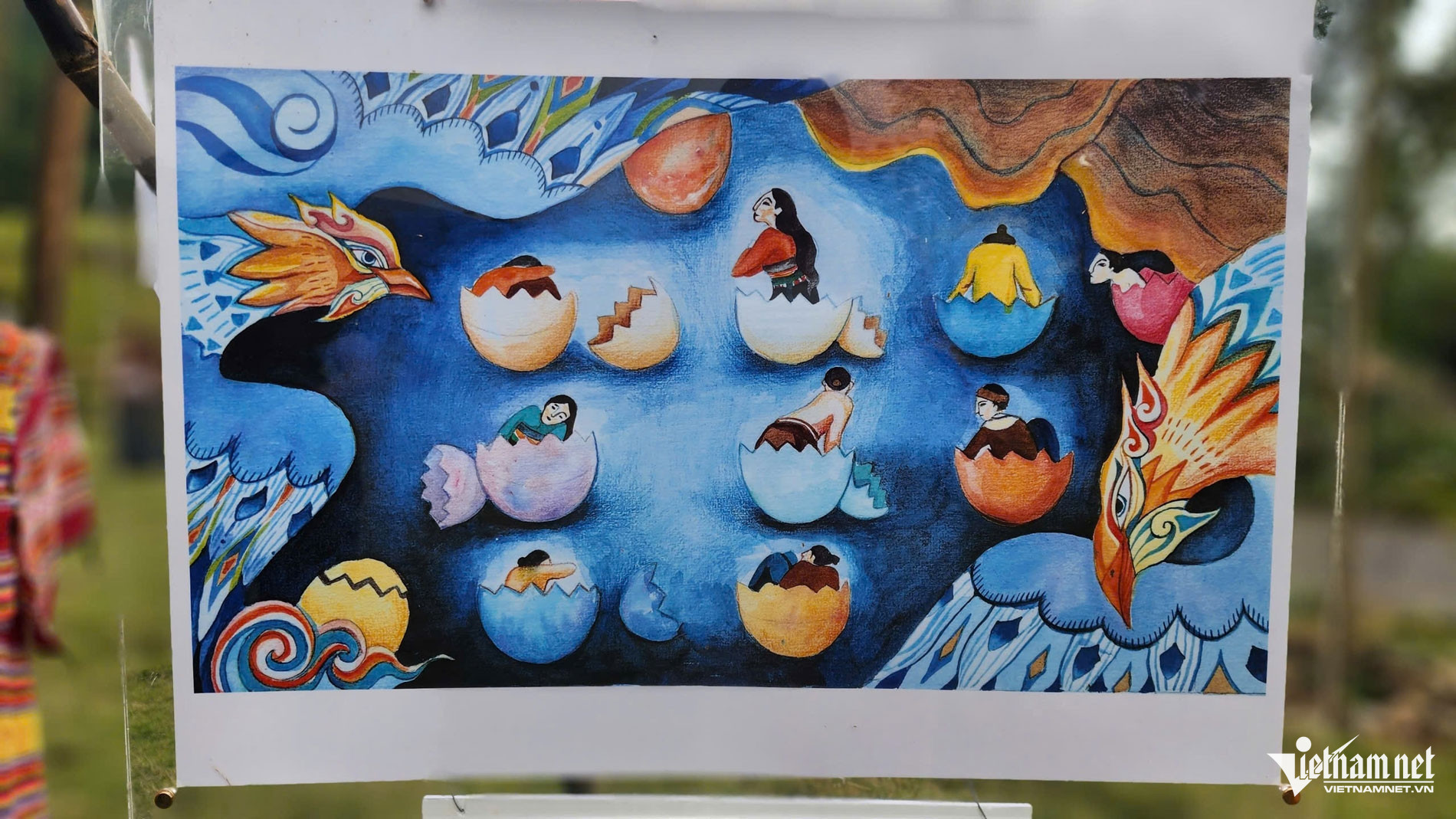
The collection also explores the birth of humanity.
Rather than merely explaining the origins of the first Muong people, this section of the epic traces the development of human civilisation.
It depicts humanity's progression from primitive living conditions to the discovery of fire, cultivation of upland fields, rice farming, silk weaving, metalworking and the establishment of communities, social customs and traditional laws.
Through these illustrations, Quynh seeks to communicate not only the epic's cosmological stories but also the human values embedded in Muong folklore.
These include lessons about life, community and the relationship between humans and nature, passed down through generations.
Her work has been featured at several cultural and creative events, including programmes held around Hanoi's Hoan Kiem Lake pedestrian zone.
It has also appeared at Lung Trang Creative Cultural Space, a venue dedicated to Muong culture in Hanoi and recognised by the city's cultural authorities as a new creative cultural space.
A long-term commitment to preserving Muong heritage
The illustrated collection is Quynh's first major artistic project.
It comprises 18 completed illustrations, with 12 representative works selected for exhibitions at various venues.
To convey the epic's mythological atmosphere, she adopted a stylised decorative approach that combines expressive lines with bold areas of colour.
Her colour palette and patterns draw inspiration from traditional Muong clothing, temples, bronze drums and household objects used by the Muong and ancient Vietnamese communities.
Character designs are influenced by early 20th-century Muong quan lang, or traditional local leaders, as well as female figures depicted in Vietnamese folk paintings.
The result is a visual world that retains distinctive cultural references while encouraging contemporary audiences to engage their imaginations.
Illustrating the origins of humanity and Muong society
For Quynh, the illustrated adaptation of De dat de nuoc represents only the beginning of a longer artistic journey.
She believes the Muong community possesses an extensive cultural heritage, including folk tales, customs and everyday traditions that remain largely unexplored through contemporary illustration.
The artist plans to continue researching these materials and developing additional illustrated collections based on Muong folklore.
"The Muong people's folk heritage is incredibly rich. I am continuing my research to create more illustrated collections of traditional fairy tales," she said. "I want to devote my energy to cultural illustration projects, beginning with the heritage of my own Muong community."
Through her work, Quynh demonstrates how contemporary art can provide new ways to preserve and share traditional cultural knowledge.
By combining historical research, ethnic artistic traditions and modern illustration techniques, she is helping bring an ancient epic closer to audiences who might otherwise have limited opportunities to encounter it.
Her project also highlights the potential of visual storytelling to sustain cultural identity while allowing traditional narratives to remain relevant to new generations.
Tinh Le

