 Vietnamnet.vn

 Podcast



At over 60 years old, Bui Thi Huong from Xom Com (Tan Lac, Phu Tho) is one of the few artisans still preserving the traditional brocade weaving craft of the Muong ethnic group.
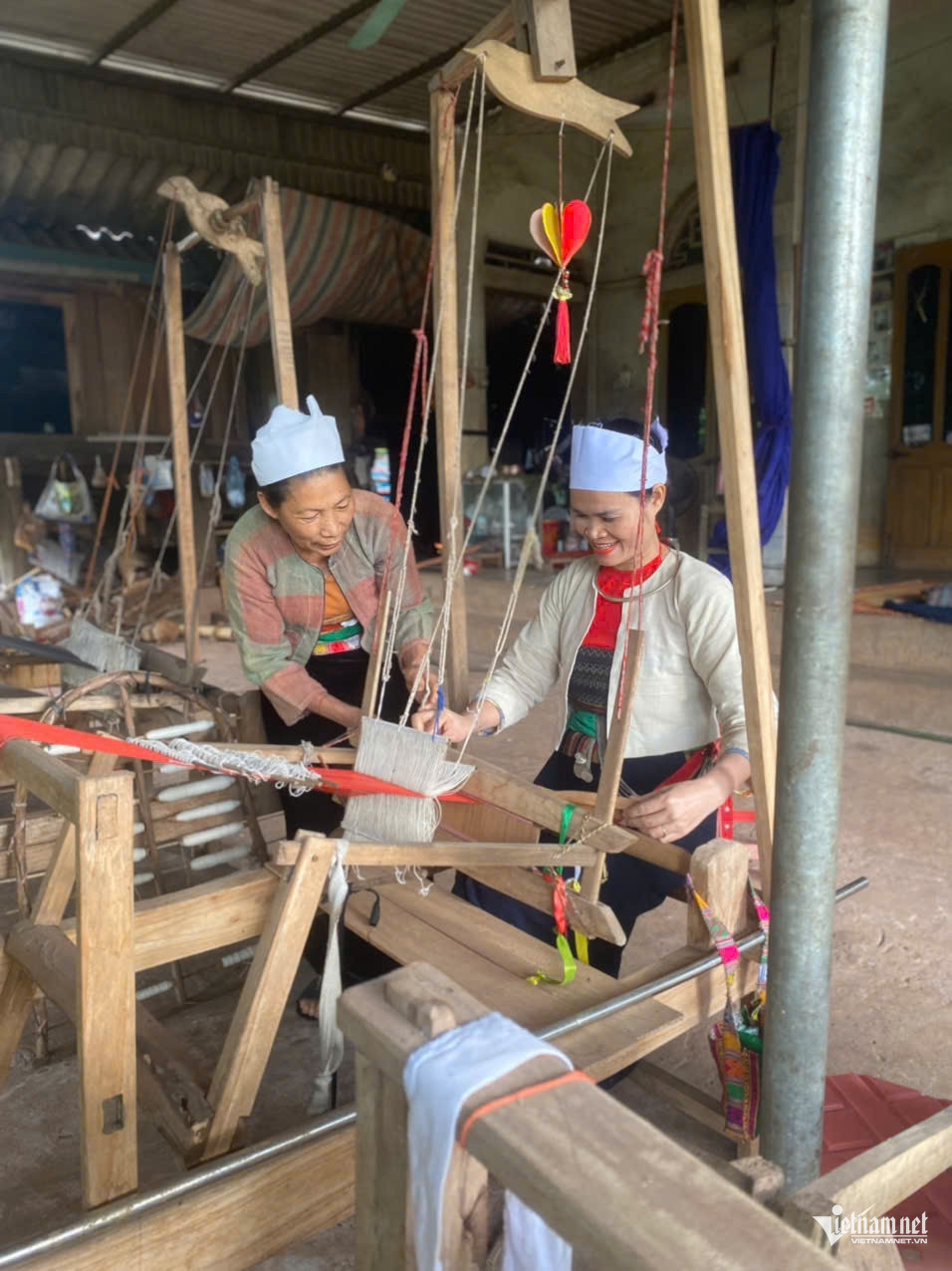
We met her at a regional OCOP fair in Hanoi, where she brought not only her textiles for sale but also traditional tools like the cotton press and loom to demonstrate the entire brocade-making process by hand.
“No one remembers when this craft began. It was passed down from our grandparents and parents. One generation teaches the next, and so it continues,” Huong explained.
The brocade-making process is intricate. The Muong people grow their own cotton, which is harvested and sun-dried after about six months. The seeds are separated manually with a hand-press tool. The cotton is then fluffed and rolled into small clumps called “con” to make spinning easier.
“From one kilogram of seed-separated cotton, we only get about 0.66 pounds of usable fiber. And we can only do this in sunny weather. On rainy days, the process stops,” she noted.

Huong and Mia bring traditional looms and cotton tools to the fair to demonstrate the hand-weaving process. Photo: Binh Minh
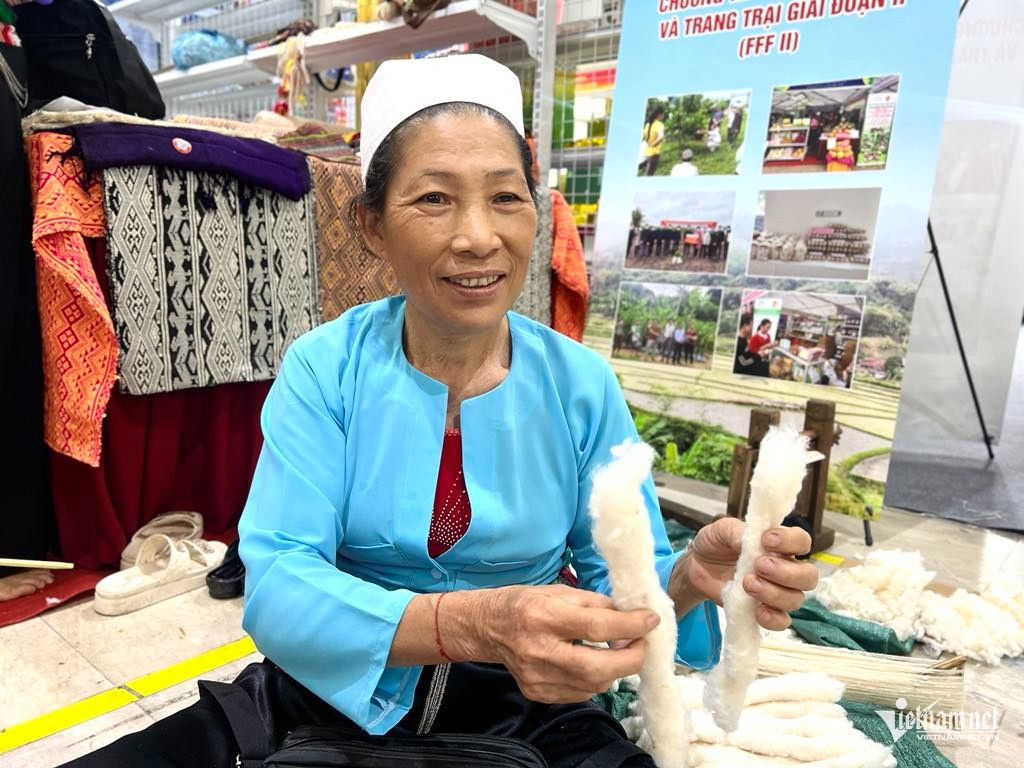
Huong says only about 0.66 pounds of usable cotton is derived from each kilogram of raw cotton. Photo: Binh Minh
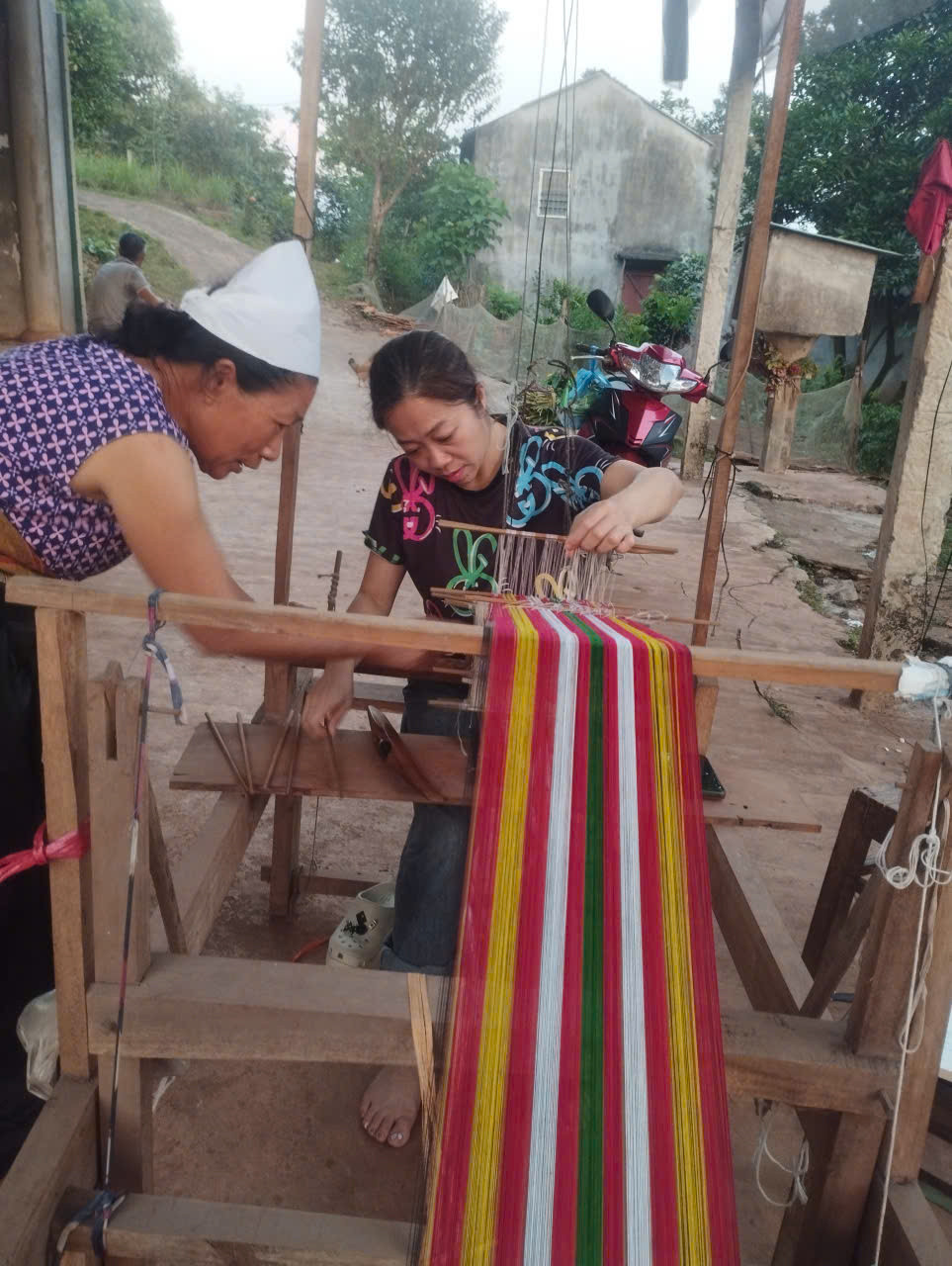
The fluffed cotton is spun into yarn, cleaned, and soaked for a week to increase flexibility and durability. Yarn is divided into warp and weft threads. Warp yarn is strengthened using rice porridge as glue, then wound and threaded through the loom. Weft threads, meanwhile, are simply washed and softened.
For coloring, natural materials are used. Black comes from indigo, yellow from turmeric, and sky blue from the dac tree with hairless leaves.
On the traditional loom, these dyed threads are woven into brocade cloth rich in delicate patterns.
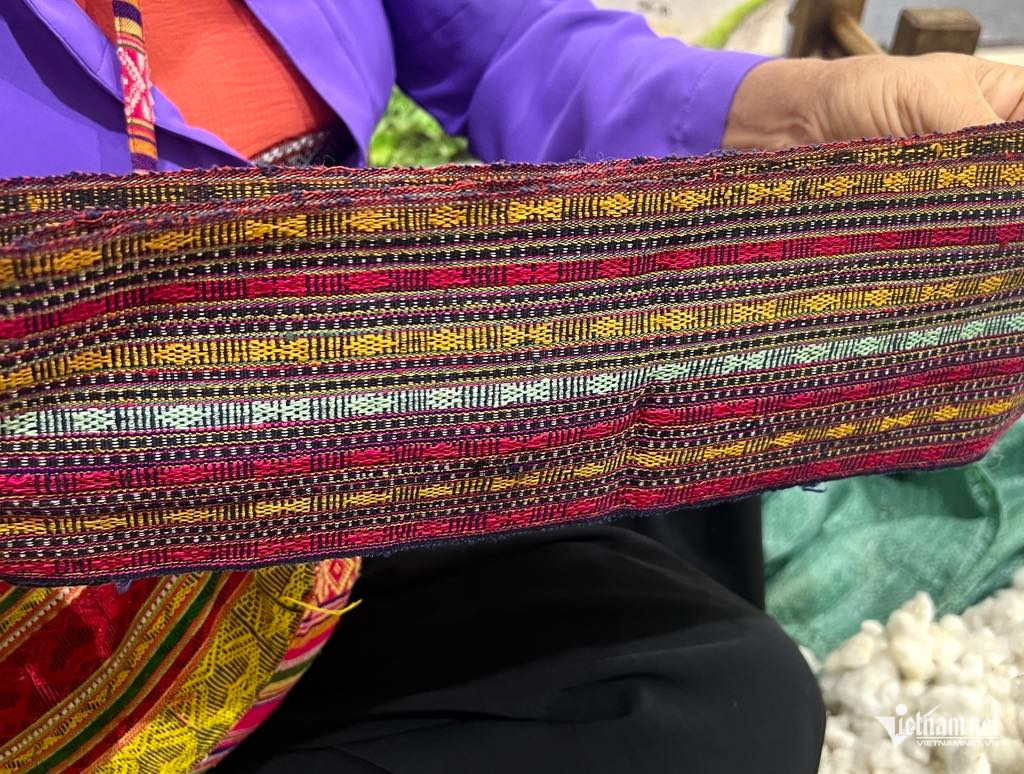
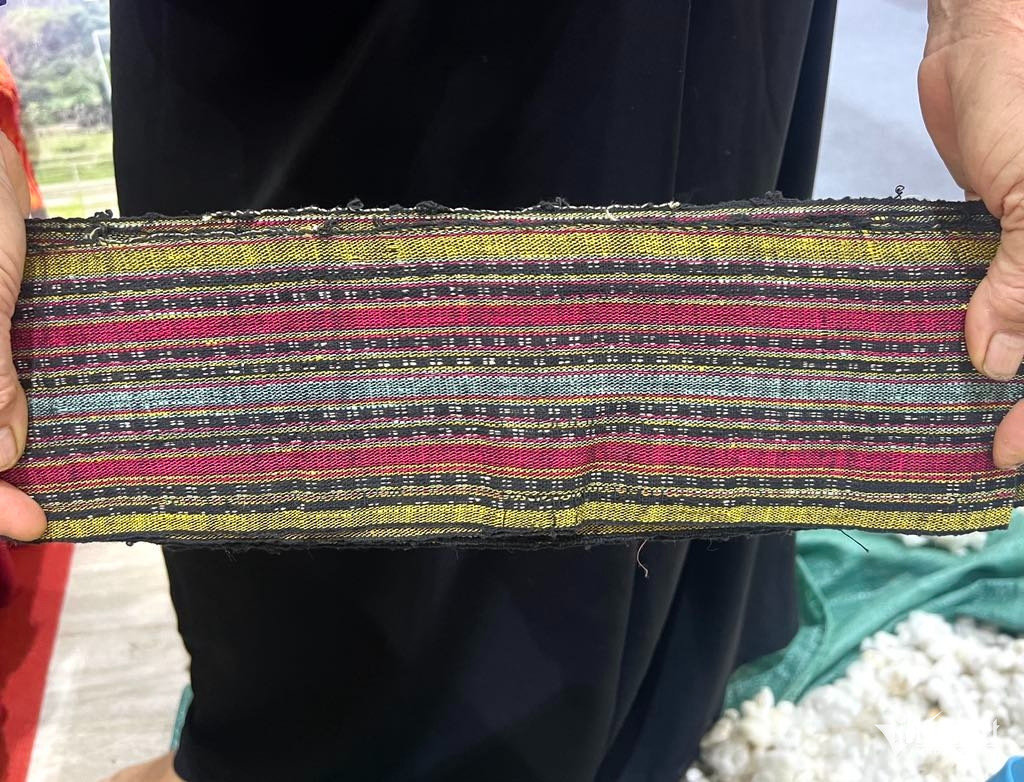
“There are about 50 traditional motifs handed down from our ancestors: lozenges, hearts, duck eggs, ducks, flowers, leaves, mountain peaks... all inspired by nature. Each piece carries a story, a profound cultural message,” Huong shared proudly.
A unique cultural symbol of the Muong people
Traditional brocade weaving is a unique cultural identity of the Muong people that cannot be mistaken for any other.
Citing the traditional Muong women's skirts, Bui Thi Mia, Deputy Director of Dong Lai Brocade Weaving Cooperative, explained how brocade patterns once reflected the social hierarchy of the Muong community.
The Muong society historically had three classes: Lang (nobility), Au (assistants to the nobility), and Nooc (commoners).
Skirt waistbands for the Lang class featured elaborate, symbolic patterns representing power, often including sacred animals like dragons, phoenixes, and peacocks. These required high technical skill and time to weave. They were made from silk and dyed in vivid colors like red, yellow, and blue for lasting vibrancy.
The Au class wore waistband patterns with motifs such as lozenges or various local fruits.
Commoners wore simpler waistband designs, like leaf patterns, using affordable and easy-to-find cotton threads, and colors such as black, white, or blue.
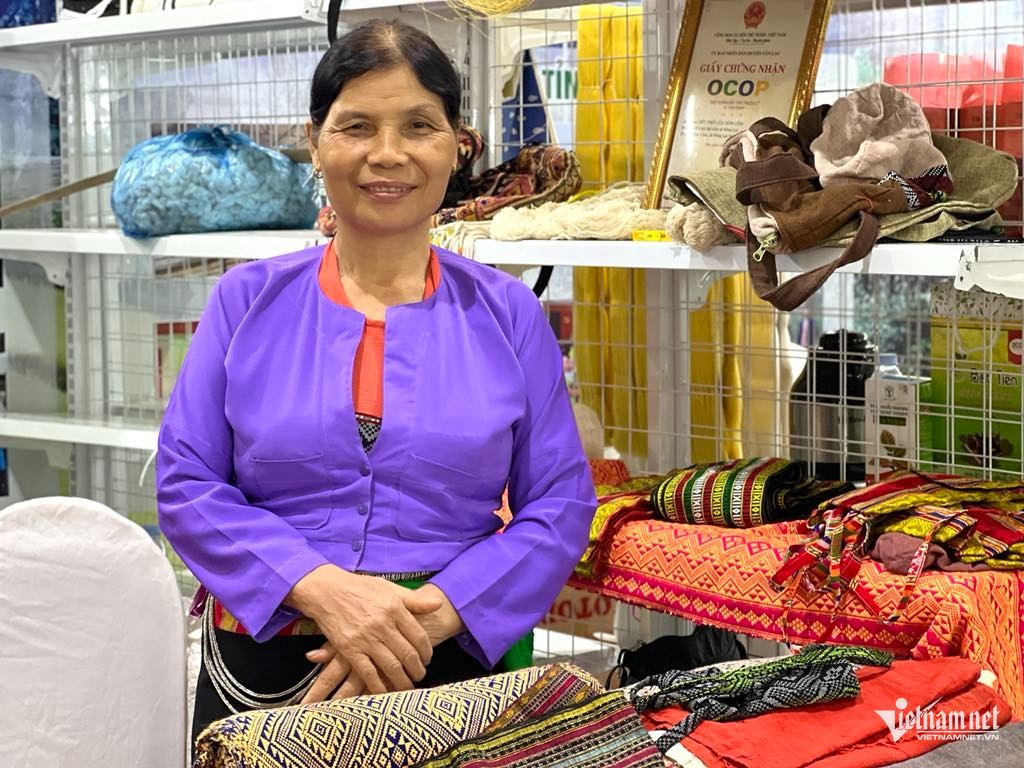
Each Muong brocade piece contains intricate patterns requiring great patience. Photo: Binh Minh

 |
 |
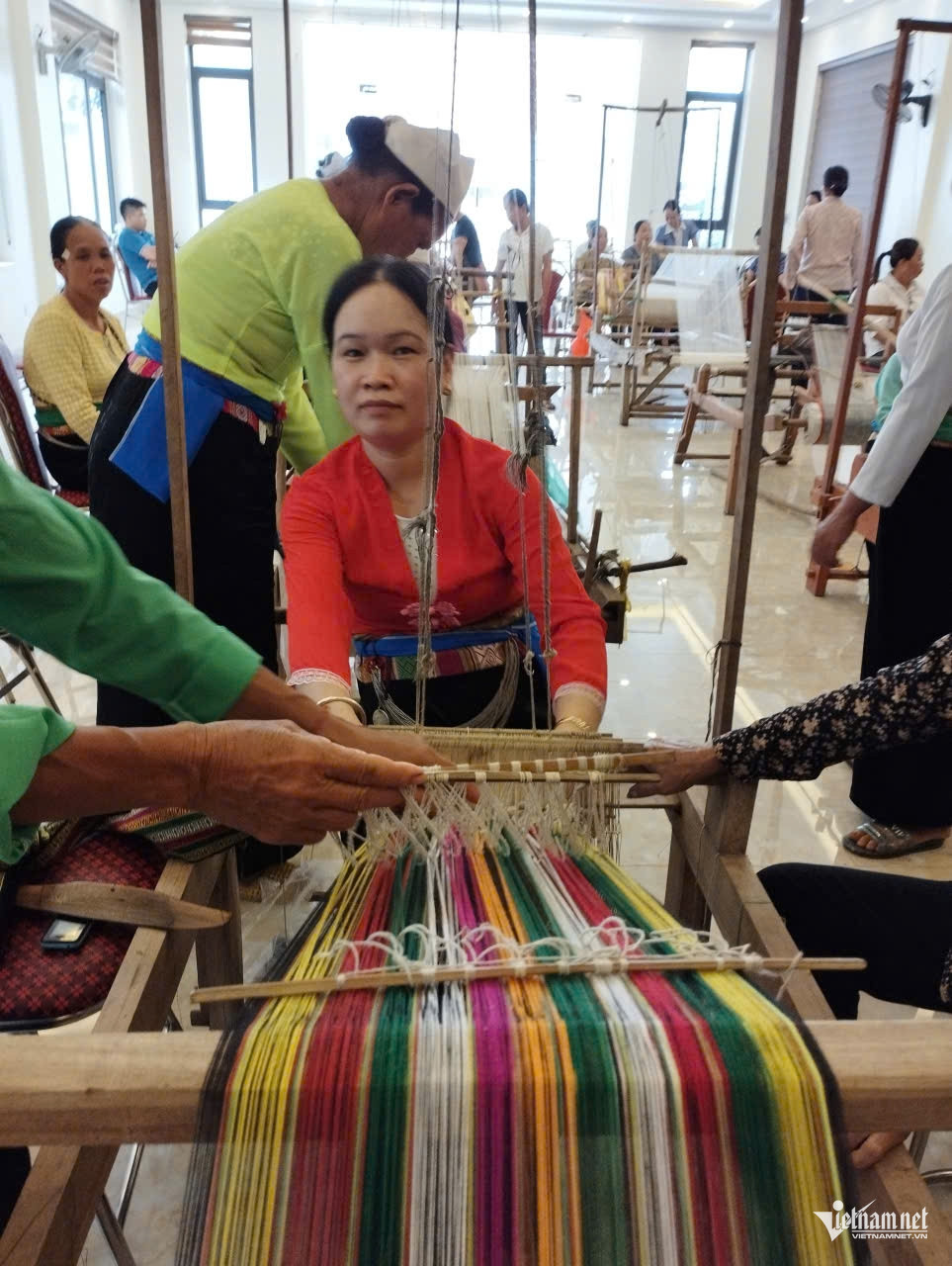 |
Every Muong brocade product requires meticulous attention. “To get the patterns right, the artisan must count every thread precisely. A slight mistake distorts the whole pattern. Without patience, this job is impossible,” Mia said.
She quoted a folk poem capturing the essence of the craft:
“Mountains and rivers, shapes abound,
Count every thread, pattern by pattern found.
A thousand-year tradition in hand,
Our descendants uphold this art so grand.”
Preserving a fragile cultural heritage
Though proud of their cultural craft, Huong and Mia are increasingly concerned about its survival.
Once a thriving village craft, only about 50 households still practice brocade weaving today, mostly middle-aged or elderly artisans.
Mia began weaving at age 12 under the guidance of her mother and grandmother. After nearly 50 years, she laments that “despite our efforts, few young people are interested. It breaks my heart.”
Huong also admitted: “This job is hard and doesn’t earn much. I still mainly rely on farming to live. Sometimes I make only a few million dong a year (roughly $100–$200) from weaving. Young people prefer stable company jobs. We've tried to encourage them, but it’s tough.”
In 2023, artisans and cultural advocates came together to establish the Dong Lai Brocade Weaving Cooperative (initially under Tan Lac district, Hoa Binh province, now part of Tan Lac commune, Phu Tho province).
The brocade weaving craft of Xom Com was recently certified as meeting OCOP 3-star standards. The cooperative must meet rigorous requirements, including source traceability and handmade production. They grow their own cotton, raise silkworms, and weave – maintaining a closed-loop, locally rooted process.
However, to truly save the craft, more structured training for youth and practical support for artisans are still needed.
“You can’t expect young people to embrace the craft if it can’t support their lives. The key is helping artisans earn a living from weaving. Only then can we pass it on,” Mia reflected.
Muong brocade weaving does more than produce colorful cloth – it preserves the soul of the Muong people, a community with a rich cultural and historical legacy. Keeping the tradition alive is not only about sustaining a craft but about safeguarding the identity of an entire ethnic group now at risk of losing it.
Binh Minh
.svg)
