 Vietnamnet.vn

 Podcast



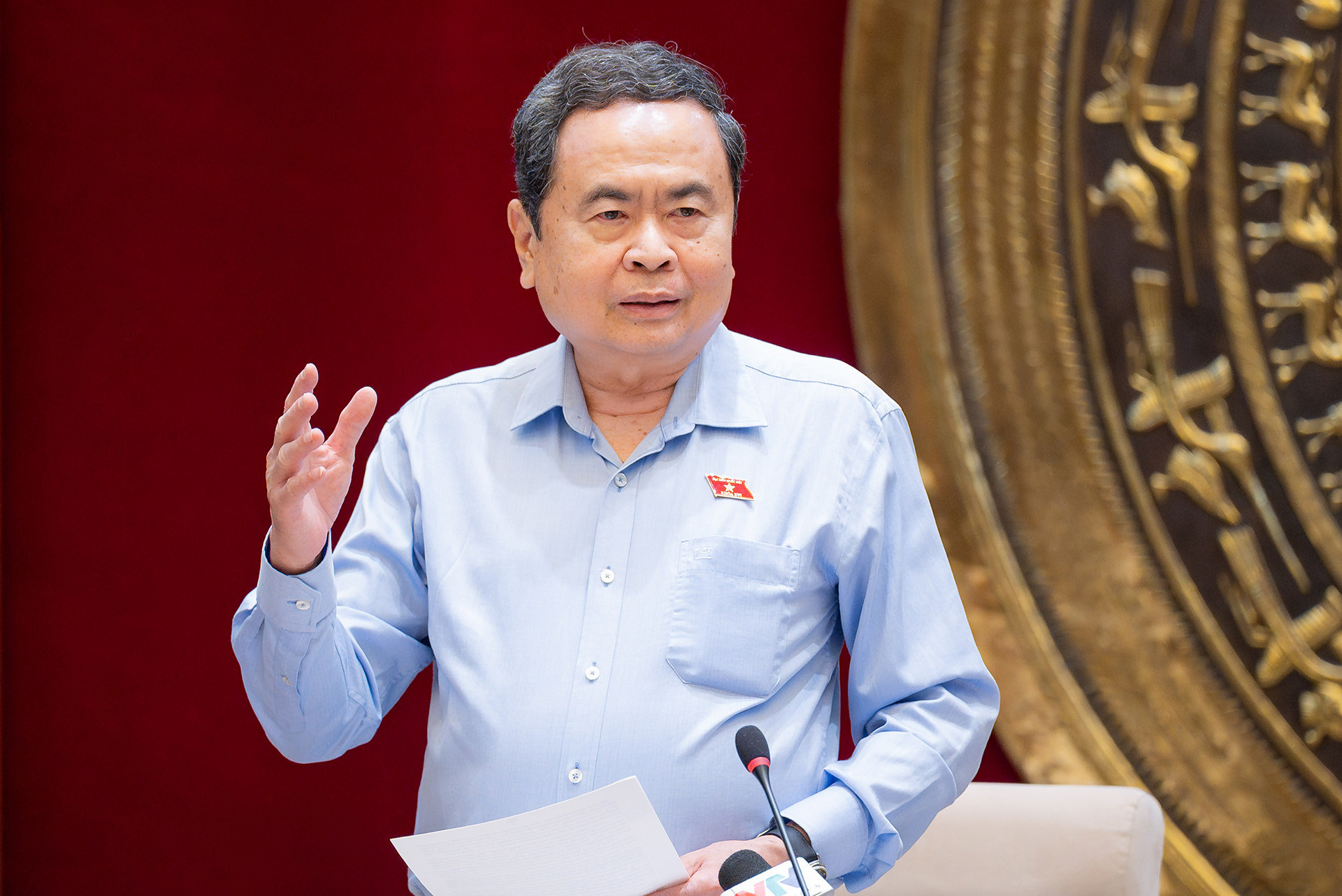
Speaking at the meeting, Chairman Tran Thanh Man said the workload ahead would be substantial and the requirements increasingly demanding, requiring the Ethnic Council to immediately adopt a new working approach that is “more urgent, more scientific, more substantive, with clear deadlines, deliverables and accountability.”
Addressing key tasks for 2026 and the 16th National Assembly term, the chairman urged the Ethnic Council to continue reforming legislative thinking and improve the quality of appraisals for draft laws, ordinances and resolutions, especially those directly affecting ethnic minority communities and mountainous areas.
The Ethnic Council was also asked to proactively participate in and complete a comprehensive review of legal documents within its area of responsibility.
The move aims to address shortcomings identified in reports, including fragmented regulations related to ethnic affairs and ethnic policies, limited policy consistency and sustainability, and insufficient inter-agency coordination in both policy formulation and implementation.
Chairman Tran Thanh Man requested the Standing Committee of the Ethnic Council to proactively select appropriate forms of supervision based on practical conditions and to carry out oversight activities during 2026.
He also emphasized the need to accelerate digital transformation and the application of information technology and artificial intelligence in the council’s operations.
Members of the Ethnic Council, officials and civil servants were encouraged to actively utilize digital platforms, AI tools and other technological support systems more effectively.
The chairman noted that the National Assembly would soon update and issue Version 2.0 of the National Assembly’s digital architecture, deploy a shared operational management system within the legislature, and complete its digital data center.
“If the National Assembly is to build a digital data center, the Ethnic Council and committees must first complete and integrate their own data systems,” he said.
Chairman Tran Thanh Man also urged the Ethnic Council to work closely with relevant agencies to closely monitor socio-economic conditions, security and public order in border and ethnic minority areas.
He stressed the importance of strengthening grassroots engagement, particularly in key and border regions, in order to proactively propose appropriate solutions.
Vietnam’s ethnic minority population currently stands at around 14.8 million people, accounting for roughly 14.6% of the country’s population.
However, poverty and near-poverty rates remain high, with the poverty rate estimated at 9.71% and the near-poverty rate at 8.84%.
Livelihoods among ethnic minority communities continue to depend heavily on agriculture and forestry, where productivity remains low.
Many households still face shortages of capital and stable employment and are vulnerable to natural disasters and climate change.
Mountainous and remote regions continue to face difficulties related to transportation, electricity, clean water and internet access, while access to public services, information, technology and digital skills remains limited.
Many traditional festivals and crafts are also at risk of disappearing, while educational attainment and living standards among ethnic minority populations continue to lag behind urban and lowland areas.
“These are issues the Ethnic Council must pay closer attention to in order to better improve the lives of ethnic minority communities,” Chairman Tran Thanh Man said.
The chairman also requested the Ethnic Council to strictly implement its working regulations and use work performance as a basis for evaluating officials and civil servants.
At the same time, he emphasized the importance of Party building, particularly political and ideological work, while ensuring genuine unity and solidarity and preventing factionalism or internal divisions.
Each cadre and Party member, he said, must remain exemplary and continuously improve political integrity, ethics, lifestyle and professional qualifications.
The Ethnic Council was further urged to strengthen coordination mechanisms to ensure practical and effective cooperation internally, within the National Assembly, and with the Government, particularly the Ministry of Ethnic and Religious Affairs, local authorities and related agencies.
Tran Thuong
.svg)
