 Vietnamnet.vn

 Podcast



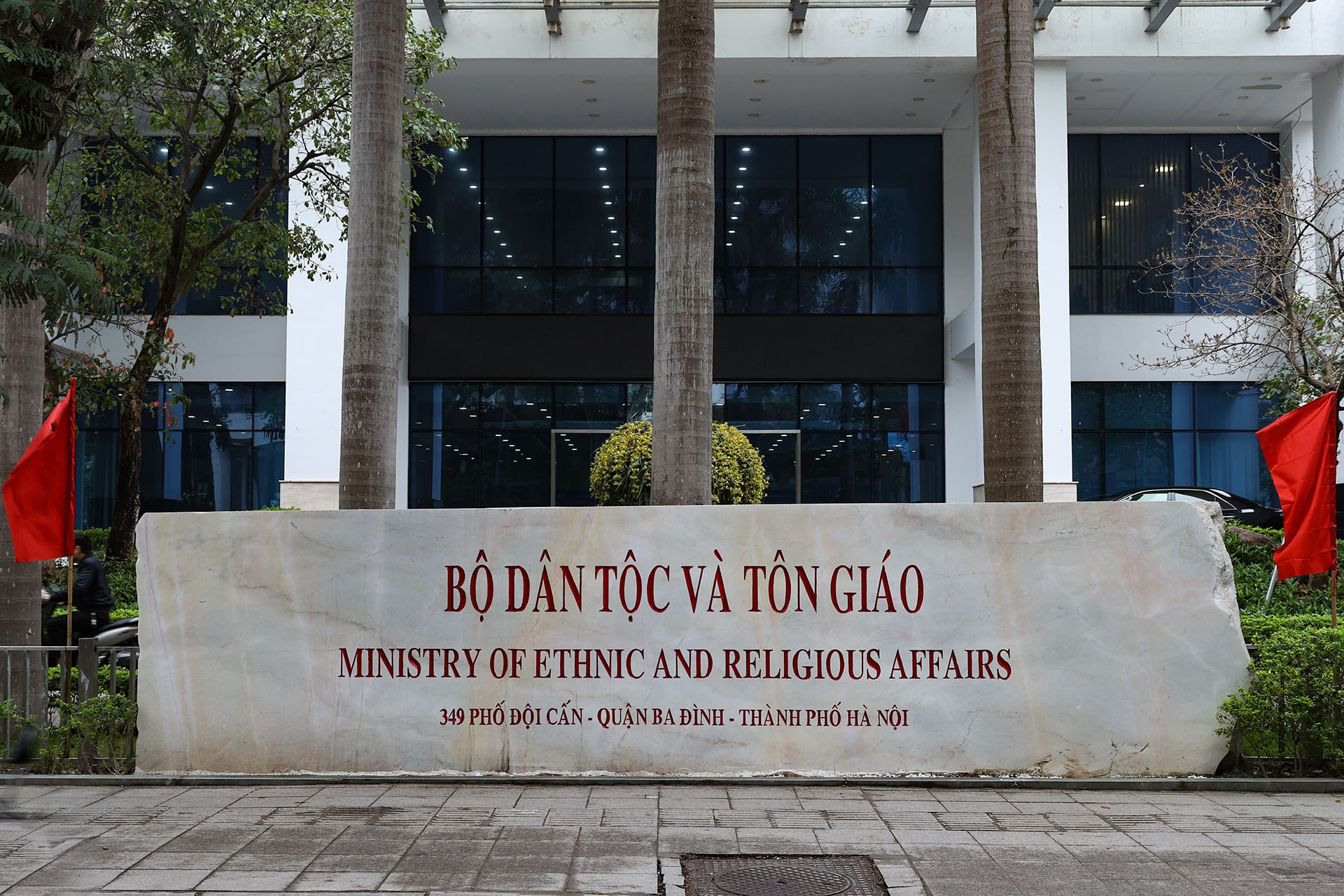
The draft was prepared by the Ministry of Ethnic and Religious Affairs.
According to the draft decree, the ministry’s organizational structure would include 12 units: the Department of Planning and Finance, Department of Personnel and Organization, Department of Legal Affairs, Department of International Cooperation, Department of Communications on Ethnic and Religious Affairs, Office of the Ministry, Government Committee for Religious Affairs, Department of Ethnic Strategy and Policy, Center for Digital Transformation, Academy of Ethnic and Religious Affairs, VietNamNet newspaper, and the Journal of Ethnic and Religious Studies.
Following a review and assessment of the ministry’s organizational structure during the 2021-2026 government term, authorities concluded that the current structure is generally reasonable and aligned with assigned functions, duties, and powers.
State management agencies and public service units have largely fulfilled their assigned responsibilities effectively across specialized sectors.
The ministry stated that the departments, the Government Committee for Religious Affairs, the ministry office, and affiliated public service units all meet the criteria for establishment.
As a result, the Ministry of Ethnic and Religious Affairs has proposed maintaining seven state management units, including the Department of Planning and Finance, Department of Personnel and Organization, Department of Legal Affairs, Department of International Cooperation, Department of Communications on Ethnic and Religious Affairs, the Office of the Ministry, and the Government Committee for Religious Affairs, classified as a Type-2 department.
The ministry has also proposed establishing the Department of Ethnic Strategy and Policy, also classified as a Type-2 department, based on the current Policy Department with expanded responsibilities.
The proposal is grounded in orientations outlined in the documents of the 14th National Party Congress, conclusions of the Politburo, and the ethnic affairs strategy for the 2021-2030 period with a vision toward 2045.
The ministry stated that the establishment of the new department is intended to meet development requirements in the new phase.
Party General Secretary and State President To Lam has emphasized the need for a more strategic, synchronized, and substantive approach to ethnic affairs and ethnic policy, viewing ethnic affairs as part of the country’s overall development strategy.
Currently, the Ministry of Ethnic and Religious Affairs oversees two primary areas of state management: ethnic affairs and religious affairs.
In the religious affairs sector, the ministry already operates the Government Committee for Religious Affairs to manage religion and belief related issues.
For ethnic affairs, however, the ministry currently only has the Policy Department.
Authorities therefore consider it necessary to establish the Department of Ethnic Strategy and Policy to strengthen state management capacity in strategic consultation, policy research, planning, and implementation of ethnic policies in line with Party orientations regarding ethnic affairs in the new context.
The proposed department is expected to advise the minister on state management related to ethnic policy, science and technology, basic investigations, and environmental protection.
It would also lead the drafting of legal documents and specialized socio-economic development policies for ethnic minority and mountainous areas, particularly disadvantaged regions, border areas, and former resistance bases.
The department would additionally advise on policies related to culture, language, reputable community figures, and social issues such as gender equality and child marriage prevention.
It would also be responsible for reviewing and monitoring the implementation of ethnic policies nationwide and recommending improvements.
According to the draft, the Department of Ethnic Strategy and Policy fully meets the conditions and standards required for establishment under current regulations.
Proposal seeks to retain three public service units and rename academy
The draft submission also states that the Ministry of Ethnic and Religious Affairs will not establish divisions within its departments.
The Government Committee for Religious Affairs, the Department of Ethnic Strategy and Policy, and the ministry office would maintain division-level structures in accordance with regulations.
The Department of Communications on Ethnic and Religious Affairs would continue operating two units headquartered in Dak Lak Province and Can Tho City.
The ministry also proposed maintaining three public service units: VietNamNet newspaper, the Journal of Ethnic and Religious Studies, and the Center for Digital Transformation.
The Academy of Ethnic Affairs is proposed to be renamed the Academy of Ethnic and Religious Affairs to better reflect the ministry’s state management functions and the academy’s current responsibilities.
The academy is a public non-business unit and a higher education institution.
Since March 1, 2025, the academy has been assigned additional functions in education, training, and research related to beliefs and religion.
The proposed name change is therefore considered necessary to fully encompass the academy’s functions and duties.
The position and functions of the Ministry of Ethnic and Religious Affairs under the draft decree would remain unchanged from those stipulated in Decree No. 41/2025.
Specifically, the ministry would continue serving as the government agency responsible for state management in the areas of ethnic affairs, beliefs, religion, and public services within sectors under its management in accordance with the law.
Regarding duties and powers, the ministry would largely retain all 24 provisions under Article 2 of Decree No. 41/2025, with only minor wording adjustments and the addition of one provision to Clause 6 of Article 2.
The additional provision concerns participation and coordination in vocational training and job creation for pupils, students, and young people from ethnic minority and mountainous areas.
Tran Thuong
.svg)
