 Vietnamnet.vn

 Podcast



A tiny lump that changed everything
One ordinary evening, while taking a shower, N.T.H., a 40-year-old woman from Dong Quan Commune in Hung Yen Province, unexpectedly felt a small hard lump in her left breast.
The lump was no larger than a peanut. It caused no pain, yet its unusual firmness instantly alarmed her. She stood frozen in the bathroom.
She gently pressed the lump several more times before her heart began racing. The thought of breast cancer flashed through her mind, making her hands tremble.
That same night, she texted her husband, who was away on a business trip.
"I found a strange lump in my breast."
Trying to reassure her, he replied: "You're probably overthinking it."
She barely slept that night. Her phone screen glowed continuously as she searched for information about breast cancer, malignant tumors and warning signs. The more she read, the more frightened she became.
Stories of chemotherapy, hair loss and mastectomy left her quietly weeping through the stillness of the night.
The following morning, she visited a hospital near her home for an ultrasound examination.
Inside the examination room, the doctor studied the monitor intently before frowning slightly.
"This lump has spiculated margins." That brief remark was enough to make H. feel as though her heart had stopped.
She immediately understood that the possibility of cancer was high.
The doctor advised her to seek further evaluation at a higher-level specialist hospital.
Two days later, she arrived at K Hospital's Tan Trieu Campus in Hanoi.
It was there that her fight against breast cancer truly began - a journey that included surgery, 12 rounds of chemotherapy and 29 sessions of radiotherapy.
For nearly ten months, she traveled back and forth between the hospital and a rented room nearby.
She endured days of exhaustion brought on by treatment and sleepless nights consumed by fear.
Some mornings, she woke to find her pillow covered with fallen hair and burst into tears, barely recognizing the woman she saw in the mirror.
Yet while sitting in the hospital corridors, she came to realize she was far from alone in this battle.
Breast cancer remains the most common cancer among women
According to GLOBOCAN 2022, breast cancer is currently the most commonly diagnosed cancer among women worldwide, with nearly 2.3 million new cases, accounting for approximately 23.8% of all cancers diagnosed in women.
In Vietnam, around 24,500 women are diagnosed with breast cancer each year.
Associate Professor Pham Cam Phuong, Director of the Nuclear Medicine and Oncology Center at Bach Mai Hospital in Hanoi, said breast cancer is a malignant disease that develops from breast tissue cells. It ranks first in new cancer diagnoses and fourth in cancer-related deaths nationwide.
"These figures underscore the urgent need to raise public awareness and promote early screening," she said.
According to specialists, breast cancer risk is influenced by multiple factors, including genetics, age, previous medical history, hormonal disorders, reproductive factors and lifestyle.
Earlier detection is changing the outlook
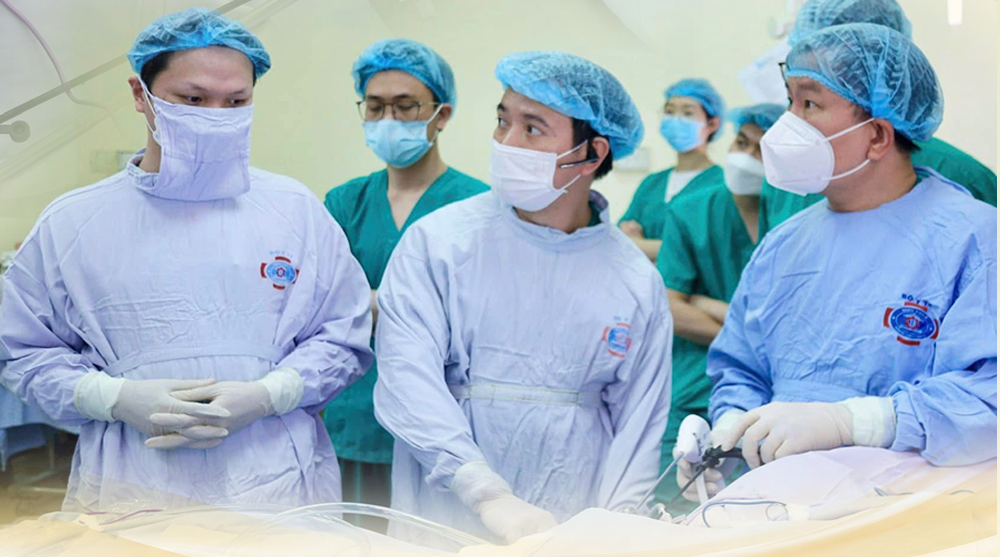
According to Associate Professor Le Hong Quang, Head of the Breast Surgery Department at K Hospital's Tan Trieu Campus, although the number of breast cancer patients continues to rise, the disease is no longer as frightening as it once was. The biggest change lies in detecting it much earlier.
Fifteen to 20 years ago, most patients arrived at the hospital only after the disease had reached an advanced stage. Today, that trend has largely reversed. Around three-quarters of breast cancer patients are now diagnosed at an early stage, a factor that significantly improves the chances of successful treatment.
Behind this shift are years of public awareness campaigns encouraging women to perform regular breast self-examinations, undergo routine screening and recognize early warning signs.
Progress has not stopped at earlier diagnosis. Breast cancer treatment in Vietnam has also evolved dramatically.
In the past, surgery and chemotherapy were often the only treatment options available. Today, treatment follows a multidisciplinary, personalized approach similar to those adopted in many developed healthcare systems.
Depending on each patient's condition, doctors may combine surgery, chemotherapy, radiotherapy, targeted therapy, immunotherapy and hormone therapy.
Specialists in diagnostic imaging, pathology, breast surgery, radiation oncology and medical oncology work together to review each case and design the most appropriate treatment plan.
Molecular testing and genetic sequencing are also opening the door to more precise treatment strategies. Women found to carry BRCA1 or BRCA2 gene mutations may benefit from targeted therapies specifically developed for those genetic profiles, improving treatment outcomes and long-term survival.
Fear remains part of every diagnosis
Despite remarkable advances in medicine, a breast cancer diagnosis remains a life-changing shock for almost every woman.
It is the moment many realize that life has suddenly taken an entirely different direction.
"Their greatest fear is not only the disease itself, but also the uncertainty," Associate Professor Quang said. "Will I live long enough to see my children grow up? Will my hair grow back? Will my body still feel like my own after treatment?"
For that reason, he believes the most important message is helping women recognize abnormalities as early as possible and never ignore even the smallest warning signs from their bodies.
Hospitals across Vietnam have introduced a range of modern technologies for breast cancer detection, including digital mammography, advanced breast ultrasound and BRCA1/BRCA2 genetic testing to identify inherited cancer risk.
Associate Professor Phuong recommends that women aged 40 and older, especially those with risk factors such as obesity, a family history of cancer or having never given birth, undergo annual breast cancer screening.
Phuong Thuy
.svg)
