 Vietnamnet.vn

 Podcast



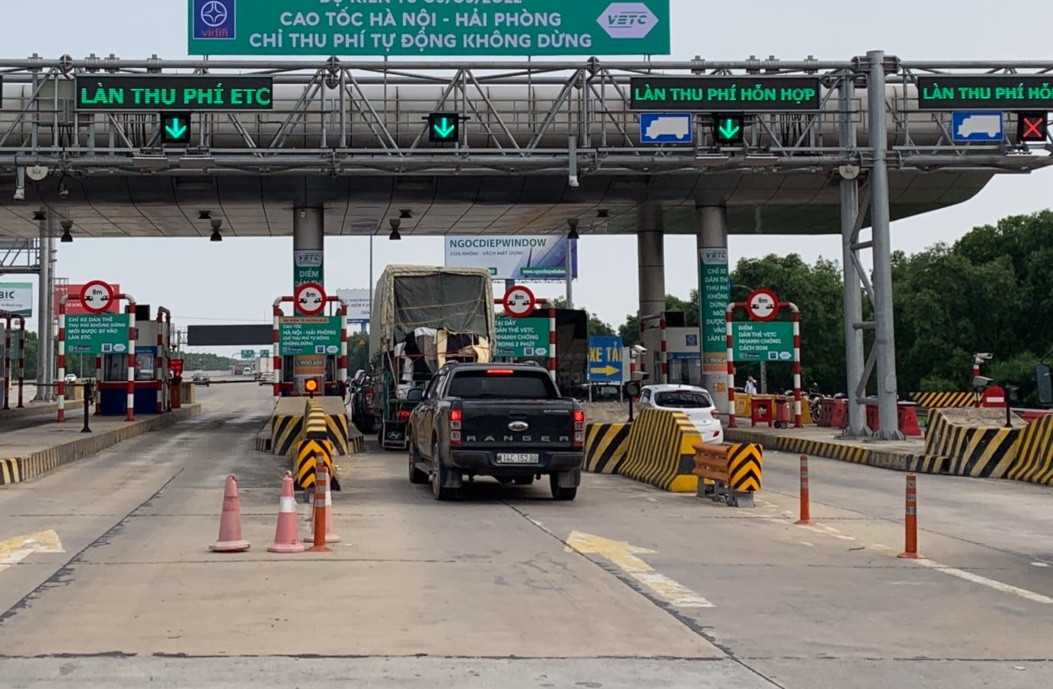
I have encountered a particularly frustrating situation several times on expressways that have only electronic toll collection (ETC) lanes and no mixed-payment lanes. The signs say “non-stop tolling,” yet there is still a line of stationary vehicles ahead.
Sometimes the account has sufficient funds and the ETC tag is properly affixed to the vehicle, but the barrier still fails to open because of a problem with account conversion or because the vehicle owner has not updated their registration details.
Station staff then have to intervene manually while drivers behind grow impatient. The words “non-stop” suddenly feel anything but realistic. The only lesson I have taken from these experiences is not to use that expressway again, instead taking another route where toll booths allow me to pay in cash or scan a QR code.
In this context, the decision by VETC and ePass to impose a monthly fee of VND6,600 on individual customers and VND66,000 on organizations from August 1 for wallet/payment-account management services has sparked debate.
VND6,600 is not a large amount when viewed month by month. But when a new fee is imposed on a service so closely tied to travel on toll roads, the more important question is no longer whether it is expensive or cheap. It is what users are actually paying for and whether they can choose another option that is genuinely convenient.
Decree 119/2024 shifted the system from “toll accounts” to “traffic accounts,” linking them to vehicles and connecting them to a cashless payment method. In other words, a traffic account is not synonymous with an e-wallet which is simply one of several payment rails that can connect to the system.
Service providers say customers can unlink their wallets and switch to another payment method. If doing so is genuinely quick and simple and does not disrupt their ability to pass through toll stations, that is a meaningful choice.
But the reactions of many drivers seeking to withdraw their money, unlink their wallets or deposit funds only when necessary suggest that the real issue to examine is the gap between having “a choice on paper” and having “a choice in practice”.
The VND1.4 trillion in user balances deposited in advance is substantial enough to warrant transparency, but it does not by itself mean companies have access to free working capital. The more relevant questions are how the money is safeguarded, which costs are associated with ETC operations, which belong to wallet services, and whether any costs are being charged twice.
Similarly, multiplying 3 million customers by VND6,600 and 12 months produces VND237.6 billion, but that is merely a maximum scenario, not guaranteed revenue.
Don’t let payment error become a traffic incident
ETC was introduced to reduce vehicle stopping times, fuel consumption and congestion. If a fee policy gives people an incentive to withdraw most of their wallet balance, unlink their accounts or top up only immediately before entering an expressway, the resulting risks can affect everyone else as well.
A failed transaction at a toll lane can force a vehicle to stop, require staff intervention and create a queue behind it. This is why many international systems have gradually moved away from the model in which drivers must have sufficient funds before passing through, toward systems where payment obligations are securely recorded and can be collected afterward.
Rather than arguing over whether VND6,600 is expensive or cheap, I think four questions need to be answered: What value does the fee pay for? is there a sufficiently convenient non-recurring fee option available? Are any costs being charged twice between ETC and payment services? And can users switch payment methods or providers without disruption?
On that basis, regulators can clarify the service structure, level of competition, switching costs and the security of user balances. In the long term, the traffic account should serve primarily as an identification and reconciliation layer, while wallets, banks, credit cards, debit cards and other payment methods compete at the payment layer.
Over the medium and long term, housing supply is expected to continue expanding in suburban areas as Hanoi accelerates population decentralization, promotes multi-center urban development and upgrades its transport infrastructure.
Nguyen Phuoc Thang, Hoa Binh University
.svg)
