 Vietnamnet.vn

 Podcast



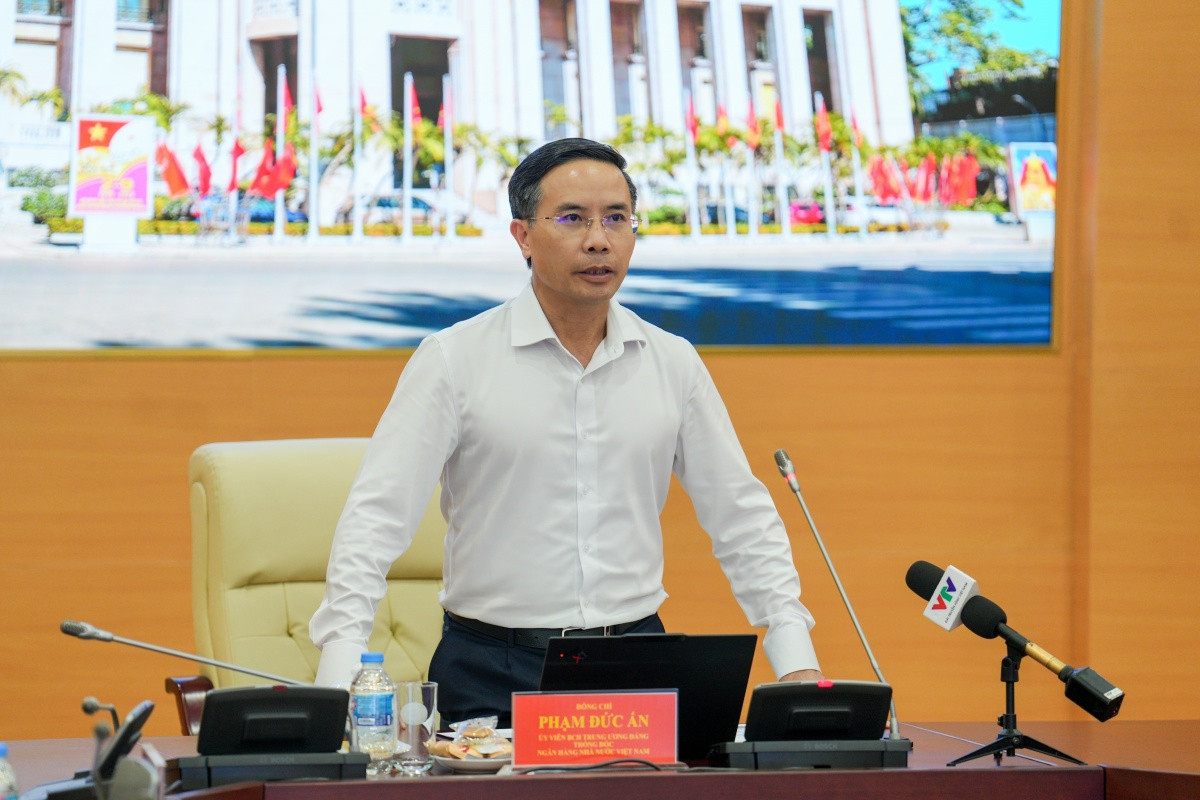
At the meeting, Pham Chi Quang, Director General of the Monetary Policy Department, noted that in the first three months of the year, the central bank had operated monetary policy proactively and flexibly to stabilize the macroeconomy, control inflation, and promote economic growth.
Specifically, open market operations were conducted in a flexible and proactive manner, aligned with market developments and policy objectives. The central bank carried out daily purchases of valuable papers with appropriate volumes and varied tenors to support liquidity and stabilize the money market.
Exchange rate management and the foreign exchange market were also handled in line with market conditions, helping absorb shocks. Policy tools were coordinated effectively, including foreign currency sales to stabilize the market, contributing to macroeconomic stability and inflation control.
In terms of credit management, from the beginning of 2026 the central bank set a credit growth target of 15% for credit institutions. Banks were required to tightly control lending to high-risk sectors, particularly real estate, while directing credit toward production, business activities, and priority sectors that drive growth.
The approach also emphasizes alignment with risk management capacity, limiting the rise of bad debt and ensuring system safety.
As of the end of March 2026, total credit in the system had grown by approximately 2.65% compared to the start of the year, reaching VND19.08 quadrillion (approximately US$780 billion).
Regarding policy rates, the central bank has maintained current levels to allow credit institutions access to low-cost funding, thereby supporting the economy.
However, according to Pham Chi Quang, recent global developments have become increasingly complex and unpredictable. Escalating geopolitical and military tensions in the Middle East have pushed oil prices higher, creating inflationary pressures worldwide.
At the same time, strong domestic demand for capital to meet growth targets has posed challenges for monetary policy management and banking operations, with both deposit and lending rates trending upward.
At the meeting, commercial banks expressed strong agreement in implementing directives from the Government and the central bank to reduce market interest rates. They committed to lowering both deposit and lending rates following the meeting.
In his concluding remarks, Governor Pham Duc An emphasized that the central bank will continue closely monitoring developments in deposit and lending rates, including transparency in publishing lending rates on bank websites.
The State Bank of Vietnam will implement appropriate monetary policy measures and remain ready to provide liquidity support to commercial banks. At the same time, it will strengthen inspection, supervision, and enforcement to ensure compliance with government and central bank directives on interest rates.
Violations in capital mobilization and credit extension activities will be strictly handled, he stressed.
The meeting took place against a backdrop of rising deposit and lending rates over the first three months of the year, adding urgency to coordinated efforts aimed at easing financial conditions for the economy.
Tuan Nguyen
.svg)
