 Vietnamnet.vn

 Podcast



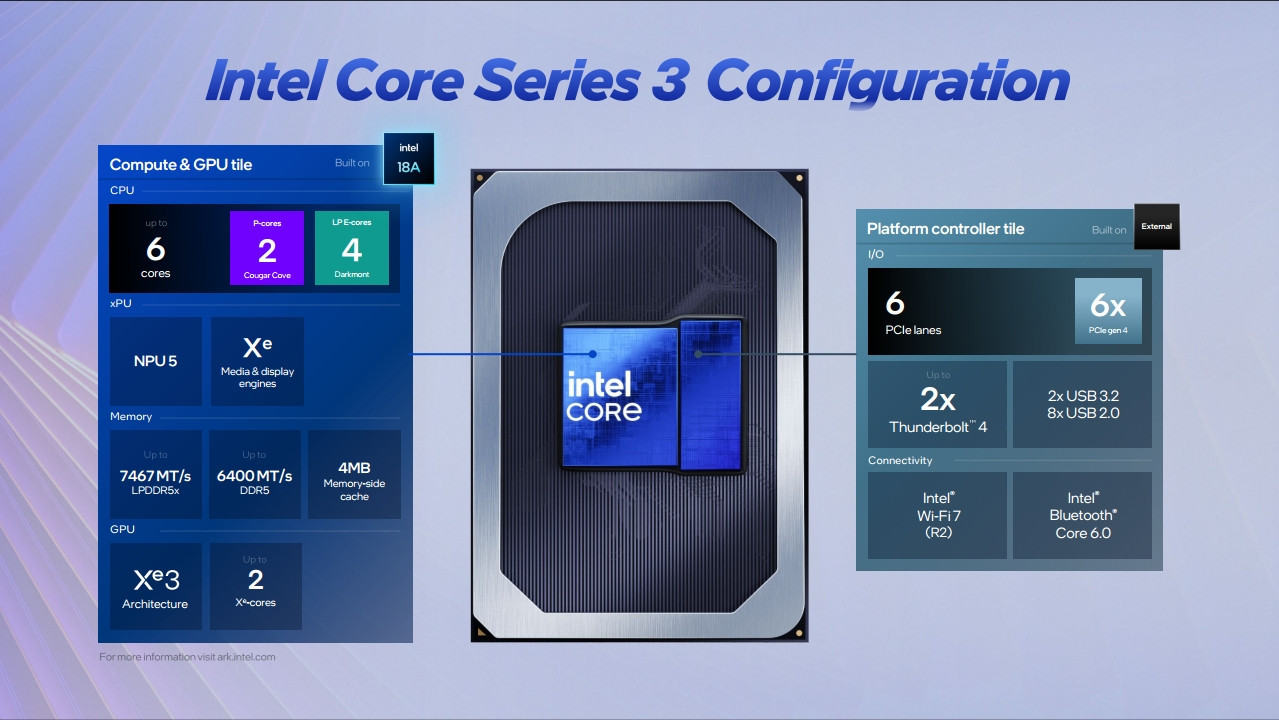
The new lineup is positioned for everyday users, including students, households and small enterprises, as well as edge devices such as point-of-sale machines, robots and measurement systems that process data at the source.
Intel Core Series 3 is built on the architectural foundation of the Core Ultra Series 3 (Panther Lake) and manufactured using the company’s most advanced 18A process technology.
This marks the first Core Series generation to feature a hybrid architecture optimized for artificial intelligence. The system delivers total AI computing performance of up to 40 TOPS (trillions of operations per second).
In terms of connectivity, the processors support high-speed hardware interfaces, including up to two Thunderbolt 4 ports, Wi-Fi 7 (R2) and Bluetooth 6.
According to the US-based technology firm, the new chips are designed for users entering a “golden five-year upgrade cycle” for computing devices.
Compared with PCs that are five years old, Core Series 3 improves single-thread performance by 47 percent and multi-thread performance by 41 percent, while boosting AI processing power on the graphics processor by 2.8 times.
When compared with the previous-generation Intel Core 7 150U, the new series reduces power consumption by 64 percent, doubles creative task performance by 2.1 times and enhances AI performance on the GPU by 2.7 times.
These improvements are aimed at delivering all-day battery life for mainstream users.
Mr. Josh Newman, Vice President and General Manager of Consumer PCs at Intel’s Client Computing Group, said the new processors “open the door to advanced technology for a broader audience, meeting real-world needs of students, families, small businesses and edge computing models.”
Devices equipped with Intel Core Series 3 processors will be available from OEM partners such as Asus, Acer, Dell and HP starting April 17 and throughout the year.
Edge computing devices using the new chips are expected to launch in the second quarter of 2026.
Du Lam
.svg)
