 Vietnamnet.vn

 Podcast



This provision will have a positive impact on the banking sector, according to Vu Thi Linh from Yuanta Securities Vietnam.
Banking is a specialized business field where credit growth directly depends on equity capital and the Capital Adequacy Ratio (CAR).
When the rate of retained profits increases, equity capital can be supplemented immediately without the need to issue more shares. For example, if BIDV or VietinBank are allowed to retain several trillion dong more in profit each year, CAR would improve significantly, enabling stronger credit expansion.
In addition, Resolution 79 sets the goal that by 2030 Vietnam will have at least three state-owned commercial banks among the top 100 largest banks in Asia by total assets.
At present, Vietnamese banks remain outside the top 100. As of the end of 2025, Vietnam had three banks reaching the $100 billion total asset mark.
To enter the top 100, domestic banks would need total assets of at least $150–200 billion. This implies average total asset growth of about 12–17 percent per year over the next five years, placing considerable pressure on banks’ CAR amid rapid asset expansion.
Meanwhile, Yuanta Vietnam Securities noted that Resolution 79 opens up new space following state divestment and the sale of state capital to strategic partners at banks in the coming period. Among state-owned banks, BIDV still has the largest room for state divestment, as the State currently holds more than 80 percent of its shares, higher than Vietcombank (VCB) and VietinBank (CTG).
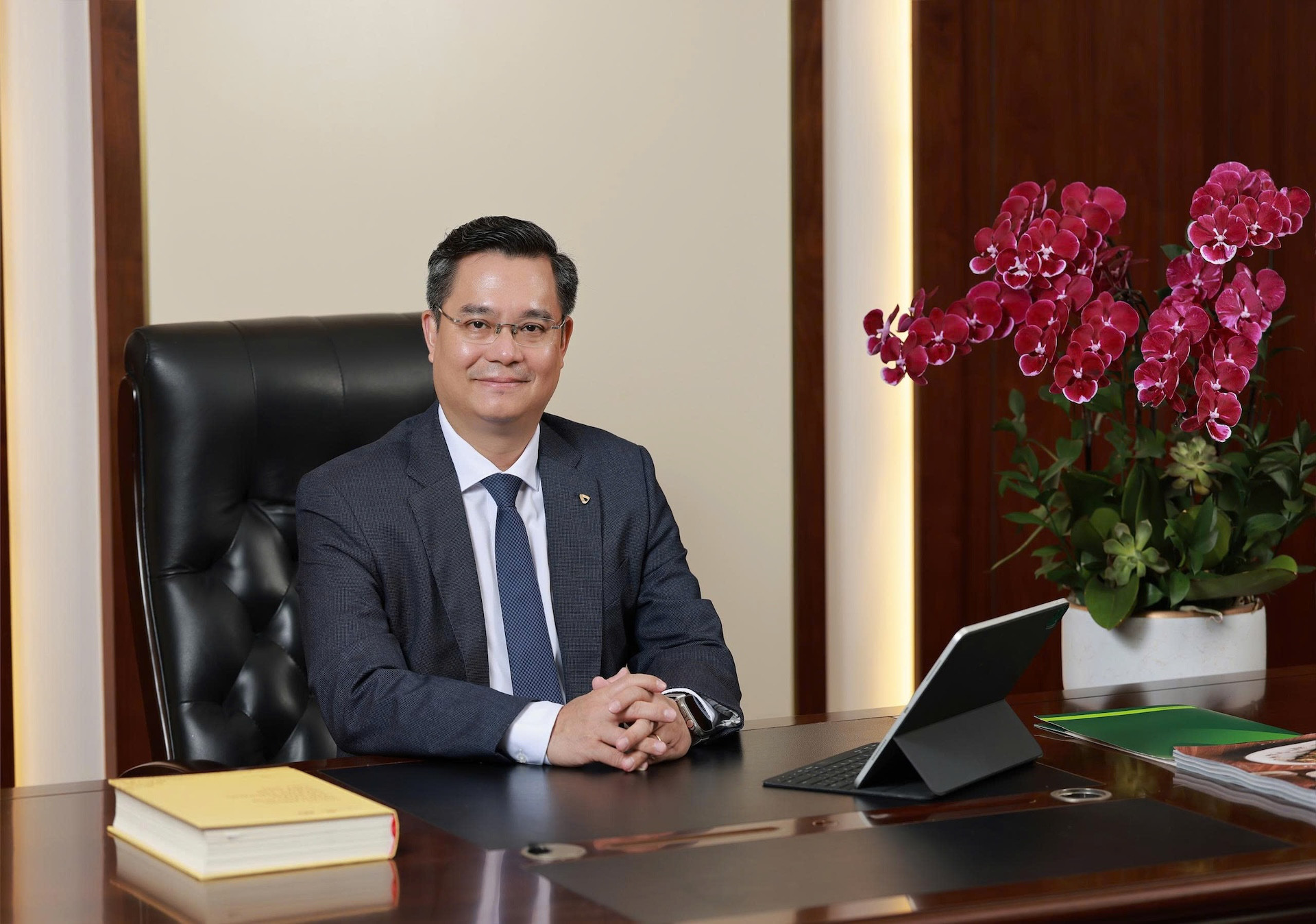
Nguyen Thanh Tung, Chair of the Board of Directors of Vietcombank, when mentioning the goal of having 3 State-owned commercial banks in the top 100 largest banks in Asia by total assets, said this is both an opportunity but also a challenge and a great responsibility for the bank which is holding a core role in the system.
He said that Resolution 79 can be considered a breakthrough in the State's capital investment thinking.
The specific characteristic of the banking sector is that its growth room, from credit expansion and technology investment to meeting international standards, depends heavily on the scale and quality of equity capital.
"This is especially important in the context that State-owned commercial banks’ CAR is currently lower than that of private banks and significantly lower than many banks in the region, while requirements for Basel standards and international competition are increasingly high," he said.
What bottlenecks need to be removed?
According to Tung, to implement Resolution 79 effectively, it is necessary to continue removing several bottlenecks as follows:
First is the consistency in policies regarding State capital investment at State-owned commercial banks. VCB proposes allowing the flexible application of capital increase forms, including retaining profits, supplementing capital from state divestment sources, private placements, and issuing preferred shares, including to employees, on the basis of ensuring the State's dominant role.
Second is the need for a clearer distinction between business activities and political tasks, as well as non-profit tasks assigned to State-owned commercial banks.
For example, VCB is currently performing the task of restructuring Construction Bank (now VCBNeo). This is an important political task to ensure system safety and therefore requires the creation of a specific mechanism.
Third, VCB proposes a longer-term approach in evaluating national pillar banks, not just based on short-term profit results, but also on market regulation roles, risk resilience capacity, international integration levels, and contributions to macroeconomic stability.
Antoine Goupille from RMIT University Vietnam said for state-owned enterprises (SOEs) to fully promote their core role in the economy, the key solution is to transform operational thinking and institutional structures.
He pointed out three main factors, including:
First is strategic focus and selective withdrawal. SOEs need to concentrate resources on truly strategic areas, while withdrawing or divesting from fields that the private sector can handle more effectively.
Second is governance modernization. SOEs need to shift quickly and thoroughly from administrative management to governance based on market principles. All state-owned groups and corporations must apply OECD corporate governance principles.
Third is innovation and going global. SOEs need to be empowered to proactively use science and technology development funds for R&D activities, including the establishment of venture capital funds. Simultaneously, it is necessary to encourage SOEs to invest abroad to ensure strategic resources and access to advanced technology, thereby strengthening strategic autonomy.
Tran Chung
.svg)
