 Vietnamnet.vn

 Podcast



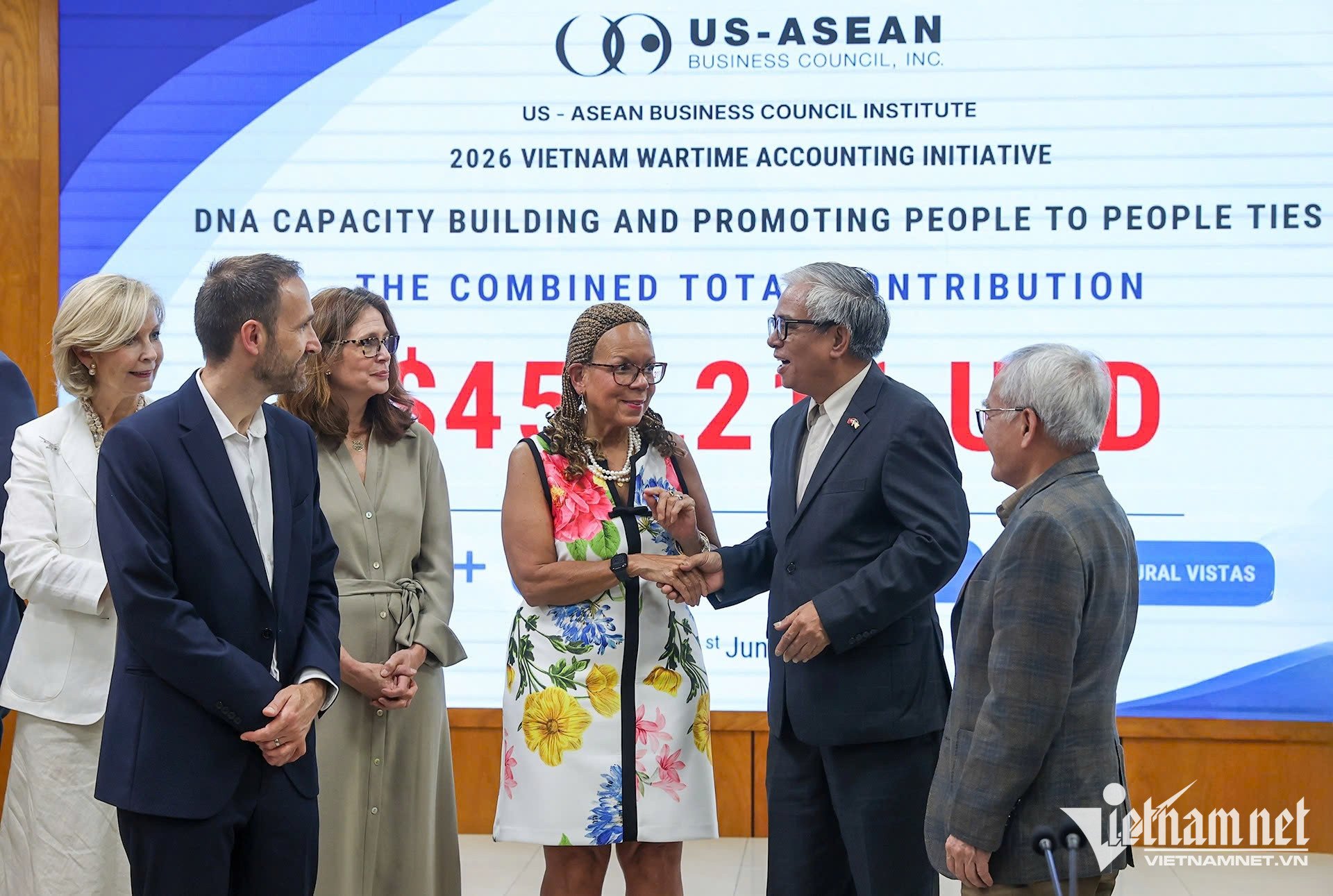
The US-ASEAN Business Council Institute (USABCI) on June 1 announced a grant worth more than $450,000 to provide comprehensive support for Vietnam's efforts to locate and identify people missing in the aftermath of war.
Implemented under the US Government's Vietnam Wartime Accounting Initiative (VWAI), the project is designed not only to accelerate the identification of war victims through modern technology but also to strengthen people-to-people exchanges and further deepen the Comprehensive Strategic Partnership between Vietnam and the United States.
To advance the initiative, a senior USABCI delegation and representatives of participating businesses are visiting Vietnam from June 1 to 4.
The delegation is scheduled to meet senior Vietnamese government officials, representatives of the Vietnam Union of Friendship Organizations (VUFO), and conduct field visits to key operational centers.
Margaret Hanson-Muse, President and Chief Executive Officer of the US-ASEAN Business Council Institute, said that supporting humanitarian efforts such as accounting for those missing from war is a natural extension of the organization's commitment to strengthening trust and long-term partnership between the United States and Vietnam.
"The private sector can bring practical capabilities in technology, logistics and innovation to complement government-led reconciliation efforts in meaningful and non-political ways. This initiative demonstrates how governments, businesses and civil society can work together to address the consequences of conflict while building stronger relationships for the future," she said.
The grant package includes several strategic components, including the provision of advanced DNA identification equipment at preferential pricing together with specialized training programs; the expansion of humanitarian activities and the transfer of US technologies to Vietnam; enhanced DNA analysis capabilities; and technical support to ensure flight safety during search operations in difficult terrain and remote areas.
Cooperation in addressing the legacy of war has long been regarded as a cornerstone of Vietnam-US relations, playing a crucial role in reconciliation, healing and confidence-building between the two countries.
Over the years, Vietnamese and US agencies have worked closely together on war legacy programs and achieved a number of significant milestones. These include the successful remediation of dioxin contamination at Da Nang Airport and ongoing remediation efforts at Bien Hoa Airport, as well as support programs that have improved the quality of life for more than 30,000 Agent Orange/dioxin victims and persons with disabilities in six heavily affected provinces.
The two sides have also jointly recovered and repatriated more than 990 sets of remains of US military personnel missing during the war in Vietnam and have organized numerous training programs aimed at strengthening the capacity of personnel involved in post-war unexploded ordnance clearance efforts.
US organizations and individuals have provided approximately 800,000 pages of documents and wartime memorabilia related to Vietnamese soldiers who were killed or went missing during the war, helping support search and recovery operations.
These achievements reflect Vietnam's strong political commitment and the United States' constructive and effective cooperation in addressing the consequences of war.
Tran Thuong
.svg)
