 Vietnamnet.vn

 Podcast



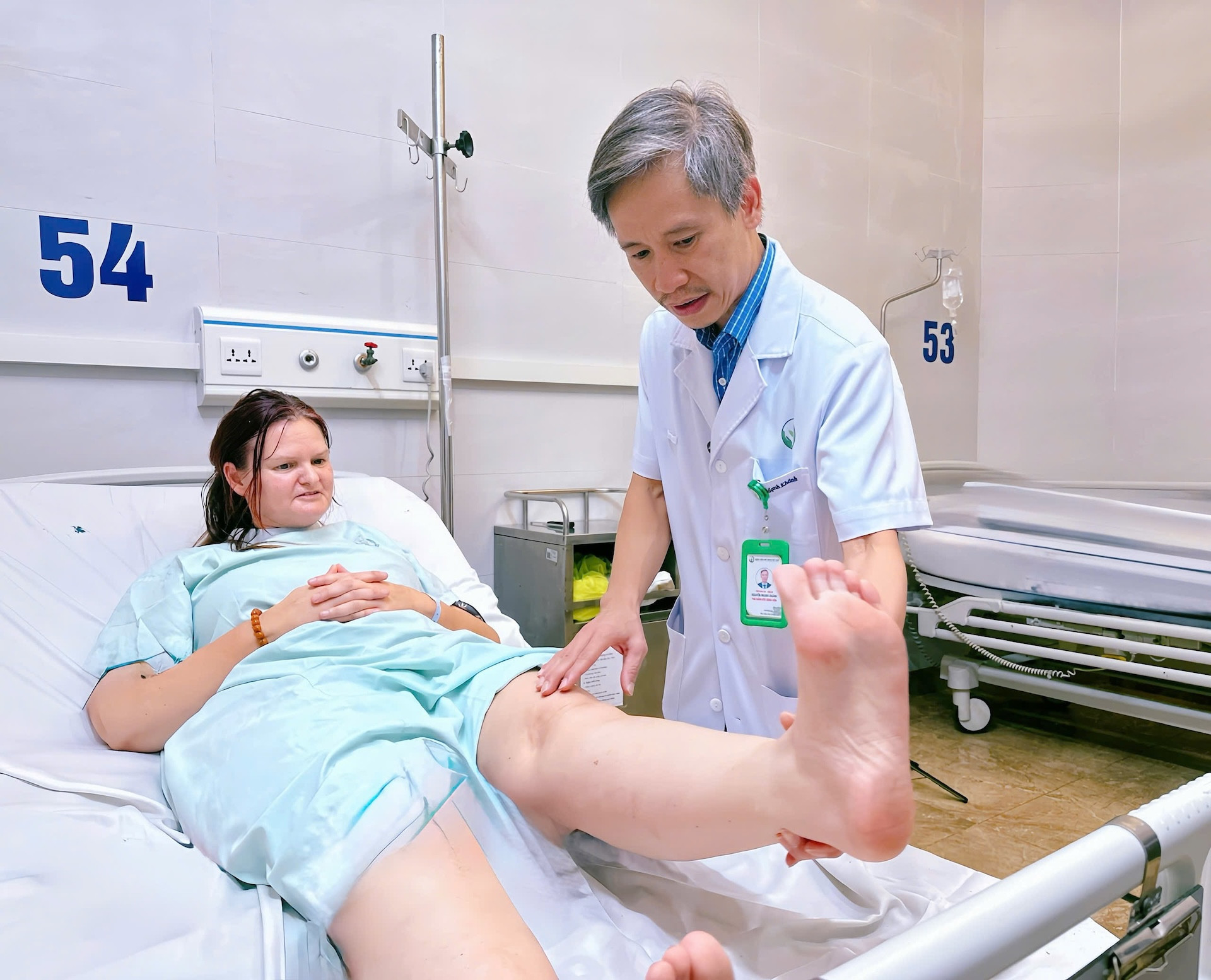
Associate Professor Nguyen Manh Khanh, Deputy Director of Viet Duc University Hospital in Hanoi, said on July 26 that the New Zealand patient first began experiencing pain in her left hip around 10 years ago. Initially, the pain occurred only during physical activity, but it gradually worsened. Persistent pain eventually disrupted almost every aspect of her daily life.
She told doctors that although she had been recommended for hip replacement surgery in New Zealand several years earlier, she remained on the waiting list under the public healthcare system. By now, she had been waiting for surgery for around four years. Having the operation as a self-paying patient, meanwhile, would cost nearly NZD40,000, or around VND600 million.
By the time she arrived at Viet Duc University Hospital, her left hip joint had been completely destroyed. She was in severe pain, could barely walk without assistance and had become dependent on a wheelchair.
Doctors diagnosed her with avascular necrosis of the femoral head, which had progressed to end-stage osteoarthritis of the hip. The condition can be associated with several factors, including disruption of the blood supply to the femoral head, trauma, autoimmune diseases, prolonged corticosteroid use, or being overweight or obese.
Despite the additional challenges posed by the patient’s weight of 100kg, the surgical team successfully performed a total hip replacement using a minimally invasive technique. The thick layer of soft tissue around the hip made the surgical approach considerably deeper than usual. Nevertheless, the operation proceeded smoothly, with an incision of only around 5-6cm, helping minimize soft-tissue damage and shorten recovery time.
On the second day after surgery, the patient was already being guided to stand and begin walking. After nearly a week of treatment, the surgical wound was healing well, her lower limbs were balanced, she was pain-free and able to walk independently.
According to Khanh, after returning to New Zealand, the patient should soon be able to resume a normal life, drive independently, participate in suitable sporting activities and regain the independence that years of debilitating hip disease had taken away.
Vo Thu
.svg)
