 Vietnamnet.vn

 Podcast



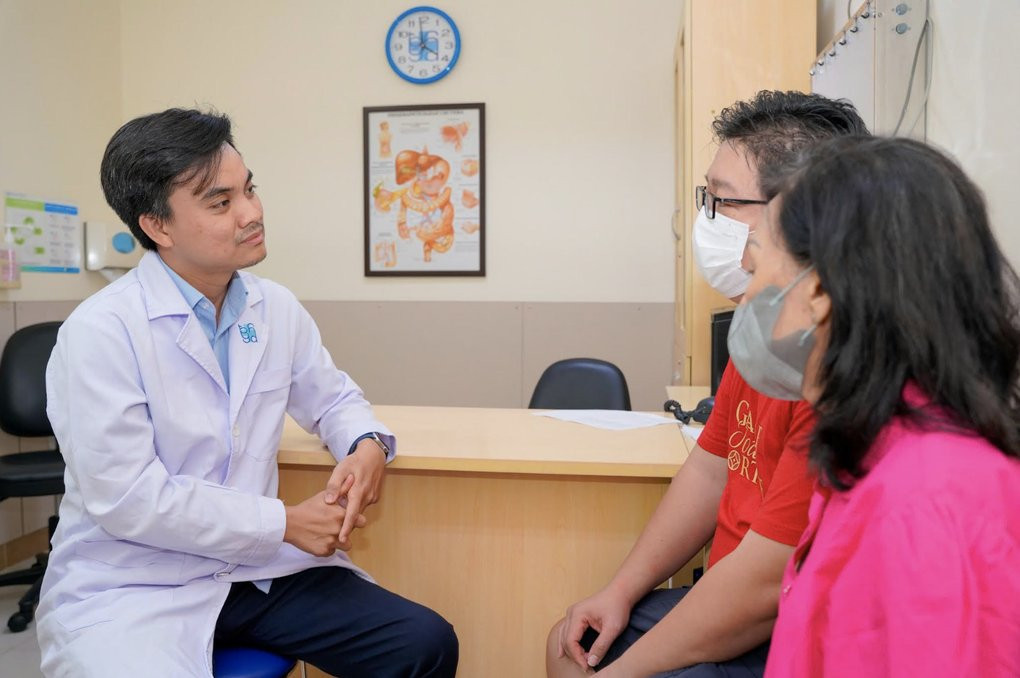
Foreign businessman travels to Vietnam for cancer treatment
A 67-year-old Indonesian businessman recently came to Ho Chi Minh City for treatment of colorectal cancer after being diagnosed with the disease along with a bowel obstruction complication. Upon admission, he was suffering from severe abdominal pain, abdominal distension and was almost unable to eat because the tumor had completely blocked his digestive tract.
Notably, the person who recommended that he seek treatment in Vietnam was his own physician in Indonesia. The doctor had previously undergone training in colorectal cancer surgery at the University Medical Center Ho Chi Minh City and had also treated a similar condition there with positive results. Based on firsthand experience and confidence in the expertise of Vietnamese doctors, he referred the patient to Vietnam.
After a thorough examination, doctors performed surgery to remove the section of intestine containing the tumor and restored digestive function without the need for a temporary colostomy. Following treatment, the bowel obstruction was completely resolved, the patient was able to eat again and his health gradually stabilized.
A second case involved An Muy Kohn, a 64-year-old Cambodian national. She initially developed unusual symptoms, including slow movement and difficulty communicating, before rapidly losing her ability to speak and move. Magnetic resonance imaging revealed a brain tumor measuring approximately 4.5 centimeters in diameter located in the left temporal lobe, a region directly associated with language function.
As her condition worsened, her family decided to take her to a hospital in Binh Thanh Ward, Ho Chi Minh City, for treatment. The case was particularly complex because the tumor was located adjacent to critical functional areas of the brain and was connected to several major blood vessels. The patient also suffered from immune thrombocytopenia, significantly increasing the risk of bleeding during surgery.
After stabilizing her condition and reducing the tumor's blood supply through intervention, doctors carried out a surgery lasting around five hours. They successfully removed the tumor while preserving both language and motor functions. Just six days later, she had regained the ability to speak and move after previously being unable to communicate or walk.
A shift away from seeking treatment abroad
Associate Professor Nguyen Hoai Nam, former senior lecturer at the University of Medicine and Pharmacy at Ho Chi Minh City, said Vietnam has gradually become a healthcare destination for patients from Cambodia, Laos, Indonesia and several other countries in recent years.
In Ho Chi Minh City, international patients primarily come from the United States, Australia, South Korea, China and ASEAN countries. Overseas Vietnamese often seek dental and cosmetic services, while patients from ASEAN nations tend to show greater interest in traditional medicine and preventive healthcare.
Professor and Academician Nguyen Van De, Chairman of the Vietnam Private Hospitals Association, said affordable treatment costs remain one of Vietnam's major advantages. Around 30 years ago, many Vietnamese patients aspired to travel to Singapore, Japan and other developed countries for medical care. Today, the trend has begun to reverse. Fewer Vietnamese are spending foreign currency on overseas treatment, while more foreign patients are bringing foreign currency into Vietnam for healthcare services.
According to De, the combined development of both public and private hospitals, together with a highly skilled workforce and the adoption of advanced medical technologies, gives Vietnam strong potential to become a regional healthcare center.
The Ministry of Health is currently collecting feedback on a draft project aimed at developing high-quality medical services linked to medical tourism, with the goal of attracting foreign patients and affluent Vietnamese citizens during the 2025-2030 period.
Under the proposal, by 2030 Vietnam aims to have at least 15 hospitals, including both public and private institutions, accredited to international quality standards such as JCI or equivalent certifications. At least five of those hospitals are expected to be public facilities. In addition, 100 percent of healthcare institutions participating in pilot programs will be required to establish international marketing and communications departments.
One example is Bach Mai Hospital in Hanoi, which has launched a healthcare application offering appointment booking and health monitoring services in multiple languages, including Vietnamese, English, Chinese and Korean, to better serve international patients.
Phuong Thuy
.svg)
