 Vietnamnet.vn

 Podcast



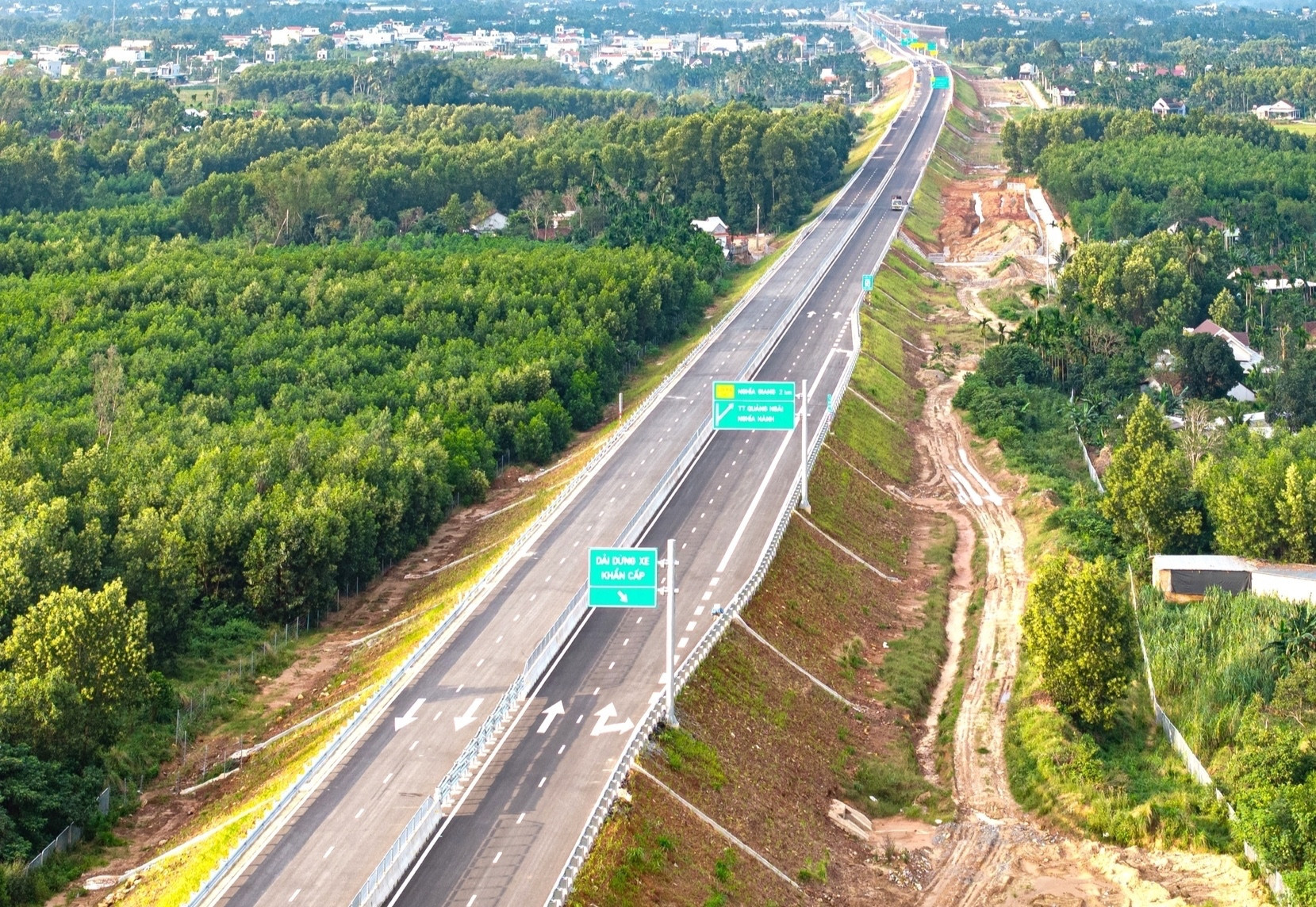
Public investment should serve as the primary approach, while public-private partnerships (PPP) can be deployed on segments with heavy traffic volumes and strong capital recovery potential.
The Prime Minister has requested the expansion and upgrading of limited two-lane and four-lane expressways to meet standards, prioritizing the Eastern North-South Expressway. The Ministry of Construction was tasked with coordinating with ministries, branches, and localities to review and propose investment options.
Under approved master plans, the national network encompasses 46 expressways totaling over 10,100 kilometers. To date, 3,345 kilometers have been brought into operation, with total mileage projected to reach 5,762 kilometers by 2030.
Nationwide, 258 kilometers of two-lane expressways require expansion, with capital demands approaching VND42.7 trillion. Additionally, nearly 2,100 kilometers of limited four-lane expressways need expansion, with total estimated capital exceeding VND400 trillion.
Upgrading the 1,222-kilometer Eastern North-South Expressway alone will require approximately VND200 trillion.
As the Ministry of Construction evaluates expansion options for the Eastern North-South Expressway, selecting between public investment and PPP models remains a central focus.
Associate Professor Dr. Nguyen Thuong Lang, an economic expert at the Institute of International Economics and Trade under National Economics University, said that under current conditions, top priority should go to concentrating state resources to complete the entire route swiftly.
The North-South corridor bears the name "expressway", but vehicles still run at speeds for national highways.
He noted that the expressway system functions as the "blood vessels" of the economy. Delayed investment inflates logistics costs, extends freight transit times, creates congestion, and delays the formation of logistics hubs, urban areas, and new economic corridors.
"Economic development depends first and foremost on infrastructure. Wherever roads go, economic growth follows. If road building is delayed, economic development will also be delayed," he said.
Although VND200 trillion is a substantial investment for upgrading the eastern North-South Expressway, Lang said it would remain manageable if allocated over several years.
He stressed that expressways can deliver maximum benefits only when completed as an integrated network. If only isolated sections are finished, vehicles will still have to slow down or divert, reducing overall efficiency.
"If only one section, such as Hanoi-Vinh, is completed while the remaining stretches are still under construction, the route's overall performance will remain limited. Vehicles will still have to slow down, and traffic will not flow seamlessly. That means the investment will not achieve its full potential,” he said.
"The government should focus its resources on completing the entire corridor as soon as possible rather than stretching the project over many years," he added.
PPP should be applied
Regarding a combination of public investment and PPP financing, Lang said PPP is an important funding channel but should not be applied indiscriminately.
He noted that PPP projects typically involve lengthy procedures, including investor selection, contract negotiations, and financing arrangements, all of which can delay project preparation and implementation. In some cases, investors' financial capacity must also be carefully assessed to avoid affecting project schedules.
In addition, when projects rely heavily on private-sector financial models, pressure to recover investment costs may lead to higher tolls, thereby increasing transportation and logistics costs.
"If investors prioritize recovering their capital, they are likely to seek higher tolls or greater government support. That would ultimately increase logistics costs across the economy," he explained.
By contrast, when the government directly finances strategic infrastructure, toll policies can be managed more flexibly, providing stronger support for manufacturing, business activity, and freight movement.
However, if the state budget cannot fully meet funding needs, Lang said private capital could still be mobilized through PPP. This model should be prioritized for sections with high traffic volumes, clear toll revenue prospects, and strong commercial viability.
Conversely, for sections with lower traffic volumes, limited investor interest, or strategic importance in ensuring seamless network connectivity, the government should continue relying on public investment.
"PPP can create opportunities for private companies to participate in infrastructure development. But for a project of national strategic importance such as the North-South Expressway, the overriding priority must be completing it quickly, as an integrated network, and maximizing its benefits for the entire economy," Lang said.
The adjusted road network master plan through 2050 identifies a nationwide expressway network of 46 routes totaling approximately 10,106 kilometers, including the addition of five new routes.
Vu Diep
.svg)
