 Vietnamnet.vn

 Podcast



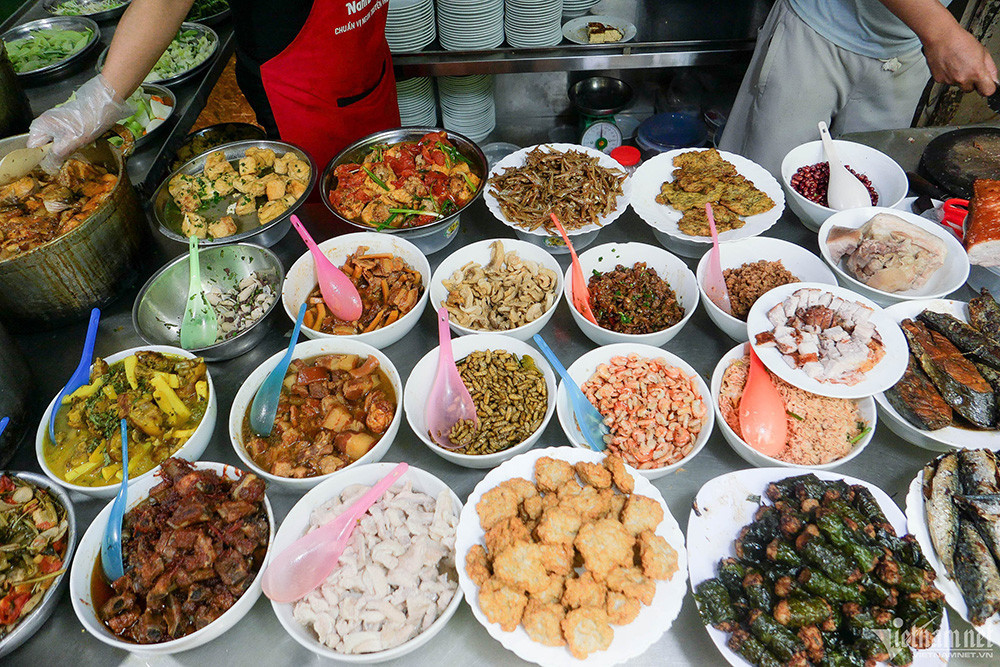
For over a month, Hoa’s office lunch eatery in an alley in Dong Da ward, Hanoi, has been barely operational. The number of regular customers, mostly office workers, dwindled after two large companies with hundreds of employees relocated.
The growing trend of office workers bringing homemade lunches has also affected revenue. Since the beginning of the year, many have opted to prepare their own meals to save costs.
“I only stock enough ingredients to sell daily, avoiding overstocking due to fear of waste,” Hoa said.
While revenue declines, costs continue to rise. And despite increasing ingredient prices, Hoa has not raised meal prices, which range from VND35,000 to VND50,000 per serving.
The eatery also faces rental costs of VND13 million per month, excluding utilities like electricity and water.
Serving office workers, the eatery closes on weekends, compared to cafes or other establishments that operate continuously.
When Hoa first leased the space, she planned to sell additional items in the evening to boost revenue. However, the alley location and office-worker clientele made expansion challenging.
She tried distributing flyers and contacting nearby companies and office buildings, but new customers did not increase. Selling through food delivery apps also proved difficult due to high commission and discount fees, making it hard to compete on price.
Hoa is considering expanding the menu with items like noodles to attract more customers. However, she has concerns about low demand and the cost of hiring extra staff.
“I’m afraid that raising prices will drive away even more customers,” Hoa said. Maintaining current prices, however, significantly erodes profits.
Eateries like Hoa’s can only hold prices for a short time. If the situation persists, closure is a real risk. In Hanoi, many eateries have adjusted prices. Some noodle and pho shops have increased prices by VND5,000 per bowl.
A noodle shop in Linh Dam announced a price hike after maintaining old rates for a long time. The owner cited rising input costs, particularly for meat, vegetables, gas, and spices, forcing the price adjustment to maintain dish quality and business operations.
The shop raised prices by VND5,000 per portion, with most menu items now costing VND35,000–VND40,000, up from VND30,000.
“Input costs have been rising steadily since the start of the year. The VND30,000 price is no longer sustainable. We had to adjust to keep operating, even though we know it may affect customer numbers,” the owner of the shop said.
Pork prices have surged by 30-40 percent since the end of last year, while beef has become 10 percent more expensive. Vegetable oil and pepper prices have also increased.
She said that Linh Dam is a populous area, so people think eateries are doing well, but they are struggling to exist.
Morning pho, office lunch, evening beers
Like Hoa, Tuan in Hoang Mai ward, Hanoi, faces challenges with his office lunch eatery. “Running an office lunch business is tough now,” Tuan lamented.
Customers have decreased in number as people cut back on spending, with dining out being the first expense to go. Workers now carefully weigh their options before ordering lunch. Eateries, in general, see far fewer customers than before, while input costs have risen notably in recent months.
Previously, Tuan’s eatery provided over 150 servings daily. However, after price surges and tightened consumer spending, his kitchen now sells fewer than 100 servings per day.
“I have to be meticulous, changing dishes daily to retain customers. People are frugal now, and if you don’t diversify or keep prices affordable, they’ll go elsewhere,” he said.
Tuan has also adapted his business model to maximize the use of the retail premise. His eatery now operates as a multi-purpose venue: pho in the morning, office lunches at noon, and beers in the evening.
This diversification serves different customer groups at various times, optimizing revenue from the same space. Tuan’s customers now range from breakfast diners and office workers to evening social groups.
“The number of customers has increased slightly, and revenue has improved significantly, though challenges remain,” Tuan shared.
However, Tuan emphasized that in a competitive market, maintaining food quality, ensuring hygiene, and regularly updating the menu are critical to retaining customers.
Linh Trang
.svg)
