 Vietnamnet.vn

 Podcast



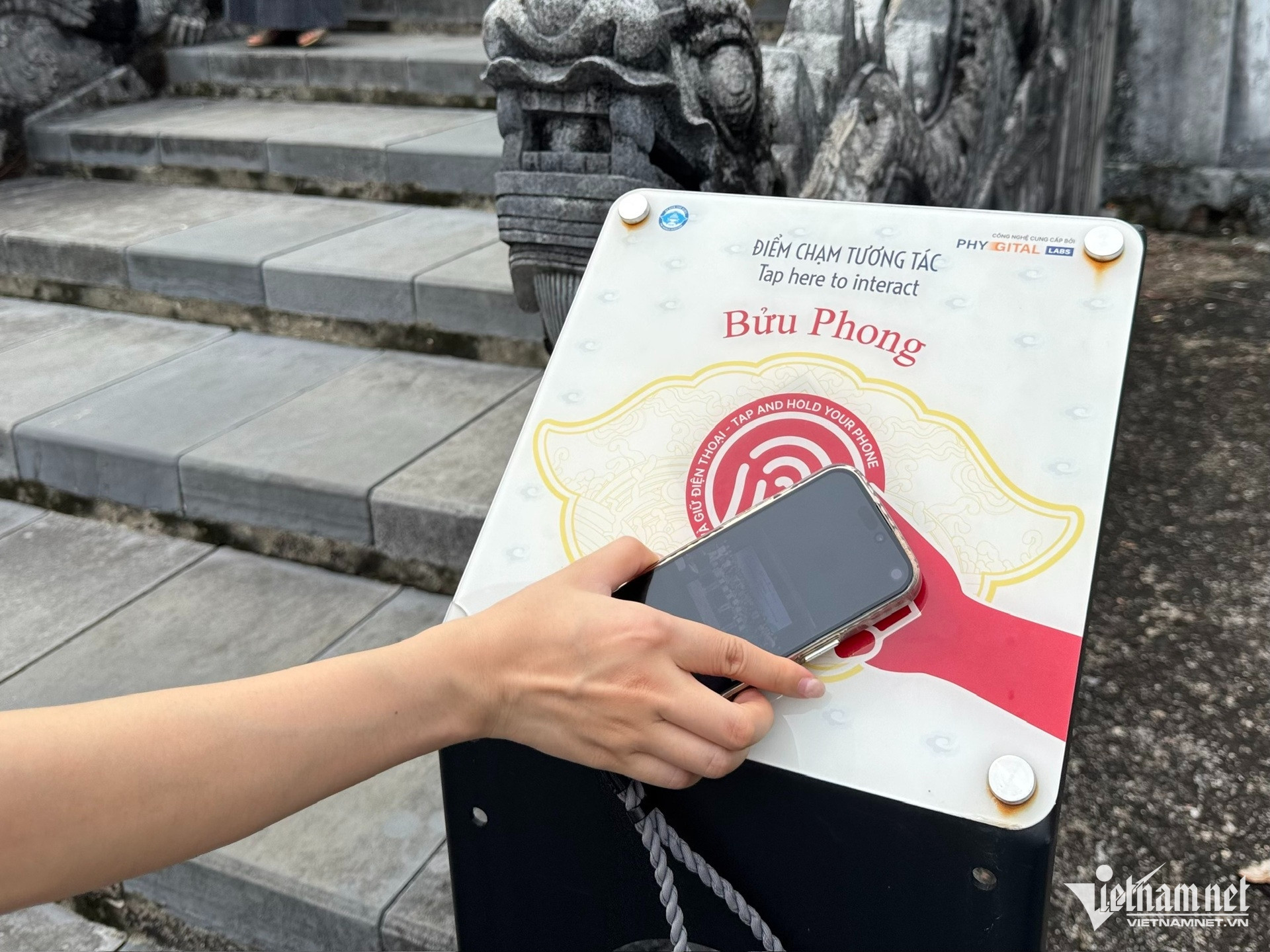
These two developments have become some of the clearest examples of how digital transformation is reshaping tourism.
Speaking at the seminar “Applying Innovation in Promoting Hue Tourism and Heritage” on June 11, Cung Trong Cuong, director of the Hue Institute for Development Studies, said: “The Perfume River has become the city’s largest delivery and pickup hub.”
Instead of using hotel or accommodation addresses, many visitors choose to receive deliveries at geotagged locations along the riverbank.
“They sit and relax by the river, then start ordering through mobile apps,” he said.
This is a clear example of digital transformation, where technology is integrated with traditional cultural spaces to create new experiences for visitors.
The trend comes as global tourism embraces green and sustainable development. A Booking.com survey found that 76 percent of travelers in 2023 wanted to travel more sustainably. This trend requires destinations to be more innovative to meet diverse visitor expectations.
Hue’s tourism challenge
Although Hue’s tourism industry has been posting encouraging growth, maximizing the economic value generated from its heritage assets remains a major challenge.
Vo Hoang Lien Minh of the Hue Department of Tourism said the city is expected to welcome 4.3 million visitors in the first six months of 2026, up 30 percent year-on-year, generating VND10.3 trillion in revenue, an increase of 56.2 percent.
Hue is home to eight UNESCO-recognized heritage designations, an advantage that Minh described as “impossible to replicate”.
However, behind the growth figures lies what experts call “value leakage”. Many visitors come to Hue but stay only briefly and spend relatively little.
Minh said the root cause is that tourists only scratch the surface of heritage values without having many opportunities to experience them deeply. Amplifying the economic value of tangible heritage demands coordinated solutions to prolong tourist stays and stimulate spending.
At the seminar, experts agreed that digital transformation is a critical tool for addressing this challenge. Beyond improving destination marketing, technology can also connect government agencies, tourism businesses, and technology companies within a shared ecosystem.
Enhancing visitor experiences
One notable example is the use of traditional cyclo services on digital platforms. Experts said the model improves operational management, service quality control, and transparency in tourism activities.
Pham Ba Hung, rector of Hue Tourism College, noted that international experience demonstrates that combining heritage and technology is now an established trend. At many global destinations, ticketing, payments, and tourism services are connected through centralized data systems.
Such systems allow authorities and businesses to analyze visitor behavior and develop products tailored to specific customer segments.
From the private sector perspective, Nguyen Phuong Vi, marketing manager at Grab Vietnam, said that since the launch of Grab Xich Lo in August 2025, all participating cyclo drivers have remained on the platform.
Food and beverage businesses have also reported increased order volumes. Notably, the number of female driver partners has grown by more than 2.2 times, while their average earnings were more than 20 percent higher than the market average in 2025.
Foundation for development
In the long term, Hue is pursuing a tourism strategy based on the principle of “Preservation for Development,” guided by the philosophy that “preservation is the foundation, culture is the cornerstone, and people are the center”.
To achieve this vision, Hung has proposed a shared data infrastructure and more AI use in tourism product development.
He said that consolidating data into a large integrated system would enable more accurate analysis of visitor demand and improve the personalization of tourism experiences.
However, he emphasized that technology should remain a supporting tool.
“Digital transformation is only a tool to enhance experiences,” he said, noting that no application can fully replace the authentic emotions that visitors experience when engaging directly with heritage sites.
From a government perspective, Minh proposed four key solutions for transforming heritage into economic value, including preservation, utilization, and reinvestment; acceleration of digital transformation; innovation in destination promotion; and greening of the tourism journey.
As part of these efforts, the Department of Tourism is developing a “Digital Imperial Palace” project, digitizing historical sites and artifacts using VR, AR, and 3D technologies.
The city is also planning to develop a 3D culinary museum to preserve and showcase traditional recipes, and is exploring the use of the metaverse and AI to create more personalized tourism experiences.
Du Lam
.svg)
