 Vietnamnet.vn

 Podcast



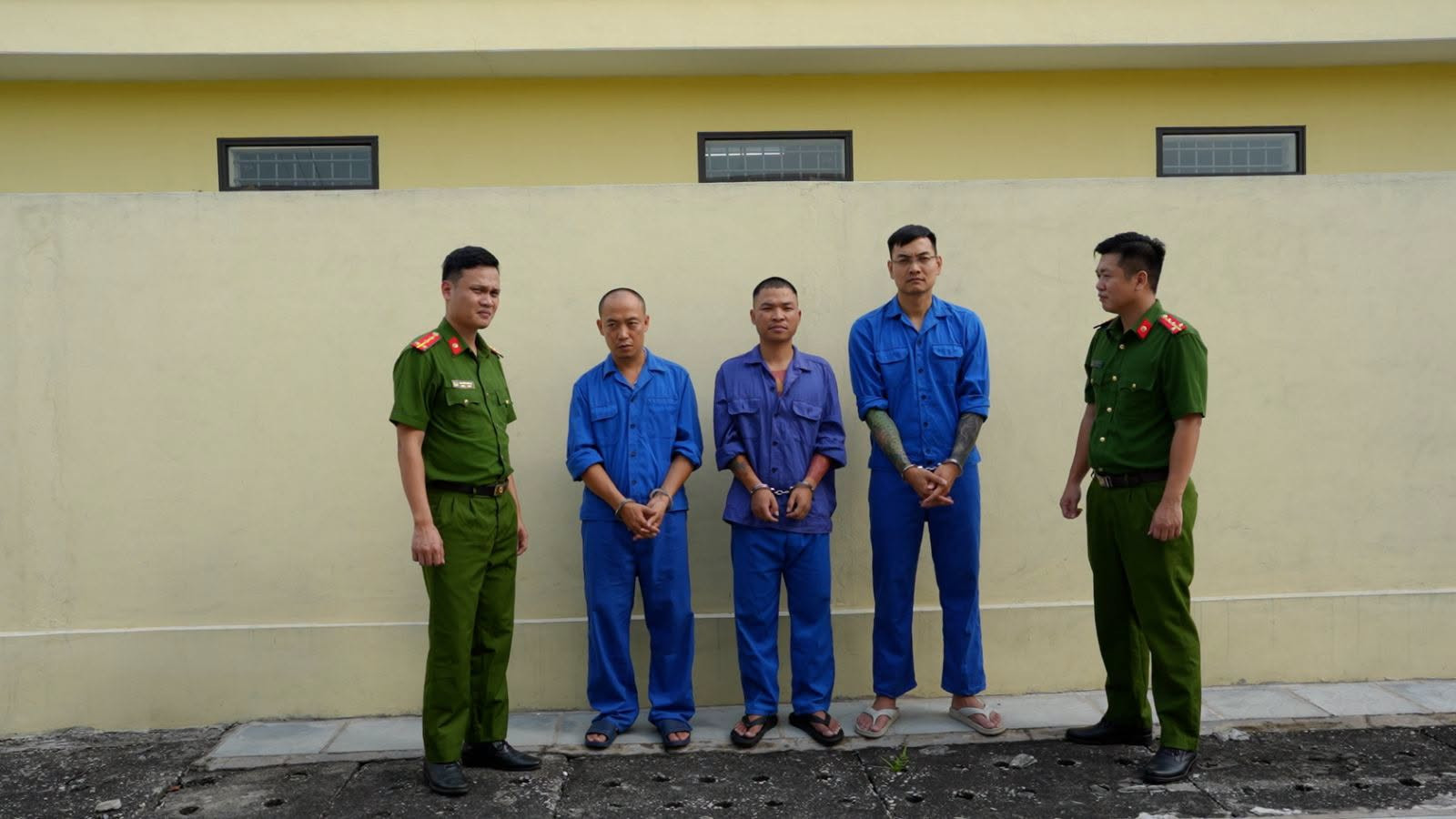
Police in Bac Ninh Province, working with the Ministry of Public Security’s Criminal Police Department, have launched criminal proceedings against Nguyen Van Hoi, better known online as Khanh Sky; Ho Van Khoa; and Tran Dinh Tiep, known as Vua Quat, or “Fan King”.
Bac Ninh police announced on August 7 that the three had been charged in connection with allegations involving the use of social media to disrupt public order, disseminate false or unverified information and infringe upon the lawful rights and interests of organizations and individuals.
The case is the latest development in a dispute that unfolded largely through TikTok livestreams before spilling into the physical world, drawing hundreds of thousands of viewers and eventually prompting police intervention.
From a charity controversy to an online feud
The origins of the dispute can be traced to controversy surrounding charitable assistance for people affected by floods in the northern province of Lai Chau.
In late July, social media personality Bui Xuan Huan, widely known as Huan Hoa Hong, said during a livestream that if someone donated a certain amount to flood victims, he would contribute three times that sum.
Tiep subsequently publicized proof of a VND1 billion donation to the Vietnam Fatherland Front Committee in Lai Chau Province to support people affected by natural disasters.
The provincial Fatherland Front Committee later sent a letter thanking KF Fan, a company belonging to Tiep’s family, for providing a total of VND1.1 billion in assistance.
Huan later said he would not follow through on his earlier statement, explaining that he did not want charitable work to become a “bet” on social media.
The episode triggered heated exchanges online. Hoi and Khoa subsequently posted content targeting Tiep before the dispute escalated further.
Livestream confrontation at Vua Quat’s factory
According to initial investigation documents, Hoi and Khoa went to Tiep’s manufacturing facility in Tam Giang Commune, Bac Ninh Province, on July 29.
Hoi entered the factory area and repeatedly called for Tiep to come out and meet him, claiming the factory owner had locked himself inside a room and was refusing to face him.
During a livestream lasting about 15 minutes, Hoi repeatedly used insulting, challenging and threatening language while demanding that Tiep appear in person to confront him and apologize.
The livestream attracted more than 200,000 simultaneous viewers. Thousands of comments appeared across social media platforms as footage of the confrontation rapidly spread online.
Authorities assessed the incident as having an adverse impact on local security and public order.
When Hoi encountered a woman at the factory, he asked her to call her husband out to speak with him. When she said she would call the police, Hoi told her not to do so.
He also made statements that authorities considered threatening, suggesting there would eventually be consequences if Tiep did not come out and apologize, while also declaring that he was not afraid of going to prison.
Hoi and the people accompanying him left after Tiep’s family contacted police.
Police investigation widens
On July 30, Tam Giang Commune police summoned Hoi for questioning after videos of the confrontation circulated widely online.
A day later, the Bac Ninh Provincial Police Investigation Agency issued a notice seeking Khoa, 34, of Soc Son Commune in Hanoi, to assist its investigation and verification of information relating to the case.
On August 3, the People’s Procuracy of Region 7 in Bac Ninh Province approved an emergency arrest order for Hoi, 34, a native of Hung Yen Province, for investigation into alleged disturbance of public order.
The investigation subsequently expanded beyond the confrontation at the factory.
Police said their findings showed that conflicts arising during livestreams and other social media activities had led the individuals involved to repeatedly use TikTok accounts to broadcast live, trade insults and publish false information in an effort to attract views, increase engagement and expand their online influence.
Investigators also alleged that Hoi had repeatedly uploaded fabricated videos insulting the honor and dignity of Tiep and his wife.
Tiep, meanwhile, was accused of using his TikTok account to livestream unverified information and make statements that insulted the honor and reputation of Hoi and several other individuals, adversely affecting security and order in cyberspace.
Three defendants prosecuted
Based on the evidence collected, the Bac Ninh Provincial Police Investigation Agency launched a criminal case and initiated proceedings against the three men.
Hoi and Khoa were prosecuted for allegedly disturbing public order.
Hoi and Tiep were also prosecuted for allegedly abusing democratic freedoms to infringe upon the interests of the State and the lawful rights and interests of organizations and individuals.
This means Hoi faces proceedings over two alleged offenses, while Khoa and Tiep each face proceedings over one.
According to lawyer Dang Van Cuong, head of Chinh Phap Law Office, information released by investigators indicates that Hoi is being investigated under Clause 2, Article 318 of Vietnam’s Penal Code for disturbing public order and Clause 2, Article 331 for abusing democratic freedoms to infringe upon the interests of the State and the lawful rights and interests of organizations and individuals.
Khoa faces proceedings for allegedly disturbing public order, while Tiep faces proceedings under Article 331.
Cuong said Article 318 provides for criminal liability when conduct seriously disrupts public order or adversely affects social security, order and safety. Under Clause 2, an offender may face two to seven years in prison.
For Article 331, Clause 2 also provides for a prison term of two to seven years when the conduct adversely affects social security, order and safety.
The specific criminal liability of each defendant, however, will depend on the outcome of the investigation and the evidence gathered.
The price of chasing views
Initial statements cited in information about the investigation shed light on the incentives behind the confrontational livestreams.
Hoi reportedly said that “the more you curse, the more views you get”, while Khoa acknowledged livestreaming to attract likes and views in support of his sales activities. Tiep said some information he discussed during livestreams had not been verified and that he had been provoked.
Cuong said such statements point to a troubling phenomenon in which online attention can become an incentive for people to deliberately produce increasingly negative content.
The more shocking, abusive or confrontational the content becomes, he said, the more viewers it can attract. Higher viewership can then translate into greater opportunities to sell products, advertise, make money and become famous.
That can create a dangerous cycle in which problematic content generates engagement, engagement produces benefits, and those benefits encourage the creation of still more problematic content.
The lawyer said the pursuit of fame, income or online views cannot justify insults, threats, fabricated claims, encouragement of violence or disruption of public order.
Social media is not beyond the law
As digital platforms become increasingly intertwined with everyday life, Cuong said respect for the law must become part of how people behave both offline and online.
People cannot assume that being online gives them unrestricted freedom to say whatever they want, insult or threaten others, he said, stressing that social media is not a space beyond the reach of the law.
Public attention surrounding the case also reflects growing concern over social media personalities who regularly generate controversial or socially inappropriate content.
At the same time, Cuong said authorities must handle such cases objectively, identifying the right individuals and conduct and applying the law appropriately. Criminal behavior should not be overlooked, but conduct that does not meet the legal elements of a crime should not be criminalized.
He said expanding the investigation was necessary to clarify the sequence of events, the motivations and roles of each person, the consequences of their actions and any other potential violations.
“The most important thing is to change perceptions: one view cannot be worth more than another person’s honor, and a million interactions cannot stand above the law,” Cuong said.
A history of controversy
Khoa had previously served a prison sentence in connection with a shooting involving a vehicle carrying social media personality Duong Minh Tuyen in early 2021.
He was subsequently sentenced to 39 months in prison for disturbing public order and intentionally damaging property.
The wider controversy also drew attention to Huan Hoa Hong, whose charity-related comments helped trigger the chain of online disputes.
Huan, 41, has built a large social media following through livestreams ranging from charitable activities to displays of luxury cars and an affluent lifestyle.
He has also previously been involved in legal controversies. In 2020, the Ministry of Public Security summoned him over the editing and unauthorized use of footage from a Vietnam Television program. The same year, he was fined VND17.5 million for publishing and selling books without a license.
In 2019, authorities in Ho Chi Minh City ordered him into compulsory drug rehabilitation after he tested positive for illegal drugs during a police raid at an apartment in the city.
In the latest development involving Huan, police were seen at his residence in Gia Lam Commune, Hanoi, on the afternoon of August 6. Crowds gathered outside, while claims circulated on social media that he had been arrested. Authorities, however, had not released official information confirming those claims at the time of the reports.
Meanwhile, the case involving Khanh Sky, Vua Quat and Ho Van Khoa remains under investigation. Bac Ninh police said the investigation would continue to determine the involvement of other individuals and handle any violations in accordance with the law.
Bao Khanh
.svg)
