 Vietnamnet.vn

 Podcast



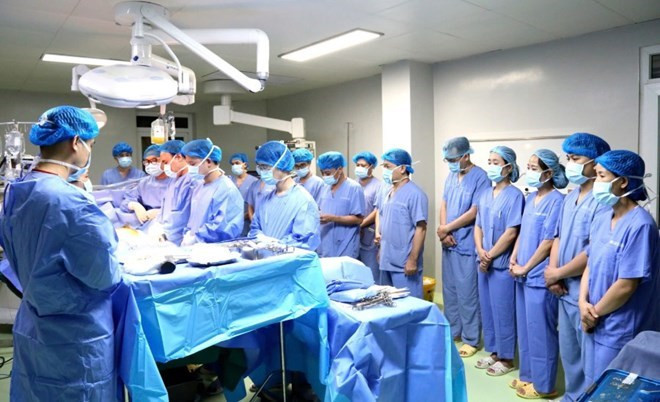
A recent multi-organ transplant was abruptly canceled just before the scheduled surgery, raising pressing legal and ethical questions about who has the ultimate authority to decide on organ donation after brain death.
The case involved nearly 100 medical personnel from various hospitals working overnight in preparation. By 6 AM, everything was set for the surgical team to enter the operating room and begin the retrieval of organs from a registered brain-dead donor.
But at the “89th minute,” a man identifying himself as a relative appeared and objected to the procedure, accusing doctors of “profiteering.” The family quickly changed their mind, and the entire operation had to be called off - denying six patients their chance at renewed health.
Legally registered, emotionally contested
To understand who has the legal right to make decisions in such scenarios, VietNamNet spoke with Dr. Nguyen Hoang Phuc, Deputy Director of the National Coordination Center for Organ Transplantation.
According to Dr. Phuc, under Vietnam’s 2006 Law on Donation, Removal, and Transplantation of Human Tissues and Organs, a person only needs to meet two conditions to register as an organ donor: be at least 18 years old and have full legal capacity.
This means that family consent is not legally required. Anyone who qualifies can independently decide to donate their organs.
However, in practice, the situation is much more complex.
Even if a person holds a valid organ donor card, if they become brain-dead and the family objects, the organ retrieval typically does not proceed. This holds true even in countries with advanced organ donation systems, like France.
“Legally, it’s the donor’s right. But in practice, especially given Vietnam’s cultural context, organ retrieval without family consent is nearly impossible,” Dr. Phuc explained.
Family communication is key
Current registration forms do not include a section for family approval. Still, officials at the Coordination Center always advise potential donors to discuss their intentions with their families to avoid future conflicts.
“If family members object, the donor may not have their wishes fulfilled,” Dr. Phuc said. “But if the family is aware of and understands the donor’s intentions, they are more likely to respect them.”
Some donors also choose to include a will alongside their donor card to further reinforce their legal and personal intent.
“In most cases, donors have discussed their decision with their families, and they receive support - because it's their heartfelt wish,” he added.
However, if the donor hasn't shared their intention before becoming brain-dead, the Coordination Center will check its database and inform the family. Many families, unprepared for such news, refuse to proceed - resulting in missed donation opportunities.
When the donor never registered: Who gets to decide?
In cases where the brain-dead individual had not registered as a donor, things get even murkier.
Dr. Phuc noted that this is a common scenario in Vietnam, yet current law does not clearly specify who within the family has the authority to decide.
In practice, consent documents vary between hospitals. Some require signatures from multiple family members; others accept a single representative - whether a parent, spouse, child, or sibling - depending on the situation.
This inconsistency leads to conflicts. For instance, a brain-dead man’s parents may agree to donate his organs, but the patient’s wife or children may oppose, resulting in a canceled transplant.
To resolve this, the upcoming revision of the Organ and Tissue Donation Law will clarify who has final decision-making authority. Early drafts lean toward granting this right to the first-degree legal heirs.
Raising awareness, building acceptance
In many countries, widespread media campaigns, public events, and even school programs promote organ donation as a normal and humane act.
“When people understand the value and meaning of organ donation, they are more likely to support it,” Dr. Phuc emphasized. “The most important factor is communication. As public awareness grows, so will the number of available organs.”
Phuong Thuy
.svg)
