 Vietnamnet.vn

 Podcast



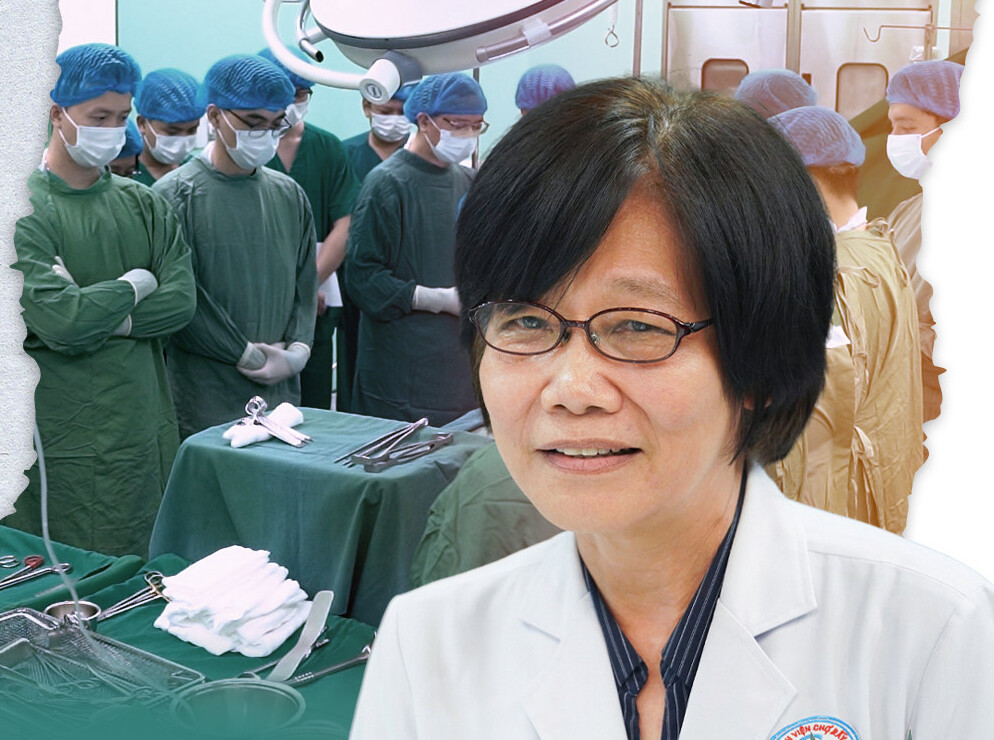
What led you to the field of organ transplantation, one of the most specialized branches of medicine?
I do not come from a family with a medical tradition, but I realized I am truly happy whenever I help someone recover from an illness.
To become a kidney transplant surgeon, a doctor not only needs to understand internal medicine, cardiology, endocrinology, and resuscitation but must also be proficient in surgical skills and the entire kidney transplant process. It is a long journey, and once I committed to it, I could not step out anymore.
What led you, a surgeon, to be an organ transplant coordinator?
Actually, I did not actively choose this field. In 2008, I had the opportunity to go to Belgium to approach the specialty of kidney donation and transplantation. In 2013, I received a scholarship from the Transplantation Society to study organ coordination in Australia. In 2014, Cho Ray Hospital established a coordination unit in a context where, in Vietnam, information about organ trafficking was very complicated at that time. From a surgeon, I gradually became a coordinator, not because I had planned it, but because circumstances pushed me there. Looking back, it has been a very long journey.
In the early days of advocating for organ donation, what was the biggest barrier you faced?
The biggest barrier to organ donation in Vietnam remains the mindset of "dying with an intact body," which is deeply rooted in Vietnamese culture. In 2009, Cho Ray Hospital began researching the possibility of kidney transplantation from brain-dead donors.
The surprise was that after answering the research group's questions, most of the families asked immediately requested discharge because they feared their loved ones' organs would be taken. But among them, there were three families who not only answered but also actively agreed to donate organs.
Most memorable was the case of a husband; as soon as the doctor informed him of his wife's critical condition and fatal prognosis, he said immediately without hesitation: "Let my wife donate her organs. My wife and I discussed this before."
In 2014, when the Cho Ray Organ Transplant Coordination Unit was launched, we received many organ donation registrations.
Over the past 10 years, we have approached over 400 families with relatives who suffered severe brain injuries leading to brain death. Each family has its own circumstances and thoughts on organ donation.
For example: the rate of families wanting their relatives to have an intact body accounts for 5.59 percent; not wanting their loved ones to suffer pain accounts for 1.55 percent; or being influenced by those around them to change their intention to donate accounts for 2.17 percent. The rate of families refusing to donate without a reason is the highest, accounting for 36 percent. The rate of agreement to donate organs is 31.36 percent, but in reality, the receipt of donated tissues and organs is only 16.15 percent.
How do you approach advocating for organ donation?
The core principle that we always emphasize in training classes is to put yourself in their shoes. Think of them as your own relatives. When the attitude comes from the heart and kindness, the patient's family will sense it and feel more at peace.
The actual organ donation consensus rate in Intensive Care Units is completely different from the normal state in society. On average, when persuading a case, the rate of family agreement is only 0.16 percent.
Among the hundreds of successfully advocated organ donation cases, which one do you remember most?
I forever remember the case of a 19-year-old girl. Her mother had a severe accident; her father had left long before. She was the eldest sister with two younger siblings. That day, she stood outside the ICU door looking at the television screen broadcasting information about organ donation, then turned and said: "Then let's donate my mother's organs."
I once heartbreakingly witnessed a poor mother in Vinh Long who had to leave her hometown to live in another locality because she could not stand the rumors that she sold her child's organs for money. Or a wife in Dong Nai who fell into depression and isolated herself because she was suspected of selling her husband's organs for billions of VND.
Phuoc Sang
.svg)
