 Vietnamnet.vn

 Podcast



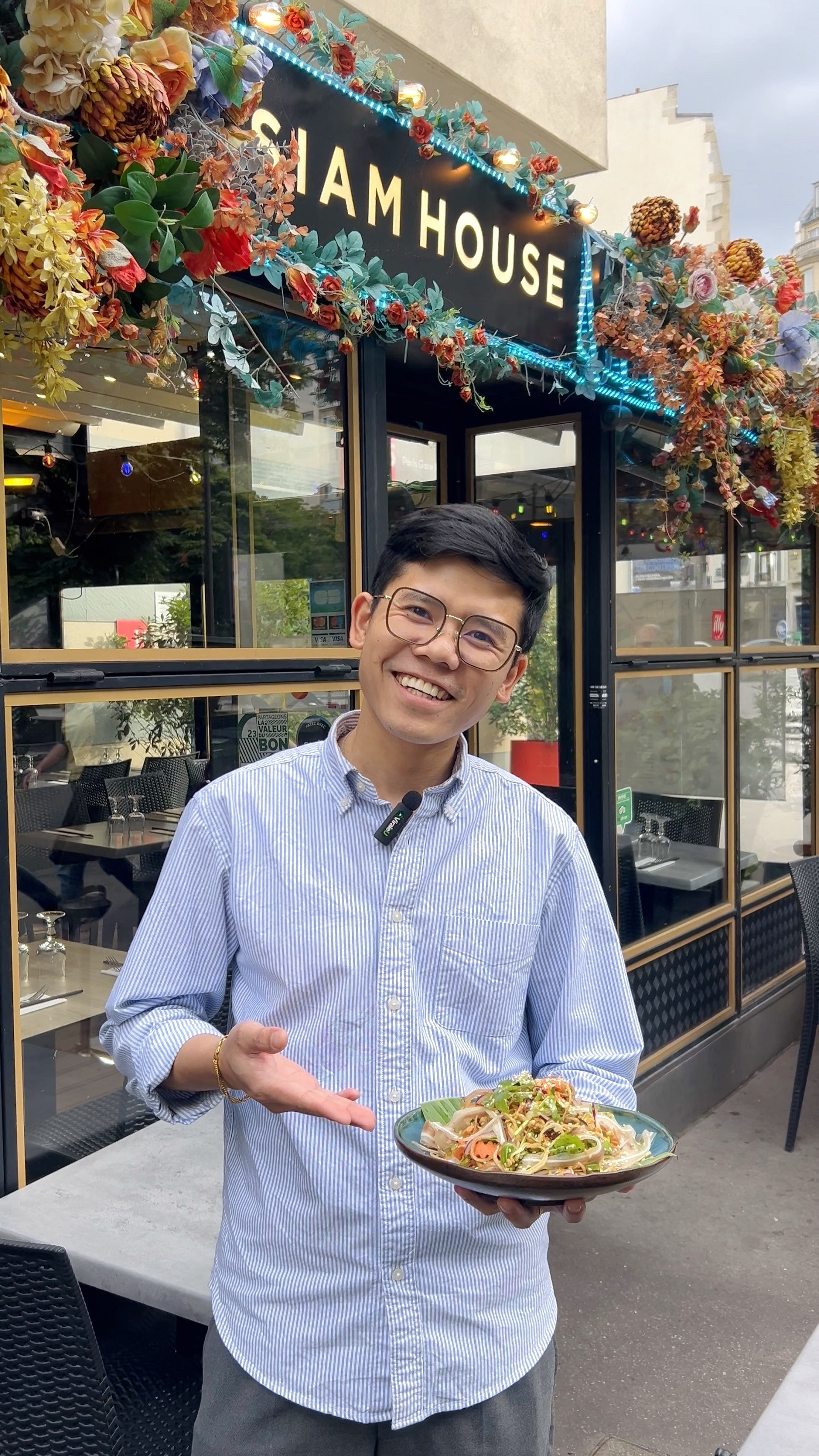
On weekend afternoons, Siam House, located on Boulevard de Vaugirard in Paris's 15th arrondissement, is almost always fully booked. Every table, both inside the restaurant and on its outdoor terrace, is often occupied.
On nearly every table are classic Vietnamese dishes like pig’s ear salad with banana blossom, scallion-infused fried tofu, fried rice with cured beef and pickled mustard greens, blood sausage, cartilage sausage, stir-fried tripe with pickled greens, and stir-fried beef stomach with pineapple. European diners enjoy the food enthusiastically, nodding in praise.
The Vietnamese eatery, which opened in 2023, is operated by Dang Duc Thien (30, originally from Lai Chau) and Tran Hung (42, originally from Hanoi). Thien shared that the duo worked together for years at a restaurant in the 13th arrondissement, home to Paris's largest Vietnamese community.
Later, they decided to establish their own restaurant to introduce authentic Vietnamese cuisine to international diners.
Spanning roughly 100 square meters with a 100-guest capacity, the venue operates seven days a week, serving lunch and diner. Initially, both Thien and Hung worked in the kitchen. Once operations stabilized, Hung took charge of kitchen management, while Thien handled customer reception and advisory.
The menu features nearly 100 dishes combining Vietnamese and Thai cuisines. Thien noted that the most popular dishes include fried rice with cured beef and pickled greens, sticky rice with minced bird meat, La Vong grilled fish, Hanoi grilled pork with vermicelli, galangal-braised fish, various tofu options, and traditional salads.
Meanwhile, blood sausage, cartilage sausage, and rice vermicelli with fried tofu and shrimp paste stir the curiosity of foreign diners most.
"Sausage dishes are the most intricate because they require exact ingredients and spices to produce authentic Vietnamese flavor," Thien said.
According to Thien, while not widespread, pork small intestines, blood, and offal can still be bought in France. The main challenge lies in selecting suppliers that meet stringent hygiene and quality regulatory standards. Every raw ingredient is carefully inspected before entering the kitchen.
For specialized spices, fermenting agents like shrimp paste, and fresh herbs such as spearmint must be imported directly from Vietnam or through specialized Asian distribution channels. Every one to two months, the restaurant restocks rare ingredients to ensure dishes preserve their original flavors.
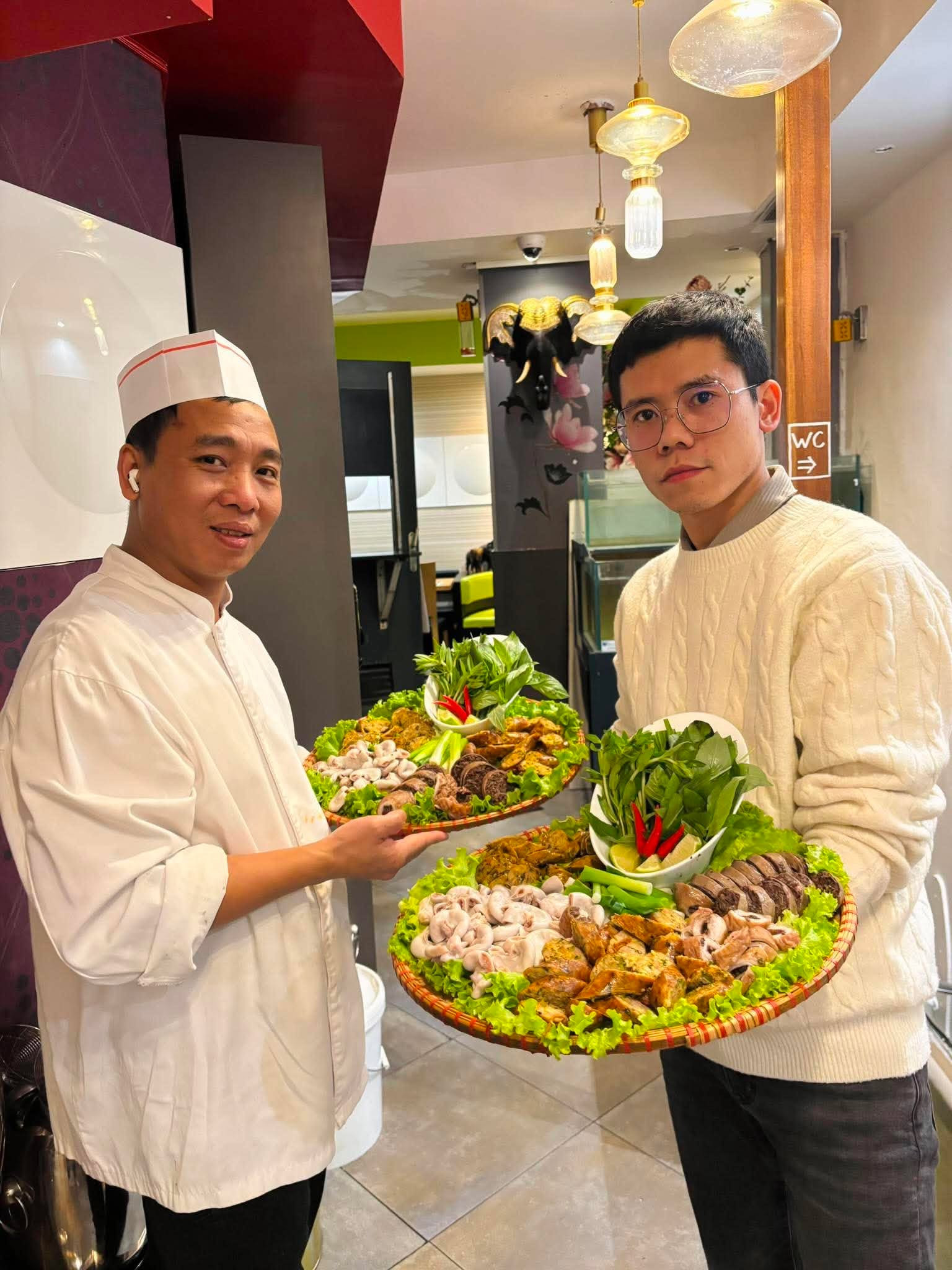
"Herbs grown in France may look similar in appearance, but their aroma differs from those in Vietnam, so we still import them regularly. Shrimp paste is also a non-negotiable ingredient that must be brought over from Vietnam," Thien shared.
Tofu, a staple ingredient across many dishes on the menu, also posed an early challenge. In the beginning, the restaurant made its own tofu to achieve the desired soft texture and aroma. As customer volume grew, the restaurant contracted a specialized production facility to manufacture tofu according to its custom specifications.
Similarly, the iconic La Vong grilled fish dish was carefully adapted to match local French ingredients. Instead of hemibagrus fish (ca lang), the restaurant uses Nile perch (Perche du Nil), a species known for its sweet, firm flesh that retains texture after preparation.
Authentic Vietnamese flavors
What Thien takes most pride in is that the restaurant has never altered its recipes simply to cater to French palates. "We believe that authentic flavor is precisely what makes Vietnamese cuisine beloved globally. Modifying recipes excessively causes dishes to lose their true identity," he said.
Situated in the Montparnasse district, somewhat distant from the main Vietnamese community hubs, the eatery faced initial hurdles attracting and convincing diners.
Many French customers felt hesitant upon hearing descriptions of offal dishes or fermented shrimp paste. Quite a few expressed reservations about aromas that differed sharply from European cuisine.
Thien and his staff spent time conversing with guests, gauging individual tastes, and introducing accessible dishes before suggesting more adventurous specialties.
Recently, the restaurant began creating short videos showcasing Vietnamese culinary culture, preparation techniques, and the stories behind each dish to reach broader audiences. These videos have attracted tens of thousands of views on social media platforms.
"Many customers come out of curiosity after watching our videos. After trying the food and enjoying it, they return repeatedly," Thien recounted.
About 60 percent of the restaurant's clientele consists of French patrons, while the remainder comprises local Vietnamese residents and international tourists.
Linh Trang
.svg)
