 Vietnamnet.vn

 Podcast



In the power industry, COD is a crucial legal and technical boundary. It marks the moment a plant is confirmed to operate stably, is accepted by the power system, and begins selling commercial electricity. Only upon reaching COD does a project truly transition from an investment state to a cash-flow-generating state.
In August 2024, the Prime Minister approved the policy to import electricity from the Savan 1 Wind Power Plant project to Vietnam. Later, in January 2025, T&T Group received the concession agreement for the Savan 1 project from the Ministry of Planning and Investment of Laos. Under this contract, the Government of the Lao PDR agreed to allow Savan 1 Wind Power Co, Ltd (a member of T&T Group) to design, build, own, and operate the project for a 25-year term to export and sell electricity back to Vietnam.
Also, the Power Purchase Agreement (PPA) between Savan 1 Wind Power Co., Ltd and Electricity of Vietnam (EVN) was finalized, paving the way for electricity from the project to be officially integrated into Vietnam’s national power grid.
Transmission infrastructure
With a total designed capacity of 495 MW and investment capital of $768 million, Savan 1 is among the few large-scale onshore wind power projects in Southeast Asia completed within a short timeframe, under high technical requirements and an extremely tight schedule to serve the goal of transmitting electricity to Vietnam.
A distinguishing point of the project lies in the developer’s simultaneous implementation of both the power generation source and the transmission infrastructure within a single project entity, thereby gaining autonomy over the schedule and grid-connection capability.
T&T Group chose to invest in a dedicated transmission line for the project, accepting higher costs to ensure the overall schedule. The parallel implementation of plant construction and transmission infrastructure helped Savan 1 avoid the scenario of “generation sources are ready but transmission line is not”, a common bottleneck for renewable energy projects in the region.
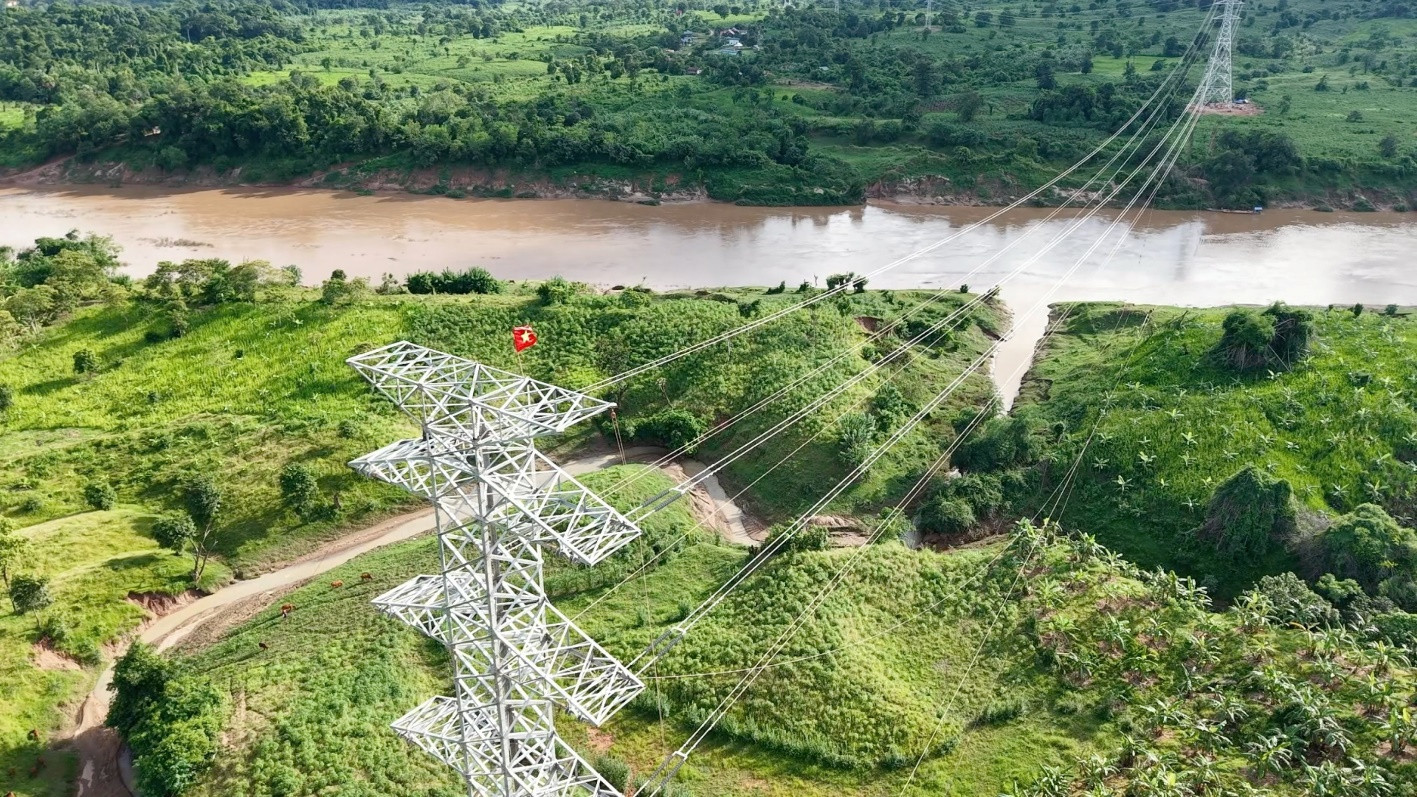
Following this roadmap, during the implementation process in Savannakhet, plant construction and turbine installation were carried out alongside the construction of a more than 70km-long arterial line connecting the plant and the Lao Bao 220kV Station.
On August 31, just before the Vietnamese National Day, the final meters of wire were strung across the Sepon River back to Vietnam, creating the conditions for the electricity from Savan 1 to be ready for integration into Vietnam’s power system as planned.
According to experts, developing transmission infrastructure in parallel with power source construction "clears the path" for the electricity current, eliminating the risk of a plant being completed but unable to generate commercial power.
The power generation did not have to wait for the transmission line, and no delays occurred between stages. As a result, in the final days of the old year, Savan 1 officially achieved COD, closing the entire cycle from finalizing legal procedures and signing the concession contract to construction and commercial operation in just about 16 months.
More than just a wind power project
At a time when many renewable energy projects face the situation of being “built but unable to generate power,” the commercial operation milestone of Savan 1 has become the most important benchmark for assessing the real effectiveness of a project.
The achievement of COD by the Savan 1 wind power project should be viewed within the wider context of national energy strategy, where ensuring energy security and transitioning to clean energy sources have become consistent priorities.
Savan 1 reflects a trend toward increasingly substantive energy cooperation between Vietnam and Laos. The investment of a Vietnamese enterprise in wind power in Laos, the building of transmission infrastructure, and export of electricity back to Vietnam demonstrate a shift from policy-level agreements to concrete projects capable of commercial operation and delivering real electricity to the economy.
Savan 1 also reflects a shift toward deeper participation by Vietnamese firms in the regional energy supply chain, in addition to the established EVN-led power import channels.
Under this model, Vietnamese companies directly invest in and develop power sources in neighboring countries, while also investing in transmission infrastructure to bring electricity back to serve the domestic system. This approach helps increase supply security and supports the balancing of domestic energy development amid increasingly tight land availability and stricter environmental requirements.
Tuan Nguyen
.svg)
