 Vietnamnet.vn

 Podcast



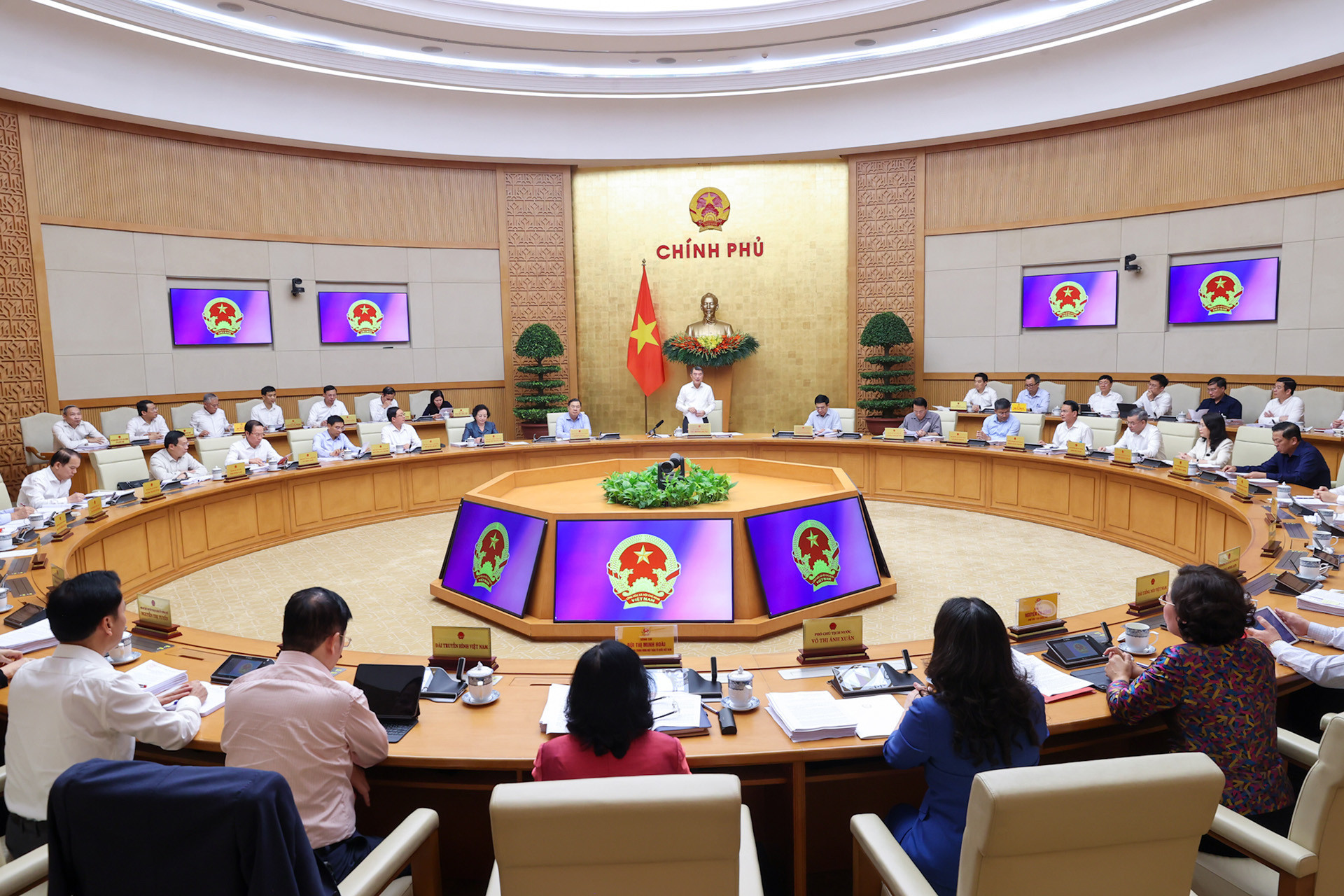
Under the plan, deputy prime ministers will represent the prime minister in monitoring and directing localities in carrying out socio-economic development tasks outlined in the resolution of the 14th National Party Congress, government resolutions, provincial and municipal Party congress resolutions for the 2025-2030 term, and especially Conclusion No. 18 of the Party Central Committee, with the aim of reaching double-digit economic growth.
Specifically, Permanent Deputy Prime Minister Pham Gia Tuc will oversee localities in the Southeast region, including Ho Chi Minh City, Dong Nai City and Tay Ninh.
Deputy Prime Minister Phan Van Giang will oversee localities in the South Central Coast and Central Highlands regions, including Da Nang City, Quang Ngai, Gia Lai, Dak Lak, Khanh Hoa and Lam Dong.
Deputy Prime Minister Pham Thi Thanh Tra will monitor localities in the Northern Midlands and Mountainous region, including Cao Bang, Dien Bien, Lang Son, Lai Chau, Lao Cai, Phu Tho, Son La, Thai Nguyen and Tuyen Quang.
Deputy Prime Minister Ho Quoc Dung will oversee localities in the Mekong Delta region, including Can Tho City, An Giang, Dong Thap, Ca Mau and Vinh Long.
Deputy Prime Minister Nguyen Van Thang will monitor localities in the Red River Delta region, including Hanoi, Hai Phong City, Quang Ninh, Ninh Binh, Hung Yen and Bac Ninh.
Deputy Prime Minister Le Tien Chau will oversee localities in the North Central region, including Hue City, Thanh Hoa, Nghe An, Ha Tinh and Quang Tri.
The deputy prime ministers are authorized to proactively choose suitable working methods with the assigned localities in order to directly direct socio-economic development measures, focus on removing obstacles and bottlenecks hindering growth, and accelerate administrative reform as well as decentralization and delegation of authority in accordance with the law to achieve economic growth targets.
Earlier, on April 16, the government issued Resolution No. 109 updating and supplementing the government’s action program to implement the resolution of the 14th National Party Congress and Conclusion No. 18 of the Party Central Committee.
The core focus of Resolution 109 is achieving double-digit economic growth while maintaining macroeconomic stability and improving people’s living standards.
The resolution outlines strategic tasks including establishing a new growth model driven by science, technology and innovation; improving institutions to unlock production capacity; developing high-quality human resources; and modernizing infrastructure systems.
Ministries, agencies, localities, economic groups, state corporations and state-owned enterprises are required to fulfill development targets and assigned growth tasks for sectors, fields and local economies.
On May 21, the prime minister also issued an official dispatch assigning growth targets to localities and state-owned enterprises.
In the dispatch, local authorities were instructed to urgently complete all targets and indicators in accordance with guidance from the Ministry of Finance and relevant ministries for 2026 and the 2026-2030 five-year period, and submit them to the Ministry of Finance no later than May 23.
Tran Thuong
.svg)
